How a Money Recovery Lawyer in India Can Help You Recover Money
The right process depends on who owes you money, what proves it, and which forum can order repayment.


Table of Contents
Table of Contents
Swipe →One standard money recovery notice will not solve every unpaid amount. If your employer has withheld your final salary, the first question is what the settlement statement actually shows. If a landlord keeps your deposit, photographs and proof that you handed back the keys may matter more. An accepted invoice, a cancelled flight and money lent to a friend each raise different questions about evidence, deadlines and where to complain. A useful money recovery lawyer in India does not start by threatening a lawsuit. They work out which route can get you an enforceable repayment order, and whether a carefully supported demand might resolve the matter sooner.
What should a money recovery lawyer check before recommending action?
The first task is to identify the legal debtor. Did you contract with a company, an individual proprietor, a landlord named in the lease, or a booking platform acting for an airline? Addressing a notice to whoever last replied on WhatsApp may feel satisfying, but that person may not be liable for payment.
Next comes a calculation you can defend. Start with the agreed amount, then account for payments already received, legitimate credits and disputed deductions. If a client owes ₹1,20,000 on two invoices but has paid ₹40,000, the demand should explain why ₹80,000 remains due. If an employer claims notice-pay adjustment, ask for the contractual basis and arithmetic rather than ignoring the adjustment.
A lawyer also checks what made payment due: a monthly wage date, acceptance of delivered work, cancellation under refund terms, return of rented premises, or a promised possession date. That trigger affects both the strength of the claim and its deadline. Contract clauses may specify approval steps, dispute resolution or a place for proceedings. They do not, however, turn a consumer refund into an invoice claim or override every statutory remedy.
Finally, ask what the proposed forum can actually do. A grievance channel may help obtain a response; an authority, commission, tribunal or court may be needed for an enforceable order. This distinction helps you avoid spending months pursuing replies that never require the other side to pay.
Start with the transaction, not the label “money recovery”
The table is a route map, not a promise that one forum fits every case. Use it to identify what needs checking before you pay to file anything.
Type of unpaid amount | Who may be legally liable | Best-fit first forum or escalation channel | Evidence that usually decides the claim | Key route-specific caveat |
|---|---|---|---|---|
Salary or employment dues | Employing entity | Employer reconciliation, then appropriate labour authority; SAMADHAN where applicable | Appointment terms, payslips, bank credits, final-settlement breakup | Incentives, gratuity and notice-pay disputes may need separate analysis. |
Consumer or airline refund | Seller or service provider; airline for an agent-booked ticket refund under DGCA rules | Merchant or airline, National Consumer Helpline or AirSewa, then consumer commission if appropriate | Payment, booking terms, cancellation record, refund correspondence | A helpline grievance is not a commission order. |
Rental security deposit | Landlord or other party obliged under the agreement | Written deduction request, then forum under applicable state law or civil court | Lease, deposit transfer, handover proof, photographs, meter readings | There is no universal nationwide deposit-refund deadline. |
Eligible micro or small supplier invoice | Buyer of accepted goods or services | State MSE Facilitation Council through MSME Samadhaan | Registration, purchase order, acceptance, invoice and payment ledger | Eligibility and registration timing matter. |
Money lent personally | Borrower | Repayment demand, then appropriate civil suit | Transfer plus repayment messages, note or acknowledgment | A transfer alone does not establish a loan. |
the applicable legal framework-covered builder claim | Promoter responsible under the project agreement | the applicable legal framework authority in the project’s state | Agreement, payment receipts, promised date, project status | Refund after withdrawal and interest while staying are different choices. |
These routes can overlap without being interchangeable. A homebuyer who qualifies as a consumer may have consumer remedies as well as the applicable legal framework remedies, but should assess overlapping proceedings before filing. An invoice dispute might qualify for a specialist MSME route, while an ordinary freelancer claim may require civil or commercial proceedings. The lawyer’s value lies in testing those distinctions early, not in sending the same document to six offices.
Salary and employment dues: reconcile the final settlement before escalating
“Your F&F is under process” does not tell you what is owed. Put the appointment letter, resignation or termination communication, payslips, attendance or leave record, bank credits and full-and-final statement in one timeline. Separate unpaid monthly salary from leave encashment, incentives, gratuity and any claimed notice-pay deduction. If HR says ₹35,000 was adjusted, request the clause, the period used and the calculation. A dispute about a discretionary incentive is not necessarily the same as a failure to pay earned wages.
Under section 17 of the Code on Wages, 2019, monthly wages are generally payable by the seventh day of the following month; wages payable on resignation or termination are generally due within two working days. Section 18 restricts deductions. These rules give a lawyer something more precise to raise than “release my settlement immediately”, but the amounts covered and applicable rules still need checking. The four Labour Codes took effect on November 21, 2025; confirm the relevant central or state rules and authority for your employment.
If reconciliation fails, the appropriate labour authority may be the next stop. A notified section 45 claims authority can determine a claim and may award compensation up to ten times that amount; this is discretionary, not an automatic multiplier. Such claims can generally be filed within three years, subject to condonation. The central salary and employment dues route can help you organise the claim; SAMADHAN is available at https://samadhan.labour.gov.in where applicable. Do not assume a portal submission replaces checking which authority has jurisdiction.
Visual Dispute Resolution & Recovery Framework
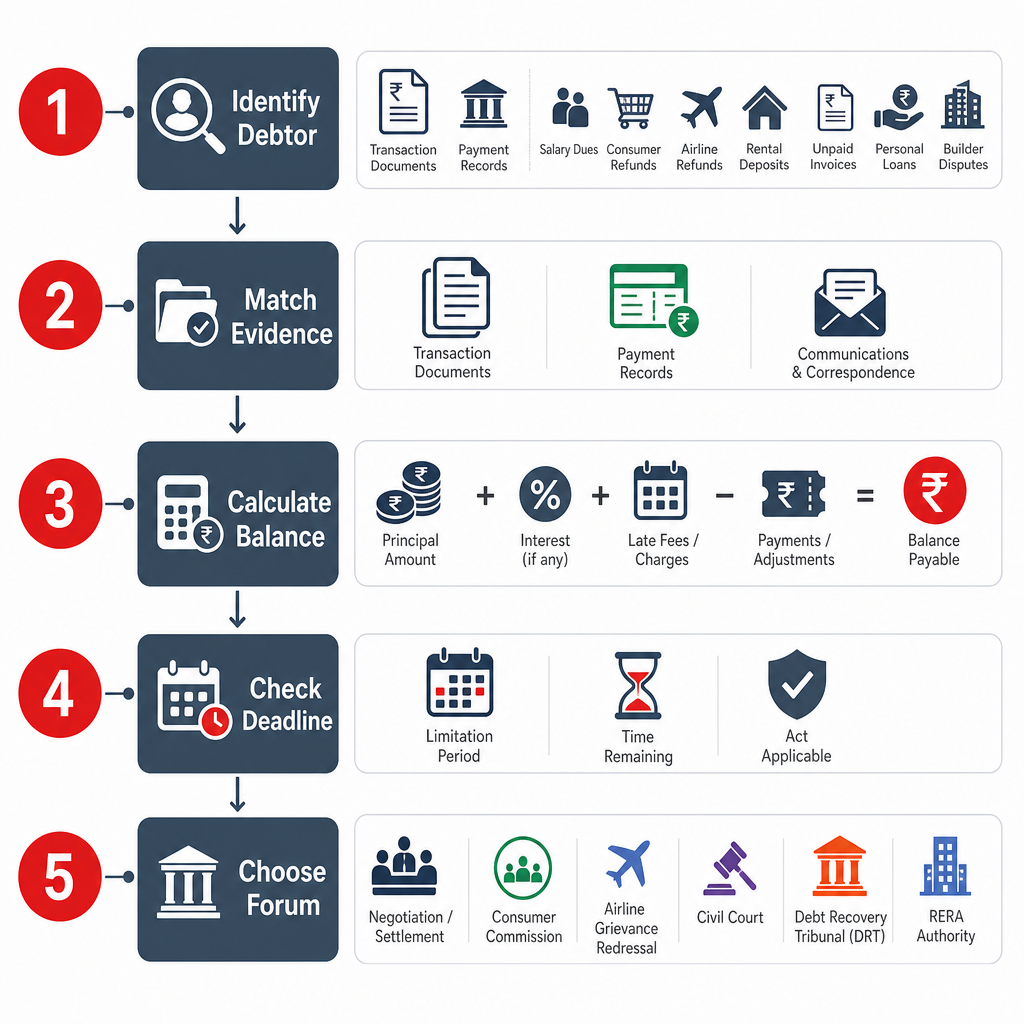
Refunds, flight bookings and deposits call for different proof
Consumer refunds: show what was promised and what changed
For an undelivered order, cancelled subscription or refused service refund, keep the invoice, payment record, advertised terms, cancellation request and the seller’s stated reason for withholding money. If a coaching provider offers only “credit for the next batch”, the key question is what refund terms applied when you paid and what service was actually provided.
Start with the merchant and the National Consumer Helpline at https://consumerhelpline.gov.in or 1915. If that does not resolve the problem, a consumer complaint can be filed through https://e-jagriti.gov.in. The helpline cannot itself make a consumer commission order. Under the 2021 jurisdiction rules, commission level depends on consideration paid, not the compensation you ask for: District up to ₹50 lakh, State above ₹50 lakh to ₹2 crore, and National above ₹2 crore. The usual complaint period is two years from the cause of action, with possible condonation. See the consumer complaint filing guide before choosing a commission.
Airline refunds: check the airline’s responsibility
If a travel portal says it is waiting for the airline, do not let the parties pass you back and forth indefinitely. The DGCA’s revised refund rules, effective March 26, 2026, place responsibility for an agent or portal booking refund on the airline and specify 14 working days; credit-card refunds are due within seven days. Statutory taxes and specified airport charges remain refundable even if the basic fare is non-refundable or you did not fly. The 48-hour booking “look-in” is conditional, including advance-booking requirements, not a blanket cancellation right. Keep the ticket, fare breakup, cancellation time and each refund reference. AirSewa at https://airsewa.gov.in provides an escalation channel; a consumer complaint may follow. A flight refund review should calculate what is refundable rather than demand the entire fare without checking its terms.
Rental deposits: make deductions explainable
A landlord who says “painting and cleaning consumed your ₹60,000 deposit” should be asked for an itemised breakup and supporting bills. Compare that response with the lease, move-out notice, handover messages, dated photographs and final utility readings. If the landlord alleges damage, distinguish damage from ordinary wear and tear under the applicable agreement and state law. There is no single nationwide two-month-deposit cap or refund deadline to quote in every tenancy. The rental deposit recovery route may begin with a documented demand, but the eventual forum depends on the state’s law and the tenancy.
Invoices, personal advances and builder payments: match proof to the remedy
When a client says the invoice was never approved
For a ₹2 lakh freelance milestone, an invoice proves you billed; it does not by itself prove delivery and acceptance. Preserve the statement of work, purchase order, files sent, approval emails, revision requests, GST records and part-payments. If the client raises a “quality issue” only after using the work, the timing and detail of that objection matter. A freelancer payment claim should answer the objection, not merely repeat the invoice total.
Eligible micro and small suppliers have a specialist option. Under sections 15 to 18 of the MSMED Act, 2006, an agreed payment period cannot exceed 45 days after acceptance; delayed payment attracts monthly-compounded interest at three times the RBI bank rate. An eligible supplier can approach the state MSE Facilitation Council through https://samadhaan.msme.gov.in. Verify the enterprise’s eligibility, registration timing and acceptance date first. A trading-only registration does not automatically qualify, and a buyer challenging an MSEFC award generally faces the section 19 requirement to deposit 75% of the awarded amount.
When a friend says the transfer was a gift
A ₹75,000 UPI transfer proves money moved, not why. Messages saying “I’ll return it after Diwali”, a signed note, repayment instalments and a clear transfer narration help establish a loan. Record every part-payment so you do not overclaim. A civil suit may be appropriate; a qualifying written contract or instrument may support an Order XXXVII summary suit. If the borrower gave you a cheque that bounced, obtain immediate advice on the separate statutory notice timetable. The personal money recovery route starts by distinguishing a repayable advance from a gift or shared expense.
When a builder misses possession
Keep the allotment and sale documents, payment schedule, project registration details, promised possession date and current project status. For a the applicable legal framework-covered project, section 18(1) distinguishes two choices: withdraw and seek refund with prescribed interest, or stay in the project and claim interest for each month of delay. The applicable rate comes from the state’s rules. Complaints go to the the applicable legal framework authority in the state where the project lies; sections 31 and 71 address complaints and compensation adjudication. A builder dispute assessment should clarify which outcome you actually want before seeking relief.
What happens after a lawyer sends a demand notice?
A good notice states the correct liable party, transaction, payment trigger, amount after credits, legal basis and a reasonable response period. Attach or identify the documents that support the calculation. A notice demanding ₹1,20,000 when bank records show a ₹40,000 part-payment gives the other side an easy reason to challenge everything else.
Service records matter. Keep the signed notice, postal receipt, tracking and delivery record for Registered Post AD, plus copies of any email or WhatsApp follow-up and replies. Electronic messages can help show communication, but do not casually assume they satisfy a special statutory service requirement. If the other side proposes instalments or a reduced settlement, put the amount, dates, payment method and consequences of default in writing before treating the dispute as closed.
LegalRecovery’s online case process begins with submission and expert review, followed by a professionally drafted notice dispatched by registered post, multi-channel follow-up and escalation. Its notice service starts at a ₹1,499 flat fee, with online case management and no visit required for those online steps. That is not a guarantee of repayment or a substitute for attending proceedings if the chosen forum requires it. If the demand fails, the next move should be the suitable authority, tribunal or court identified from the outset, not another identical notice.
Check the clock and the cost before filing
Different clocks apply to payment, complaints and suits. Write down both the event that started the clock and the date you learned of it; then have the applicable rule checked. This is especially important when discussions have dragged on for months.
Claim type | What starts the clock or payment period | Key period to verify | Where to escalate | Important qualification |
|---|---|---|---|---|
Wage payment | End of wage month; resignation or termination | Generally seventh day of next month; two working days on exit | Appropriate labour authority | Check which dues fall under the Code and applicable rules. |
Consumer complaint | Cause of action | Generally two years | Consumer commission via e-Jagriti | Delay may be condoned on sufficient grounds. |
Airline refund | Refund becoming due under applicable booking and cancellation circumstances | 14 working days for agent bookings; seven days for credit-card refunds | Airline, AirSewa, then consumer forum if appropriate | Check fare components and conditional look-in rules. |
Eligible MSME payment | Acceptance of goods or services | Agreed period capped at 45 days | State MSE Facilitation Council | Eligibility and registration timing require review. |
Ordinary contractual recovery | Date payment becomes due under the applicable obligation | Often three years | Appropriate civil or commercial court | The Limitation Act article and starting date vary. |
Cheque dishonour | Receipt of dishonour information, then receipt of statutory demand | Demand within 30 days; 15 days to pay; complaint generally within one month after the cause of action arises | Magistrate under the Negotiable Instruments Act | This sequence applies only where section 138 requirements are met. |
For ordinary contractual recovery, a notice does not restart limitation. A timely signed acknowledgment or qualifying part-payment can affect the calculation under sections 18 and 19 of the Limitation Act, but do not rely on a vague promise to pay. Section 138 of the Negotiable Instruments Act has its own cheque-dishonour notice sequence; an ordinary recovery notice does not replace it. Check the money recovery limitation guide early, especially if the debt is approaching three years old.
Also budget for the forum, not just the notice. Jurisdiction depends on the agreement and where the relevant events occurred. A qualifying commercial dispute of the applicable specified value, not less than ₹3 lakh subject to notification, may belong in a Commercial Court. Section 12A pre-institution mediation generally applies there unless urgent interim relief is sought. Ask your lawyer what filing, mediation and representation may cost, and whether the likely recovery justifies it. The right route is the one that fits your proof, deadline and realistic outcome, not simply the one with the sternest wording.
Popular Searches & Related Topics

Legal Recovery is India's trusted consumer protection and legal tech platform. We specialize in holding corporations accountable for unfair trade practices, deceptive marketing, and commercial fraud. With over 15,000 customers counselled, our mission is to provide fast, out-of-court resolutions by connecting you with top-tier panel advocates for immediate legal action.
Client Reviews
"My former employer had paid only part of my final settlement and gave no clear calculation for the notice-pay deduction. LegalRecovery helped organise my payslips, bank credits and settlement statement, then sent a clear legal notice and followed up. The employer released the remaining undisputed salary dues after responding to the notice."
Ananya Kulkarni
"My landlord kept most of my deposit and only said it was used for cleaning and repairs. LegalRecovery helped me present the lease, key handover messages and move-out photos, and asked for an itemised deduction. The landlord returned the balance after the notice and follow-up. I appreciated that the claim was based on the evidence, not an inflated demand."
Rohit Menon
"A client was delaying payment for an accepted design milestone and kept saying the invoice had not been approved. LegalRecovery helped me put the scope, delivery emails, approval messages and part-payment record in order. Their notice and follow-up helped resolve the outstanding invoice without me having to keep chasing the client myself."
Megha Saini
"After cancelling my flight, I was passed between the booking portal and airline about the refund. LegalRecovery reviewed the ticket and cancellation records, explained what refund components to claim and sent a formal demand. The airline processed the eligible refund after the follow-up, and I had a clear record of the escalation."
Sanjay Bhatia
Frequently Asked Questions
Related Articles
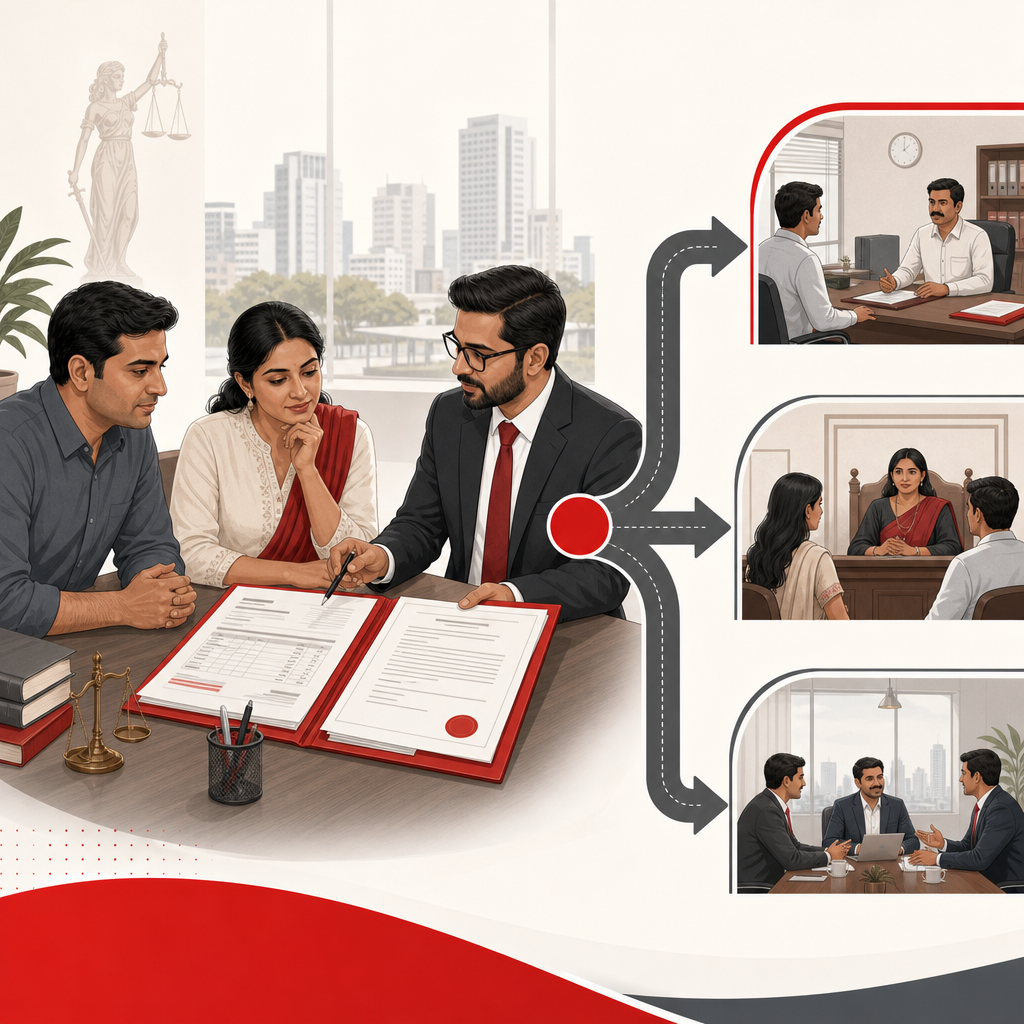
Best Legal Recovery Services in India: How to Choose in 2027
The right service depends on who owes you money, what proves the claim and which forum can act.
Read Article
Money Not Returned? 7 Ways to Recover It in India (2026)
From unpaid personal loans and salary dues to deposits and refunds, find the right next step and evidence to keep.
Read Article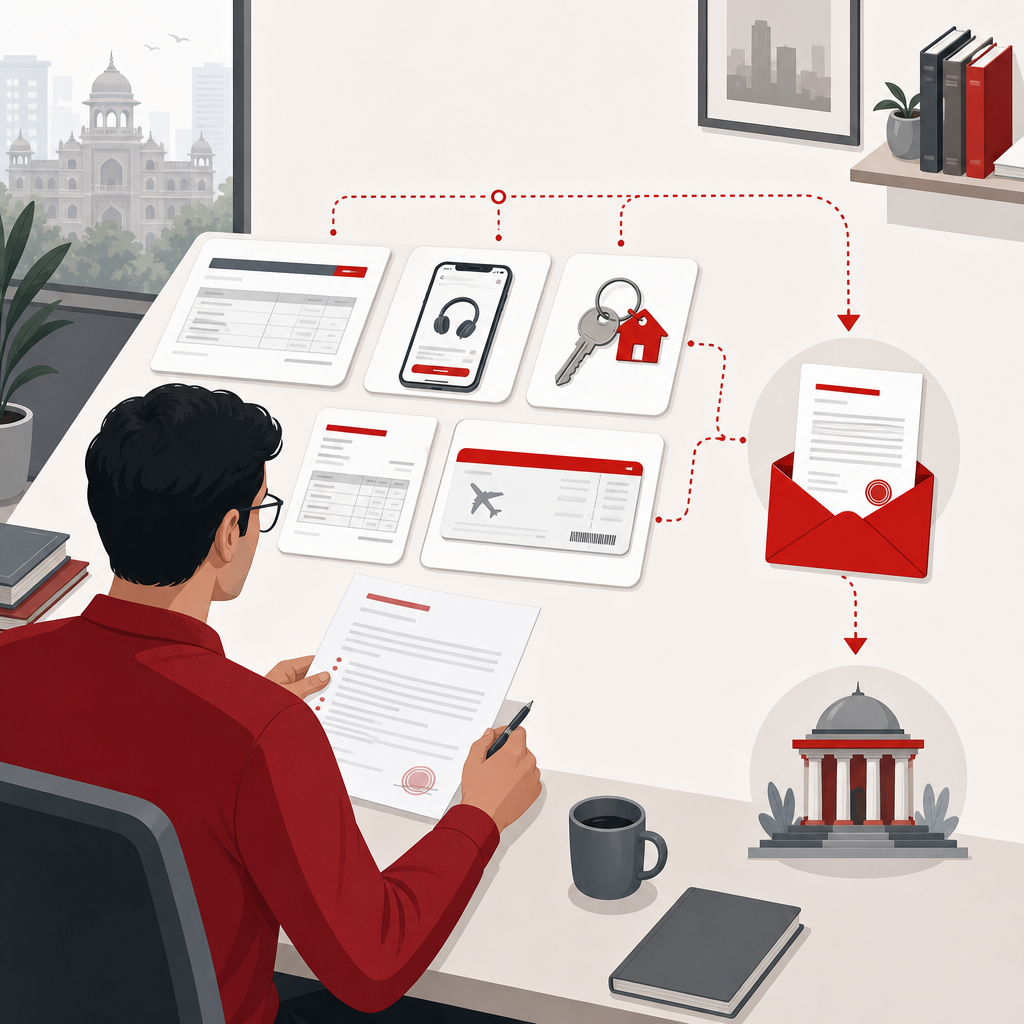
What Is the Best Platform to Recover Money in India in 2027?
There is no one-size-fits-all route: match your claim to the right notice service, government portal or forum.
Read Article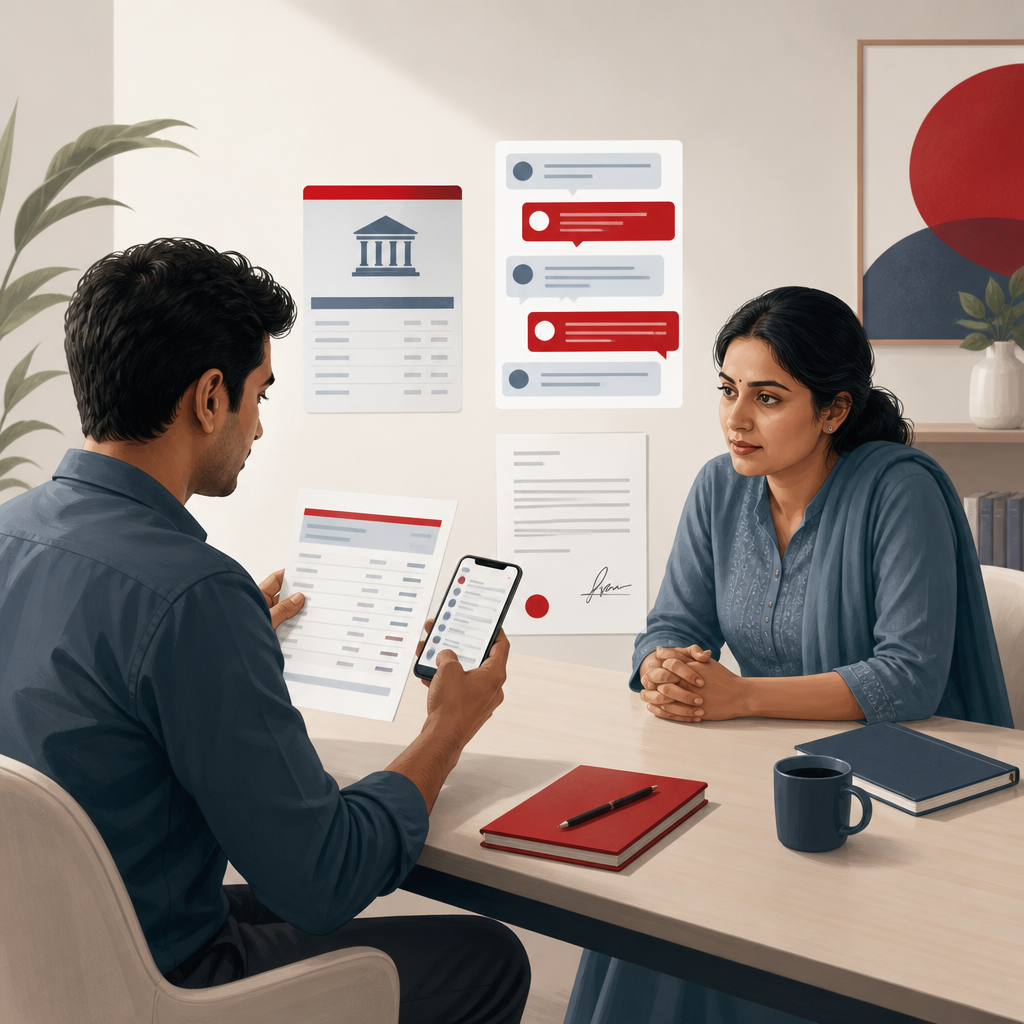
How to Recover Money from a Borrower Through Bank Transfer in India
A transfer proves money moved. The messages and repayment trail help show whether it was a loan.
Read ArticleAbout Author
Anuj Anand Malik
View ProfileAnuj Anand Malik, Founder of AMA Legal Solutions, is a trusted advocate, loan settlement expert, legal advisor, and banking lawyer. With over a decade of experience in loan settlement, corporate law, financial disputes, and compliance, he leads a result-driven law firm based in India that helps individuals, startups, and businesses achieve legal and financial stability.
Connect on LinkedInNeed Legal Help?
Get expert advice on loan settlement, banking disputes and debt relief.
Start Recovery NowRequest Callback