Legal Notice Essentials: A Comprehensive Guide
Master the art of drafting effective legal notices for recovery.

Table of Contents
Table of Contents
Swipe →Detailed Framework for Drafting Legal Notices in India
Drafting a legal notice is a crucial step in the realm of legal recovery and dispute resolution. It serves as a formal communication indicating an intention to undertake legal action for a breach or non-compliance. The importance of a well-drafted notice is paramount, as it not only informs the opposing party of the demands but also sets the foundation for any subsequent legal proceedings. In the context of Indian law, various statutes guide the drafting of legal notices, each with its own procedural nuances and requirements.
Essential Components of a Legal Notice
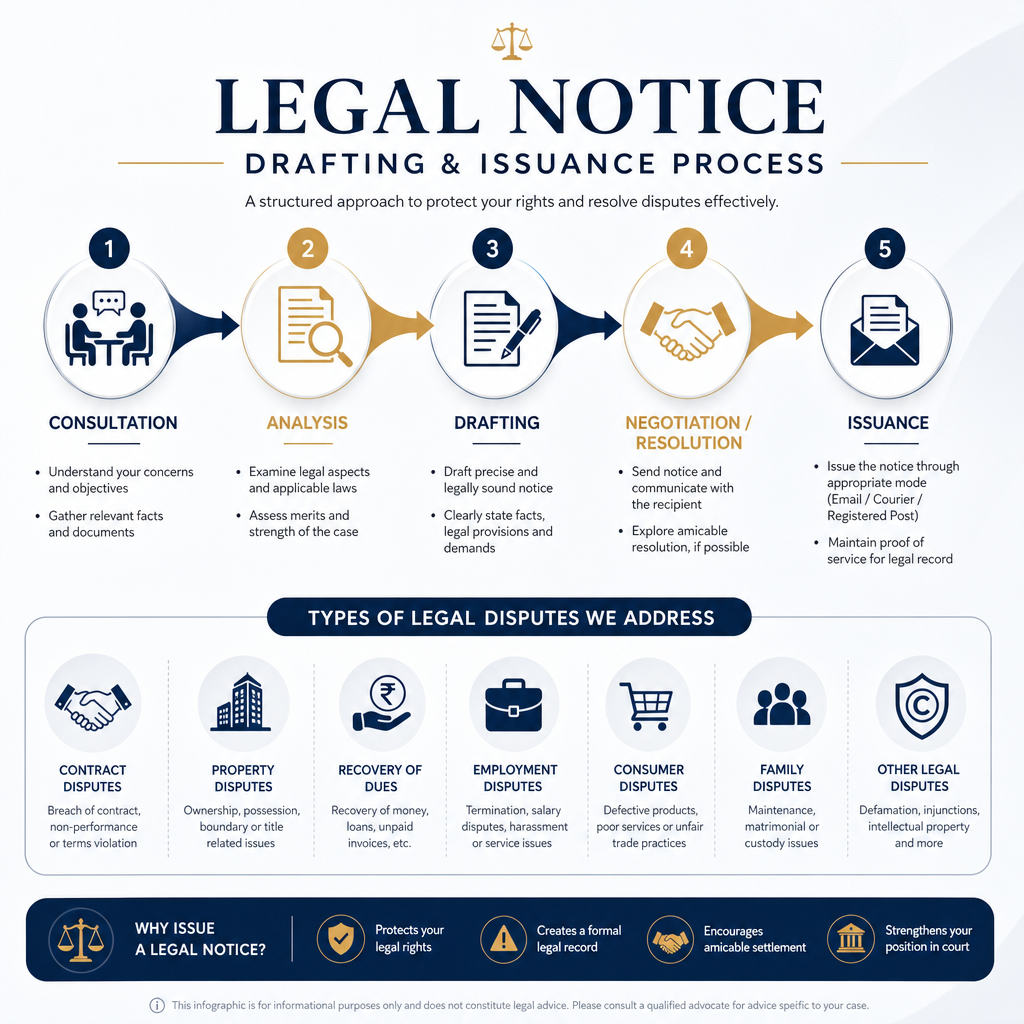
A legal notice must be precise, comprehensive, and structured to ensure clarity and effectiveness. It should include the following elements:
Heading: Clearly specify that the document is a legal notice.
Sender Details: The sender's name, address, and contact information should be accurately mentioned.
Recipient Information: Details of the party to whom the notice is addressed.
Subject Matter: A brief statement of the issue in dispute or the reason for sending the notice.
Factual Background: A detailed account of the facts that led to the dispute, supported by relevant dates and events.
Legal Basis: Cite relevant legal provisions and precedents that support the sender's claim.
Specific Relief Sought: Clearly articulate the demands or actions the sender expects from the recipient.
Consequences of Non-compliance: State the legal actions that will be initiated if the demands are not met within a stipulated time.
Signature: The sender or their legal representative must sign the notice for authenticity.
Statutory Timelines: Importance and Compliance
Adhering to statutory timelines is critical in enforcing a legal notice. Different laws impose specific deadlines for sending and responding to legal notices, which, if ignored, may lead to the dismissal of a case or forfeiture of rights.
Legal Context | Statutory Timeline | Relevant Legislation |
|---|---|---|
Cheque Bounce | 30 days from the date of cheque return | Section 138 of the NI Act |
Consumer Protection | 30 days to reply | Consumer Protection Act 2019 |
Property Dispute | Depends on specific circumstances | Transfer of Property Act |
Employment Dues | 30 days to respond | Indian Contract Act 1872 |
Documenting Evidence: The Foundation of a Strong Case
Evidence plays a vital role in substantiating claims made in a legal notice. The nature of evidence required varies depending on the dispute context. It is essential to collate and organize all supporting documents before drafting a notice.
Dispute Type | Required Documentation | Admissibility |
|---|---|---|
Cheque Bounce | Cheque, bank memo, transaction records | Admissible under the Evidence Act |
Consumer Complaint | Purchase receipts, warranty documents, correspondence | Essential for a Consumer Forum filing |
Rental Dispute | Rental agreement, payment receipts, communication logs | Vital in civil court proceedings |
Employment Claim | Employment contract, salary slips, correspondence | Forms the basis for labor court appeals |
Practical Steps in Drafting a Legal Notice
While drafting a legal notice, it is crucial to follow a systematic approach to ensure its effectiveness and enforceability. Here are the practical steps:
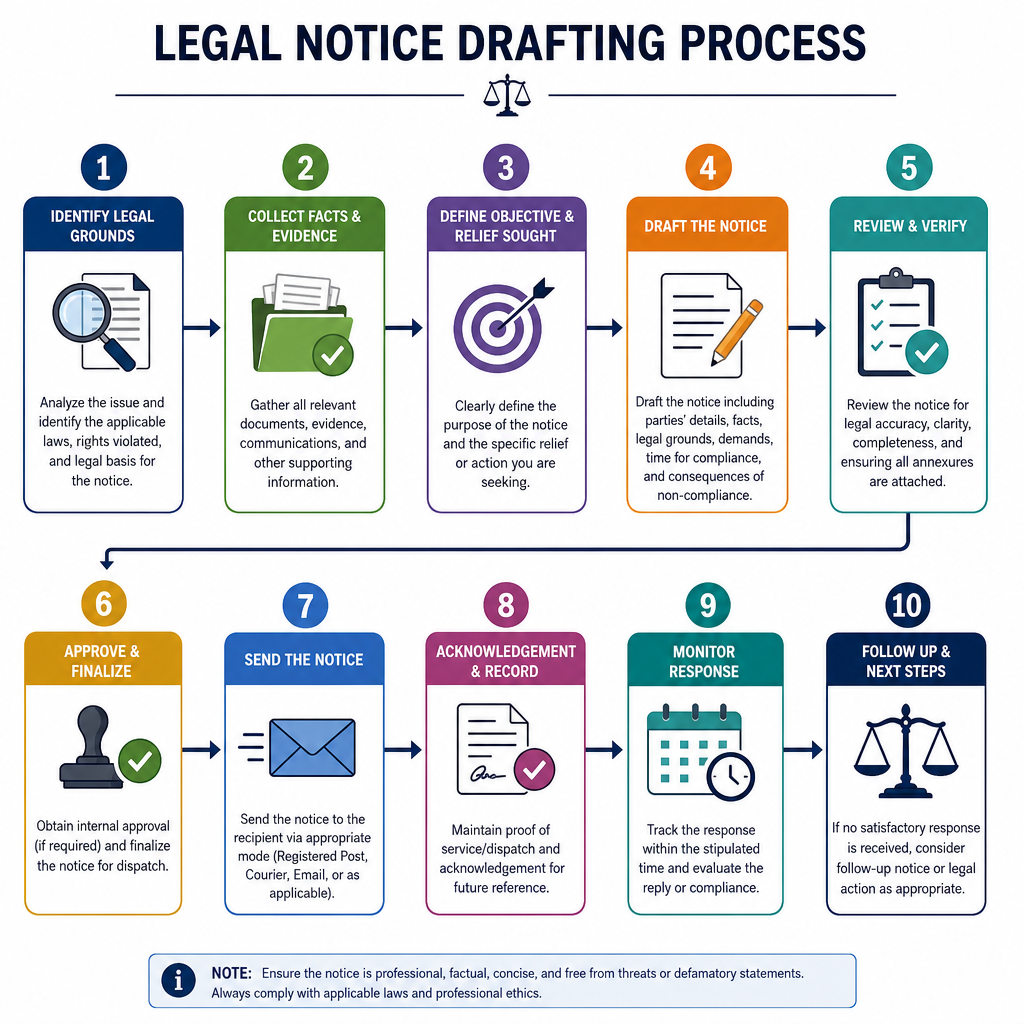
Identify the Legal Grounds: Analyze the facts and identify the legal basis for your claim. This involves understanding the statutes and legal precedents relevant to your situation.
Gather Evidence: Before drafting the notice, gather all relevant documents and evidence to substantiate your claims. This might include contracts, emails, receipts, and any other pertinent material.
Draft the Notice: Begin by clearly stating the purpose of the notice. Follow with a detailed factual background, legal grounds, and the specific relief sought.
Review for Accuracy: Ensure all facts, figures, and legal references are accurate and well-articulated. Avoid any ambiguous language that could weaken your position.
Send the Notice: Dispatch the notice through a reliable method, such as registered post or email. Retain proof of delivery for future reference.
Monitor Response: Track the response period closely. Follow up if there is no reply within the stipulated time frame.
Visual Dispute Resolution & Recovery Framework
Handling Common Legal Notice Scenarios
Different kinds of disputes necessitate specific approaches and considerations when drafting legal notices. Here are some common scenarios:
Cheque Bounce
A legal notice for a bounced cheque must comply with Section 138 of the Negotiable Instruments Act. It should articulate the amount involved, the date of presentment, and the reason for dishonor. The notice should demand payment and specify a 15-day period for compliance.
In such cases, the Section 138 cheque bounce notice timeline is crucial for ensuring legal enforceability.
Consumer Complaints
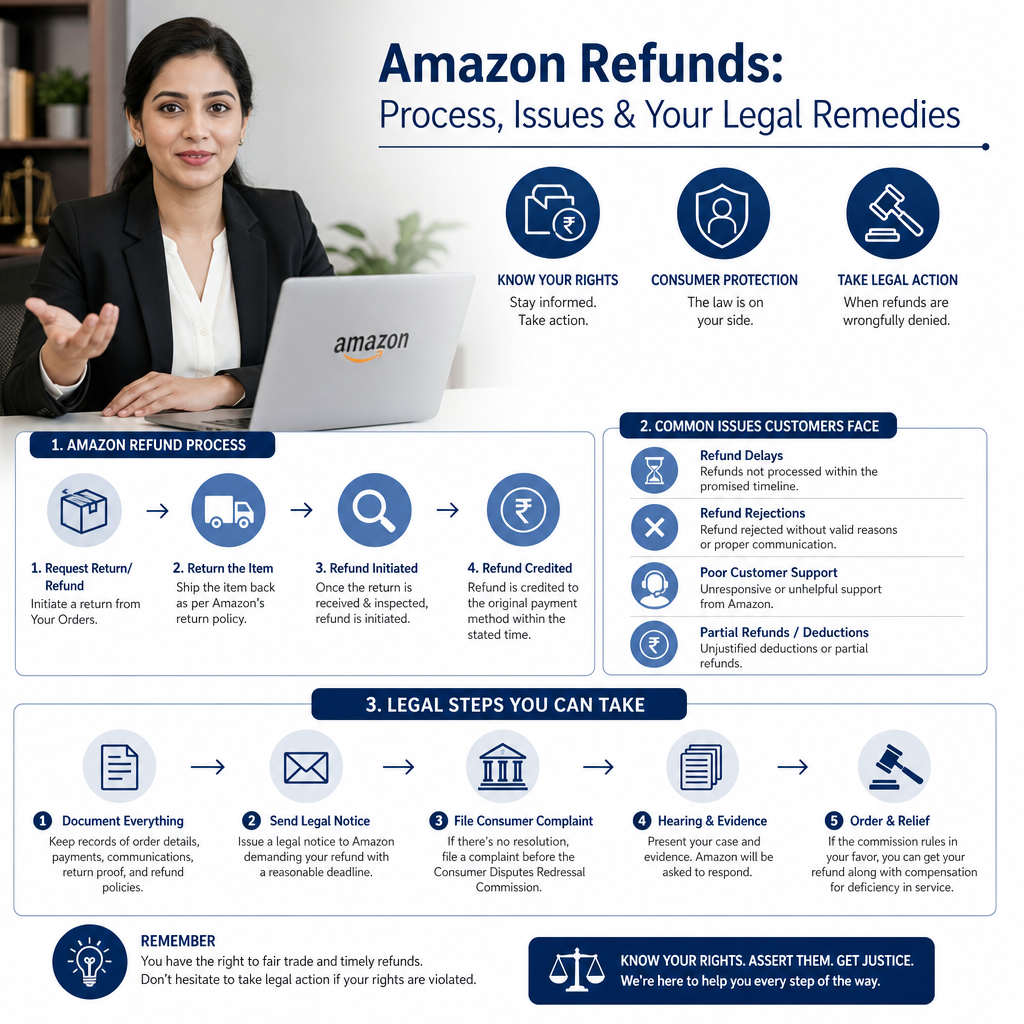
For consumer grievances, the legal notice should cite the Consumer Protection Act, detailing the product or service, the defect or deficiency, and the compensation or rectification sought. Attach all relevant purchase documents and correspondence to reinforce your position.
For more details on the process, consider filing a consumer court complaint online.
Employment Disputes
In cases of unpaid dues or wrongful termination, the legal notice should reflect the terms of the employment contract and the breaches thereof. Cite the Indian Contract Act provisions and include supporting documents such as the employment agreement and any correspondence demonstrating non-compliance.
Explore the steps to recover unpaid salary from an employer for further guidance.
Rental and Property Issues
For rental disputes, the notice should reference the relevant clauses in the rental agreement and the Transfer of Property Act, specifying the landlord's breaches or issues concerning deposit refunds or unreasonable deductions.
More information can be found on the recovery of security deposits and rental recoveries.
Alternative Dispute Resolution Mechanisms
Before escalating to court proceedings, consider alternative dispute resolution (ADR) methods such as mediation, arbitration, or negotiation. ADR can be cost-effective and time-efficient, often leading to amicable settlements.
Understanding when and how to engage in ADR can be pivotal in preserving relationships and achieving satisfactory outcomes without the adversarial nature of court litigation.
What to Do if a Legal Notice is Ignored
If a legal notice is ignored, the next steps involve filing a formal complaint or lawsuit in the appropriate legal forum. It is imperative to have all your documentation in order and be prepared to present your case with clarity and conviction.
For additional strategies, consult the guide on what to do if a legal notice is ignored in India.
Conclusion: The Power of Precision in Legal Notices
Precision, clarity, and compliance with statutory requirements are the cornerstones of effective legal notices. As a pre-litigation tool, a well-crafted notice can often resolve disputes without the need for further legal action, saving time and resources for all parties involved.
For professional assistance in drafting or sending a legal notice, explore how to send a legal notice in India.
Popular Searches & Related Topics

Legal Recovery is India's trusted consumer protection and legal tech platform. We specialize in holding corporations accountable for unfair trade practices, deceptive marketing, and commercial fraud. With over 15,000 customers counselled, our mission is to provide fast, out-of-court resolutions by connecting you with top-tier panel advocates for immediate legal action.
Client Reviews
"The legal recovery service provided was exceptional in clarifying the process and helping draft an effective notice. The guidance was precise and timely."
Amit Khanna
"I was very satisfied with the professional assistance in drafting my legal notice. The team was knowledgeable and efficient, making the process stress-free."
Neha Sharma
"Excellent service! The legal notice was well-structured and led to a swift resolution of my dispute. Highly recommend their expertise."
Ravi Patel
"The clarity and attention to detail in drafting the legal notice were commendable. I appreciated the proactive approach in managing my case."
Priya Nair
"A seamless experience with professional guidance at every step. The legal notice resulted in a favorable outcome without going to court."
Vivek Sinha
Frequently Asked Questions
Related Articles
About Author
Team LegalRecovery
View ProfileTeam LegalRecovery is a dedicated team of legal and financial professionals specializing in loan settlement, banking disputes, debt relief, and corporate compliance. We are committed to helping clients achieve debt freedom and business stability through expert strategic advisory.
Connect on LinkedInNeed Legal Help?
Get expert advice on loan settlement, banking disputes and debt relief.
Start Recovery NowRequest Callback