Understanding Legal Notices for Refunds
Learn how to draft effective legal notices to claim refunds
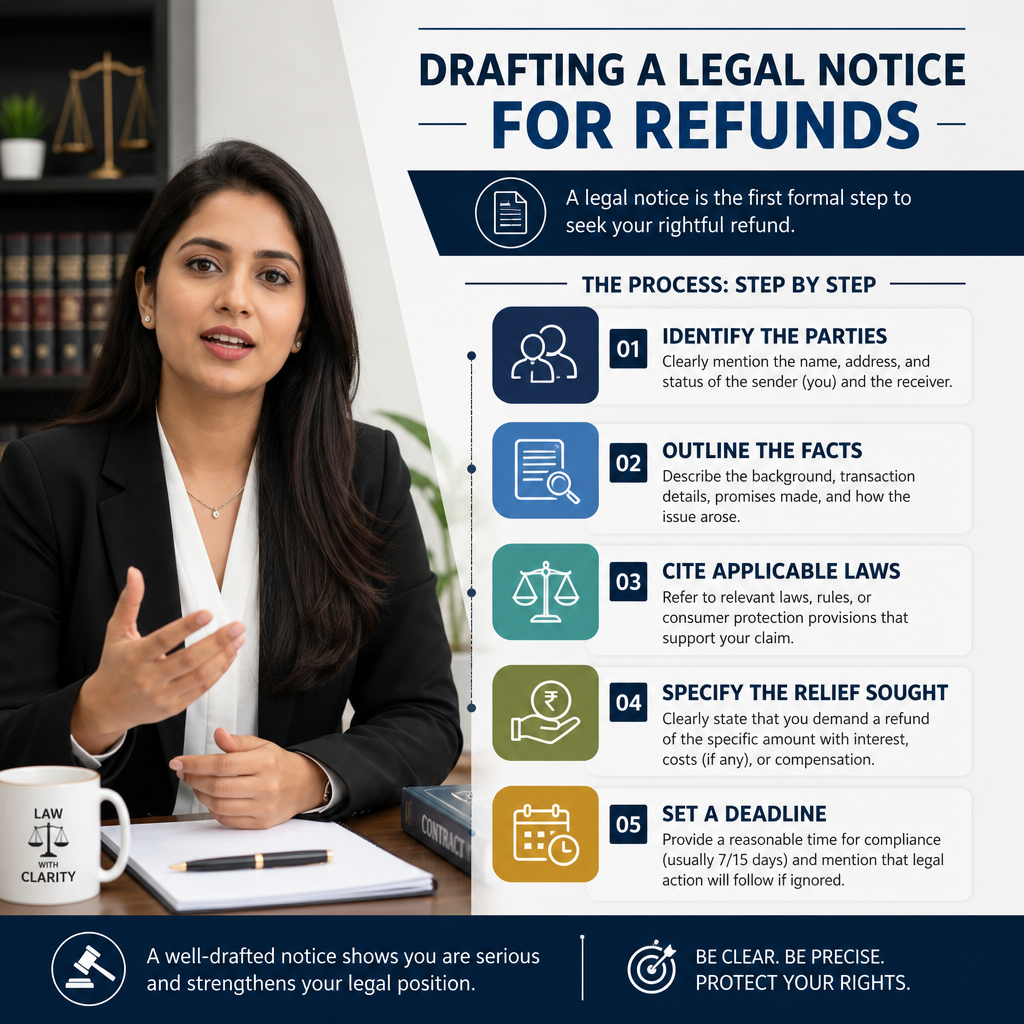
Table of Contents
Table of Contents
Swipe →Introduction to Legal Notices for Refunds
A legal notice for refund is a formal communication issued by an individual or a business entity demanding the repayment of funds owed. It is a crucial step in asserting one's legal rights to recover money without immediately resorting to litigation. In the Indian legal context, issuing a legal notice is often considered a mandatory step before proceeding with a lawsuit, especially in civil matters. This article aims to provide an exhaustive understanding of legal notices for refunds, discussing various scenarios where they can be used, the legal framework governing them, and practical guidance on drafting effective legal notices.
The Importance of Legal Notices in Refund Claims
Legal notices serve as a preliminary step that can potentially resolve disputes without the need for a court case. They are crucial because they notify the other party of the grievance and provide an opportunity for negotiation and settlement. In many cases, recipients of legal notices opt to settle the matter out of court to avoid the costs and complexities of legal proceedings.
For individuals and businesses alike, the act of sending a legal notice indicates seriousness in pursuing a refund. It helps in establishing a formal record of the demand for refund, which can be critical if the matter escalates to court. Additionally, a well-drafted legal notice can sometimes act as a deterrent for the opposing party, compelling them to settle the dispute amicably.
Moreover, in India, the issuance of a legal notice is often a statutory requirement in certain situations, such as when dealing with government entities or in cases related to dishonored cheques as outlined in the Negotiable Instruments Act. Therefore, understanding the nuances of drafting and serving legal notices can be instrumental in successfully claiming a refund.
Legal Framework Governing Refunds in India
Several Indian laws and regulations govern transactions and the recovery of money, including refunds. It's essential to understand these legal frameworks when dealing with refunds, as they provide the statutory backing for claims and determine the procedural requirements. We will explore relevant laws and how they pertain to refunds.
Consumer Protection Act
The Consumer Protection Act, 2019 plays a significant role in refund claims, especially in the context of consumer goods and services. Under this act, consumers are entitled to refunds if products or services are defective, deficient, or if there is unfair trade practice. The act provides for the establishment of Consumer Disputes Redressal Commissions at the district, state, and national levels, which consumers can approach for relief.
Consumers can file complaints online through the e-Daakhil portal, making the process more accessible. The act also provides for mediation as an alternative dispute resolution mechanism, which can be a quicker and less adversarial process than traditional court proceedings. Importantly, the act stipulates that consumer complaints should be resolved within a specified timeframe, ensuring that refund claims are addressed promptly.
Contract Act, 1872
The Indian Contract Act, 1872, is another important piece of legislation that governs refund claims. Contracts form the basis of most commercial transactions, and the act lays down the principles related to the formation, performance, and enforceability of contracts. Refunds often arise when there is a breach of contract, such as non-performance or defective performance.
In cases where a refund is sought due to a breach of contract, the aggrieved party can invoke the provisions of the Contract Act to claim damages or specific performance. The act allows parties to stipulate conditions under which refunds can be claimed, making it crucial for parties entering into contracts to clearly outline refund policies and terms in their agreements.
Negotiable Instruments Act, 1881
The Negotiable Instruments Act, 1881, is particularly relevant for refund claims involving cheques. Under Section 138 of this act, dishonor of a cheque due to insufficient funds or stop payment instructions can lead to criminal liability. The act mandates that before initiating any criminal proceedings, the payee must issue a legal notice to the drawer within 30 days of cheque dishonor, demanding payment.
This notice period provides an opportunity for the drawer to make the payment within 15 days of receiving the notice, failing which the payee can proceed with filing a complaint in court. The act is a powerful tool for enforcing payment and claiming refunds, as it imposes strict penalties for defaulting drawers.
Scenarios Requiring Legal Notices for Refunds
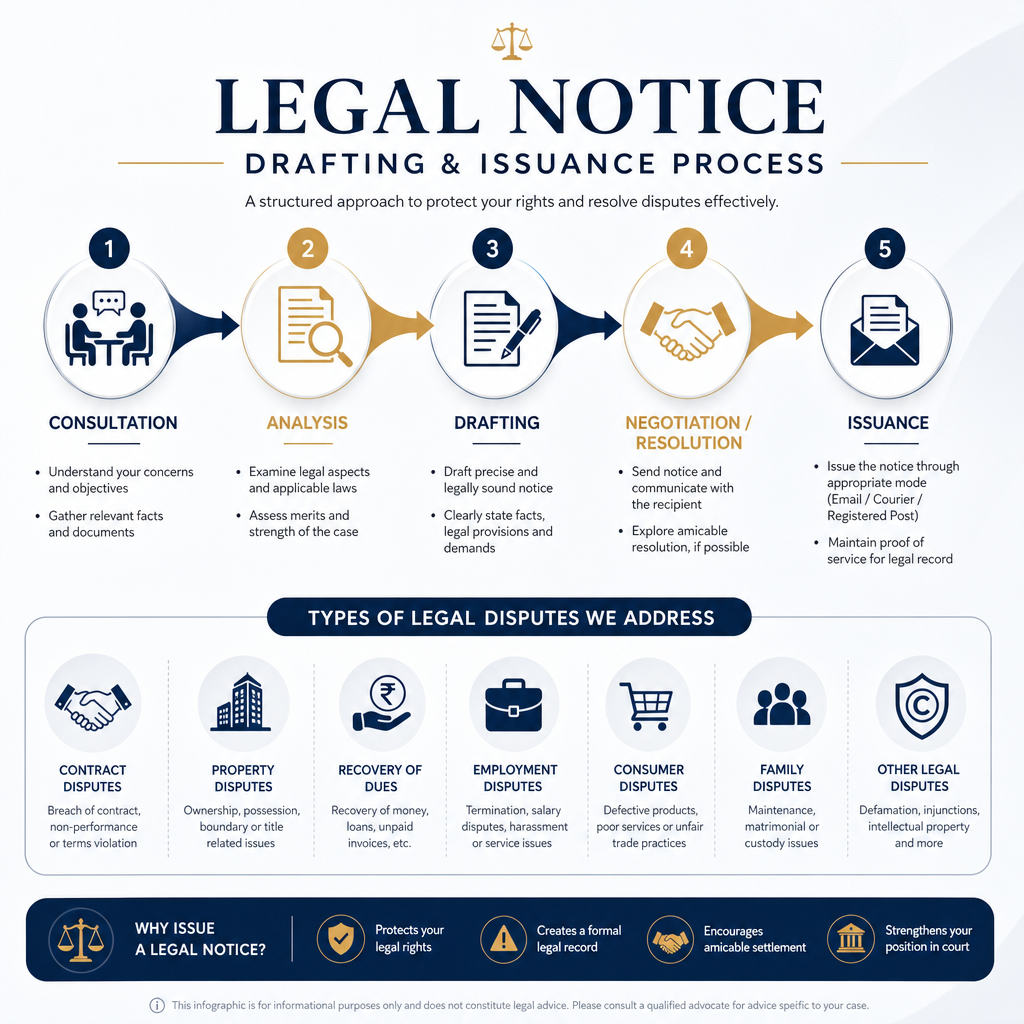
Legal notices for refunds may be issued in various scenarios where an individual or business entity is entitled to a refund. Understanding these scenarios can help in determining when a legal notice is appropriate and what specific legal considerations apply.
Refunds in Consumer Transactions
One of the most common scenarios involves consumer transactions, where a buyer seeks a refund due to defective goods or unsatisfactory services. Examples include online purchases, where the product delivered does not match the description, or service agreements where the service provided is inadequate.
Under the Consumer Protection Act, consumers have the right to request refunds in such cases. Sending a legal notice can compel the seller to fulfill their obligations or negotiate a settlement. The legal notice should highlight the specific grievances and mention relevant provisions of the Consumer Protection Act to strengthen the claim.
Employment and Salary Refunds
Another scenario involves employment contracts, where an employee may seek a refund for salary deductions or unpaid dues. The Payment of Wages Act, 1936, and the Shops and Establishments Act provide legal recourse for employees to claim unpaid wages or wrongful deductions.
In such cases, a legal notice serves to formally demand payment from the employer, citing the specific violations of statutory provisions. The legal notice should include details such as the amount due, the period of default, and any previous communications regarding the issue.
Rental and Security Deposit Refunds
Tenants often seek refunds for security deposits at the end of a lease term. The rental agreement typically outlines the conditions under which deposits are refundable. However, disputes may arise when landlords unjustly withhold deposits or make excessive deductions.
Issuing a legal notice in such situations can prompt landlords to return the deposit or provide a valid justification for deductions. The notice should reference the rental agreement and any applicable state rental laws to substantiate the claim.
Step-by-Step Guide to Drafting Legal Notices for Refunds
Drafting a legal notice requires meticulous attention to detail and a comprehensive understanding of the legal principles involved. Below is a step-by-step guide on how to draft an effective legal notice for refund claims.
Step 1: Identify the Parties Involved
The first step is to clearly identify the parties involved in the dispute. This includes the sender of the notice (the claimant) and the recipient (the party from whom the refund is being sought). Accurate identification is crucial for establishing the legal relationship and ensuring that the notice is served to the correct entity or individual.
Include the full names, addresses, and contact information of both parties. In cases involving businesses, mention the registered office address and the names of any contact persons or representatives who are authorized to deal with the matter.
Step 2: Outline the Facts and Grounds for Refund
The next step is to succinctly outline the facts of the case and present the grounds on which the refund is being claimed. This section should include a chronological account of the relevant events leading to the claim, such as the purchase of goods, payment transactions, or contractual agreements.
It is important to include specific details such as order numbers, invoice references, dates of transactions, and any communications exchanged between the parties. This factual background will provide the basis for the legal arguments made in the notice.
Step 3: Cite Relevant Legal Provisions
Incorporating relevant legal provisions is crucial to lend authority to the notice. Depending on the nature of the dispute, refer to applicable statutes such as the Consumer Protection Act, Indian Contract Act, or Negotiable Instruments Act.
For instance, if the refund pertains to a defective product, cite the specific sections of the Consumer Protection Act that are relevant to the case. Similarly, mention any contractual terms or policies that support the refund claim. The inclusion of legal provisions not only strengthens the notice but also informs the recipient about the legal context of the claim.
Step 4: Specify the Relief Sought
Clearly specify the relief being sought in the notice. This typically includes the amount of refund requested, along with any interest or additional compensation if applicable. Be precise in stating the exact amount and the basis for its calculation.
Additionally, outline any alternative remedies that the claimant is open to considering, such as replacement of goods or renegotiation of contract terms. This demonstrates a willingness to resolve the matter amicably and can facilitate settlement discussions.
Step 5: Set a Deadline for Response
Include a specific deadline by which the recipient must respond to the notice. This deadline is crucial for creating a sense of urgency and prompting the recipient to take the notice seriously. In most cases, a period of 15 to 30 days is considered reasonable, depending on the complexity of the matter.
Clearly state the consequences of non-compliance or failure to respond within the stipulated timeframe. This may include the initiation of legal proceedings or escalation of the matter to the appropriate regulatory authorities.
Statutory Recovery Metrics & Resolution Benchmark
Disputes resolved via formal statutory legal demand notices.
Average statutory compliance response timeline.
Mandatory refund of statutory levies under Indian Acts.
Interest compensation claimable under MSME & NI Acts.
Case Studies: Legal Notice for Refunds in Action
To illustrate the practical application of legal notices for refunds, we will examine some case studies that highlight how legal notices have been effectively used to secure refunds in various scenarios.
Case Study 1: Online Purchase from an E-commerce Platform
In this case, a consumer purchased an electronic gadget from a popular e-commerce platform. Upon delivery, the consumer discovered that the product was defective and did not meet the specifications advertised. Despite repeated attempts to contact customer support, the issue was not resolved, prompting the consumer to issue a legal notice.
The legal notice highlighted the defects in the product, referenced the relevant provisions of the Consumer Protection Act, and demanded a refund or replacement within 15 days. The e-commerce platform, recognizing the potential legal implications, promptly issued a refund and offered an apology, successfully resolving the matter without the need for further action.
Case Study 2: Salary Refund Claim against an Employer
A former employee of a corporate firm sought a refund of undue salary deductions made during their tenure. The deductions were not disclosed in the employment contract, and attempts to resolve the issue with the HR department were unsuccessful. The employee engaged legal counsel to draft a formal legal notice.
The notice cited the Payment of Wages Act and the Shops and Establishments Act, detailing the specific violations and the amount owed. Faced with potential legal action, the employer opted to refund the deducted amount and provided an official clarification, thereby settling the dispute amicably.
Case Study 3: Security Deposit Refund in a Rental Agreement
In this scenario, a tenant vacated a rented apartment and requested the return of the security deposit. The landlord, however, withheld the deposit, claiming excessive wear and tear, without providing any valid documentation or justification.
The tenant issued a legal notice, referencing the rental agreement and state-specific tenancy laws. The notice demanded the return of the deposit or a detailed account of deductions within 30 days. The landlord, upon receiving the notice, chose to return the deposit in full, realizing the lack of legal grounds for their claim.
Challenges and Considerations in Issuing Legal Notices for Refunds
While legal notices are a powerful tool for claiming refunds, several challenges and considerations must be kept in mind to ensure their effectiveness.
Precision and Clarity
One of the primary challenges lies in drafting a precise and clear legal notice. Ambiguities or inaccuracies in the notice can weaken the claim and provide the recipient with grounds to contest the demand. It is crucial to ensure that the language used in the notice is unambiguous and the facts are presented accurately.
Consulting with legal professionals can be invaluable in this regard, as they can provide guidance on effective drafting techniques and ensure that the notice meets all legal requirements.
Timeliness of Issuance
Another critical consideration is the timeliness of issuing the notice. Delays in sending a legal notice can undermine the urgency of the claim and may affect the legal rights of the claimant, especially in cases where statutory time limits apply.
Therefore, it is important to act promptly and adhere to any deadlines imposed by law or contractual agreements. Additionally, keeping records of the notice's dispatch, such as registered post receipts or email delivery confirmations, can be crucial for establishing compliance with procedural requirements.
Recipient's Response and Negotiations
The recipient's response to a legal notice can vary, ranging from outright compliance to contestation or counterclaims. It is important to be prepared for negotiations and potential settlement discussions that may follow the issuance of a notice.
In some cases, engaging in mediation or arbitration may be a viable option for resolving the dispute without resorting to litigation. Legal counsel can assist in evaluating the recipient's response and advising on the best course of action to achieve a favorable outcome.
Legal Recovery Services for Refunds
For individuals and businesses seeking assistance in drafting and issuing legal notices for refunds, engaging professional legal recovery services can be a prudent choice. These services offer expertise in navigating the complexities of the legal system and provide tailored solutions for recovering owed amounts.
Legal Recovery, for example, offers a comprehensive range of services related to refunds and consumer complaints, including drafting legal notices, negotiating settlements, and representing clients in court proceedings. Their team of experienced legal professionals is well-versed in the nuances of Indian law and can provide valuable support in securing refunds efficiently.
Moreover, Legal Recovery's approach to handling refund claims is client-centric and focused on achieving timely resolutions. By leveraging their expertise, clients can navigate the legal process with confidence and increase their chances of a successful outcome.
Conclusion
In conclusion, issuing a legal notice for a refund is a strategic step in asserting one's legal rights and resolving financial disputes. Understanding the legal framework, scenarios, and drafting techniques associated with legal notices is essential for effectively claiming refunds. By following a systematic approach and seeking professional assistance when needed, individuals and businesses can enhance their prospects of recovering owed amounts in a timely and efficient manner.
For comprehensive guidance and support in handling refund claims, consider exploring the services offered by Legal Recovery, where experienced professionals are ready to assist you every step of the way.
Popular Searches & Related Topics

Legal Recovery is India's trusted consumer protection and legal tech platform. We specialize in holding corporations accountable for unfair trade practices, deceptive marketing, and commercial fraud. With over 15,000 customers counselled, our mission is to provide fast, out-of-court resolutions by connecting you with top-tier panel advocates for immediate legal action.
Client Reviews
"Legal Recovery's service was exceptional. They handled my refund claim efficiently, and I received my money back within weeks. Highly recommend their professional approach!"
Rohit Sharma
"I was struggling to get a refund from an online purchase. Thanks to Legal Recovery, the legal notice they drafted was precise, and the issue was resolved swiftly."
Priya Mehta
"The legal team at Legal Recovery is highly knowledgeable. Their guidance and expertise in dealing with my salary refund dispute were invaluable, leading to a successful outcome."
Anjali Verma
"Legal Recovery provided outstanding service in helping me get back my tenant security deposit. Their attention to detail and understanding of tenancy laws made the process seamless."
Vikram Singh
"I am grateful to Legal Recovery for their assistance in my refund claim against a service provider. The legal notice they drafted was compelling, and the matter was resolved favorably."
Sanya Gupta
Frequently Asked Questions
Related Articles

About Author
Team LegalRecovery
View ProfileTeam LegalRecovery is a dedicated team of legal and financial professionals specializing in loan settlement, banking disputes, debt relief, and corporate compliance. We are committed to helping clients achieve debt freedom and business stability through expert strategic advisory.
Connect on LinkedInNeed Legal Help?
Get expert advice on loan settlement, banking disputes and debt relief.
Start Recovery NowRequest Callback