Sending a Legal Notice: Does It Help in Recovery?
Explore the effectiveness of legal notices for money recovery.
Table of Contents
Table of Contents
Swipe →In the realm of financial disputes, the recovery of money often stands as a challenging yet crucial process. Among the myriad of legal tools available, sending a legal notice emerges as a strategic first step. But does it truly assist in the recovery of money? This article delves into the procedural and practical aspects of sending a legal notice in India, examining its effectiveness and intricacies involved in various money recovery scenarios.
Evidentiary Essentials and Demand Notice Protocols for Recovering Personal Loans in India
When it comes to recovering personal loans in India, legal notices serve as a cornerstone of evidence and procedural protocol. A legal notice, essentially a formal communication between parties, signifies the creditor's intention to initiate legal proceedings if the debt remains unpaid. This instrument is governed by provisions under the Indian Contract Act, 1872, which provides the statutory framework for agreements and obligations.
The effectiveness of a legal notice in recovering money hinges on the precision and comprehensiveness of its content. It must encapsulate all essential details, such as the creditor's claims, the debtor's obligations, and a clear demand for the repayment of the loan. Beyond serving as a precursor to litigation, a well-drafted legal notice often acts as a catalyst for amicable settlement. This is especially true in cases where the debtor acknowledges the debt and wishes to avoid the costs and stress of court proceedings.
One of the key advantages of sending a legal notice is that it provides a documented record of the creditor's demand and the debtor's response (or lack thereof). This documentation can be pivotal in court, should the matter escalate to litigation. Moreover, the notice period allows the debtor to settle the dues, thereby potentially resolving the dispute without judicial intervention. To explore comprehensive drafting strategies, peruse our guide on how to draft a legal notice for money recovery.
In situations involving loans to friends or relatives, the dynamics of personal relationships can complicate recovery efforts. Here, legal notices provide a formal basis to address the issue, moving the conversation from personal to professional. This legal step can help mitigate emotional factors, focusing solely on the financial transaction. For more insights, our legal notice to recover loan amount given to a friend guide offers detailed instructions.
Legal Notice Drafting: Comprehensive Guidelines and Requirements
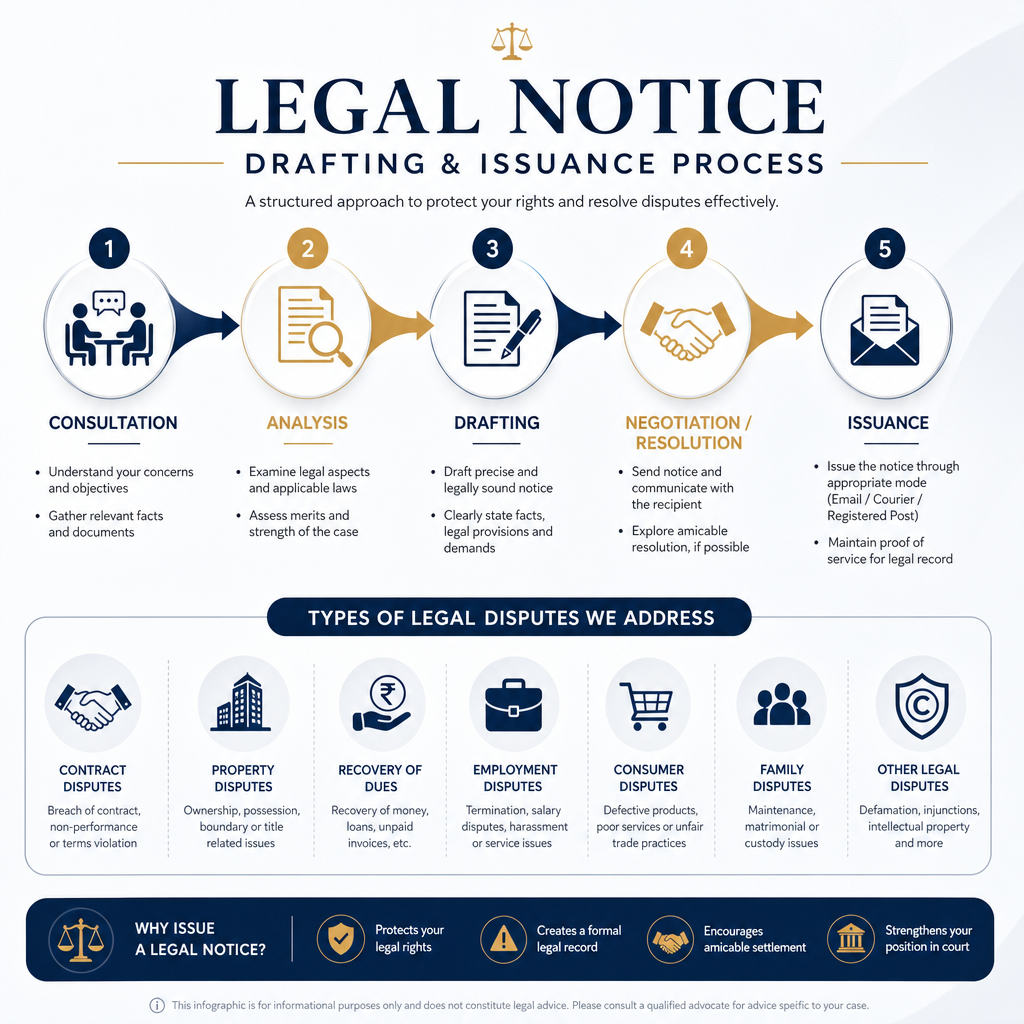
The process of drafting a legal notice is as crucial as the decision to send one. A legally sound notice must include the following elements: the name and address of the creditor and debtor, details of the transaction, the exact amount owed, a clear demand for payment, and the consequences of non-compliance. Each section must be articulated with precision to ensure that the notice holds up under scrutiny in any subsequent legal proceedings.
Professional legal assistance is often recommended during the drafting phase to ensure that the notice adheres to all legal requirements and accurately reflects the creditor's claims. While templates are available, these should be used as a foundation rather than a final solution. The specific details of each case must be incorporated, requiring a tailored approach. For those interested in professional guidance, our online legal notice services offer an efficient and reliable option.
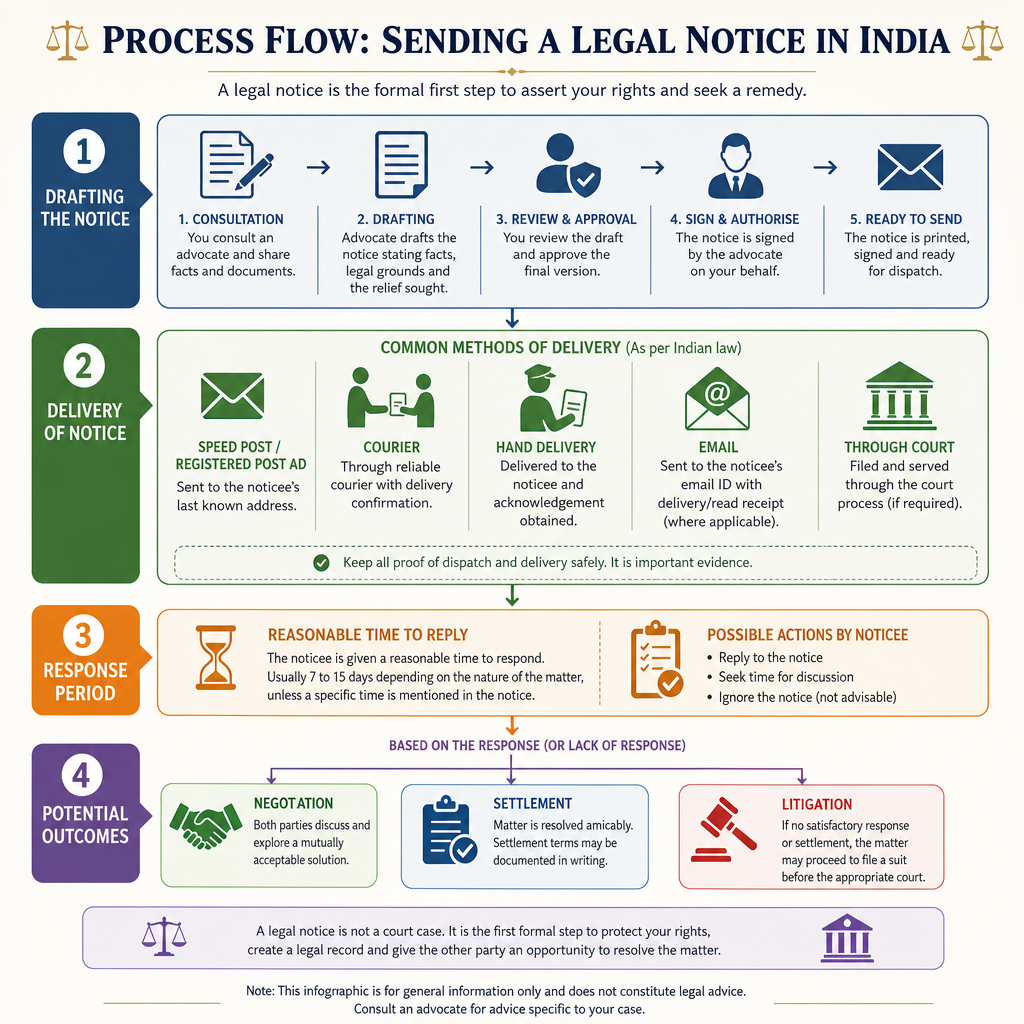
Once the notice is drafted, it must be delivered in a legally recognized manner. This includes registered post, courier, or even electronic means such as email, provided that the latter can be verified and acknowledged by the recipient. The method of delivery should be chosen based on the recipient's location and availability, ensuring that the notice is not only sent but also received and read.
The notice should stipulate a reasonable timeframe for the debtor to respond and settle the debt. This period typically ranges from 15 to 30 days, depending on the nature of the debt and the jurisdiction. This notice period plays a critical role, as it provides the debtor with an opportunity to rectify the situation, thereby potentially avoiding court proceedings.
In cases where the debtor fails to respond or refuses to pay, the legal notice serves as the foundation for filing a civil suit. It is essential to retain all proofs of delivery and communication during this process, as these will be pivotal in court. For those seeking detailed steps on legal proceedings, our article on filing a civil suit for recovery of money in India offers a comprehensive overview.
Statutory Timelines & Limitation Matrix for Legal Notices
Understanding the statutory timelines and limitations for sending legal notices is critical to ensuring their enforceability. The Limitation Act, 1963, governs the timeframes within which a creditor must initiate legal actions, including the sending of legal notices. This Act prescribes a general period of three years for money recovery claims, commencing from the date when the right to sue arises.
Adherence to these timelines is non-negotiable, as failure to act within the prescribed period can result in the claim being barred by limitation. This underscores the importance of timely action when a debt remains unpaid. For more specific timelines related to different types of debts and contracts, our time limit to file money recovery case in India resource offers valuable insights.
Additionally, the notice itself must respect any statutory or contractual timelines. In cases of cheque bounce under Section 138 of the Negotiable Instruments Act, 1881, the timeline is particularly stringent. The legal notice must be sent within 30 days of the cheque's dishonor, and the debtor is given 15 days to make the payment. Non-compliance allows the creditor to file a complaint within the subsequent 30 days. For more on this specific scenario, see our cheque bounce notice timeline resource.
Type of Debt | Statutory Limitation Period | Legal Notice Period | Subsequent Filing Window |
|---|---|---|---|
Personal Loan | 3 years | 15-30 days | As soon as the notice period lapses |
Cheque Bounce | 3 years | 30 days from cheque dishonor | 30 days after 15-day notice period |
Contractual Dispute | 3 years | 15-30 days | As soon as the notice period lapses |
This table provides a snapshot of typical statutory limitations and timelines in the context of money recovery. It is imperative for creditors to be acutely aware of these deadlines to safeguard their legal rights. For personalized advice and support, consider consulting with our experts at Legal Recovery's consultation services.
Impact of Legal Notices on Debtors: Psychological and Legal Considerations
From a debtor's perspective, receiving a legal notice can be both a psychological and legal trigger. The formal nature of a legal notice conveys the seriousness of the creditor's intentions, often prompting debtors to take immediate corrective action. This psychological pressure can lead to pre-litigation settlements, which are quicker and less costly than court proceedings.
Legally, a notice is a precursor to potential litigation, signaling that the creditor is prepared to enforce their rights through the judicial system. This formal communication often motivates debtors to consult legal counsel, evaluate their position, and consider settlement options. The fear of litigation costs, damage to credit scores, and reputational harm frequently drives debtors to settle their dues promptly.
For businesses, the receipt of a legal notice regarding unpaid debts can impact credit ratings and business relationships. It may signal to potential partners that the business is facing financial difficulties, leading to a cascade of negative consequences. Therefore, companies are often keen to resolve such disputes swiftly to maintain their reputation and operational stability.
The strategic timing and delivery of a legal notice can also influence its effectiveness. Sending a notice during a economically favorable period for the debtor can increase the likelihood of recovery. This requires a keen understanding of the debtor's financial condition and market trends. For businesses seeking strategic recovery solutions, our article on effective legal debt recovery strategies offers valuable insights.
Visual Dispute Resolution & Recovery Framework
Practical Dispute Resolution Strategies Post Legal Notice
Once a legal notice has been dispatched, there are several strategic pathways available for dispute resolution. Negotiation remains the most cost-effective method, allowing parties to settle differences without court intervention. A well-drafted legal notice often serves as a negotiation tool, opening channels for dialogue between creditor and debtor.
Mediation and arbitration are alternative dispute resolution (ADR) mechanisms that can be pursued following a legal notice. These methods are particularly beneficial in commercial disputes, offering a platform for structured discussion and resolution. ADR is emphasized in statutory laws like the MSMED Act, 2006, which encourages resolution outside traditional court systems for small and medium enterprises.
If the debtor is willing to negotiate, establishing a repayment plan can be mutually beneficial. This approach allows the debtor to manage their financial obligations while providing the creditor with a clear recovery path. Such arrangements are common in scenarios involving large sums or businesses facing temporary cash flow issues.
However, if negotiations fail and the debtor remains unresponsive, filing a civil suit becomes the logical next step. In such cases, the legal notice serves as crucial evidence of the creditor's intent to recover the debt, strengthening the case in court. For more details on preparing for litigation, our guide on civil suits for money recovery offers comprehensive advice.
In summary, sending a legal notice is not just a procedural formality but a strategic maneuver to facilitate money recovery. Its effectiveness lies in its ability to compel action, either through settlement or preparation for legal proceedings. For personalized assistance, visit Legal Recovery's service overview to understand how we can support your recovery efforts.
Case Studies: Real-World Applications of Legal Notices in Money Recovery
Examining real-world applications of legal notices in money recovery provides invaluable insights into their practical effectiveness. Consider the case of a small business owner who provided services to a client but was left unpaid. Despite multiple reminders, the client failed to settle the dues. The business owner decided to send a legal notice, meticulously detailing the financial transaction and demanding payment within 15 days.
The client, upon receiving the notice, acknowledged the debt and responded promptly, opting for a settlement to avoid potential litigation. This case illustrates how a well-crafted legal notice can expedite recovery by prompting debtors to act swiftly, often leading to out-of-court settlements. For more practical examples, explore our recovery notice strategies for business transactions.
In another scenario, a freelance professional faced payment issues from a corporate client. Despite a contractual agreement, the client delayed payments citing cash flow problems. The freelancer sent a legal notice, leveraging the contract terms and the threat of legal action to assert their position. The notice not only reaffirmed the freelancer's seriousness but also highlighted potential contractual breaches by the client.
The result was a negotiated payment plan that satisfied both parties, demonstrating the notice's power in reinforcing contractual obligations and facilitating dialogue. For freelancers facing similar issues, our freelancer payment recovery options provides a detailed pathway for addressing such disputes.
These case studies underscore the importance of a strategic approach when utilizing legal notices. They reveal that while not every notice will lead to an immediate settlement, the structured communication fosters negotiation, mitigates misunderstandings, and establishes a clear record of the creditor's claims. For more case studies and recovery tactics, our blog directory offers a wealth of information.
Common Challenges and Solutions in Sending Legal Notices
Despite their potential benefits, sending legal notices is not without challenges. One common issue is ensuring that the notice reaches the intended recipient. In some cases, debtors may evade receiving notices, complicating the process. To address this, it is critical to use reliable delivery methods and obtain proof of delivery, such as postal acknowledgments or delivery receipts.
Another challenge involves the drafting process, where inaccuracies or omissions can undermine the notice's effectiveness. Legal jargon may confuse laypersons, leading to misunderstandings and disputes over the notice's content. Engaging legal professionals for drafting is advisable to prevent such pitfalls. Our online legal notice services simplify this process, offering expert assistance and digital solutions.
Managing timelines is also vital, as delays can affect the notice's validity and the creditor's legal standing. Familiarity with statutory limitations and deadlines is essential to avoid forfeiting the right to recover. This underscores the need for timely action and proactive management of the recovery process.
Lastly, creditors may face emotional and financial stress during the recovery process, especially in personal loan cases involving friends or relatives. It is important to approach such situations with a balanced perspective, focusing on the financial aspects and utilizing legal notices to formalize the recovery efforts.
For more detailed guidance on overcoming these challenges, our comprehensive legal notice guide offers pragmatic solutions and expert advice to navigate the complexities of money recovery effectively.
Conclusion: The Strategic Role of Legal Notices in Money Recovery
Legal notices play a pivotal role in the landscape of money recovery. They serve as a formal declaration of intent, pushing debtors towards resolution and setting the stage for potential litigation. Their effectiveness lies in their ability to clarify disputes, establish a timeline for payment, and provide documented evidence for court proceedings.
While sending a legal notice does not guarantee immediate recovery, it significantly enhances the creditor's position, often leading to settlements or paving the way for successful litigation. As demonstrated in our examples and analyses, strategic use of legal notices can effectively resolve disputes, preserving relationships and minimizing financial losses.
For individuals and businesses seeking to recover dues efficiently, leveraging legal notices as part of a comprehensive recovery strategy is essential. With the right guidance and timely actions, creditors can navigate the legal landscape and enhance their chances of successful recovery. For more information on how to implement these strategies, explore our resources on sending legal notices for money recovery and connect with our experts today.
Popular Searches & Related Topics

Legal Recovery is India's trusted consumer protection and legal tech platform. We specialize in holding corporations accountable for unfair trade practices, deceptive marketing, and commercial fraud. With over 15,000 customers counselled, our mission is to provide fast, out-of-court resolutions by connecting you with top-tier panel advocates for immediate legal action.
Client Reviews
"The legal notice service was incredibly efficient. The notice was well-drafted and led to a swift resolution. Highly recommended!"
Rajesh Kumar
"Sending a legal notice helped resolve my financial dispute without going to court. The team provided excellent guidance throughout the process."
Anjali Mehta
"Professional and effective! The legal notice prompted the debtor to settle the dues promptly. Saved me a lot of hassle."
Vikram Singh
"Great service! The legal notice was comprehensive and effective in recovering my dues. The process was smooth and hassle-free."
Priya Sharma
"The legal notice service was a game-changer. It opened up negotiations and led to an amicable settlement. Very satisfied!"
Amit Patel
Frequently Asked Questions
Related Articles
About Author
Team LegalRecovery
View ProfileTeam LegalRecovery is a dedicated team of legal and financial professionals specializing in loan settlement, banking disputes, debt relief, and corporate compliance. We are committed to helping clients achieve debt freedom and business stability through expert strategic advisory.
Connect on LinkedInNeed Legal Help?
Get expert advice on loan settlement, banking disputes and debt relief.
Start Recovery NowRequest Callback