Understanding Legal Notice for Recovery of Money
A comprehensive guide to navigating debt recovery through legal notices.

Table of Contents
Table of Contents
Swipe →Legal recovery of money can be a daunting task, especially when the debtor is reluctant to pay. Understanding the intricacies of sending a legal notice for the recovery of money is crucial for both individuals and businesses. This guide explores the various facets of legal notices for money recovery, detailing the steps involved, the legal framework governing such actions, and practical strategies for effective debt recovery.
Evidentiary Essentials and Demand Notice Protocols for Recovering Personal Loans in India
When it comes to personal loans, whether given to friends, relatives, or acquaintances, the lack of formal documentation can often complicate recovery efforts. However, even in the absence of a written contract, certain evidences like text messages, bank transfer records, and witness testimony can substantiate the claim.
It is critical to follow a structured protocol in issuing a demand notice when seeking repayment. The notice should clearly articulate the amount due, the original agreement terms, and a reasonable deadline for repayment. This initial formal communication serves as a pivotal document in case the matter escalates to court proceedings.
To learn more about recovering personal loans, you can refer to the guide on recovering money from a friend.
Documenting the Loan and Initiating Recovery
The first step in loan recovery is gathering all possible documentation relating to the loan. This may include bank statements evidencing the transfer of funds, any informal agreements such as emails or texts, and even witness testimony if the loan was granted in the presence of others. These documents form the backbone of your evidentiary support.
Once you have consolidated your evidence, it's time to draft a notice. This legal notice should be succinct yet comprehensive, outlining the amount owed, the initial loan conditions, and the repayment timeline. Providing this information not only fortifies your position but also signals your intent to pursue legal action if necessary.
For additional guidance, consider reading the detailed article on recovering money without a written agreement.
Section 138 NI Act: Mandatory Statutory Demand Notice Protocol and Magistrate Filing Windows
The Negotiable Instruments Act, particularly Section 138, provides a robust framework for addressing instances of cheque bounce. Under this section, the issuance of a demand notice is a mandatory precursor to legal proceedings. This notice must be issued within 30 days from the date of cheque dishonor, demanding payment within 15 days of receipt.
Failure to comply with the demand opens the door for the complainant to file a case within 30 days of the notice period's expiration. The jurisdiction lies with the Magistrate Court where the drawer's bank is located, ensuring that the process is both systematic and legally binding.
For more in-depth information on this topic, refer to the Section 138 cheque bounce notice timeline.
Drafting the Demand Notice under Section 138
The demand notice under Section 138 must include specific details to be enforceable. It should mention the cheque details, the amount, and the date on which the cheque was dishonored. The notice should also explicitly state the intention to initiate legal proceedings if the payment is not made within the stipulated period.
It's advisable to send the notice via registered post with acknowledgment due, ensuring that there is a verifiable record of delivery. This step is crucial should the matter proceed to court, as it demonstrates due diligence on the part of the issuer.
For a sample and guidance on drafting such a notice, visit legal notice for recovery of money sample.
Contractual Enforcement and MSME Samadhan Legal Remedies for Unpaid Client Invoices
The recovery of unpaid client invoices can be especially challenging for small and medium enterprises. The MSME Act provides a framework for these businesses to resolve payment disputes. Through the MSME Samadhan portal, businesses can lodge complaints against defaulters, leveraging the act's provisions for timely resolution.
The Samadhan mechanism mandates a resolution within 90 days, failing which the complainant can approach the jurisdictional Micro and Small Enterprises Facilitation Council (MSEFC) for arbitration. This platform offers a streamlined, cost-effective method for resolving payment disputes without resorting to lengthy court battles.
For a deeper dive into how the MSME Act can assist freelancers and SMEs, read the article on MSME Act freelancer payment recovery.
Leveraging MSME Provisions for Invoice Recovery
To utilize the MSME provisions effectively, ensure that your business is registered as an MSME. This registration provides access to the Samadhan portal and other dispute resolution mechanisms. Once registered, maintain meticulous records of all transactions, including invoices and communication with clients, to substantiate your claims.
The filing process on the Samadhan portal requires detailed information about the transaction, including the amount owed, the due date, and any previous attempts at resolution. The portal's structured format helps ensure that all necessary details are covered, facilitating a smoother arbitration process.
For more insights, refer to the comparison between MSME Samadhan Portal vs. Legal Notice.
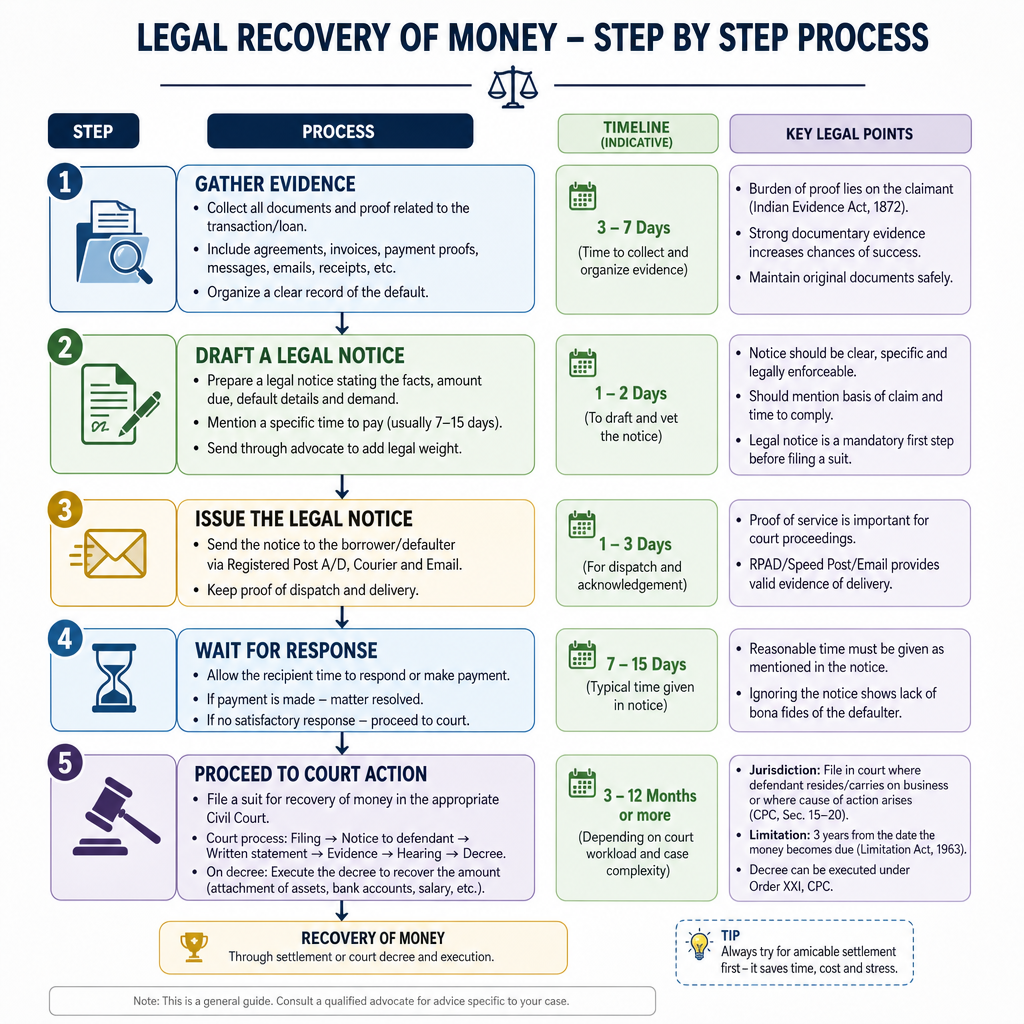
Visual Dispute Resolution & Recovery Framework
RERA Statutory Protections and Legal Compensation for Delayed Property Possession
The Real Estate (Regulation and Development) Act, 2016 (RERA) serves as a protective legal framework for property buyers facing delays in possession. RERA mandates developers to adhere to declared timelines, with provisions for penalties and compensation in cases of non-compliance.
Buyers can file complaints with the RERA authority, which is empowered to demand refunds, impose penalties, or expedite project completion. This legal recourse offers a degree of reassurance for property buyers, ensuring that their investments are safeguarded against undue delays.
Explore more about handling builder disputes effectively through the article on legal notice to builder for delayed possession.
Navigating the RERA Complaint Process
To file a complaint under RERA, buyers must provide comprehensive documentation, including the buyer-builder agreement, payment receipts, and any correspondence related to possession delays. The complaint should outline the nature of the grievance, the relief sought, and any previous attempts at resolution.
The RERA authority is obligated to address complaints within a defined timeframe, usually 60 days. This ensures timely resolution, preventing prolonged financial distress for property buyers. The authority's decisions are binding, offering a potent mechanism for enforcing compliance.
For detailed guidance, visit property and builder disputes.
Legal Notice Framework: Drafting and Sending Strategies
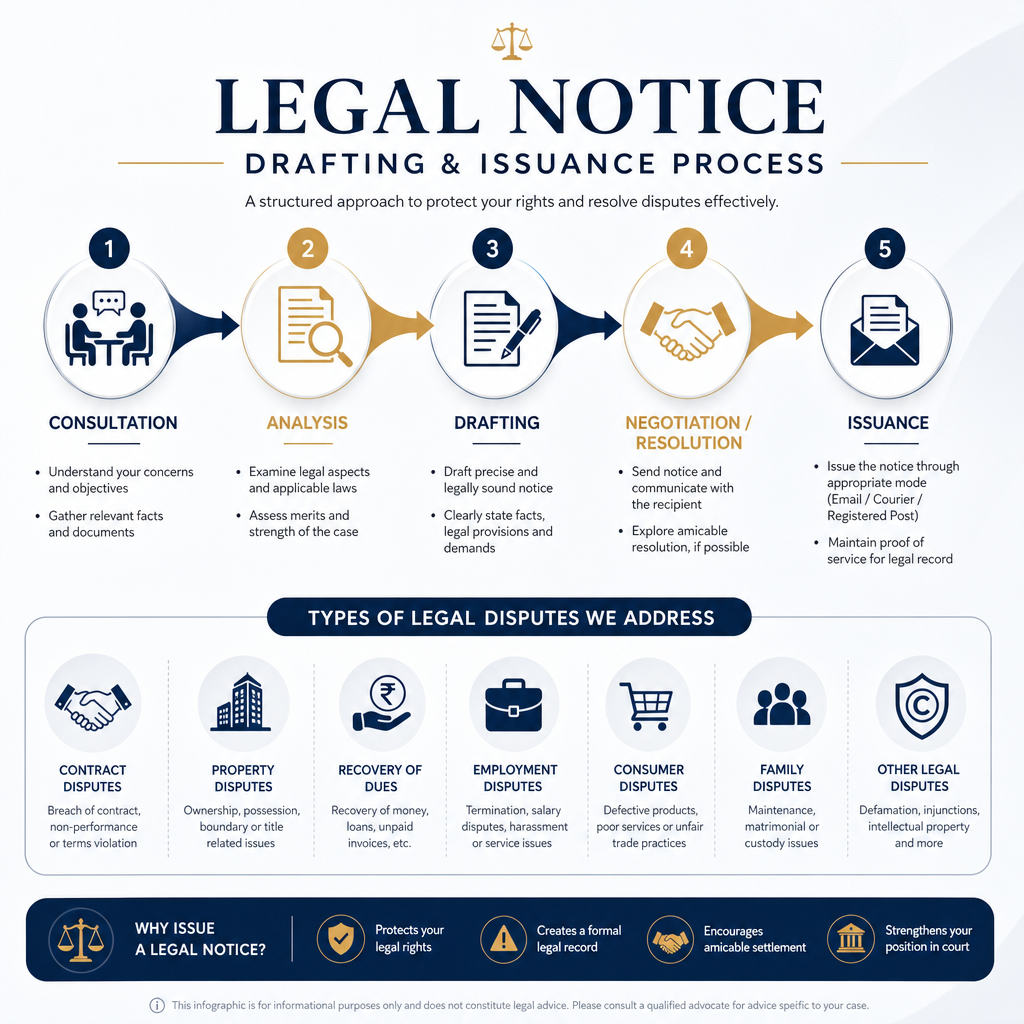
Drafting an effective legal notice is both an art and a science. The notice must be precise, legally sound, and articulate the demand clearly. It serves as a formal communication indicating the potential for litigation, thereby applying pressure on the debtor to settle the amount due.
The notice should include the particulars of the debt, the basis of the claim, the repayment timeline, and the consequences of non-compliance. It is essential to adhere to legal protocols, including proper documentation and delivery methods, to ensure the notice's enforceability.
For comprehensive steps on drafting and sending a legal notice, explore the guide on how to draft a legal notice for money recovery.
Essential Components of a Legal Notice
A well-drafted legal notice should begin with the sender’s information, including name and address, followed by the recipient's details. The subject line should clearly state the purpose of the notice. The body of the notice must articulate the facts leading to the claim, supported by relevant evidence.
The notice should conclude with a demand for payment within a specified period, typically 15 to 30 days, and a statement of intent to pursue legal action if ignored. This formal structure not only emphasizes the seriousness of the claim but also strengthens the sender's position legally.
For more details, read about the online legal notice services and legality.
Practical Negotiation and Dispute Resolution Strategies
Navigating debt recovery often benefits from strategic negotiation and alternative dispute resolution (ADR) techniques. Mediation, arbitration, and conciliation offer cost-effective, less adversarial means of settling disputes, with the potential for preserving business relationships.
Engaging in open communication, demonstrating a willingness to negotiate, and seeking mutual ground can often lead to amicable settlements. These approaches not only expedite resolution but also save on legal costs and time, providing a pragmatic alternative to litigation.
Explore more about ADR methods in the article on recovering money without going to court in India.
Effective Use of ADR in Debt Recovery
When employing ADR, it’s essential to have a clear understanding of your objectives and the flexibility to reach a compromise. Mediation allows both parties to collaboratively resolve their issues with the help of a neutral third party, while arbitration results in a binding decision.
These methods are particularly effective in maintaining confidentiality, an attractive feature for businesses concerned about reputation. The involvement of skilled ADR professionals can further facilitate constructive dialogue, increasing the likelihood of a positive outcome.
To learn about various ADR mechanisms, visit online dispute resolution in India.
Statutory Timelines & Limitation Matrix
Understanding the statutory timelines and limitations is pivotal in legal recovery cases. Each type of claim may be subject to specific time constraints, impacting the ability to pursue legal action. Knowing these timelines ensures that claims are filed within the permissible period, avoiding dismissal due to procedural lapses.
Type of Recovery | Statutory Timeline | Relevant Act |
|---|---|---|
Cheque Bounce | 30 days to issue notice, 15 days for payment, 30 days to file case | Negotiable Instruments Act, Section 138 |
Unpaid Invoices (MSME) | 90 days from due date for payment | MSME Act |
Property Possession Delay | 60 days for RERA resolution | Real Estate (Regulation and Development) Act |
General Contractual Claims | 3 years from the date of default | Indian Contract Act, Limitation Act |
This matrix provides a quick reference to important timelines across various recovery scenarios, ensuring timely legal action.
Adhering to Limitation Periods
Strict adherence to the limitation periods is non-negotiable in legal recovery processes. Any oversight can lead to the dismissal of claims, irrespective of their merit. It is prudent to act promptly and seek legal advice to ensure compliance with statutory requirements.
For complex cases, it may be beneficial to consult legal experts who can navigate these timelines effectively, optimizing the chances of a favorable outcome. Understanding the nuances of these timelines can significantly impact the success of recovery efforts.
For further assistance, consider reaching out via the LegalRecovery contact page.
In conclusion, mastering the process of sending a legal notice for the recovery of money involves understanding the legal frameworks, adhering to statutory timelines, and employing effective negotiation strategies. By leveraging the proper legal channels and resources, creditors can enhance their chances of successful debt recovery. For comprehensive support, explore the range of legal recovery services available.
Popular Searches & Related Topics

Legal Recovery is India's trusted consumer protection and legal tech platform. We specialize in holding corporations accountable for unfair trade practices, deceptive marketing, and commercial fraud. With over 15,000 customers counselled, our mission is to provide fast, out-of-court resolutions by connecting you with top-tier panel advocates for immediate legal action.
Client Reviews
"The recovery process was seamless and efficient. The team guided me through every step with professionalism."
Ankit Sharma
"I was impressed by the comprehensive strategies and effective communication. I recovered my funds without any hassle."
Pooja Patel
"Exceptional service! The legal notice was drafted perfectly, leading to a quick resolution of my case."
Rajesh Kumar
"The use of legal frameworks was thorough and accurate. I felt confident and supported throughout the process."
Neha Gupta
"Professional and knowledgeable team, they successfully helped me recover my money efficiently."
Vikas Singh
Frequently Asked Questions
Related Articles
About Author
Team LegalRecovery
View ProfileTeam LegalRecovery is a dedicated team of legal and financial professionals specializing in loan settlement, banking disputes, debt relief, and corporate compliance. We are committed to helping clients achieve debt freedom and business stability through expert strategic advisory.
Connect on LinkedInNeed Legal Help?
Get expert advice on loan settlement, banking disputes and debt relief.
Start Recovery NowRequest Callback