Client Refusing to Pay Final Invoice Citing Fake Quality Issues (2026)
client refusing to pay invoice citing quality issues, buyer raising fake dispute after invoice due date, section 42 sale of goods act deemed acceptance, client using software or design without paying final milestone, it agency unpaid milestone recovery legal notice, gst GSTR 2B input tax credit admission of invoice, 180 day itc reversal rule 37 cgst act, msmed act 15 day objection window deemed acceptance, recovering unpaid freelance milestone delivery accepted, order 37 summary suit quality dispute sham defense

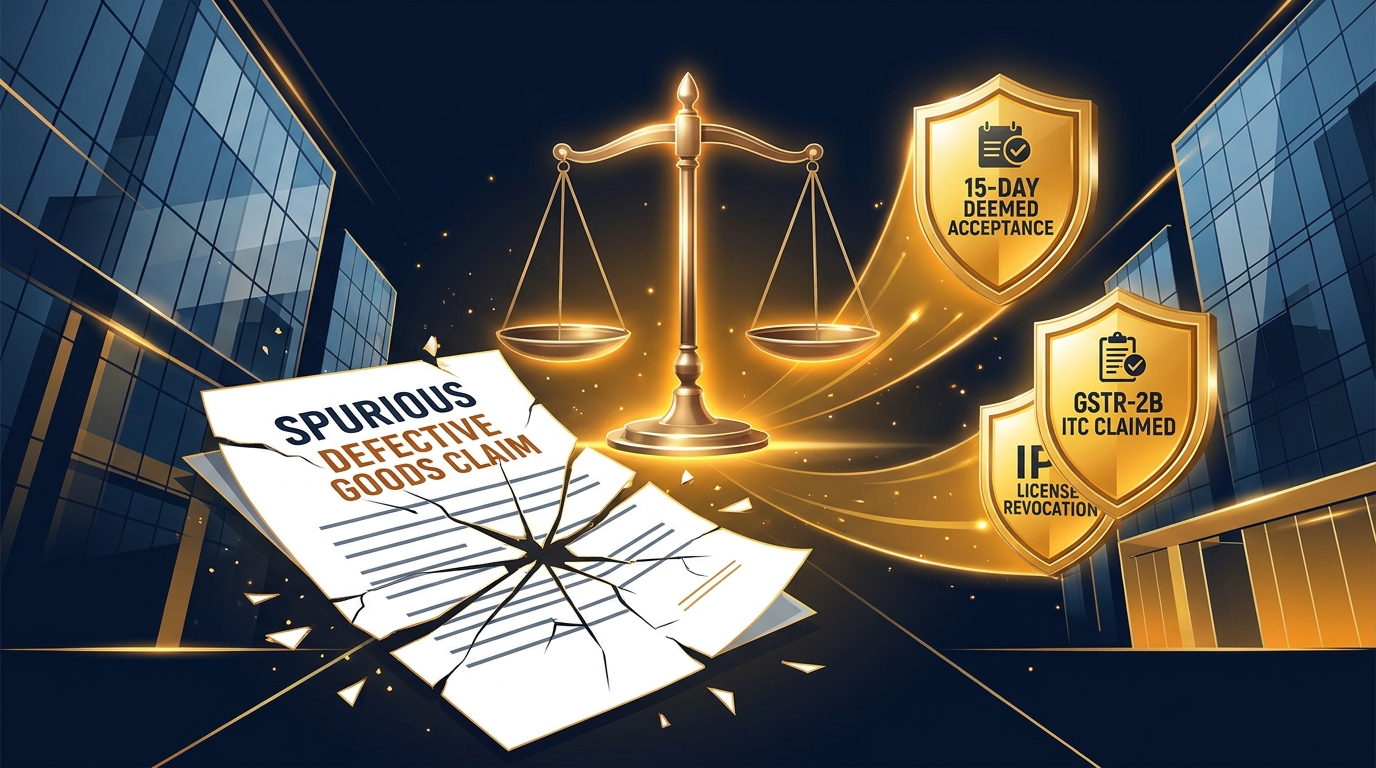
Table of Contents
Table of Contents
Swipe →Few business events hurt more than finishing a job only to face non-payment. You complete every task in the work order. Your client accepts the handover. They run your software on their live servers. They launch the site or resell your goods to buyers. Yet, when the final bill is due, the client goes silent.
When you ask for payment, their story changes fast. The client invents vague flaws out of nowhere. They claim your code has bugs. They say your design missed the brief. Or they claim your materials were poor. They raise these complaints 45 or 60 days after delivery. Crucially, they refuse to pay while still using your work in daily trade.
This tactic is a common delay trick in Indian business. But in 2026, creditors have strong legal tools to beat fake quality claims. When a buyer keeps goods without written protest, legal deemed acceptance sets in. When they claim tax credit on your bill, tax estoppel kills their excuse. This guide shows how to break fake quality claims and recover 100 percent of your funds.
The Fake Quality Dispute Trap: Why Clients Invent Defects
Corporate clients rarely hold back milestone cash due to real tech bugs. In over 80 percent of vendor disputes, quality issues are plain afterthoughts. Defaulting buyers use fake complaints to force suppliers into deep discounts. They hope you will take 50 percent cash out of fear.
Knowing how this corporate delay game works helps you protect your cash early. You must act before your working capital runs dry.
The Silent Acceptance Phase: How Clients Deploy Goods Before Defaulting
Every fake quality dispute starts with total silence during delivery. When an IT firm hands over code or a plant delivers parts, the buyer takes the goods. They sign the delivery challan. They confirm receipt by email or on team chats.
During the inspection window, the client raises zero written complaints. Instead, they put your custom code into live use. They run marketing ads with your designs. Or they sell your goods to end users. Under law, the buyer treats the goods as their own property. This active commercial use shows full operational satisfaction.
The Sudden Afterthought Defect: Delaying Payments Beyond Credit Windows
The trap springs when the final milestone bill falls due. The buyer has extracted full value from your work. Now they want to avoid the remaining 20, 30, or 40 percent balance. Suddenly, their managers invent imaginary defects.
Their emails turn hostile. They send vague lists of alleged flaws. But they produce no audit logs or test sheets. They threaten legal claims to bully you into submission. If a client is stonewalling your team, our specialized B2B vendor payment recovery advocates stop debtor manipulation at once. Understanding the law puts you in total control.
Section 42 Sale of Goods Act: How Deemed Acceptance Works
The primary legal shield against fake complaints is Section 42 of the Sale of Goods Act, 1930. Many buyers believe they can raise defects whenever they want. Indian law rejects this idea completely.
Section 42 sets up a clear rule of deemed acceptance. Once specific facts take place, the buyer cannot legally reject the goods.
The Reasonable Time Rule and the Section 41 Inspection Window
Under Section 41 of the Sale of Goods Act, a buyer has the right to inspect goods on delivery. The law gives them a fair chance to test deliverables against the contract. But this right of inspection does not last forever.
Section 42 states that a buyer is deemed to have accepted goods in three clear situations:
- Direct Notice: When the buyer tells the seller that they accept the goods.
- Acts of Ownership: When the buyer does any act with the goods inconsistent with the seller ownership.
- Lapse of Time: When the buyer keeps the goods beyond a reasonable time without saying they reject them.
If a buyer finds real defects, they must reject the goods within a reasonable inspection period. If they stay silent and keep the goods, Section 42 cancels their right of rejection by law.
Inconsistent Acts of Ownership: Deploying Code and Reselling Goods
The second rule under Section 42 is lethal for defaulting clients. When a buyer does any act inconsistent with the seller ownership, deemed acceptance is complete. In software, putting code on live public servers is an act of ownership.
Using creative artwork in public ads or selling parts to third parties is also an act of ownership. A client cannot claim software is broken while making money from that exact platform. Commercial use bars any later claim of non-acceptance. Creditors must assert this right within the statutory time limit to file a money recovery case in India.
Delhi High Court Precedents on Defeating Afterthought Objections
Indian High Courts consistently dismiss corporate buyers who invent late quality defenses. In KLG Systel Ltd. v. Fujitsu ICIM Ltd., the Delhi High Court laid down vital commercial principles. The court ruled that once goods or software are accepted under Section 42, the buyer cannot withhold money for alleged defects.
In Unison Hotels Pvt. Ltd. v. KNM Chemicals Pvt. Ltd., the court held that long silence followed by sudden quality disputes is fatal to a buyer case. Courts view late, unverified defects as sham defenses created only to delay payment. When backed by sound records, judges refuse leave to defend against such baseless claims.
The MSMED Act 15-Day Rule: Statutory Deemed Day of Acceptance in 2026
If your firm has a registration under the MSMED Act, 2006, the law gives you even greater protection. The Sale of Goods Act refers to a reasonable time. But the MSMED Act sets a strict, exact statutory clock.
The MSMED Act removes guesswork by defining the exact day when legal acceptance becomes final.
Section 2(b) Explanation: Strict 15-Day Written Objection Ceiling
Section 2(b) of the MSMED Act creates the concept of the Day of Deemed Acceptance. The statutory Explanation under Section 2(b) provides a strict two-step rule:
- Delivery Date: The supplier delivers goods or finishes digital service milestones.
- The 15-Day Objection Window: The buyer has exactly 15 days from delivery to make a written objection regarding any defect.
If the buyer fails to submit a written objection within 15 calendar days, deemed acceptance occurs by law. The date of acceptance locks in as the actual delivery date. Any casual email or phone complaint on day 16 or later has no legal weight before the MSEFC council.
Section 16 Penal Interest: Compounding at 3x RBI Bank Rate Monthly
Once deemed acceptance locks in under Section 2(b), the buyer duty to pay becomes absolute. Under Section 15 of the MSMED Act, the buyer must pay within the agreed term, which cannot exceed 45 days. If the buyer defaults past 45 days, Section 16 penal interest starts at once.
Section 16 imposes monthly compound interest at three times the RBI Bank Rate from the due date. With the RBI Bank Rate at 6.75 percent, the penal rate stands at 20.25 percent per year. Under Section 23, the buyer cannot deduct this penal interest as a business cost in income tax returns. To use this legal leverage, check our guide on MSME Samadhaan portal delayed payment recovery steps.
The Section 19 Pre-Deposit Hammer: Forcing 75 Percent Cash Escrow
The strongest weapon under the MSMED Act is Section 19. Defaulting buyers often try to drag out cases by appealing awards in civil court. Section 19 stops this tactic cold.
Under Section 19, no court can hear an appeal against an MSEFC award unless the buyer first deposits 75 percent of the sum in cash. The Supreme Court of India confirmed in Goodyear India Ltd. v. Norton Inks and Tirupati Steels that this 75 percent cash deposit is compulsory. Judges cannot waive or lower this amount. When buyers see that an appeal burns instant cash, they drop fake claims and settle.
The GST GSTR-2B Estoppel Trap: Using Section 16(2) to Disprove Defects
Beyond contract law, the Indian Goods and Services Tax (GST) system offers a lethal proof trap against defaulting clients. Corporate finance teams work apart from project managers, creating huge legal contradictions.
While client project managers invent fake quality defects over email, their finance desk quietly claims tax credits on your bills.
Claiming Input Tax Credit Constitutes Statutory Admission of Delivery
Under Section 16(2) of the CGST Act, 2017, a buyer can claim Input Tax Credit (ITC) only if four legal conditions are met. Under Section 16(2)(b), the buyer must have received the goods or services satisfactorily.
When your client files their monthly GSTR-3B tax return and claims ITC on your invoice, they make an official declaration under oath to the Government of India. They state that the goods were fully received and approved. A buyer cannot tell tax officers that goods were fine while telling a court that the goods were defective. This tax filing creates an ironclad legal estoppel against afterthought defect claims.
The 180-Day Rule 37 Reversal Threat: 18 Percent Penal GST Interest
The second proviso to Section 16(2) of the CGST Act sets up another potent collection tool known as the 180-day rule. The law directs that the buyer must pay the vendor the full invoice amount with tax within 180 days of the invoice date.
Under Rule 37 of the CGST Rules, if the buyer fails to pay within 180 days, harsh penalties kick in:
- Mandatory Credit Reversal: The buyer must reverse the full ITC claimed by adding it back to their tax liability.
- Penal Interest at 18 Percent: The buyer must pay 18 percent annual interest under Section 50 from the date they took the credit until repayment.
- Tax Department Scrutiny: Unpaid supplier invoices past 180 days trigger automated GST audit notices and compliance flags.
Pointing out this tax risk in a formal advocate notice creates instant alarm within the buyer board and finance office.
Extracting GSTR-2B Proof to Neutralize Client Dispute Claims
To use this proof hammer, suppliers must keep careful tax records. When you file your sales bill in GSTR-1, the entry appears in the buyer GSTR-2B report. Check the GST portal to verify that the buyer matched your invoice.
When drafting your legal demand notice, attach the GSTR-2B matching report showing the buyer GSTIN, bill number, and tax sum. Confront the client with proof of their tax claim. Ask them to explain how they took government tax credit on allegedly bad goods. This paper trail shatters any defense of non-delivery before judges.
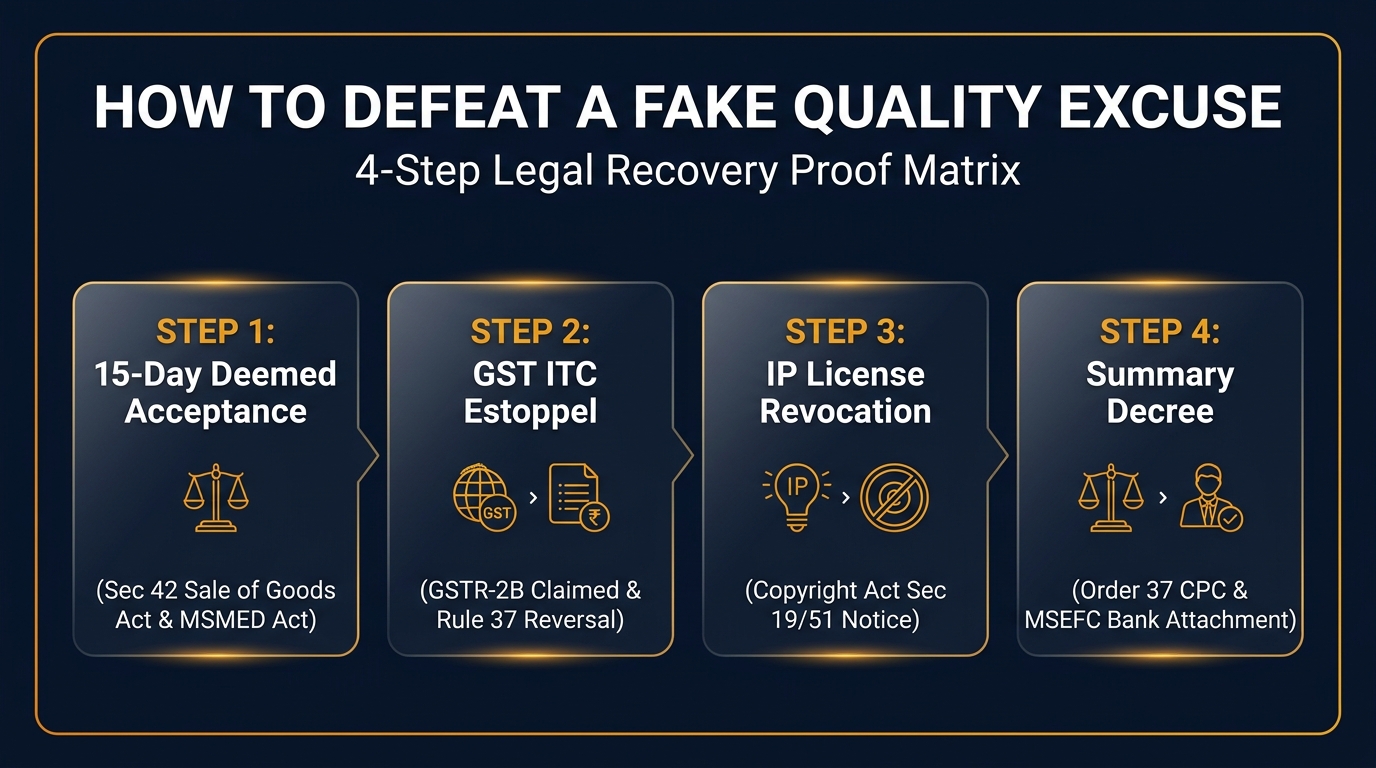
Visual Dispute Resolution & Recovery Framework
Software, Design, and Creative Projects: Revoking IP Under Copyright Act
For IT companies, software agencies, UI designers, and creative freelancers, fake quality disputes pose sharp risks. Clients often deploy code, brand logos, or designs while refusing to clear final milestone payments.
Under Indian intellectual property law, creditors possess rapid remedies that go far beyond slow civil suits.
Conditional Assignment and Section 19(4) of the Copyright Act, 1957
In standard service contracts, intellectual property terms are written as conditional transfers. Ownership of code, graphics, and technical plans transfers to the client only after full payment is made.
Under Section 19(4) of the Copyright Act, 1957, if an assignee fails to pay the agreed price or breaches terms, the transfer fails. When a client defaults on a milestone bill, title never passes. The agency remains the sole and legal copyright owner of all work assets.
Serving an IP License Revocation Notice for Immediate Project Freeze
If a client withholds milestone funds while still using your digital assets, your advocate must issue an IP License Revocation Notice. This formal legal step gives you massive leverage:
- Revocation of License: It revokes any express or implied right to host, run, or change the software or designs.
- Notice of Infringement: It warns the client that continued use is willful copyright infringement under Section 51 of the Copyright Act.
- Third-Party Liability: It warns that takedown notices will go to hosting hosts, cloud servers, and app stores running the unpaid software.
For tech firms facing unpaid bills, our specialized software development payment dispute legal notice enforces prompt code suspension. Independent creators can also send an authoritative freelancer unpaid invoice legal notice to protect their rights.
Criminal and Injunction Remedies for Willful Copyright Infringement
The penalties for copyright breach in India are swift and severe. Under Section 63 of the Copyright Act, 1957, intentional copyright infringement carries criminal jail terms up to three years and steep fines. Section 64 gives police officers the power to seize infringing copies and gear without a warrant.
In civil court, your lawyer can seek an immediate injunction under Order 39 of the CPC. High Courts frequently grant interim orders stopping clients from running portals, web stores, or apps built on unpaid code. Facing a total shutdown of their digital business, defaulting clients clear final invoices within days.
Statutory Defense and Penalty Matrix: 4 Legal Shields Against Fake Claims
To pick the right legal path against a defaulting client, you must compare each forum under Indian law. Each legal option provides distinct evidentiary proof, cost rules, and debtor pressure points.
The table below compares the four primary legal shields used to defeat afterthought quality disputes:
| Statutory Rule & Forum | Key Evidentiary Trigger | Debtor Legal Barrier | Statutory Financial Penalty | Average Recovery Speed | Settlement Leverage Rating |
|---|---|---|---|---|---|
| Section 42 Sale of Goods Act, 1930 (Civil / Commercial Court) |
Lapse of reasonable time without written rejection or acts inconsistent with seller ownership | Right of rejection extinguished; buyer limited to separate damages claim | Full invoice sum plus court interest (9% to 18% per year) | 4 to 7 Months (via Order 37 Summary Suit) |
Very High (Stops leave to defend in court) |
| Section 2(b) & Sec 15 MSMED Act, 2006 (MSEFC Arbitration) |
Zero written objection within 15 calendar days from delivery date | Deemed Day of Acceptance set; mandatory 75% cash deposit under Sec 19 on appeal | Monthly compound interest at 3x RBI Bank Rate (20.25% p.a.); non-deductible under Sec 23 | 3 to 6 Months (via MSME Samadhaan Portal) |
Extremely High (75% cash escrow stops court appeals) |
| Section 16(2) CGST Act, 2017 & Rule 37 (GST Tax Authority Estoppel) |
Buyer claimed ITC in GSTR-3B matching your GSTR-2B sales filing | Legal admission of receipt under oath; payment mandatory within 180 days | Mandatory reversal of full ITC claimed plus 18% annual penal interest under Section 50 | Immediate (15-day cure notice triggers settlement) |
Maximum (Creates board-level tax audit panic) |
| Section 19 & 51 Copyright Act, 1957 (High Court Commercial Division) |
Milestone default cancels IP transfer; client keeps using custom code or assets | Ownership stays with vendor; client use becomes willful copyright infringement | Civil damages, account of profits, police seizure under Sec 64, and jail terms under Sec 63 | 10 to 20 Days (via Interim Injunction & Takedowns) |
Immediate Shutdown (Halts SaaS platforms and apps) |
Using these four legal provisions together removes all debtor excuses. When a buyer sees that their fake dispute triggers court decree risk, tax penalty costs, and asset freezes at once, paying up becomes their only practical path.
Concrete Financial Impact Matrix: Recovering Dues With Statutory Penalties
Defaulting buyers often think that holding back milestone cash costs them nothing. Showing the severe penalties set by Indian law shatters this false comfort fast.
The financial matrix below outlines three realistic recovery cases, showing how interest and tax penalties grow over time:
| Commercial Claim Scenario | Withheld Milestone Principal | Delay Period & Legal Forum | Accrued Penal Interest & Tax Reversal | Total Debtor Liability at Settlement | Projected Realization Rate |
|---|---|---|---|---|---|
| Scenario A: IT Agency Milestone (Software & Custom ERP Delivery) |
₹8,00,000 (Final 30% Milestone) |
120 Days Delay (Order 37 CPC + IP License Revocation) |
₹63,123 (Interest @ 18% p.a.) + ₹1,44,000 GST ITC Reversal Risk + Legal Costs | ₹10,07,123 (Includes tax penalty exposure) |
100% Principal + Costs (Settled within 14 days of IP notice) |
| Scenario B: Manufacturing Supply (Precision Parts, Micro Firm) |
₹24,50,000 (Accepted Batch Deliveries) |
180 Days Delay (MSMED Act MSEFC Arbitration) |
₹2,48,062 (Compound Interest @ 20.25% p.a.) + ₹4,41,000 Mandatory GST Reversal | ₹31,39,062 (Accruing ₹1,650 daily interest) |
100% Principal + Interest (Buyer settled to avoid 75% court deposit) |
| Scenario C: Creative Agency (Brand Design & Campaign Files) |
₹4,50,000 (Final Creative Delivery) |
90 Days Delay (Section 16(2) CGST + Advocate Demand) |
₹26,630 (Commercial Interest) + ₹81,000 GST Estoppel Exposure + Notice Fees | ₹5,57,630 (Total financial exposure) |
100% Full Payment (Client released funds via RTGS in 7 days) |
As these scenarios prove, delaying payments turns a simple invoice into a costly legal debt. Putting these exact numbers into a formal demand notice forces client directors to approve prompt payment.
4-Step Strategic Recovery Playbook: Collecting 100 Percent of Your Dues
To turn legal rights into realized cash in your bank account, you must follow a clear, step-by-step path. Casual emails and angry phone calls achieve nothing against tough corporate debtors.
Follow this proven four-step legal playbook to recover your unpaid milestone money.
Step 1: Assembling the Unbreakable Contemporaneous Evidence Trail
Before launching legal action, put together an airtight set of records showing delivery and active commercial use. Gather the following files:
- Signed Contracts and Work Orders: Pull out signed agreements, scope briefs, and milestone schedules.
- Delivery and Handover Proof: Collect signed delivery slips, server setup logs, code repository logs, or acceptance emails.
- Proof of 15-Day Silence: Track dates between delivery and the first defect complaint to prove the end of the 15-day window under the MSMED Act.
- Commercial Use Proof: Take dated screenshots and video clips showing the client running your software or selling your goods.
- GSTR-2B Statement: Download the official GST portal file showing that the buyer claimed tax credit on your bill.
To review standard demand wording and legal formats, study our unpaid invoice recovery legal notice format guide.
Step 2: Sending a Deemed Acceptance and GST ITC Reversal Legal Notice
Never rely on simple emails sent by accounts staff. A formal legal demand notice served on advocate letterhead changes the debtor outlook at once. The notice must spell out the legal traps facing the buyer:
- State the exact delivery date and cite Section 42 of the Sale of Goods Act and Section 2(b) of the MSMED Act proving deemed acceptance.
- Point to the buyer GSTR-2B tax claim proving they took Input Tax Credit, creating statutory estoppel under Section 16(2) CGST Act.
- Warn of mandatory GST credit reversal with 18 percent penal interest under Rule 37 if dues stay unpaid past 180 days.
- For digital assets, revoke IP rights under the Copyright Act, warning of civil injunctions and criminal police complaints.
- Give the debtor a clear 15-day deadline to clear payment before court filings begin.
To launch this high-impact legal process today, you can send a Deemed Acceptance + GST ITC Reversal legal notice through our verified advocate network.
Step 3: Filing Summary Suit Under Order 37 CPC or MSEFC Arbitration
In over 75 percent of cases, an advocate notice with tax estoppel and IP revocation forces clients to settle within 15 days. But if the buyer stays stubborn, start court action without delay.
If your enterprise has Udyam registration, file an online delayed payment case on the MSME Samadhaan portal. If you are a non-MSME firm, file an Order 37 Summary Suit in the Commercial Court. Because the debt is fixed and backed by accepted bills, the buyer must get court permission to defend. For deeper court tactics, read our guide on summary suit for money recovery in India.
Step 4: Executing Orders via Bank Attachment and Account Freezes
Once you win an MSEFC award or a summary court decree, the final task is collecting your cash. Under Order 21 of the Code of Civil Procedure, file an execution plea in civil court.
The execution court holds broad powers to satisfy your claim:
- Bank Freezes: The judge issues freeze orders directly to debtor banks, transferring funds straight to your account.
- Attachment of Receivables: The court orders third-party corporate clients of the debtor to deposit payments into court.
- Asset Seizure: The court sends bailiffs to seize commercial cars, servers, and office gear for auction.
By following these four steps under seasoned legal counsel, creditors systematically overcome delay games and collect their full dues.
Popular Searches & Related Topics

Legal Recovery is India's trusted consumer protection and legal tech platform. We specialize in holding corporations accountable for unfair trade practices, deceptive marketing, and commercial fraud. With over 15,000 customers counselled, our mission is to provide fast, out-of-court resolutions by connecting you with top-tier panel advocates for immediate legal action.
Client Reviews
"Our SaaS agency built a custom inventory portal for a retail chain. After running the portal for 50 days, their management withheld our final ₹12 Lakh milestone citing alleged code latency. LegalRecovery drafted a lethal legal notice invoking Section 42 deemed acceptance, GSTR-2B ITC estoppel, and Section 19 IP license revocation. The client released our full payment via NEFT within 9 days."
Abhishek Mehrotra (Bengaluru)
"We supplied precision CNC machined parts worth ₹28 Lakhs. The buyer accepted delivery challans but raised fake tolerance defects 75 days later when the bill matured. Team LegalRecovery proved the 15-day objection window under Section 2(b) MSMED Act had expired and warned of 180-day GST ITC reversal. The buyer cleared the full principal plus 20.25% interest in two tranches."
Rohit Singhania (Pune)
"As a UI/UX design studio, a fintech client deployed our design system on their mobile app while refusing our ₹6.5 Lakh final milestone claiming 'brand misalignment'. LegalRecovery served an immediate IP revocation notice and warned of an Order 39 injunction. Faced with their app being taken down from app stores, their board released 100% dues in 48 hours."
Pooja Krishnamurthy (Hyderabad)
"Superb commercial recovery advocates. A logistics enterprise delayed our ₹16 Lakh ERP milestone with endless vague defect emails. LegalRecovery filed an Order 37 summary suit backed by GSTR-2B tax matching records. When the debtor realized they faced an immediate decree without leave to defend, their CFO settled the entire debt before the first court hearing."
Vikramaditya Chauhan (Gurugram)
"Exceptional speed and strategic depth. Our digital agency delivered a complete brand campaign. The client launched ads across YouTube and Instagram but held back our final ₹5 Lakhs claiming unapproved creative choices. LegalRecovery proved deemed acceptance under Section 42 and demonstrated copyright infringement. We recovered 100% of our money without stepping into court."
Ananya Sen (Kolkata)
Frequently Asked Questions
Related Articles
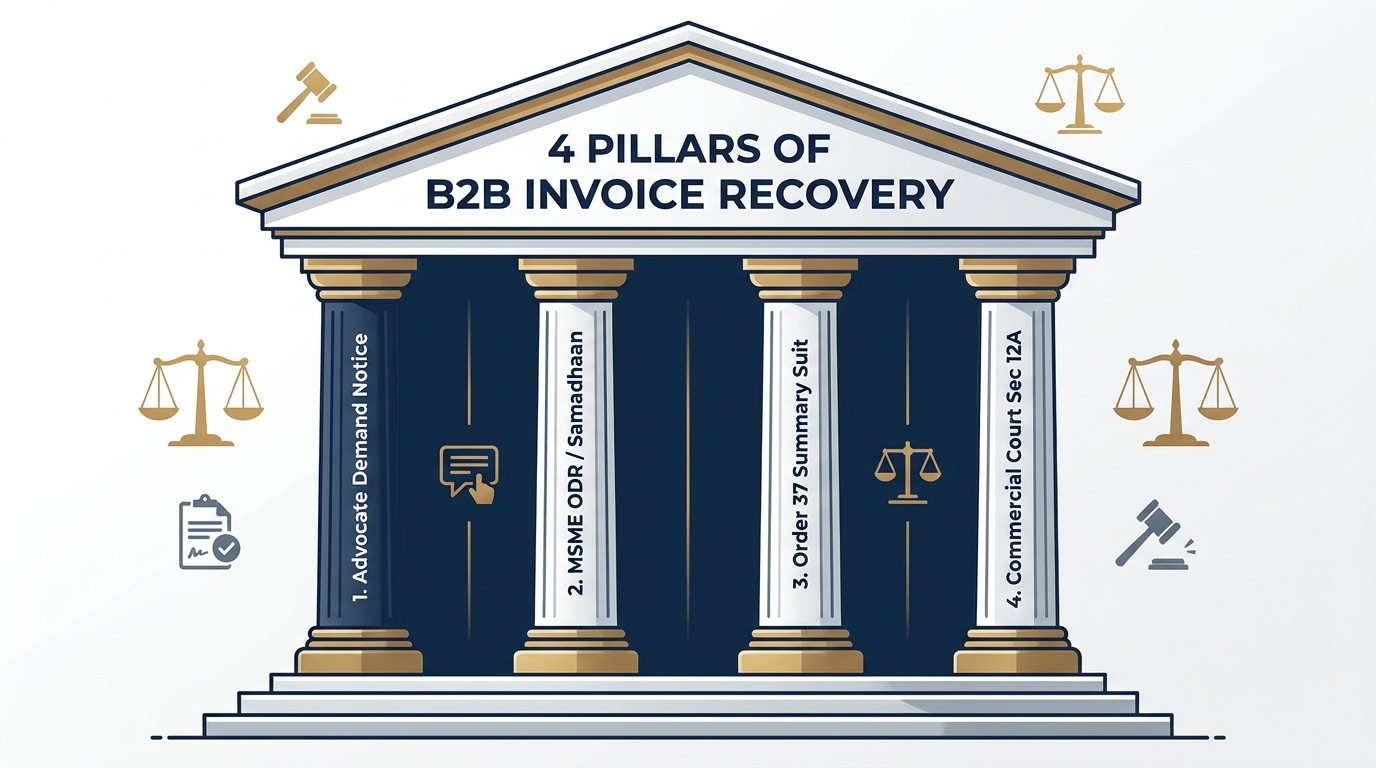
MSME ODR vs Order 37 vs Commercial Court: Fast Invoice Recovery (2026)
msme odr portal vs summary suit order 37, fastest way to recover unpaid b2b invoice in india, commercial courts act section 12a pre institution mediation, can medium enterprise or trader file msme samadhaan, 75 percent deposit rule section 19 msmed act, order 37 cpc summary suit recovery, recover money from unpaid business invoice india, b2b commercial recovery advocate notice, delayed payment dispute resolution india, msefc arbitration vs commercial summary suit
Read Article
How to Recover Unpaid Salary & FNF from a Shutting Down Startup
startup not paying salary due to funding issues, can directors be held liable for unpaid employee salary, nclt operational creditor employee salary recovery, legal notice to startup founders for unpaid fnf, summary suit for unpaid salary and fnf, recover unpaid salary and fnf from shutting down startup, section 14a epf act director liability, section 276b income tax act tds default, section 33c2 industrial disputes act revenue recovery certificate, order 37 cpc liquidated salary debt, first mover liquidity strategy startup shutdown
Read Article
Contractor Holding Retention Money or RA Bills? Recover Now (2026)
subcontractor retention money recovery legal notice india, pay when paid clause validity in india, back to back payment clause subcontractor recovery, contractor not releasing retention money defect liability period, section 24 msmed act overriding effect pay when paid, commercial dispute running account bills recovery
Read Article
Section 43B(h) & MSME 45-Day Invoice Recovery Legal Notice (2026)
section 43bh msme invoice recovery legal notice, recover money from unpaid business invoice, msme 45 days payment rule legal notice format, section 16 msmed act 3x rbi compound interest calculator, how to force corporate buyer to pay unpaid invoice, form msme 1 MCA reporting unpaid vendor invoice, section 22 msmed act statutory disclosure, delayed payment to micro and small enterprise recovery, msme payment recovery legal notice, b2b commercial debt recovery india, udyam registration invoice payment enforcement, corporate buyer unpaid invoice legal action
Read ArticleAbout Author
Anuj Anand Malik
View ProfileAnuj Anand Malik, Founder of AMA Legal Solutions, is a trusted advocate, loan settlement expert, legal advisor, and banking lawyer. With over a decade of experience in loan settlement, corporate law, financial disputes, and compliance, he leads a result-driven law firm based in India that helps individuals, startups, and businesses achieve legal and financial stability.
Connect on LinkedInNeed Legal Help?
Get expert advice on loan settlement, banking disputes and debt relief.
Start Recovery NowRequest Callback