E-Commerce App Forcing Wallet Refund Over Bank Account? Legal Fix
ecommerce forcing wallet refund instead of original payment method, can company force store credit instead of bank refund india, myntra ajio refund stuck in wallet transfer to bank, ccpa guidelines against forced wallet refunds dark patterns, rbi prepaid payment instrument wallet refund to source, legal notice for original source refund ecommerce, section 2 47 consumer protection act unfair trade practice, dark patterns forced action interface interference, closed loop wallet refund bank withdrawal, e daakhil complaint for store credit refund

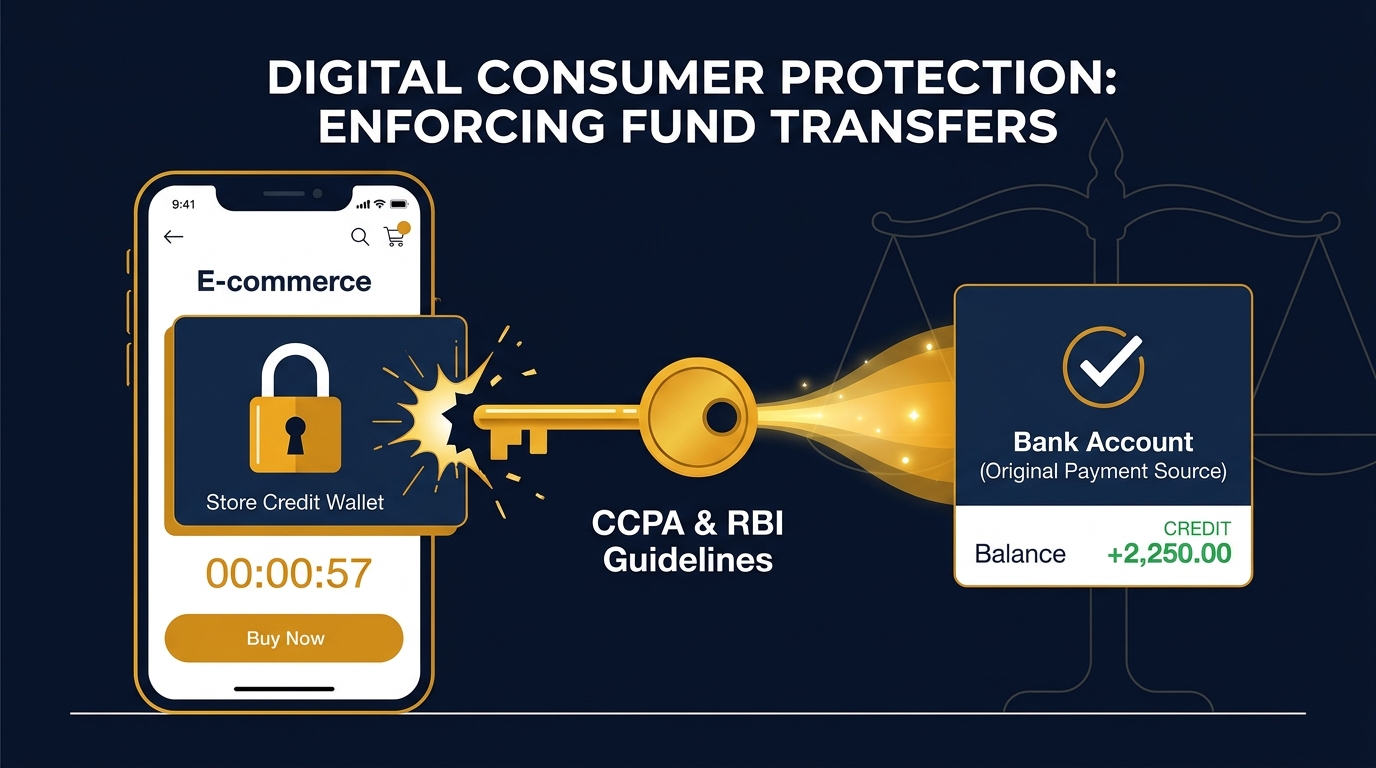
Table of Contents
Table of Contents
Swipe →You ordered clothes, shoes, electronics, or food on an Indian shopping app. The item did not fit, arrived broken, or never showed up. You tapped the return or cancel button in the app. You expected your cash to go straight back to your bank account or UPI ID. Instead, the app dumped your refund into an internal store wallet or gift voucher. To make matters worse, you cannot move that money out. The credit carries an expiry date and forces you to buy more stuff from the same store.
This trap catches millions of Indian shoppers every day. Top fashion, beauty, quick-delivery, and food apps hold user funds inside their own walled gardens. When you ask customer support to send the cash to your bank, support bots turn you away. Frontline staff claim that company policy only permits wallet points or store credits. That claim is false under Indian consumer and banking laws.
No company policy can stand above Indian law. Forcing store credits or locked app balances instead of refunding cash to your original payment source violates the Consumer Protection Act, 2019. It also breaches the Central Consumer Protection Authority (CCPA) Dark Patterns Guidelines, 2023 and Reserve Bank of India (RBI) payment directions. If you paid with real money, you have a clear legal right to get real cash back in your bank account.
The Forced Wallet Refund Trap in Modern Indian Apps
Many online shoppers face this digital trap each month. Apps like Myntra, Ajio, Nykaa, Tata CLiQ, Blinkit, Zepto, and food delivery platforms use clever screen designs to hold user refunds. Rather than sending money back to your bank, apps use tricky visual designs to keep your cash.
This trap works through three common digital tricks:
- Pre-Ticked Wallet Default: When you start a return, the app pre-selects 'Refund to App Wallet' in bright green. The button for your original payment source is grey, hidden, or buried inside a sub-menu.
- Fake Speed Alerts: Apps show warnings claiming that wallet refunds take 10 seconds, while bank transfers take 7 to 10 days. This push steers tired buyers to take the wallet credit out of haste.
- Locked Balances with Expiry Dates: Once money lands in your app wallet, the app turns off bank withdrawal options. The platform marks the funds as store credit and sets a clock. If you do not spend the cash in 90 to 180 days, the company wipes out your balance.
These methods allow apps to keep sales figures high and hold onto your cash. When an app locks your refund, it forces you to spend again. You must buy more goods from that store just to get back your own hard-earned money. Under Indian law, this practice is illegal.
Why Store Credit Violates Indian Consumer Protection Law
Indian consumer law gives strong protection against deceptive sales tactics. The legal system treats money paid for goods as real consideration under contract law. A seller cannot change the form of that payment when a sale falls through.
Section 2(47) of the Consumer Protection Act, 2019
Section 2(47) of the Consumer Protection Act, 2019 defines unfair trade practices. It covers any unfair method used to boost sales of goods or services. In particular, Section 2(47)(viii) states that refusing to take back defective goods or refusing to refund the money paid within a set time is an unfair trade practice.
Money paid means the exact legal tender you spent. If you paid ₹4,500 using your State Bank of India debit card, the money paid is ₹4,500 in cash. Giving you store credits that work only on the seller's app is not a true refund. It is an unlawful hold on your funds and a clear deficiency in service under Section 2(11) of the Act.
CCPA Dark Patterns Guidelines and Forced Action Rules
In November 2023, the Central Consumer Protection Authority issued strict rules against dark patterns. These rules bind every e-commerce site, marketplace, and online seller in India. The rules ban deceptive screen designs that trick buyers or take away their free choice.
Two specific rules in the CCPA guidelines outlaw forced wallet refunds:
- Forced Action (Annexure 1, Item 4): The rules define Forced Action as making a user take extra steps or buy extra goods to complete a deal or get their money. Forcing a buyer into store credit makes them buy more unwanted goods to recover their own funds.
- Interface Interference (Annexure 1, Item 3): Interface Interference happens when an app screen hides, shrinks, or dims key choices to mislead the user. Pre-selecting the wallet refund while hiding bank transfer options is an open breach of this rule.
RBI Master Directions on PPIs and Refund to Source
The Reserve Bank of India sets rules for digital payment systems and Prepaid Payment Instruments (PPIs). Under RBI Master Directions, strict standards apply to failed, returned, or cancelled transactions. When an online order is cancelled or sent back, the money must return to the original source of funds.
A shopping app that runs a closed wallet cannot use that wallet to trap money from bank accounts. If you paid by credit card, debit card, or UPI, the store must send the cash back through the payment gateway to your bank account. A seller cannot drop those funds into an app wallet without your clear, free consent.
Section 65 of the Indian Contract Act and Restitution
Section 65 of the Indian Contract Act, 1872 lays down the rule of payback and restitution. When a deal becomes void or is called off, any person who took an advantage under that deal must restore it. That person must return the benefit to the party who gave it.
When you return an ill-fitting or broken item, the sales contract ends. The seller gets back the physical goods. Under Section 65, the seller must return the full cash received. Keeping cash while handing out an expiring app voucher breaks the core legal rule of full restitution.
Promotional Cashback vs Real Consideration: The Legal Line
E-commerce legal teams often try to mix up promotional perks with paid refunds. To protect your rights, you must understand the clear legal line that divides promotional cashback from real purchase money.
The difference depends on where the money came from:
- Free Promotional Cashback: A store may give you a ₹200 festive gift code, app points, or a free coupon. Because you did not pay cash for those points, the store can set rules on how and when you use them.
- Principal Purchase Money: This is the actual cash, UPI transfer, or card payment taken from your personal bank account. This money is your private property. The store holds it purely as a caretaker until your order is delivered in good order.
If you pay ₹3,000 through UPI and use a ₹300 gift code for a ₹3,300 jacket, the store can cancel the ₹300 coupon on return. But the store cannot hold your ₹3,000 cash. That ₹3,000 must go back to your bank account in full. Any app clause that says your cash turns into store credit is void under Section 23 of the Indian Contract Act.
If you face similar refund blocks on other platforms, read our guides on Amazon refund not received legal notice and Flipkart return refund complaint. You can also read our guide for Zomato Swiggy refund complaint legal notice when food apps dump meal refunds into wallet points.
How Platforms Exploit Dark Patterns and Interface Traps
Digital dark patterns use behavioral tricks to push shoppers into bad choices. Online stores build clever app screens to stop cash from leaving their accounts. Knowing these visual tricks helps you collect strong proof for consumer courts.
Here are the common screen tricks used in refund disputes:
- Bright Color Tricks: The button for 'Accept Fast Wallet Credit' uses bright green or bold blue with large text. The 'Refund to Bank Account' link sits in faint grey text with no box, looking like it is disabled.
- Guilt Messages: If you pick bank refund, the app shows warning popups. The screen asks: 'Are you sure you want to wait 7 to 10 days for a bank transfer when your wallet cash is ready right now?'
- Buried Menus: Some apps make you type your bank details again for every return. They hide the saved bank account link behind deep menus while making wallet credit work with one quick tap.
- Tricks with Cash on Delivery: For Cash on Delivery (COD) orders, riders take paper notes at your door. On return, apps claim they cannot send cash to your bank because you paid by hand. They force you to take store credit, ignoring that you can simply share your UPI VPA or bank IFSC code.
These screen tricks are not harmless design choices. Under the CCPA Dark Patterns Guidelines, 2023, each trick is a legal breach. Companies using them risk heavy fines from the CCPA and tough orders from consumer courts.
Visual Dispute Resolution & Recovery Framework
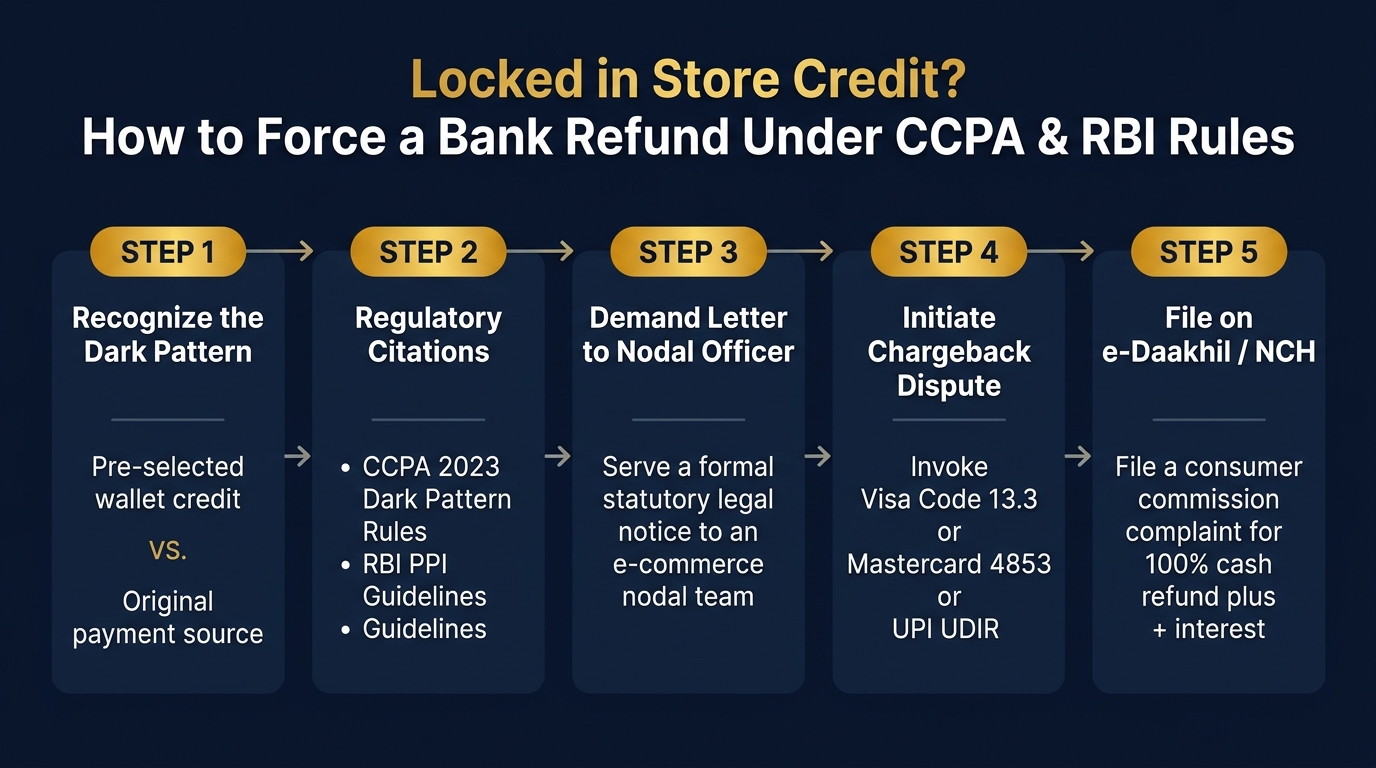
Statutory Matrix: Store Credit vs Lawful Money Recovery
When an online store locks your refund in store credit, you have several ways to act. Picking the right path depends on how the store responds, the amount at stake, and whether the app used dark patterns.
The table below compares the legal forums, rules, timelines, and remedies available under Indian law.
| Dispute Channel | Target Body | Governing Law | Key Evidence Needed | Typical Timeline | Legal Result |
|---|---|---|---|---|---|
| App Support Chat | Customer Care Bot | Internal Store Policy | Order ID and invoice copy | 1 to 3 Days | Bot rejections; support cannot bypass wallet policy |
| Company Nodal Desk | Grievance Officer | CP E-Commerce Rules 2020 | Email citing CCPA Dark Pattern Rules | 48 Hours to 7 Days | Manual bank payout; legal teams settle to avoid court |
| Bank Card Dispute | Card Issuer or UPI Bank | RBI PPI Rules, Visa 13.3, Mastercard 4853 | Bank statement, invoice, and chat refusal | 15 to 45 Days | Direct cash pull from merchant bank back to your account |
| Consumer Helpline | NCH Portal (MoCA) | Consumer Protection Act, 2019 | Docket with order and chat proofs | 15 to 30 Days | Government mediation; nudges firms to pay cash |
| Advocate Legal Notice | Directors and Nodal Officer | Section 2(47) CPA & Section 65 Contract Act | Formal legal demand with 15-day deadline | 7 to 15 Days | 85%+ settle quickly; full bank refund plus legal costs |
| Consumer Court | District Commission (e-Daakhil) | Sections 35 & 39, Consumer Protection Act, 2019 | Formal petition, affidavit, and notice proof | 3 to 8 Months | Binding court order: 100% refund, 9% interest, and damages |
Four Steps to Convert App Wallet Credit Into Bank Money
If your money sits locked in an app wallet or store voucher, do not spend it on things you do not need. You can use the law to force the store to send every single rupee to your bank account. Follow these four practical steps to get your cash back.
Step 1: Document Your Original Payment Method and Receipt
Good records form the core of every consumer win. Before calling support, collect your digital proof. Download your official tax bill from the app. That bill proves the price paid, tax breakdown, and the seller company name.
Next, take clear screenshots that show:
- Your bank passbook, bank app, or UPI screen showing the first debit for the order.
- The order cancel or return screen showing the approved refund total.
- The app wallet screen showing your money locked as points or store credits.
- The screen showing no bank cashout button or throwing an error when you try to withdraw.
Save these files in one safe folder. If your first payment got lost on the way, see our guide on failed UPI transaction money stuck in bank to trace gateway logs.
Step 2: Submit a Written Revocation to the Nodal Officer
Do not waste hours with first-line chat agents who have no power to send bank payouts. Under Rule 4 of the Consumer Protection (E-Commerce) Rules, 2020, every online store must post the name and email of its Grievance and Nodal Officer on its website.
Send a direct email to the Nodal Officer with these key points:
- Give your order ID, order date, and original payment mode like UPI, card, or net banking.
- State in plain words that you reject store credits or wallet points. Write: 'I do not consent to store credit or app wallet balances.'
- Cite Section 2(47) of the Consumer Protection Act, 2019 and CCPA Dark Pattern Rules banning Forced Action.
- Provide your bank name, account holder name, account number, and IFSC code or UPI ID.
- Give the store 48 hours to wire the cash to your bank, or you will take the matter to court.
Step 3: Trigger a Bank Chargeback or UPI UDIR Dispute
If you paid by card or UPI, your payment network gives you a direct path to your money. Under card network rules and RBI directions, stores cannot keep money when goods are returned without processing a source refund.
Call your card bank and open a formal dispute:
- Card Payments: File a dispute under Visa Reason Code 13.3 (Not as Described or Credit Not Processed) or Mastercard Reason Code 4853. Attach your return receipt and the store refusal email.
- UPI Payments: File a dispute through the NPCI UPI Dispute and Issue Resolution (UDIR) tool in your UPI app (Google Pay, PhonePe, Paytm, or BHIM) under 'Refund Not Received to Bank Account'.
When a dispute opens, the card network freezes the disputed cash in the seller bank. Sellers face penalty fees for lost disputes, which pushes them to release your cash fast.
Step 4: File a Formal Complaint on the e-Daakhil Portal
If the store ignores your email and the bank dispute drags, take formal legal steps. You can convert forced store credit into a bank refund via Legal Notice. A formal demand notice drafted by a lawyer moves your file straight to senior legal heads.
If the 15-day notice period ends with no cash, file your case online on the e-Daakhil portal (edaakhil.nic.in). Under the Consumer Protection Act, 2019, you can file right from home in your home district court.
You can ask the court for these four remedies on e-Daakhil:
- An order telling the store to wire the full refund into your bank account.
- Interest at 9% to 12% per year from the return date until the date of payment.
- Fair money damages for mental stress and loss of cash access under Section 39(1)(d).
- Full refund of all legal and notice costs under Section 39(1)(m).
For large refund claims, speaking with a skilled refund dispute lawyer helps you frame your claim and win maximum damages.
Rupee Recovery Calculation: What Courts Order Defaulting Apps
Online stores often think buyers will walk away from small or medium claims. That belief is a big error. When shoppers file a consumer complaint against company or start a consumer court complaint for refund, consumer judges penalize defaulting stores.
In key rulings, consumer courts have held that forcing store credits calls for serious damages. In cases like Komal Santoshkumar Jain v. Myntra and Arun Kumar Patel v. Garment Retail Chain, judges ordered stores to pay several times the original purchase price.
The table below shows a typical court payout for an order of ₹14,500 where a clothing app forced store credit and refused a bank refund.
| Claim Head | Legal Ground | Amount Trapped | Realistic Court Order |
|---|---|---|---|
| Principal Order Cash | Section 65 Contract Act & Section 39(1)(a) CPA | ₹14,500 (Locked in wallet) | ₹14,500 (Direct bank payout) |
| Interest on Held Funds | Section 39(1)(c) CPA (9% per year for 8 months) | ₹870 (Commercial interest) | ₹870 to ₹1,305 awarded |
| Mental Stress Damages | Section 39(1)(d) CPA for forced action and grief | ₹25,000 (Damages claimed) | ₹15,000 to ₹25,000 awarded |
| Legal Notice & Court Costs | Section 39(1)(m) CPA (Actual lawyer costs) | ₹15,000 (Notice and court fees) | ₹10,000 to ₹15,000 awarded |
| Total Cash Recovery | Total Court Award | ₹55,370 | ₹40,370 to ₹55,805 |
As the table proves, trapping a ₹14,500 refund in store credit can cost the store more than ₹40,000 in court. When stores get a formal legal notice showing this risk, their risk desk pays the full refund to the buyer bank account without delay.
Practical Checklist to Avoid Forced Store Credit Traps
To guard your cash and keep your legal rights intact, follow this checklist whenever you shop online:
- Check Return Screens Closely: Do not rush through return screens. Look at every box and toggle. Uncheck any pre-ticked 'Store Credit', 'Myntra Credit', 'Ajio Wallet', or 'App Cash' box before you hit submit.
- Pick Bank Transfer Explicitly: Always pick 'Original Payment Source' or enter your bank account number and IFSC code. Take a screenshot of the final screen showing your pick.
- Reject Unwanted Wallet Credits Fast: If an app drops your refund into a wallet anyway, do not spend a single rupee of it. Spending the balance can look like consent. Send an email at once stating that you reject the store credit.
- Save All Digital Proof: Keep order bills, delivery slips, support chats, and bank debit receipts safe on your phone or laptop.
- Do Not Rely on Phone Promises: Support callers often promise that wallet funds will turn into cash later. Always demand an email with a formal ticket number.
- Act on Deadlines: If the store does not send cash to your bank within 5 to 7 days, take legal steps right away. Do not wait months for chat bots to repeat old scripts.
You work hard for your money. No online shopping company has the legal right to hold your cash in an expiring app wallet. Indian consumer protection laws, CCPA dark pattern rules, and RBI directions stand with you. With the right legal notice, you can bring every single rupee back into your bank account.
Popular Searches & Related Topics

Legal Recovery is India's trusted consumer protection and legal tech platform. We specialize in holding corporations accountable for unfair trade practices, deceptive marketing, and commercial fraud. With over 15,000 customers counselled, our mission is to provide fast, out-of-court resolutions by connecting you with top-tier panel advocates for immediate legal action.
Client Reviews
"Myntra dumped my Rs 8,400 shoe refund into Myntra Credit without an option to withdraw to my HDFC account. Customer care kept repeating company policy scripts. Team LegalRecovery served a formal notice to their Nodal Officer citing CCPA Dark Pattern rules. In just four days, Myntra accounts transferred the full cash directly into my bank account."
Rohan Deshmukh
"Ajio cancelled three dresses due to stock issues and credited Rs 6,200 as non-withdrawable wallet points with a 90-day expiry. LegalRecovery drafted a sharp demand citing Section 2(47) of the Consumer Protection Act and initiated a card chargeback. Ajio's executive escalation desk called, apologized, and released the entire amount to my SBI card."
Ananya Nair
"Nykaa forced a Rs 5,100 refund into app store credits after an unfulfilled cosmetics order and refused to give a cash refund. LegalRecovery stepped in, warned them of e-Daakhil action, and demanded full restitution under Section 65 Contract Act. Received every single rupee back in my ICICI account within a week."
Gaurav Malhotra
"Blinkit credited Rs 2,300 to wallet balance after sending damaged household goods and claimed COD orders cannot be refunded to bank accounts. LegalRecovery's notice showed them that refusing a UPI refund violates RBI guidelines. The full refund was credited to my UPI ID within 48 hours."
Pooja Varma
"I had Rs 12,000 stuck across multiple returns on a major fashion app that converted my payments into locked credits. Team LegalRecovery sent a comprehensive notice to their corporate legal team in Bengaluru. The platform processed a manual NEFT payout to my bank without any deductions."
Varun Sengupta
Frequently Asked Questions
Related Articles
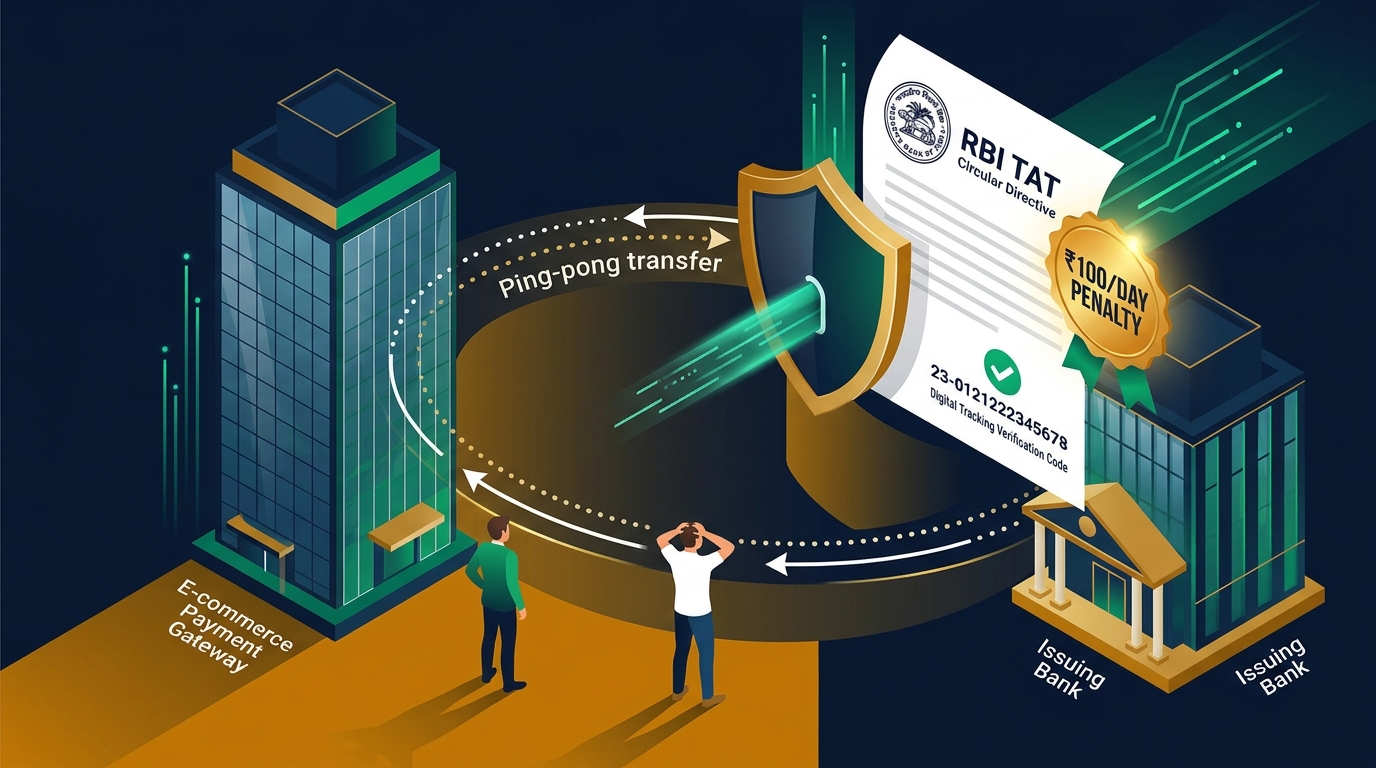
Amazon or Flipkart Refund Stuck in Bank? Claim ₹100/Day RBI Penalty
amazon refund initiated with arn but not credited, flipkart refund rrn number not credited to bank account, rbi 100 rupees per day penalty for delayed refund, credit card refund stuck between merchant and issuing bank, verify real 23 digit arn number visa mastercard, 12 digit upi rrn reference number tracking, rbi circular turnaround time failed transaction compensation, payment gateway acquiring bank settlement certificate, rbi integrated ombudsman scheme cms complaint against bank, consumer protection ecommerce rules 2020 refund delay liability
Read Article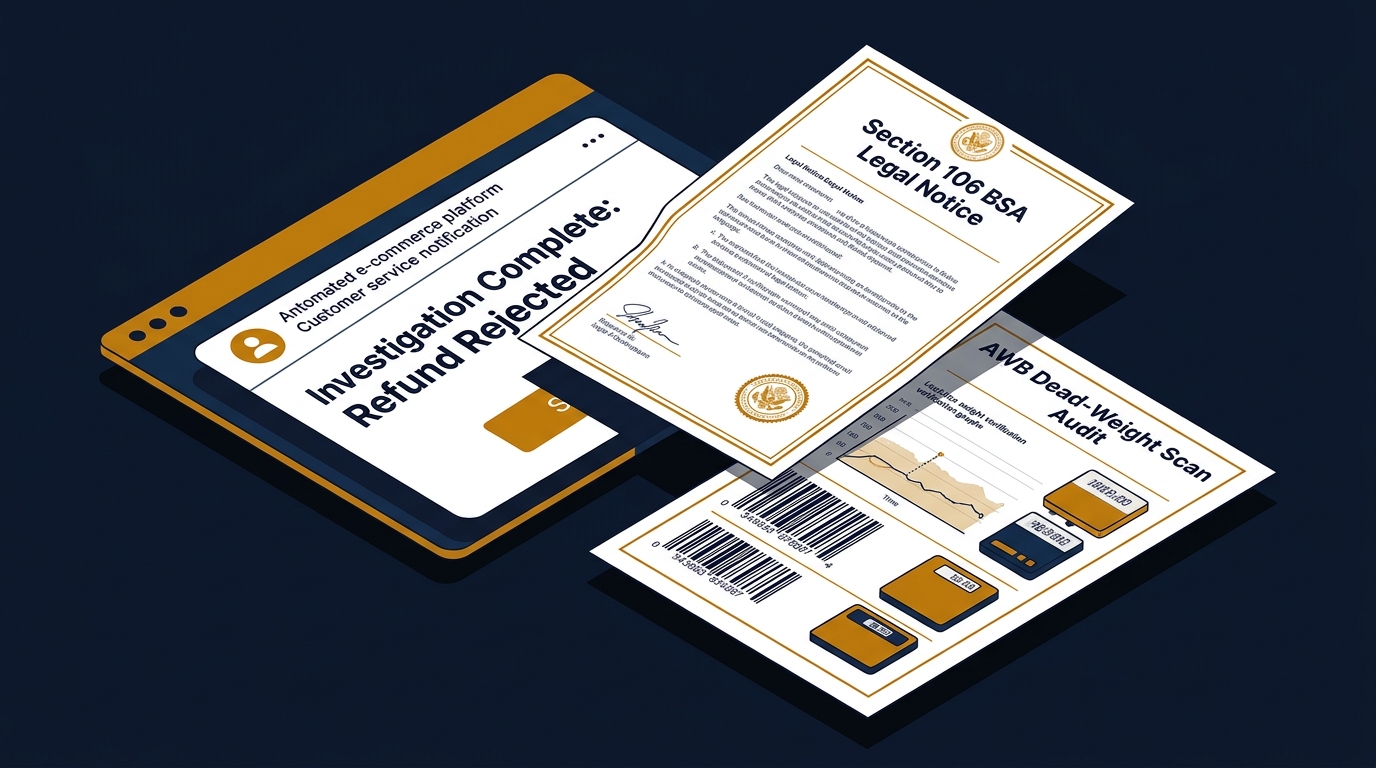
Amazon or Flipkart Investigation Denied Refund? Legal Recovery Fix
amazon investigation completed no refund wrong item received, flipkart rejected refund after investigation wrong product, amazon ofm account warning refund denied legal notice, received empty box or wrong item amazon refund denied, unboxing video evidence consumer court ecommerce, how to challenge amazon internal investigation refund rejection, section 106 bharatiya sakshya adhiniyam ecommerce burden of proof, airway bill dead weight scan hub discrepancy, consumer protection ecommerce rules 2020 refund delay liability, visa mastercard chargeback reason code 13 3 defective merchandise
Read Article
Flipkart or Amazon OBD Refund Rejected After OTP? Recover Now (2026)
flipkart open box delivery refund rejected legal notice, amazon otp shared defective product refund denied, open box delivery hidden motherboard screen defect refund, flipkart service center replacement denial refund recovery, consumer protection e-commerce rules open box delivery, how to get refund from flipkart after open box delivery
Read Article
Borrower Blocked You and Moved? How to Legally Recover Your Money
how to send legal notice if person changed address or blocked number, borrower blocked me on whatsapp how to recover money, service of legal notice via whatsapp and email supreme court, order 38 rule 5 cpc attachment before judgment bank account, how to trace debtor address for legal notice india, money recovery when borrower is absconding, section 27 general clauses act deemed service, order 5 rule 20 cpc substituted service, order 9 rule 6 cpc ex parte decree, section 63 bharatiya sakshya adhiniyam electronic evidence, legal notice to debtor last known address, recovering money from absconding borrower, friendly loan recovery legal notice, multi channel legal demand notice india
Read ArticleAbout Author
Anuj Anand Malik
View ProfileAnuj Anand Malik, Founder of AMA Legal Solutions, is a trusted advocate, loan settlement expert, legal advisor, and banking lawyer. With over a decade of experience in loan settlement, corporate law, financial disputes, and compliance, he leads a result-driven law firm based in India that helps individuals, startups, and businesses achieve legal and financial stability.
Connect on LinkedInNeed Legal Help?
Get expert advice on loan settlement, banking disputes and debt relief.
Start Recovery NowRequest Callback