Forced to Resign in Layoffs? How to Recover Severance & FNF (2026)
forced resignation fnf and severance pay recovery, forced resignation during layoff legal notice india, pip termination without notice pay recovery, how to claim severance pay in india, illegal termination fnf settlement recovery, company forcing to resign without notice period pay, section 25F retrenchment compensation it sector, section 15 16 indian contract act duress resignation, bogus pip forced resignation legal notice, recover notice pay after forced resignation

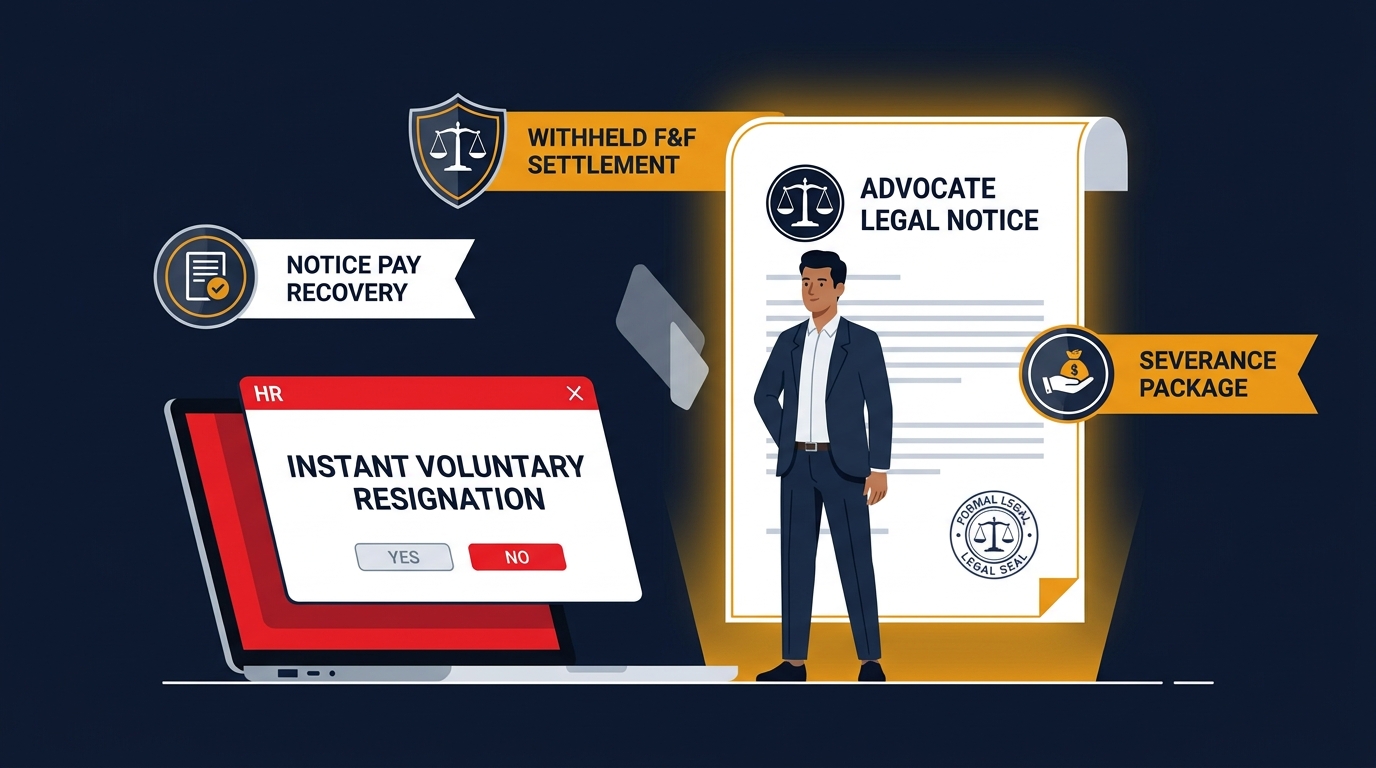
Table of Contents
Table of Contents
Swipe →Losing a job during corporate layoffs is hard enough. Yet thousands of Indian professionals face an unfair trap each month. HR teams in Bengaluru, Pune, Hyderabad, Gurugram, and Noida call workers into sudden 15-minute video meetings. They cut off Slack and email access on the spot. Then they demand an instant resignation email before the day ends. HR partners often issue harsh warnings. They say that a formal termination will ruin your background check. They claim you will never find another job if you refuse to resign.
This corporate tactic has one clear goal. Employers want to dodge paying your 1 to 3 months contractual notice pay. They want to avoid paying statutory retrenchment compensation under Indian labor law. They also want to wipe out your earned leave pay and performance bonus. Many workers believe that sending a resignation email ends their legal rights. That belief is completely wrong under Indian law.
Under Indian contract and labor statutes, a forced resignation is not voluntary. Courts treat an exit obtained under fear or duress as an illegal termination. You do not forfeit your earned money by typing a resignation under threat. This practical legal guide shows you how to defend your rights. You will learn how to retract a forced exit, defeat fake performance plans, preserve digital proof, and recover 100% of your severance and Full and Final (FNF) settlement.
The Forced Resignation Trap in Indian IT and Startups
The forced exit playbook is common in tech firms, consulting agencies, and venture-funded startups. Companies want to cut costs without bad press. They do not want news headlines about mass layoffs. They also want to avoid inspections from the state labor department. To hide the layoffs, HR forces workers to quit on paper.
The Friday Afternoon Video Call Playbook
The scheme usually starts on a Friday afternoon. You get a sudden calendar invite titled quick sync or team check-in. When you join the call, an HR lead and your manager are waiting. They tell you that your role is gone due to restructuring. They give you a tight deadline of two hours to email your resignation.
If you ask for time to think, HR applies heavy pressure. They warn that if you do not quit by 5 PM, they will terminate you for poor performance. At the same time, the IT team locks your laptop. Under extreme panic, many workers give in and send the email. This surprise meeting is designed to stop you from seeking legal advice.
The Pretext of Fake Performance Improvement Plans
Companies also use fake Performance Improvement Plans (PIPs) to force exits. A real PIP gives a worker clear goals, training, and 60 to 90 days to show progress. In contrast, a sham PIP gives impossible targets over 7 to 14 days. HR provides no guidance and no extra tools.
When the short period ends, HR claims you failed the plan. They demand your immediate exit without notice pay. Indian courts see right through these sudden PIPs. When an employee had good appraisals for years, a sudden 10-day PIP is proof of bad faith by the company.
Why Employers Resort to Forced Resignations
Employers push for resignations because voluntary exits save them huge sums of money:
- Dodging Notice Pay: Your contract requires 30 to 90 days notice or gross salary in lieu. When you resign on paper, the firm tries to pay zero notice pay.
- Dodging Retrenchment Pay: Under Section 25F of the Industrial Disputes Act, 1947, retrenched staff must get 15 days pay per year of service. A fake resignation wipes this out.
- Avoiding Government Scrutiny: State labor laws require firms to report big job cuts. Disguising layoffs as personal exits keeps inspectors away.
- Blocking Legal Claims: A resignation email gives the company a fake defense against a wrongful termination and unpaid salary legal notice.
Why Coerced Resignation Is Illegal Under Indian Law
Indian law protects workers against forced agreements. When an employer coerces an exit, the law looks at the real facts, not just the paper form.
Sections 14, 15, and 16 of the Indian Contract Act
Every employment contract is governed by the Indian Contract Act, 1872. Under Section 10, an agreement needs free consent. Section 14 states that consent is not free when caused by coercion or undue influence. Section 15 defines coercion as committing or threatening any unlawful act to harm another person. Section 16 defines undue influence as using a position of power to dominate another person will.
When HR threatens your future career or withholds your pay to force an exit, they break these laws. Under Sections 19 and 19A, any resignation obtained under coercion or undue influence is voidable at your option. When you formally retract your exit, the resignation becomes legally void.
Judicial Doctrine of Substance Over Form
Indian courts look past the title of your resignation letter. In Mhow Hosiery Pvt. Ltd. v. Jitendra, the High Court held that when an employer creates severe economic pressure, an exit is not voluntary. If the facts show that you were cornered, courts treat the exit as an unlawful layoff. Sudden account locks and quick HR ultimatums prove that you did not leave on your own free will.
The Boghara Polyfab Doctrine on Economic Duress
Employers often try to protect themselves with exit release forms. They ask you to sign a paper saying you have no further claims. In National Insurance Co. Ltd. v. Boghara Polyfab Pvt. Ltd., the Supreme Court of India laid down a vital rule. The court held that no-claim vouchers signed under economic duress or financial fear do not block legal claims.
When an employer holds your earned pay, you are under economic duress. Signing an exit voucher to get your basic pay does not stop you from claiming your full notice pay and severance later in court.
Workman Protection for Modern Tech Professionals
IT firms often claim that software engineers cannot use labor laws because of high salaries. Indian courts have repeatedly rejected this argument. Under Section 2(s) of the Industrial Disputes Act, anyone doing technical, skilled, or operational work is a workman. Only managers who have power to hire, fire, and approve budgets fall outside this rule. Software coders, QA testers, and tech leads enjoy full protection under Section 25F.
Statutory Severance and Compensation Rights You Can Recover
When you challenge a forced exit, you can claim multiple heads of compensation under Indian statutes. Knowing these rights helps you recover every rupee you earned.
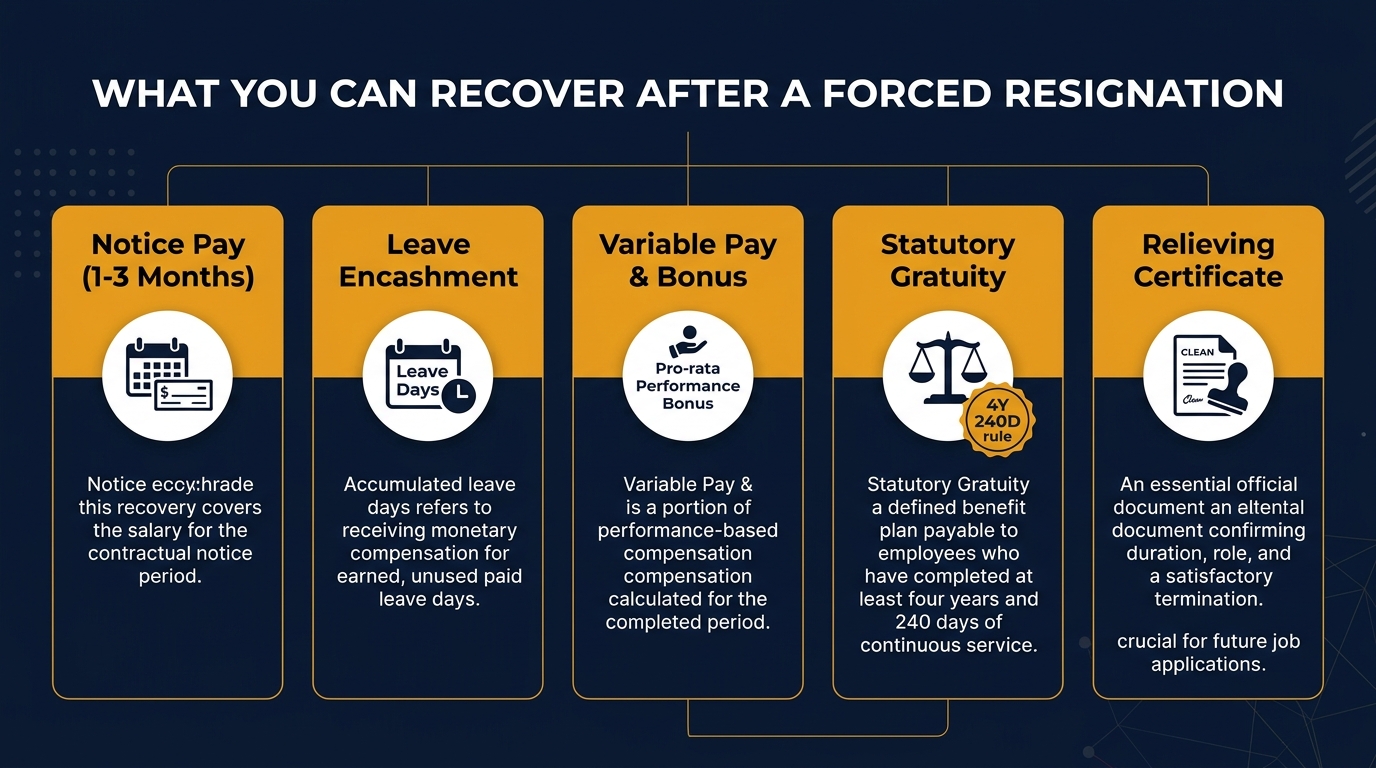
1. Contractual Notice Pay (1 to 3 Months Gross Salary)
Your job offer sets a clear notice period, usually 30, 60, or 90 days. When a company forces you out on the spot, they breach this term. State laws, including Section 30 of the Delhi Shops Act and Section 39 of the Karnataka Shops Act, require notice or pay in lieu for terminations. You can claim your full gross salary for the entire notice period as liquidated damages.
2. Statutory Retrenchment Compensation (Section 25F)
If you worked for at least 240 days in the past year, Section 25F of the Industrial Disputes Act applies. The company must pay 15 days average pay for every completed year of service. If you served more than six months in any year, that year counts as a full year. If the firm failed to pay this retrenchment money, the termination is unlawful and void.
3. Earned Leave Encashment
Your saved privilege leaves are your earned property. State Shops and Establishments Acts require firms to encash all unused earned leaves at exit. Companies cannot cancel your leaves because of a sudden layoff. If your firm cut money from your leave pay, read our guide on notice period recovery on basic salary in FNF to see how to reverse unlawful deductions.
4. Pro-Rata Variable Pay and Annual Bonus
Firms often try to cancel performance bonuses when an employee leaves. But if you completed the work quarter or met your sales targets, that money belongs to you. Withholding earned bonuses after a forced exit violates the Payment of Wages Act and the Code on Wages.
5. Statutory Gratuity Under the 4 Years 240 Days Rule
Under Section 4(1) of the Payment of Gratuity Act, 1972, gratuity is payable after five years of continuous service. However, landmark High Court rulings have clarified a vital exception. If an employee completes 4 years and 240 days of service, they meet the legal rule for five full years. An employer who forces you out at 4 years and 8 months cannot deny your gratuity payout.
6. Clean Relieving Letter and Experience Certificate
Your career documents are not bargaining chips for HR. An employer cannot withhold your relieving letter, experience certificate, or tax forms. Withholding exit papers to block a new job is an actionable civil wrong. Learn how employer withholding relieving letter legal action secures your exit papers within days.
Financial Recovery Calculation: Notice Pay, Retrenchment and FNF
To see how much money is at stake, let us look at a real example. A software engineer at a tech firm earns Rs 1,50,000 gross per month (Basic Pay: Rs 75,000; Allowances: Rs 75,000). The engineer has a 90-day notice clause, 25 saved leave days, and 3 years and 8 months of service. During a surprise layoff call, HR coerced the engineer into resigning. HR offered only 15 days of worked pay and zero notice pay.
The table below shows what HR offered versus what Indian law actually entitles the worker to recover:
| Recovery Component | Statutory Basis & Formula | Coerced HR Offer | Lawful Entitlement | Net Disputed Sum |
|---|---|---|---|---|
| Contractual Notice Pay | 3 Months Gross Salary (Contract & Shops Act) | Rs 0 (Treated as voluntary exit) | Rs 4,50,000 (3 x Rs 1,50,000) | Rs 4,50,000 |
| Retrenchment Compensation | Section 25F ID Act (15 days pay x 4 years) | Rs 0 (Denied by HR) | Rs 1,50,000 (60 days average pay) | Rs 1,50,000 |
| Earned Leave Encashment | 25 Accrued Privilege Leaves | Rs 0 (Claimed forfeited) | Rs 1,25,000 (25 days gross pay) | Rs 1,25,000 |
| Pro-Rata Annual Bonus | Accrued Performance Bonus for Q3 | Rs 0 (Conditioned on active role) | Rs 1,20,000 (Earned milestone) | Rs 1,20,000 |
| Worked Days Salary | 15 Days Worked in Exit Month | Rs 75,000 (Basic credit) | Rs 75,000 (Basic credit) | Rs 0 (Undisputed) |
| Relieving Documentation | Statutory Service Record | Held hostage for waiver | Unconditional clean exit papers | Legal Right |
| Total Recovery Amount | Comprehensive Claim Value | Rs 75,000 | Rs 9,20,000 | Rs 8,45,000 |
Giving in to HR threats would have cost this engineer Rs 8,45,000 in lost income. By taking legal action, the engineer recovered every single rupee. If your startup failed to pay your final dues, see our guide on how to handle a startup laid off without paying salary or FNF.
Visual Dispute Resolution & Recovery Framework
The Contemporary Digital Trail Protocol for Coerced Calls
When HR springs a forced resignation on you, act quickly. HR counts on panic and delay. By following our Digital Trail Protocol, you build solid proof that protects your legal claim.
Step 1: The 24-Hour Retraction Email
If you sent an exit email during a call, do not lose hope. Send a formal written retraction within 24 hours from your personal email. Address it to HR, your department head, and company leaders. Include these key points:
- State the exact date, time, and names of people on the sudden call.
- State clearly that your resignation was given under severe panic, threats, and duress.
- Cite Sections 14, 15, and 16 of the Indian Contract Act, 1872. Note that consent obtained under duress is voidable.
- Declare that you revoke and cancel your resignation immediately. Note that your exit is an involuntary layoff without notice pay.
- Demand your full contractual notice pay, leave encashment, bonus, and severance in your final settlement.
Step 2: Preserving Your Digital Evidence Trail
Your legal claim needs strong records. Secure these documents right away:
- Meeting Invites and Logs: Save screenshots of the sudden calendar invite with no clear agenda.
- Appraisals and Praise: Save past review ratings, awards, and client feedback to disprove false performance claims.
- Contract Papers: Keep your offer letter, salary revision letters, employee handbook, and severance rules.
- Salary Slips and Tax Forms: Download your last six pay slips, Form 16, and bank statements.
- Chat Records: Archive Slack or Teams messages where managers talked about team downsizing or budget cuts.
Step 3: Handling Bogus PIP Documentation
If HR tries to place you on a sham PIP, reply to every point in writing. Note the lack of past warnings. Point out the unfair timelines and list all your completed projects. When a company fires an employee for performance without fair reviews, courts treat the exit as illegal.
How to Handle Blanket No-Dues Waivers and Discharge Vouchers
A key moment occurs when HR sends your final settlement paper. Most exit portals demand that you click an agreement box. The text usually says: I accept this sum in full settlement, and I waive all further legal claims against the company.
Companies use these waiver clauses to stop you from going to court. Follow these rules to protect your money:
- Never Sign a Total Waiver: Do not sign any paper that waives your right to notice pay or severance.
- Sign Under Protest: If the portal forces you to accept the terms to get your earned pay, write an email to HR right away. State: I accept the credit of Rs [Amount] strictly under protest and without prejudice to my legal claims for unpaid notice pay and severance.
- Use the Boghara Polyfab Precedent: Under Supreme Court rulings, economic duress cancels out unfair waivers. If the company also tries to demand fake bond costs, check our legal defense on employment training bond recovery legal defense.
Legal Enforcement Matrix: How to Recover Withheld Money
When HR ignores your retraction and polite emails, you must take formal legal action. Indian law provides several forums to recover your money:
| Legal Forum & Route | Governing Law | Expected Timeline | Relief Recoverable | Key Advantage for Claimants |
|---|---|---|---|---|
| Advocate Legal Notice | Indian Contract Act & State Shops Act | 15 to 30 Days | Notice Pay, Severance, Leaves & Relieving Letter | Over 88% settle fast; low cost; zero court visits; triggers review by company lawyers. |
| Labour Commissioner Conciliation | Section 39 Karnataka Shops Act / Section 30 Delhi Act | 30 to 60 Days | Unpaid Wages, Notice Pay & Fines on Company | Labour Officer issues direct summons to company directors, creating strong corporate pressure. |
| Labour Court Reference | Section 2A & 25F Industrial Disputes Act | 6 to 18 Months | Reinstatement with Back Wages or Full Severance | Binding court order; fully available to tech engineers and non-managerial staff. |
| Civil Summary Suit | Order 37, Code of Civil Procedure, 1908 | 3 to 9 Months | Liquidated Notice Pay with 18% Annual Interest | Company must deposit funds in court to defend; fast decree on written job contract. |
For most professionals, sending an advocate legal notice is the fastest path. A formal legal notice for Full and Final settlement delay makes corporate counsel step in. Most companies prefer a quiet financial settlement over public labor disputes. You can also explore our guidance on legal notice for wrongful termination and notice pay.
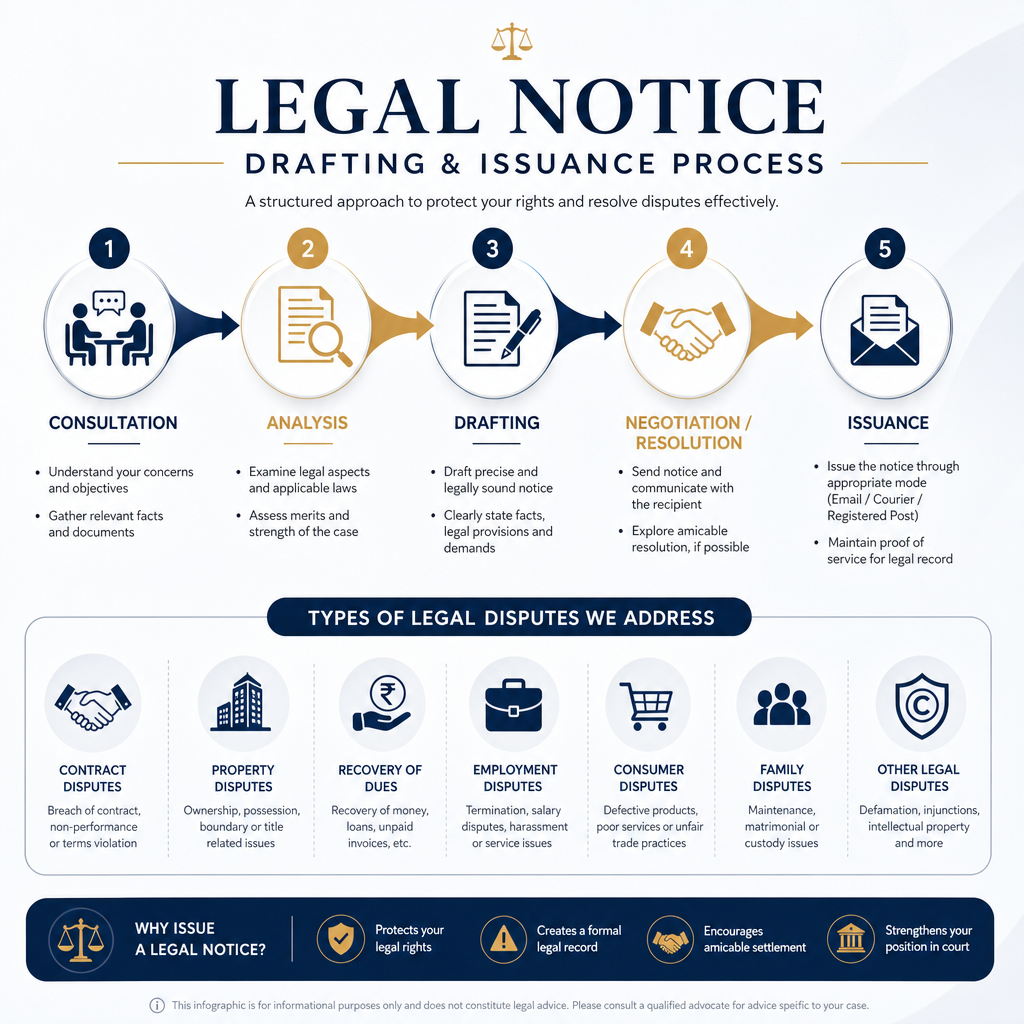
Four-Step Legal Action Plan to Secure Your Money and Exit Papers
To recover your severance, notice pay, and exit papers, follow this structured four-step plan.
Phase 1: Digital Retraction and Audit (Days 1 to 3)
Send your retraction email within 24 hours of the call. Gather your contract papers, appraisal reports, and pay slips. Calculate the exact sum owed to you across notice pay, leave encashment, bonus, and gratuity. Check our guide on how to recover full and final settlement from employer to verify your math.
Phase 2: Formal Advocate Demand Notice (Days 4 to 7)
If HR rejects your retraction, hire an advocate through LegalRecovery. Our legal team drafts a formal Legal Demand Notice served on company directors. The notice details the coercive call, cites Sections 14, 15, and 16 of the Contract Act, and demands your full notice pay with interest. Start your case now through our portal to recover your layoff severance and FNF now.
Phase 3: Legal Negotiations and Settlement (Days 8 to 20)
When the notice arrives, company leadership sends the file to their legal team. Corporate lawyers know the legal risks of defending a forced exit before a labor officer. In most cases, company lawyers offer to pay the notice pay and issue clean exit letters within two weeks.
Phase 4: Statutory Escalation and Labour Enforcement
If a firm remains stubborn, your advocate escalates the case. We file a complaint with the local Labour Commissioner and apply for conciliation. The officer summons company directors to appear. We also file a summary suit under Order 37 to freeze company assets. Learn more about how to recover unpaid salary legally when employers delay payments.
Reclaim Your Career Freedom and Severance Dues Today
You worked hard for your employer. You helped build their products and revenue. You do not have to walk away empty-handed because of corporate restructuring. A forced resignation is an unlawful termination under Indian law.
Do not let HR intimidate you with threats. Stand up for your rights. Recover your notice pay, retrenchment compensation, earned leave pay, and clean relieving letter. Connect with LegalRecovery today, serve a formal demand notice, and reclaim every rupee you are legally owed.
Popular Searches & Related Topics

Legal Recovery is India's trusted consumer protection and legal tech platform. We specialize in holding corporations accountable for unfair trade practices, deceptive marketing, and commercial fraud. With over 15,000 customers counselled, our mission is to provide fast, out-of-court resolutions by connecting you with top-tier panel advocates for immediate legal action.
Client Reviews
"My IT services employer in Hinjawadi forced me onto a 15-minute Zoom call and made me submit my resignation to avoid a layoff tag. They refused my 90-day notice pay. LegalRecovery drafted a sharp Advocate Demand Notice citing Section 15 coercion and Karnataka Shops Act. The company settled my full notice pay of Rs 3,45,000 and issued my relieving letter in 14 days."
Tanmay Deshmukh (Pune)
"I was placed on a bogus 14-day PIP and forced to resign immediately. HR withheld my variable bonus and 2 months notice pay. Team LegalRecovery intervened with a formal legal notice detailing our digital evidence trail and Supreme Court precedents on economic duress. The company cleared my Rs 4,12,000 FNF without any court litigation."
Sneha Iyer (Bengaluru)
"Our fintech startup conducted mass layoffs and forced 40 engineers to click resign in the HRMS portal to save money on severance. LegalRecovery represented me, served a demand notice for Section 25F retrenchment compensation and notice pay, and recovered my Rs 5,20,000 settlement within 3 weeks."
Kunal Mehrotra (Gurugram)
"HR locked my Slack and email access during an afternoon Teams call and threatened to issue a termination letter unless I sent a voluntary resignation. I followed LegalRecovery digital retraction protocol and sent an advocate notice. They paid my 60 days notice pay and leave encashment in full."
Pooja Nambiar (Hyderabad)
"After 4 years and 8 months of service, my employer forced me to resign during downsizing and refused to pay gratuity and severance. LegalRecovery invoked the 4 years 240 days rule and Delhi Shops Act notice mandates. I received my full Rs 3,80,000 FNF payout including gratuity."
Rohit Verma (Noida)
Frequently Asked Questions
Related Articles

About Author
Anuj Anand Malik
View ProfileAnuj Anand Malik, Founder of AMA Legal Solutions, is a trusted advocate, loan settlement expert, legal advisor, and banking lawyer. With over a decade of experience in loan settlement, corporate law, financial disputes, and compliance, he leads a result-driven law firm based in India that helps individuals, startups, and businesses achieve legal and financial stability.
Connect on LinkedInNeed Legal Help?
Get expert advice on loan settlement, banking disputes and debt relief.
Start Recovery NowRequest Callback