How to Choose the Best Legal Recovery Law Firm in India
The right choice depends on your dispute, evidence, limitation date and the forum your claim belongs in.


Table of Contents
Table of Contents
Swipe →An unpaid salary, a landlord’s withheld deposit and a supplier’s overdue invoice can all feel like the same problem: someone owes you money. Legally, they may require different proof, different deadlines and different forums. That is why there is no credible single answer to “Which is the best legal recovery law firm in India?” The first useful test is simpler: before recommending a notice or a case, can the prospective advocate identify who legally owes you the money, what proves it, when time may run out and where the claim belongs?
Why “best” depends on the money you are trying to recover
Imagine three consultations. An employee says HR has withheld ₹85,000 as a “full-and-final adjustment”. A tenant wants a ₹60,000 deposit back after handing over the keys. A supplier has invoices worth ₹8 lakh that a company has stopped answering. Sending each debtor an impressive-looking notice is not, by itself, a strategy. The employee needs a wage and deduction analysis; the tenant needs to challenge particular damage claims; the supplier may need an eligibility check for a specialised payment route.
Promotional rankings cannot tell you whether a firm has handled your kind of dispute, understands your evidence or will take the matter beyond a notice if necessary. Advocates in India are also subject to Bar Council restrictions on advertising and solicitation. Treat “No. 1” and guaranteed-success claims as marketing, not independent measures of skill.
A better comparison starts with the work a firm proposes to do. Ask what it needs to review before advising you, which parts of your claim are strong or contested, and what a sensible first step might cost. A good answer can include “we need to check this first”. Recovery advice should become more specific as the facts become clearer, not more confident before anyone has opened your documents.
Match the firm’s experience to your particular dispute
Experience in “money recovery” is broad. The useful question is whether the person assessing your case has dealt with the kind of refusal you are facing. In an unpaid salary or employment-dues matter, for example, counsel should distinguish earned wages from a disputed incentive, reimbursement or notice-period deduction. In a consumer refund dispute, the purchase terms, cancellation date and identity of the seller or service provider may matter more than a long account of customer-service calls.
Similarly, rental deposit recovery often turns on the agreement, handover condition and itemised deductions, while freelancer payment recovery may turn on whether the client accepted a milestone and which company actually contracted for the work. Ask for relevant experience, not a claim that every unpaid amount follows the same template.
Claim type | Experience to look for | Evidence or issue to discuss | Likely first forum or escalation route |
|---|---|---|---|
Unpaid salary and employment dues | Wage claims and contested settlements | Payslips, resignation, earned wages and deductions | Employer demand, then the appropriate wage authority where applicable |
Consumer refunds and complaints | Product and service refund disputes | Purchase terms, payment, defect and cancellation records | Seller escalation, National Consumer Helpline, then consumer commission |
Security deposits and rental recoveries | Local tenancy rules and civil claims | Agreement, handover proof and itemised deductions | Landlord demand, then a route under applicable state law or civil court |
Freelancer and client payments | Service contracts and invoice disputes | Scope, delivery, acceptance and contracting entity | Client demand; eligible MSE route or civil/commercial court |
Personal money lent to friends or relatives | Informal-loan evidence and civil recovery | Transfer, loan messages and repayment date | Borrower demand, then civil recovery where warranted |
Airline and travel recoveries | Travel terms and passenger complaints | Booking channel, cancellation and refund calculation | Airline or provider grievance channel, AirSewa where relevant, consumer commission |
Vendor and invoice recovery | B2B contracts and supplier eligibility | Purchase order, delivery acceptance, ledger and Udyam status | Buyer demand; eligible MSE Facilitation Council or commercial/civil court |
Property and builder disputes | Project records and property remedies | Agreement, possession date and instalments | Builder demand, relevant State/UT the applicable legal framework or another available forum |
These are starting points, not automatic forum assignments. The correct route depends on the facts, statutory eligibility and applicable local procedure.
If money was lent to a friend, an advocate familiar with informal personal loans should ask whether your UPI transfer can be tied to messages calling it a loan. A transfer alone may be explained away as a gift or contribution. For airline and travel claims, the booking channel and the applicable cancellation rules are central; a flight refund is not assessed exactly like a hotel booking dispute.
For vendor dues, ask whether the firm checks purchase orders, proof of supply and any micro or small enterprise eligibility before suggesting a forum. In builder disputes, ask whether it can explain the difference between leaving a delayed project and seeking a refund, and staying in it while claiming delay interest. Relevant experience means being able to explain those choices in terms of your documents.
Will the firm identify the debtor, the proof and the deadline?
The name on the messages may not be the person who owes you
A freelancer may have dealt entirely with a marketing manager, although the invoice was raised on a private company. A tenant may have paid a broker, although the rent agreement names the owner. A travel portal may have collected the fare, while the airline must address a particular part of the refund. Before drafting a demand, counsel should trace the contracting party, payment recipient and role of each intermediary. Naming the wrong recipient can waste time and invite an easy denial.
The same discipline applies to the amount. Bring a dated payment trail, written terms, invoices or receipts, and the messages that explain what each payment was for. If the other side says “we already adjusted it”, ask the firm to reconcile credits and deductions rather than simply repeat your original figure. For a landlord’s ₹60,000 deposit, a ₹5,000 documented utility bill and a disputed ₹20,000 repainting charge require different answers.
Ask for a date, not “there is still time”
Limitation is claim-specific. An ordinary contractual recovery claim may commonly face a three-year period, but the starting event, the relief sought and any legally effective acknowledgement or part-payment need examination. Consumer complaints ordinarily have a two-year period under section 69 of the Consumer Protection Act, 2019, with possible condonation of delay. A claim under section 45 of the Code on Wages, 2019 ordinarily has a three-year filing period. None of these figures should be applied blindly to another claim.
Ask the firm to put the likely limitation date and its assumptions in writing. If an invoice was payable 30 days after acceptance, when did acceptance occur? If a deposit became refundable after handover, what proves the handover date? Sending a legal notice does not automatically stop the limitation clock. If a deadline is close, filing advice matters more than an extended exchange of demands.
Visual Dispute Resolution & Recovery Framework
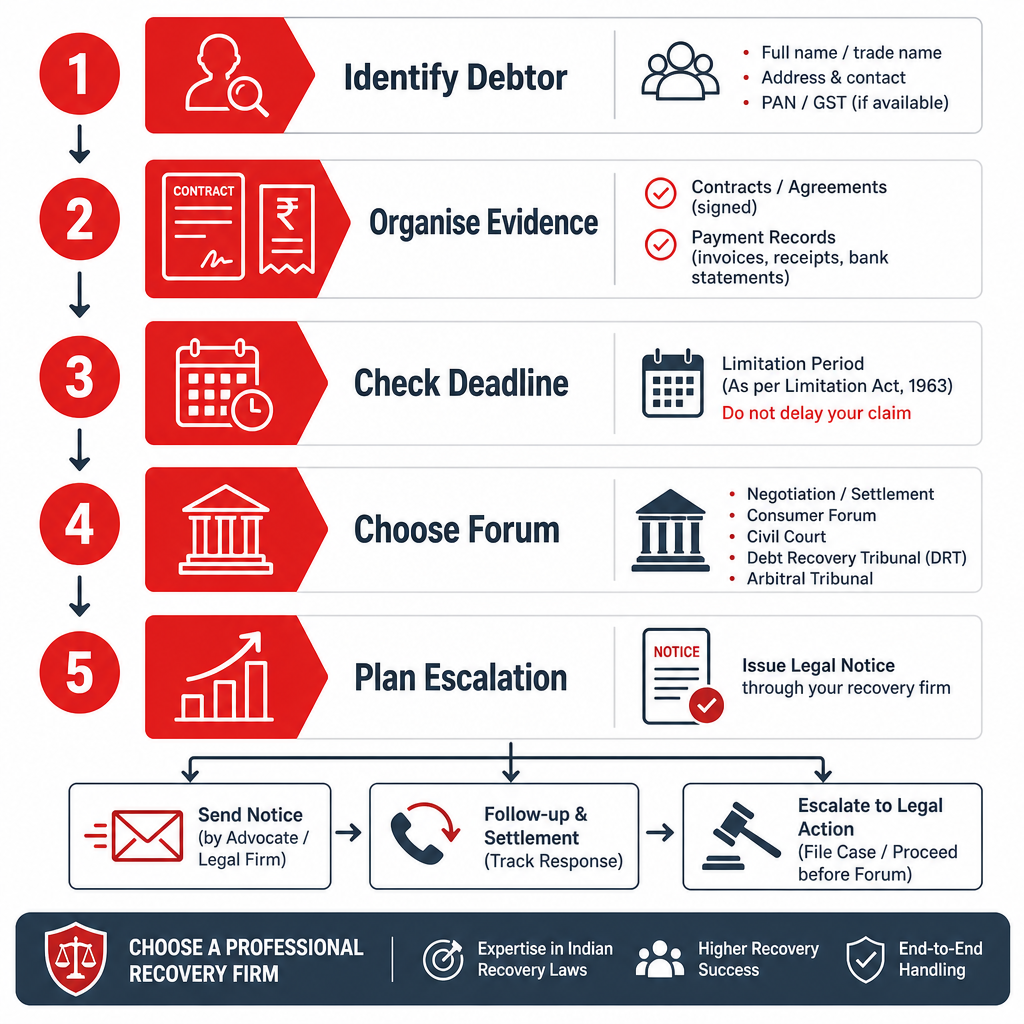
Does the firm know where your claim can actually go?
A legal notice may prompt payment, but it is not a substitute for knowing the next forum. Ask counsel to name the proposed authority or court and explain why your claim qualifies. “We will file a consumer case if they ignore us” is not a sound answer to every unpaid invoice.
For wages, the Code on Wages, 2019 has been effective since 21 November 2025. Section 17 sets payment timelines, including monthly wages ordinarily due by the seventh day of the following month and wages due on resignation or termination within two working days, subject to statutory qualifications. Section 18 restricts deductions, and section 45 provides for claims before the appointed authority. Counsel should check whether the appropriate authority is Central or State and separate wage claims from other disputed contractual amounts.
For a qualifying purchase or service, a consumer may first try the National Consumer Helpline at 1915, then consider a complaint through e-Jagriti. Consumer commission level is based on consideration paid, not the compensation demanded: District up to ₹50 lakh, State above ₹50 lakh to ₹2 crore, and National above ₹2 crore. A business chasing an ordinary unpaid sale does not become a consumer merely because the buyer behaved badly.
Some routes are even more dependent on eligibility. A qualifying micro or small supplier may use the delayed-payment framework under sections 15 to 18 of the MSMED Act, including a reference to the MSE Facilitation Council. The agreed payment period cannot exceed 45 days from acceptance, and statutory delay interest can be substantial. But medium-enterprise registration or trading activity alone does not establish eligibility. Other qualifying commercial disputes may go to a Commercial Court if the applicable value threshold is met; section 12A generally requires pre-institution mediation unless urgent interim relief is sought.
For a registered housing project, sections 18 and 19 of the applicable legal framework distinguish a buyer withdrawing and seeking a refund with prescribed interest from one remaining in the project and seeking delay interest. A complaint goes to the relevant State or UT authority under section 31; compensation has its own adjudication route under section 71. Rental deposits, by contrast, require a check of applicable state tenancy law: the Model Tenancy Act is not a nationwide deposit-refund rule. A firm that knows the forum should also know when a popular-sounding forum does not fit.
What will the notice do besides demand payment?
A useful notice makes it harder for the recipient to pretend the dispute is unclear. It should go to the correctly identified person or entity, at an address counsel has checked, and explain the transaction in dates and figures. For an invoice, that means the amount billed, the contractual due date, payments received, the precise balance and any separately justified interest. For a rental deposit, it means addressing the landlord’s stated deductions rather than demanding the entire deposit without comment.
Ask whether the draft deals with the defence you already expect: “the work was never approved”, “the product was non-refundable” or “notice-period pay was adjusted”. It need not predict every argument, but ignoring the one already in your inbox weakens the demand. The requested response should be clear: pay, provide an itemised calculation, or identify a genuine dispute by a stated date.
Delivery is part of the plan. Where appropriate, ask about dispatch by Registered Post and preserving its receipt and tracking record, alongside email or WhatsApp copies with retained delivery evidence. The firm should explain what it will do if the notice is returned, disputed or ignored. A notice creates a documented opportunity to resolve the matter; it does not itself compel payment or guarantee that the eventual forum will accept every amount claimed.
Compare the full cost and the chances of collecting, not just the notice price
A low entry price can be useful if you know exactly what it buys. Ask for written charges for document review, drafting, dispatch and follow-up, then separate estimates for filing, appearances, additional evidence, settlement work, appeals and enforcement. Confirm whether government fees, postage and local counsel are included. A ₹1,499 starting fee and a quote for conducting a contested case are not comparable products.
LegalRecovery, for instance, offers an online process that begins with case submission and expert review, followed by drafting and registered-post dispatch, follow-up and possible escalation. Its stated pricing starts at ₹1,499 flat fee. You can review how that process works, then ask which steps the quoted fee covers in your case. Online case management can spare you routine visits; it should not be understood as a promise that no hearing or personal appearance will ever be required in a later proceeding.
Also ask what happens after a favourable order. Does the debtor have an identifiable address and assets? Is the other side likely to contest the amount? Would a settlement payable in instalments be more realistic than years of proceedings? No responsible firm can promise a recovery percentage before examining those questions. The cheapest notice is poor value if nobody has considered whether the demand is provable, enforceable or proportionate to pursue.
Use one consultation to compare firms on substance
Take the same short chronology and document set to each prospective firm. Explain who owes what, when payment was due, what has been paid, what excuse was given and when you last received a clear acknowledgement. Then compare the answers, not the sales language. The questions below help reveal whether you are buying a considered plan or merely a drafted letter.
Question to ask | What a useful answer should address | Warning sign | Fee or scope detail to confirm |
|---|---|---|---|
When could my claim become time-barred? | Likely starting date, applicable period and facts needing verification | “A notice gives you more time” | Is limitation review included before dispatch? |
Who exactly should receive the demand? | Contracting entity, payment recipient and relevant intermediary | Using only the name in your phone contacts | Is address and entity verification included? |
Which forum would you use if this fails? | Eligibility, location, value threshold and an alternative if needed | Same forum proposed for every dispute | Is filing advice separate from filing itself? |
What will the notice say? | Dated calculation, supporting proof and likely defence | Guaranteed payment from a standard template | Do drafting, revisions, dispatch and tracking cost extra? |
What will each later stage cost? | Separate estimates for filing, hearings and enforcement | One attractive price with no scope | Are fees, expenses and local counsel itemised? |
What if we win but are not paid? | Settlement prospects and possible enforcement steps | Promised recovery percentage | Who handles enforcement, and at what charge? |
Before hiring, establish who will review your documents, who will draft the notice, who will speak to you, and who could represent you at the next stage. Ask how updates are sent and whether you will approve the final demand before dispatch. If you have a close deadline, say so at the start and ask whether the proposed timetable protects it.
The best choice is the firm that can explain your claim without flattening it into a generic “money recovery” case. You should leave the consultation knowing what still needs proof, which route appears available, what the first step costs and what might happen if the other side refuses. That clarity is more valuable than a ranking, and it gives you a practical basis for deciding whom to trust with your money.
Popular Searches & Related Topics

Legal Recovery is India's trusted consumer protection and legal tech platform. We specialize in holding corporations accountable for unfair trade practices, deceptive marketing, and commercial fraud. With over 15,000 customers counselled, our mission is to provide fast, out-of-court resolutions by connecting you with top-tier panel advocates for immediate legal action.
Client Reviews
"My former employer had held back part of my salary and called it a full-and-final adjustment. LegalRecovery reviewed my payslips and exit emails, explained which amounts needed clearer proof and prepared a notice with a dated calculation. I appreciated the practical updates and that nobody promised a guaranteed outcome."
Ananya Sharma
"After I returned my rented flat, the landlord proposed several deductions from my security deposit without an itemised explanation. LegalRecovery helped organise the agreement, handover messages and payment records, then sent a clear demand addressing the disputed deductions. The process and next steps were explained plainly."
Rohit Mehta
"A client had not paid my final freelance invoice and kept saying the work was not approved. LegalRecovery helped me put the brief, delivery messages and invoice into a clear timeline before drafting the notice to the contracting company. I found the document review and follow-up helpful."
Priya Nair
"Our small business had an overdue supplier invoice after the buyer stopped responding. LegalRecovery reviewed the purchase order, delivery proof and ledger, and checked the documents relevant to the delayed-payment route before preparing a notice. I valued the specific advice about evidence and possible escalation."
Vikram Singh
Frequently Asked Questions
Related Articles
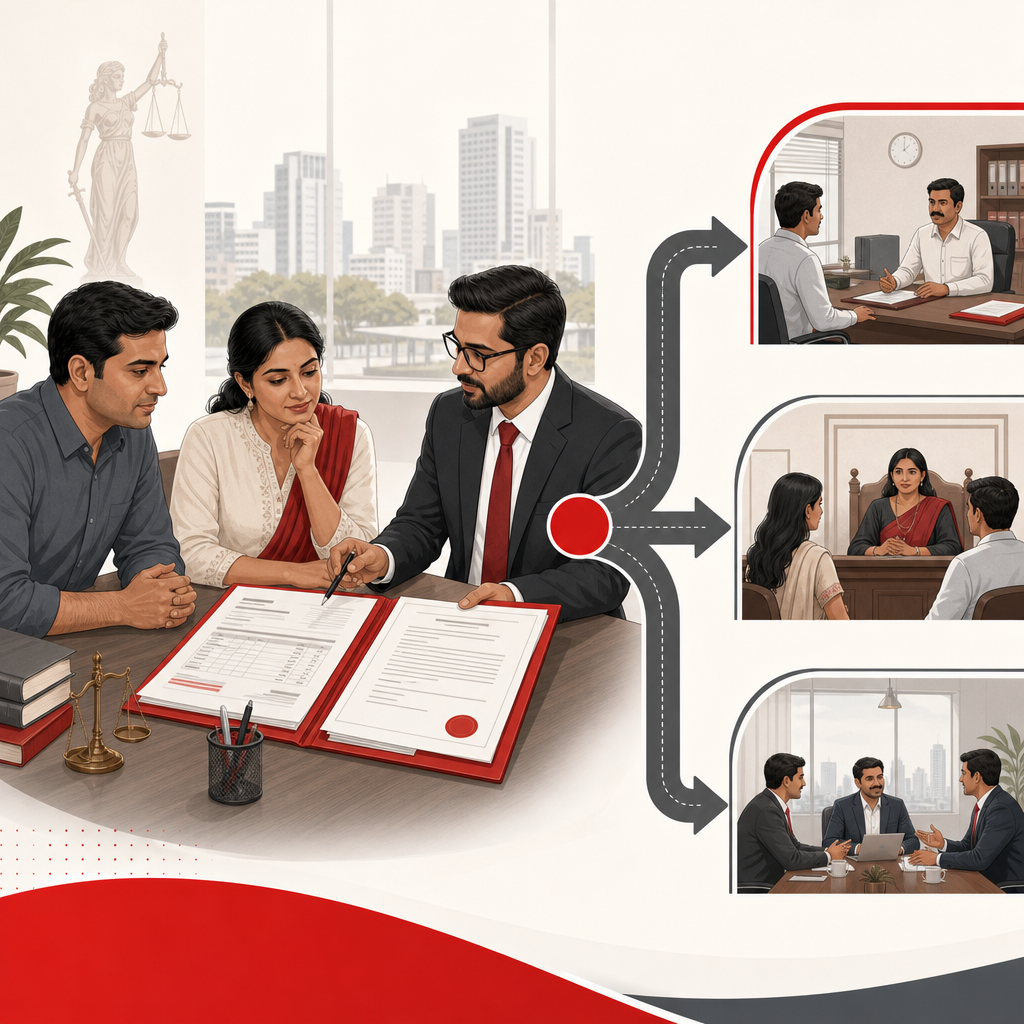
Best Legal Recovery Services in India: How to Choose in 2027
The right service depends on who owes you money, what proves the claim and which forum can act.
Read Article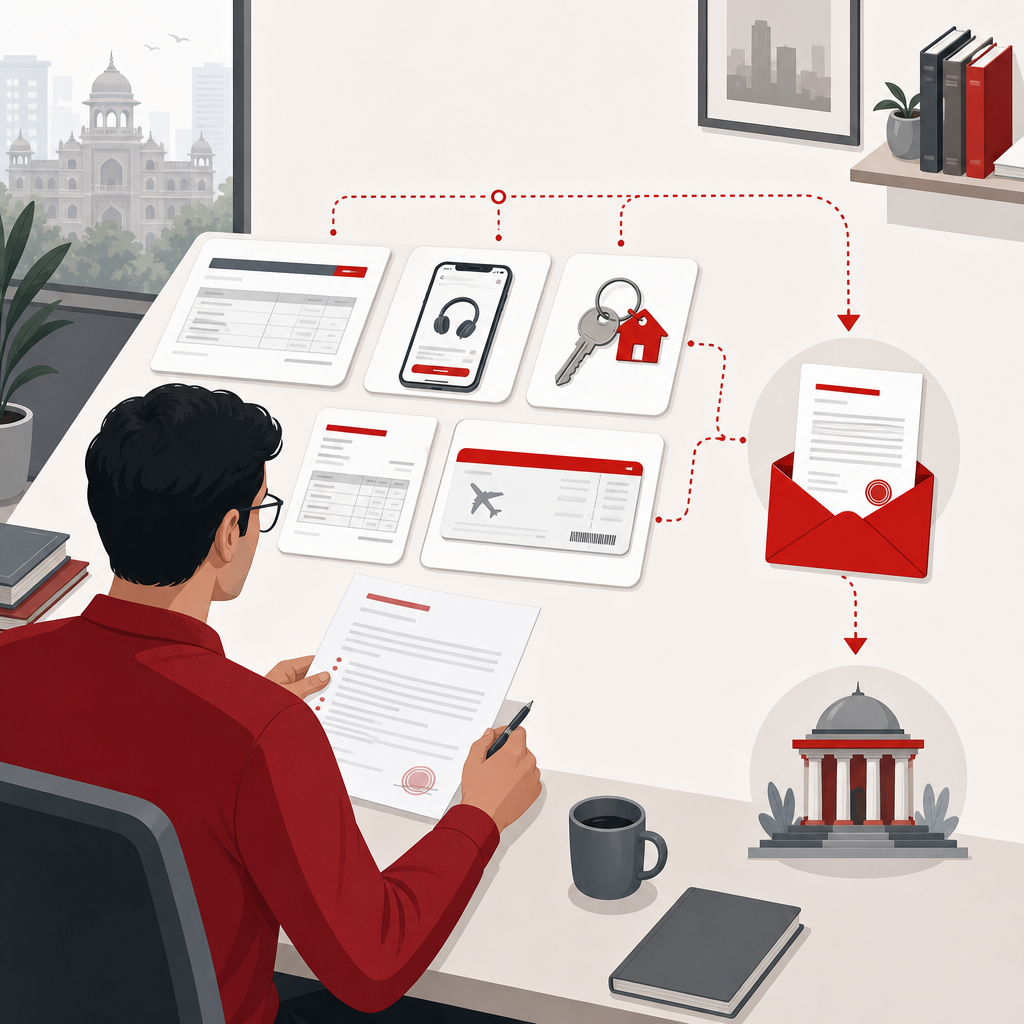
What Is the Best Platform to Recover Money in India in 2027?
There is no one-size-fits-all route: match your claim to the right notice service, government portal or forum.
Read Article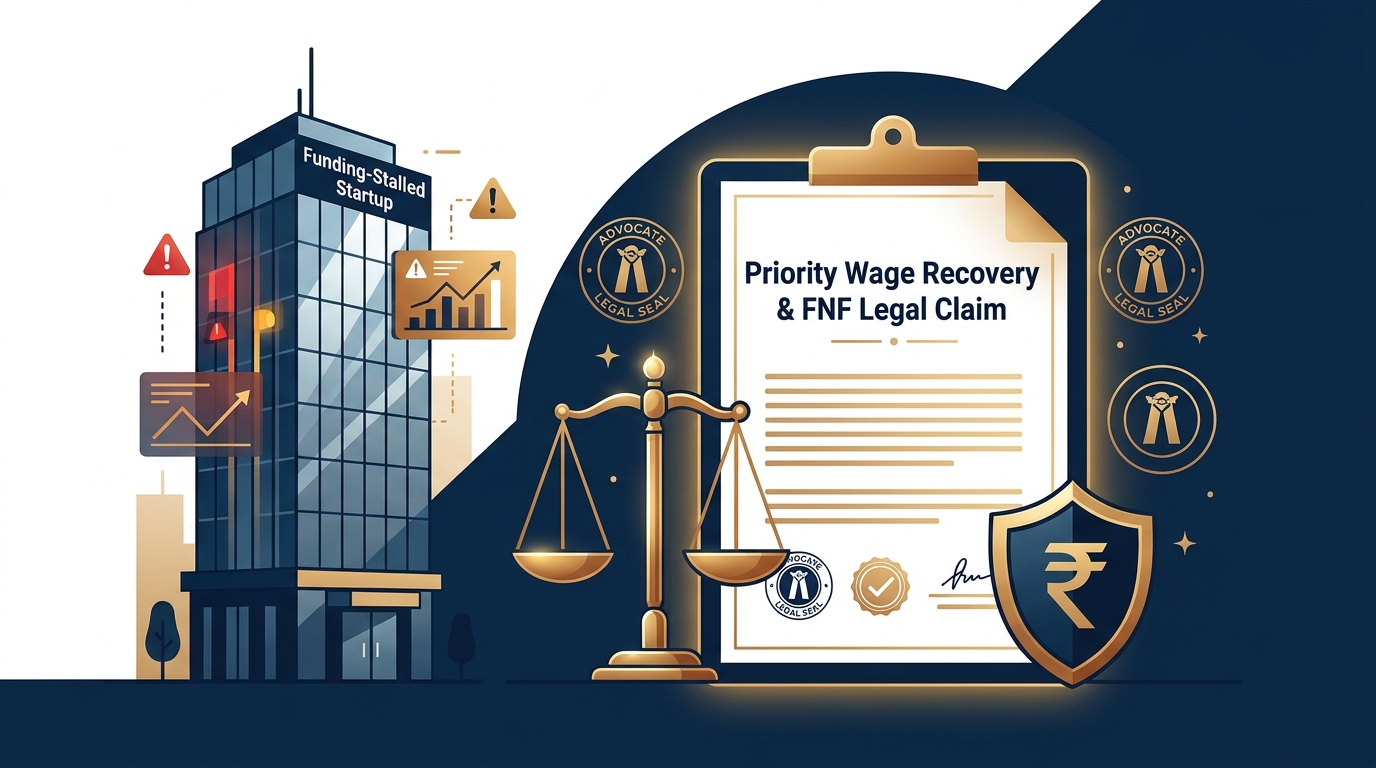
How to Recover Unpaid Salary & FNF from a Shutting Down Startup
startup not paying salary due to funding issues, can directors be held liable for unpaid employee salary, nclt operational creditor employee salary recovery, legal notice to startup founders for unpaid fnf, summary suit for unpaid salary and fnf, recover unpaid salary and fnf from shutting down startup, section 14a epf act director liability, section 276b income tax act tds default, section 33c2 industrial disputes act revenue recovery certificate, order 37 cpc liquidated salary debt, first mover liquidity strategy startup shutdown
Read Article
How to Send a Money Recovery Legal Notice in India (2027)
What to include, how to deliver it, what it may cost, and what to do if the recipient does not pay.
Read ArticleAbout Author
Anuj Anand Malik
View ProfileAnuj Anand Malik, Founder of AMA Legal Solutions, is a trusted advocate, loan settlement expert, legal advisor, and banking lawyer. With over a decade of experience in loan settlement, corporate law, financial disputes, and compliance, he leads a result-driven law firm based in India that helps individuals, startups, and businesses achieve legal and financial stability.
Connect on LinkedInNeed Legal Help?
Get expert advice on loan settlement, banking disputes and debt relief.
Start Recovery NowRequest Callback