Legal Recovery of Medical Bills: A Guide for Doctors
Strategies to Recover Unpaid Medical Fees from Patients

Table of Contents
Table of Contents
Swipe →In the realm of medical practice, providing quality healthcare services is of utmost priority, but it often gets overshadowed by the increasing number of patients who default on paying their medical bills. This situation puts healthcare providers, including doctors and clinics, in a challenging position as it directly affects their financial stability and operational efficiency. Legal recovery of unpaid medical bills, therefore, becomes a critical process for ensuring that healthcare professionals receive their rightful dues.
Legal Mechanisms for Recovering Unpaid Medical Fees in India
The legal framework governing the recovery of unpaid medical fees in India primarily revolves around the Indian Contract Act, 1872, and the Civil Procedure Code, 1908. The contract between a doctor and a patient is considered a service contract, where the doctor agrees to provide medical services in exchange for a fee. When a patient defaults on this payment, it constitutes a breach of contract, allowing doctors to pursue legal remedies for recovery.
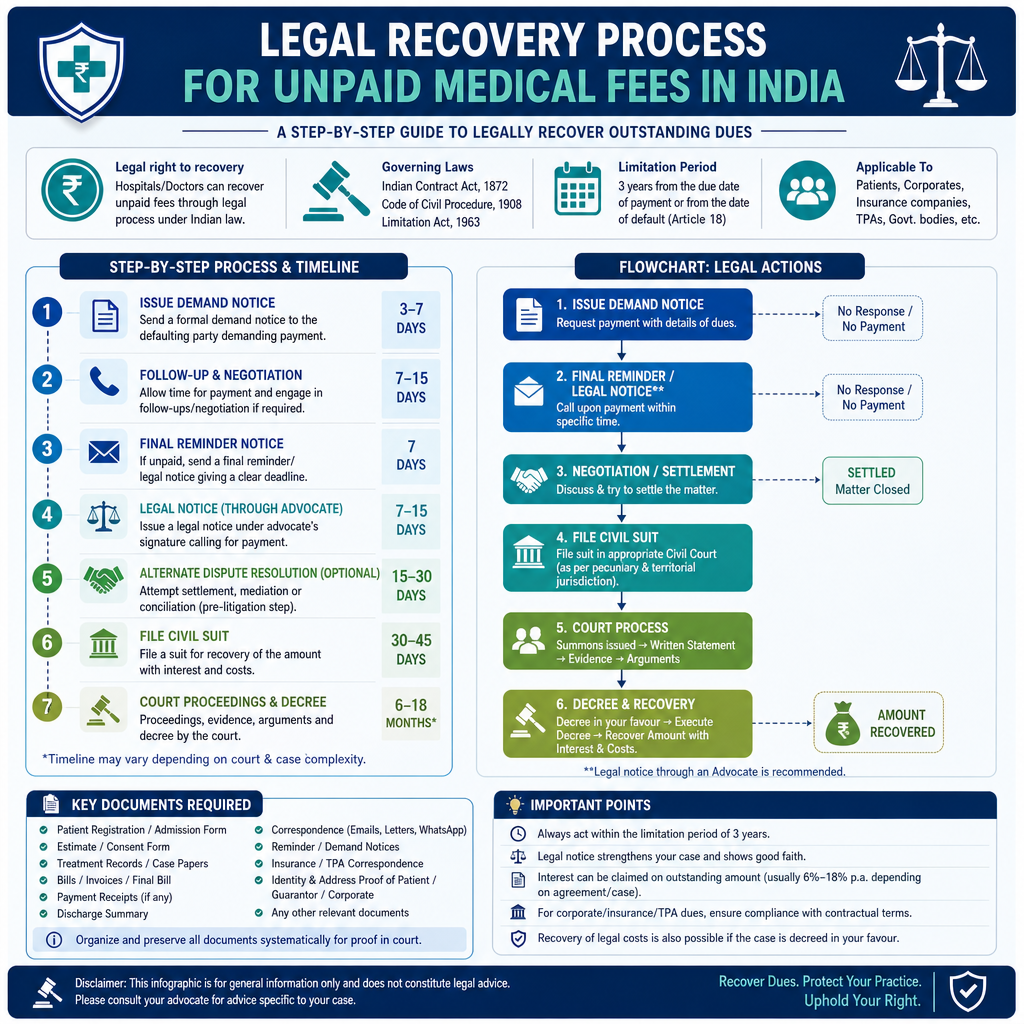
Doctors can initiate legal action by sending a demand notice to the defaulter, which serves as a formal request for payment before proceeding to court. If the notice goes unheeded, the doctor can file a civil suit for recovery in the appropriate court. The civil suit is generally filed under Order XXXVII of the Civil Procedure Code, which deals with summary suits for recoveries involving liquidated amounts, such as unpaid medical fees.
It is crucial for doctors to maintain a comprehensive record of all transactions and communications with patients to substantiate their claims. This includes invoices, proof of treatment, payment agreements, and any correspondence related to payment reminders.
Role of Legal Notices in Medical Bill Recovery
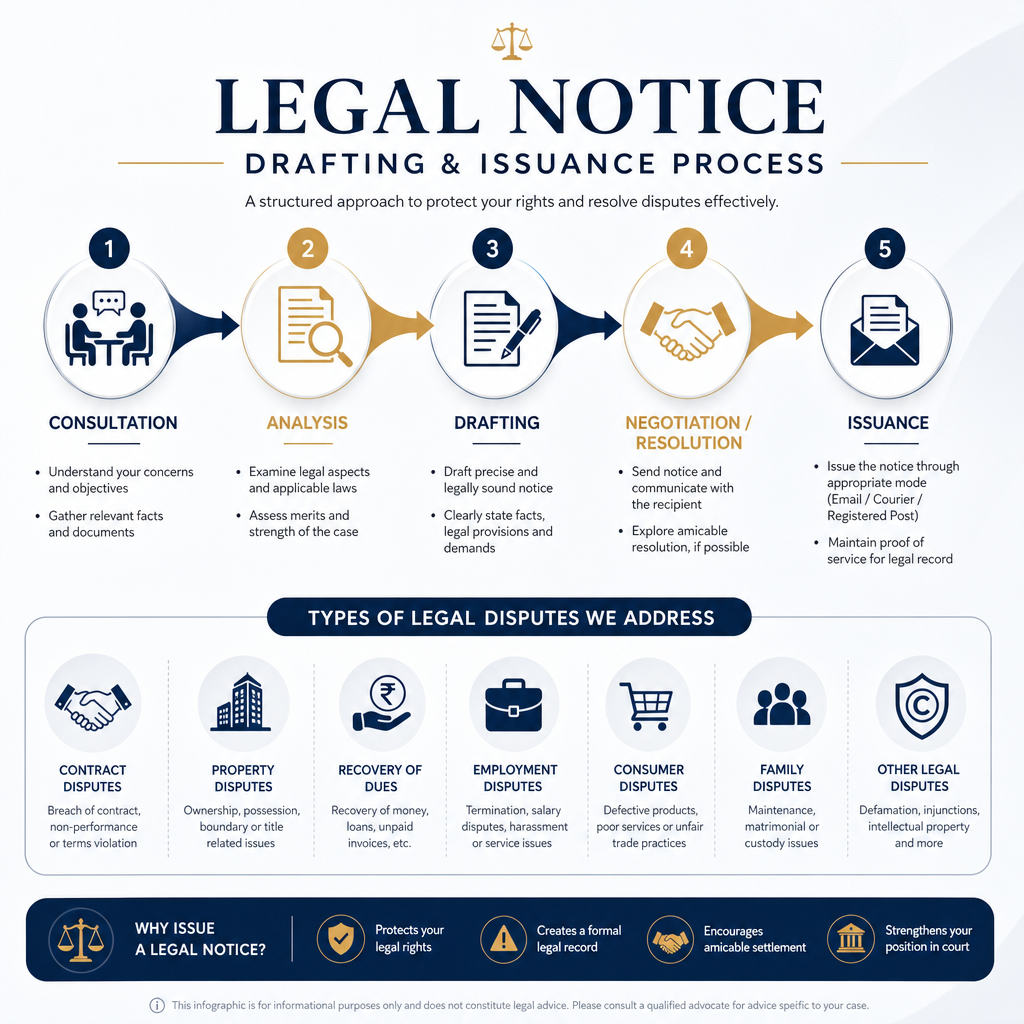
A legal notice is the first step in the legal recovery process for unpaid medical fees. It serves as an official intimation to the defaulter about the pending dues and the intention to initiate legal proceedings if the dues are not cleared within a stipulated time frame. Drafting a precise and comprehensive legal notice is pivotal to set the foundation for a strong legal case.
The notice should clearly outline the details of the services rendered, the amount due, and the consequences of non-payment, including the initiation of court proceedings. It must be sent through registered post or any other legally recognized method to ensure proof of dispatch and delivery.
Doctors can engage legal professionals to assist in drafting and sending these notices. Services like sending a legal notice for recovery of money are available through online platforms to streamline this process.
Filing a Civil Suit for Medical Bill Recovery
When a legal notice fails to yield the desired result, the next step is to file a civil suit. This involves several procedural steps that need to be meticulously followed to ensure the admissibility of the case in court.
The suit is filed in the appropriate civil court based on the jurisdiction, which is determined by the location of the defendant or the place where the contract was executed. Typically, for amounts up to ₹20 lakhs, the suit can be filed in a District Court, while higher amounts may require filing in the High Court.
Accompanying the suit must be a plaint, which is a formal statement of the claim. The plaint must detail the nature of the contract, the services provided, the amount due, and the efforts made to recover the dues. It should be supported by documentary evidence, such as treatment records, invoices, and copies of the legal notice sent.
Statutory Timelines and Limitations
Understanding the statutory timelines and limitations is crucial in the legal recovery of medical fees. The Limitation Act, 1963, prescribes a time limit within which a suit for recovery must be filed, usually three years from the date the debt became due.
Missing these timelines can result in the court dismissing the case on the grounds of limitation, thereby barring the recovery of the dues. Thus, it is imperative for healthcare providers to initiate legal proceedings promptly once the payment becomes overdue.
Action | Statutory Timeline | Relevance |
|---|---|---|
Issuance of Legal Notice | Variable (typically 15-30 days response time) | Initiates the formal recovery process |
Filing Civil Suit | Within 3 years from the due date | As per the Limitation Act, 1963 |
Execution of Decree | Within 12 years from the date of decree | Enforcing the court's judgment |
Evidentiary Documentation Required for Court Proceedings
For a civil suit to successfully recover unpaid medical fees, the evidence must be compelling and irrefutable. The Indian Evidence Act, 1872, lays down the framework for what constitutes admissible evidence in court. The following documents are crucial for substantiating a doctor's claim:
Invoices and Payment Records: These serve as primary evidence of the contract and the amount due.
Patient's Consent Forms: These demonstrate the patient's agreement to pay for services rendered.
Medical Records: These substantiate the services provided and justify the fees charged.
Correspondence Records: Emails, letters, or messages that reflect attempts to recover the dues.
Copy of the Legal Notice: Proof of dispatch and delivery to demonstrate efforts made before filing a suit.
Visual Dispute Resolution & Recovery Framework
Alternative Dispute Resolution: Mediation and Arbitration
While litigation is a viable option for the recovery of unpaid dues, alternative dispute resolution (ADR) methods can offer a more amicable and faster resolution. Mediation and arbitration are two such methods that can help resolve disputes without the need for protracted court battles.
Mediation involves a neutral third party who facilitates dialogue between the doctor and the defaulter to reach a settlement. It is often less formal and adversarial than court proceedings, making it a preferred choice for maintaining professional relationships.
Arbitration, on the other hand, involves a more structured process where an arbitrator reviews evidence and renders a decision. Though more formal than mediation, arbitration can be quicker and more cost-effective than traditional litigation.
Doctors can include clauses in their service agreements that mandate ADR processes, helping to expedite dispute resolution and reduce legal costs.
Leveraging Online Platforms for Recovery
With the advent of digital technology, many online platforms facilitate the recovery of unpaid dues. These platforms streamline the process by offering services like drafting legal notices, filing cases, and even facilitating ADR. Platforms like Legal Recovery provide comprehensive recovery services tailored for different sectors, including medical professionals.
These platforms can assist in quickly generating legal notices, tracking responses, and initiating follow-up actions, thereby saving time and effort for healthcare providers. They also offer insights and guidance on effective legal debt recovery strategies and solutions.
Common Challenges and Solutions in Medical Bill Recovery
Recovering unpaid medical fees is fraught with challenges, ranging from lack of clear communication to patients contesting the charges. Understanding these challenges and implementing strategic solutions is vital for successful recovery.
One common issue is patients disputing the charges based on perceived discrepancies in billing. To mitigate this, doctors should ensure transparent billing practices and provide detailed explanations of charges at the onset of treatment.
Another challenge is the lack of follow-up on outstanding payments. Regular reminders via email or phone can help in maintaining communication and encouraging timely payments. Additionally, employing a dedicated accounts receivable team can streamline the process.
Finally, the legal process itself can be daunting for healthcare providers unfamiliar with legal procedures. Engaging professional legal services can alleviate this burden, providing expert guidance and representation throughout the recovery process.
Conclusion: Best Practices for Preventing Unpaid Medical Fees
Preventing the occurrence of unpaid dues is as crucial as recovering them. Implementing best practices can significantly reduce the incidence of non-payment and enhance financial security for healthcare providers.
Firstly, doctors should consider implementing a robust billing system that requires upfront payment for services or partial payment plans to mitigate the risk of non-payment. Clear communication regarding the payment terms and conditions should be established from the beginning.
Secondly, maintaining transparent records and documentation can deter disputes and bolster recovery efforts if they arise. Regular audits and reconciliations of accounts can help identify any discrepancies early on.
Lastly, establishing a strong contractual agreement that includes clauses for ADR and specifies penalties for late payments can act as a deterrent for defaulters, encouraging timely settlements.
For further guidance on recovery processes and legal frameworks, healthcare providers can explore resources and services offered by platforms like Legal Recovery.
Popular Searches & Related Topics

Legal Recovery is India's trusted consumer protection and legal tech platform. We specialize in holding corporations accountable for unfair trade practices, deceptive marketing, and commercial fraud. With over 15,000 customers counselled, our mission is to provide fast, out-of-court resolutions by connecting you with top-tier panel advocates for immediate legal action.
Client Reviews
"The recovery service was exemplary. They were thorough with documentation and provided clear guidance throughout the legal process."
Rajesh Mehta
"Efficient and professional service. The team handled everything, from legal notices to court proceedings, with great expertise."
Priya Sharma
"Highly satisfied with the legal recovery services. They streamlined the entire process, ensuring minimal stress on our part."
Anil Kumar
"Their strategic approach and prompt follow-up were key in recovering our dues. Highly recommend their services for any medical professional."
Sneha Joshi
"Exceptional service! They made navigating the legal framework seamless and ensured our financial interests were protected."
Kiran Desai
Frequently Asked Questions
Related Articles
About Author
Team LegalRecovery
View ProfileTeam LegalRecovery is a dedicated team of legal and financial professionals specializing in loan settlement, banking disputes, debt relief, and corporate compliance. We are committed to helping clients achieve debt freedom and business stability through expert strategic advisory.
Connect on LinkedInNeed Legal Help?
Get expert advice on loan settlement, banking disputes and debt relief.
Start Recovery NowRequest Callback