Mastering the Art of Crafting a Legal Demand Notice
Learn how to effectively draft a legal demand notice for optimal recovery.

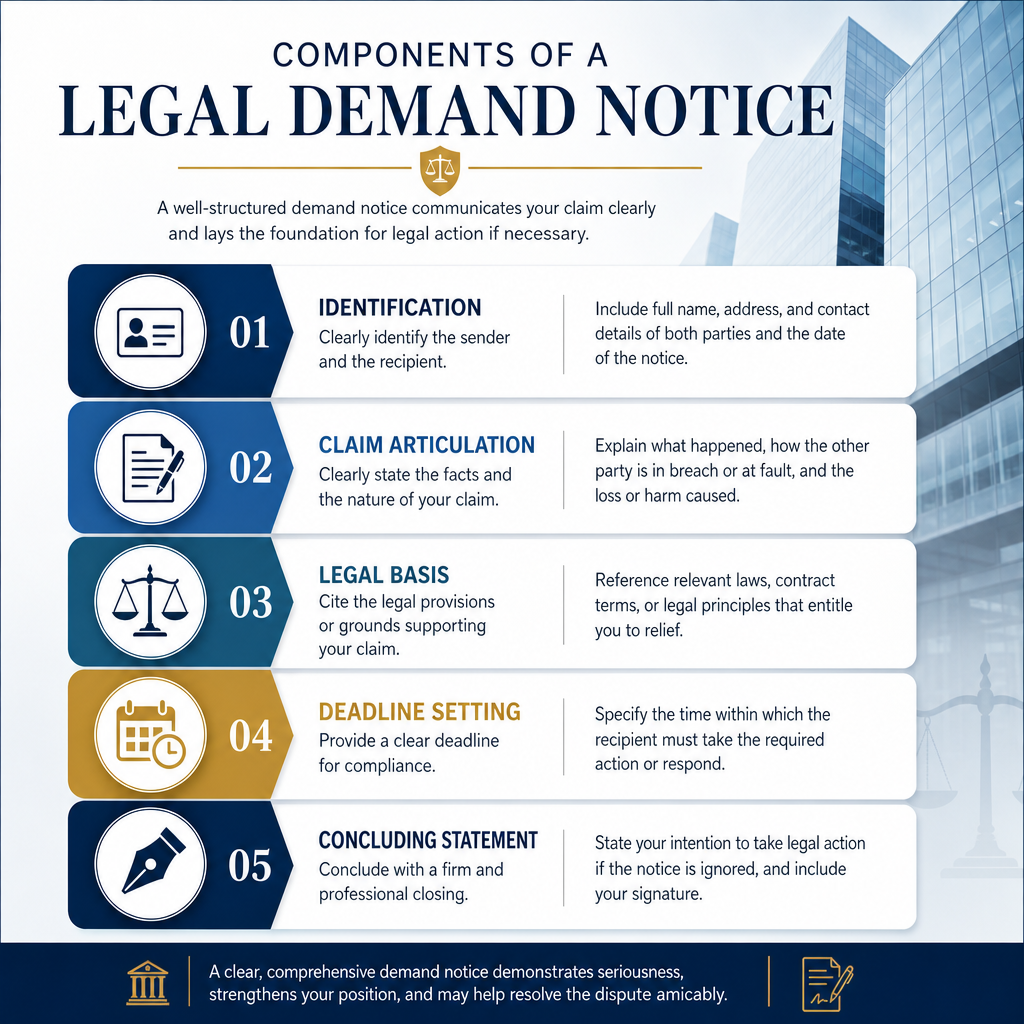
Table of Contents
Table of Contents
Swipe →Introduction to Legal Demand Notices
A legal demand notice is a formal written request sent by an individual, business, or legal representative to assert a legal claim against another party. This document serves as a preliminary step in the legal recovery process, indicating the intent to seek judicial remedy if the demand is not met. By providing a formal avenue for dispute resolution, a legal demand notice can often facilitate amicable settlements and avoid costly litigation.
In India, a legal demand notice is an essential tool for recovering debts, enforcing rights, or resolving disputes. It acts as a record of the grievance, specifying the legal basis for the claim, and the potential consequences of non-compliance. Whether it is related to employment dues, rental agreements, or unpaid invoices, understanding the components and procedures involved in crafting an effective legal demand notice is crucial for optimal recovery.
Understanding the Importance of a Legal Demand Notice
The necessity of a legal demand notice is underscored by its multifaceted role in the legal ecosystem. Legally, it serves as a crucial pre-litigation tool, often required by courts to demonstrate that a party has made reasonable efforts to settle a dispute before pursuing legal action. This can ultimately save both time and resources for all parties involved.
In terms of relationships, sending a demand notice exemplifies due diligence and respect for the legal process. It highlights a commitment to resolving an issue outside of court, which can preserve business relationships and personal reputations. Moreover, a well-drafted notice can significantly influence the offending party’s decision to settle the matter to avoid potential legal repercussions.
Furthermore, a legal demand notice establishes a clear paper trail. In the event that the case escalates to court, this document provides essential evidence that the aggrieved party has pursued all reasonable avenues to claim their dues. Consequently, it strengthens the credibility of the claimant and supports their case in the eyes of the judiciary.
Legal Framework Governing Demand Notices in India
Several Indian acts and legal provisions govern the issuance of legal demand notices, each pertinent to different contexts and types of recovery. Understanding these frameworks helps ensure that the notice is not only legally sound but also effective in inducing compliance from the recipient.
Payment of Wages Act, 1936: This act is crucial when dealing with issues related to wage recovery. It mandates the timely payment of wages and outlines the legal recourse available to employees in case of discrepancies or delays. A legal demand notice citing this act can be instrumental in recovering unpaid wages or salary deductions.
Shops and Establishments Act: Applicable to various commercial establishments, this act governs the rights and obligations of employers and employees. In the context of salary and employment dues, a legal demand notice under this act can address unpaid overtime, withheld gratuities, or unjust termination claims.
Negotiable Instruments Act, 1881 (NI Act): This act is pivotal for cases involving dishonored cheques. According to the NI Act, a demand notice must be sent within 30 days of the cheque bounce to claim the amount. Failure to comply with this stipulation may invalidate subsequent legal actions.
Indian Penal Code (IPC) and Civil Procedure Code (CPC): These codes provide the general legal framework for civil and criminal proceedings in India. They define the procedures for claim filing, evidence submission, and other judicial processes that might follow the issuance of a demand notice.
Step-by-Step Guidance for Drafting a Legal Demand Notice
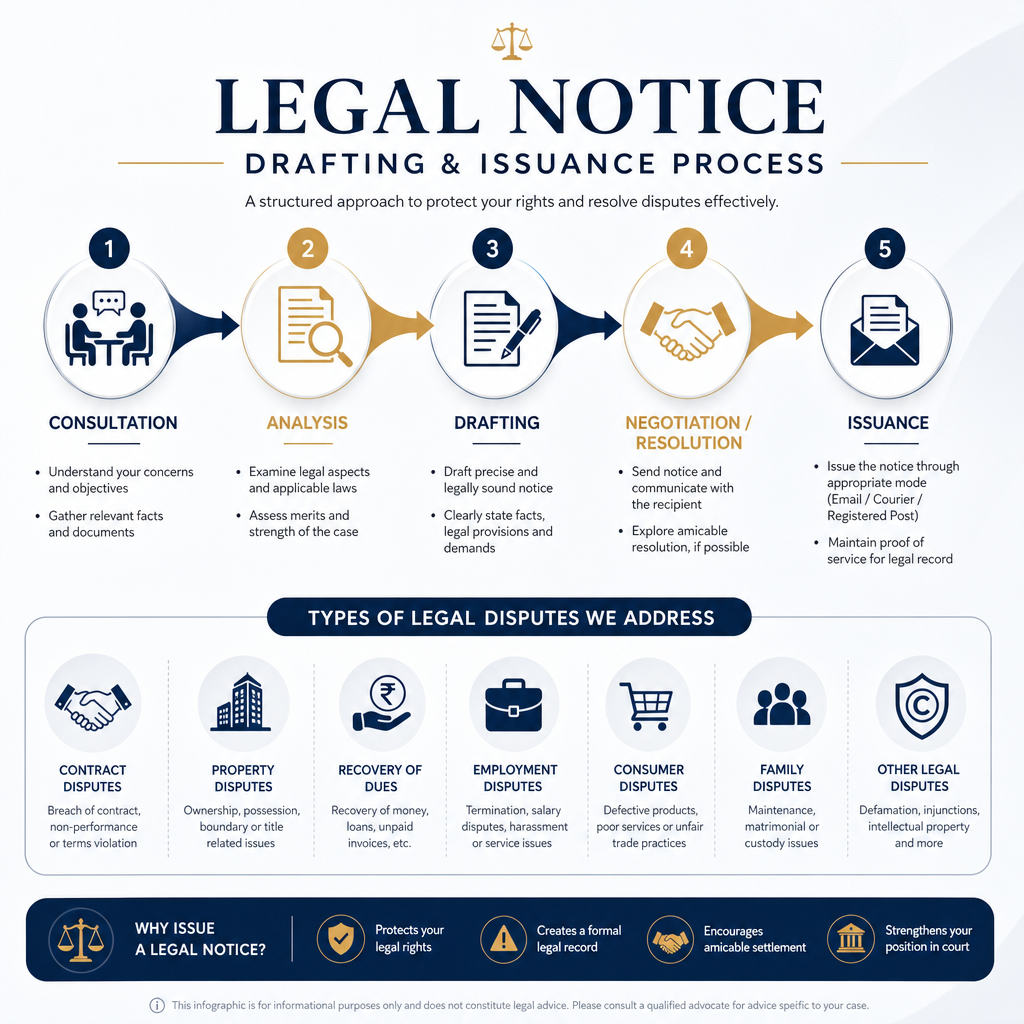
Crafting a legal demand notice is a meticulous process that requires attention to detail and adherence to legal standards. Below is a step-by-step guide to ensure that your notice is comprehensive and effective.
Identification and Verification
Begin by accurately identifying the parties involved. This includes the claimant, the party against whom the demand is made, and any legal representatives. Verify contact information and ensure that all names and addresses are spelled correctly to avoid any potential disputes or misunderstandings.
Articulating the Claim
Clearly articulate the nature of the claim in your notice. Detail the events or transactions that led to the dispute, emphasizing dates, amounts, and other pertinent facts. This section should leave no room for ambiguity regarding the basis of the demand.
Legal Basis and Statutes
Cite relevant laws and statutes that underpin your claim. Reference specific sections of acts such as the Payment of Wages Act or Shops and Establishments Act as applicable. This not only lends legal weight to your notice but also demonstrates a thorough understanding of the legal framework surrounding your claim.
Setting a Deadline
Impose a clear deadline for compliance, typically ranging from 15 to 30 days. This deadline should be reasonable, considering the nature of the claim and any applicable legal requirements. Clearly state the consequences of non-compliance, which could include legal action or additional penalties.
Formulating a Concluding Statement
End the demand notice with a formal concluding statement. This should reiterate your willingness to amicably resolve the matter while asserting your preparedness to pursue legal action if the demand is not met. Provide contact information for further communication and encourage a prompt response.
Statutory Recovery Metrics & Resolution Benchmark
Disputes resolved via formal statutory legal demand notices.
Average statutory compliance response timeline.
Mandatory refund of statutory levies under Indian Acts.
Interest compensation claimable under MSME & NI Acts.
Required Evidence for Supporting a Legal Demand Notice
The strength of a legal demand notice is significantly bolstered by the quality and relevance of the evidence accompanying it. Evidence serves as the backbone of your claim, providing tangible proof of the events and transactions referenced in the notice.
Documentary Evidence
Collect all relevant documents that support your claim. This may include contracts, invoices, emails, or receipts that establish the financial obligation or breach. Ensure these documents are organized chronologically and are easily accessible.
Correspondence and Communication
Include any previous correspondence related to the dispute. This can include emails, letters, or meeting notes that highlight attempts at resolving the issue prior to issuing the demand notice. Such evidence demonstrates due diligence and a reasonable effort to settle the matter amicably.
Witness Testimonies
If applicable, secure written statements from witnesses who can corroborate your claim. These testimonies should be recorded formally, detailing the witness's credentials and relationship to the case. Witness statements can provide additional credibility and context to the facts presented in the notice.
Financial Statements and Records
For claims involving financial transactions, present a clear record of accounts. Bank statements, transaction receipts, and account summaries can substantiate claims of unpaid dues or financial discrepancies. Ensure these records are up-to-date and accurately reflect the financial status related to the claim.
Detailed Case Studies on Legal Demand Notices
To further elucidate the application and impact of legal demand notices, consider the following case studies that illustrate the nuances and outcomes of effectively crafted notices.
Case Study 1: Recovery of Salary Dues
An employee in a mid-sized IT company was denied his rightful salary dues post resignation. Citing the Payment of Wages Act, the employee sent a legal demand notice to the employer. Accompanied by detailed employment records and salary slips, the notice clearly outlined the unpaid amount and stipulated a 30-day deadline for payment.
Upon receipt of the notice, the employer, wary of potential litigation and damage to reputation, chose to settle the outstanding dues within the specified time frame. This case underscores the effectiveness of a well-supported demand notice in expediting dispute resolution.
Case Study 2: Cheque Bounce Under NI Act
A small business owner faced a bounced cheque issue from a client. In compliance with the Negotiable Instruments Act, a legal demand notice was issued within 30 days of the cheque's return. The notice, backed by bank statements and the original cheque, demanded payment of the dishonored amount within 15 days.
The client, acknowledging the legal ramifications of non-compliance, promptly settled the amount to avoid further legal proceedings. This case highlights the critical importance of timeliness and statutory compliance when dealing with cheque bounce scenarios.
Role of Legal Recovery Services
Engaging professional legal recovery services can significantly enhance the effectiveness of a legal demand notice. Firms like Legal Recovery specialize in crafting precise and compelling demand notices tailored to the specific needs and legal context of each client.
These services offer a comprehensive approach, handling everything from initial assessment to documentation and follow-up. Their expertise in navigating complex legal frameworks ensures that your demand notice is not only legally robust but also strategically designed to maximize recovery potential.
Legal Recovery's services extend beyond demand notices, encompassing a range of recovery solutions, including salary dues, rental recoveries, and consumer complaints. Their proficiency in managing diverse recovery scenarios can be invaluable in achieving favorable outcomes.
Potential Challenges and Solutions in Drafting Demand Notices
Despite their utility, drafting effective legal demand notices can present certain challenges. Understanding these potential hurdles and adopting strategic solutions can improve the efficacy of your demand notice.
Ambiguity in Legal Framework
Navigating the complexities of the legal landscape can be daunting. Misinterpretation of statutes or misapplication of legal principles can undermine your notice's effectiveness. To combat this, consider consulting legal professionals or utilizing services from firms like Legal Recovery to ensure accurate legal representation.
Resistance from Recipients
Recipients may resist compliance due to financial constraints or disagreement with the claim. In such cases, maintaining clear communication and offering flexible options for resolution can facilitate a more amicable settlement. Professional negotiators can also play a crucial role in bridging differences.
Timeliness and Documentation
Delays in issuing a demand notice or incomplete documentation can weaken your case. Establishing a systematic approach to documentation and ensuring timely issuance of notices are critical steps in overcoming these challenges. Leveraging technology for record-keeping and communication can also enhance efficiency.
Conclusion
Mastering the art of crafting a legal demand notice requires a blend of legal knowledge, strategic insight, and meticulous attention to detail. By understanding the legal frameworks, adhering to procedural guidelines, and leveraging professional expertise, individuals and businesses can effectively assert their rights and facilitate the optimal recovery of dues.
For those seeking expert assistance, Legal Recovery offers a wealth of resources and services to guide you through the demand notice process and beyond, ensuring that your legal interests are robustly represented and protected.
To explore more about legal recovery solutions and stay informed on related topics, visit the Legal Recovery blog for the latest insights and updates.
Popular Searches & Related Topics

Legal Recovery is India's trusted consumer protection and legal tech platform. We specialize in holding corporations accountable for unfair trade practices, deceptive marketing, and commercial fraud. With over 15,000 customers counselled, our mission is to provide fast, out-of-court resolutions by connecting you with top-tier panel advocates for immediate legal action.
Client Reviews
"Excellent service! The legal demand notice drafted by Legal Recovery was pivotal in resolving our case quickly and efficiently. Highly recommend their expertise."
Vikram Sinha
"I was impressed with how professionally my demand notice was handled. Legal Recovery's attention to detail and thorough understanding of the legal framework was commendable."
Ananya Gupta
"Legal Recovery helped me recover my overdue payments seamlessly. Their strategic approach and well-crafted demand notice made all the difference. Thank you!"
Rohan Mehta
"The team at Legal Recovery provided exceptional service. They made a complex legal process straightforward and were instrumental in achieving a favorable outcome."
Priya Nair
"Highly satisfied with Legal Recovery's service. Their expertise in drafting an effective demand notice led to a swift resolution. I would recommend them without hesitation."
Rajesh Patel
Frequently Asked Questions
Related Articles

About Author
Anuj Anand Malik
View ProfileAnuj Anand Malik, Founder of AMA Legal Solutions, is a trusted advocate, loan settlement expert, legal advisor, and banking lawyer. With over a decade of experience in loan settlement, corporate law, financial disputes, and compliance, he leads a result-driven law firm based in India that helps individuals, startups, and businesses achieve legal and financial stability.
Connect on LinkedInNeed Legal Help?
Get expert advice on loan settlement, banking disputes and debt relief.
Start Recovery NowRequest Callback