Legally Valid Ways to Deliver a Legal Notice Online in India
Explore the legal methods for online legal notice delivery in India.
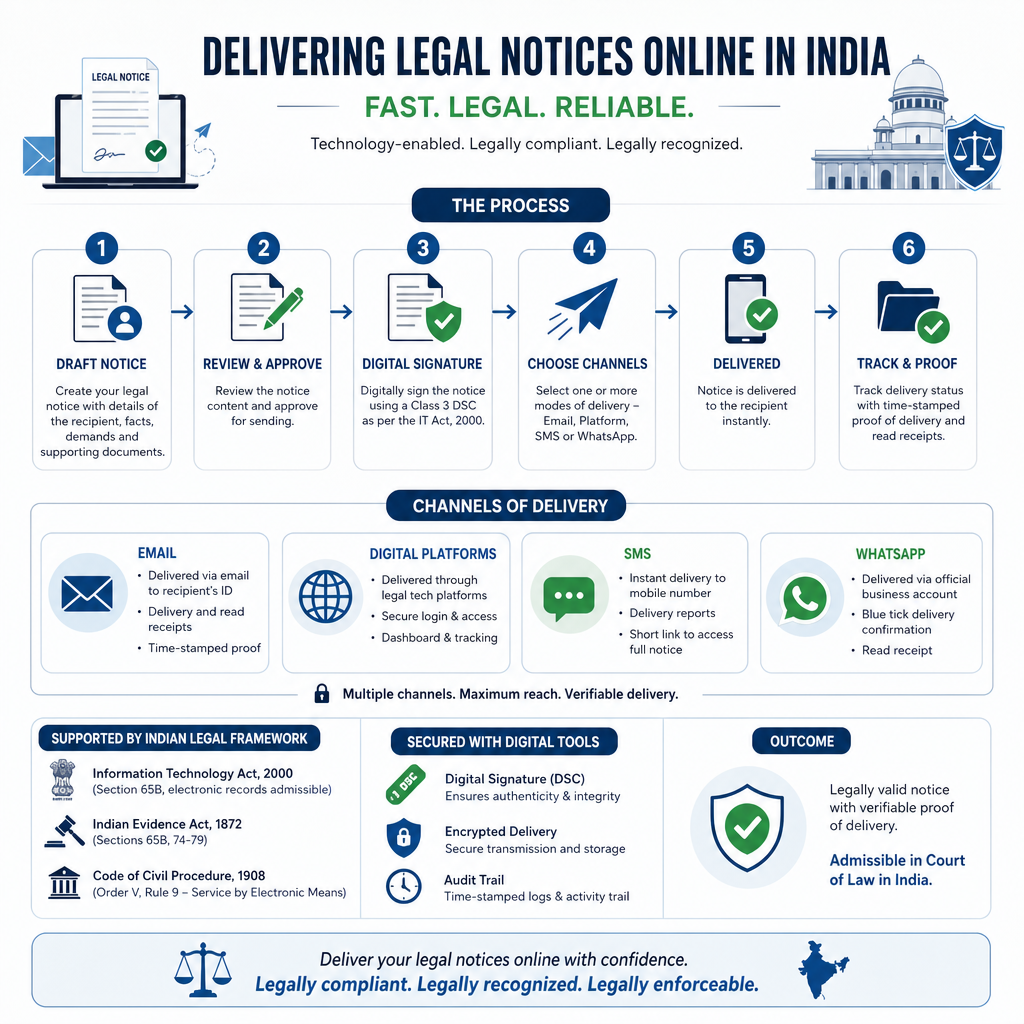
Table of Contents
Table of Contents
Swipe →Introduction to Delivering Legal Notices Online in India
In the digital age, the process of delivering legal notices has evolved significantly, aligning with technological advancements and the shifting legal landscape. Traditionally, legal notices were delivered through physical mail or in-person serving, but the advent of the internet has introduced new, efficient methods. In India, delivering a legal notice online is not just about convenience but also about ensuring adherence to legal validity and compliance with the judicial system. This comprehensive guide explores the legally valid ways to deliver a legal notice online in India, analyzing relevant legal frameworks, court procedures, and practical approaches.
Understanding Legal Notices in the Indian Context
A legal notice is a formal communication that signifies the intention to initiate legal proceedings against the recipient. In India, legal notices serve as a preliminary step in various disputes, including property disagreements, employment issues, consumer grievances, and payment recoveries. Serving a legal notice provides the recipient an opportunity to resolve the matter amicably before formal litigation commences.
The Indian legal framework stipulates specific guidelines for drafting and delivering legal notices. These notices must clearly state the facts of the case, the legal basis for the claim, and the remedy sought by the sender. Each element of the notice must be presented concisely and unambiguously to convey the sender's intent effectively.
With the integration of online platforms, the process of serving legal notices has become more streamlined. However, it is crucial to ensure that online delivery methods comply with Indian legal standards and are recognized by courts as valid. This necessitates a thorough understanding of the legal principles governing electronic communications in India.
The Legal Framework Governing Online Legal Notices
The legal framework surrounding online legal notices in India is primarily governed by the Information Technology Act, 2000, which provides the legal recognition for electronic records and digital signatures. The Act establishes the foundation for using electronic means for legal communications, which is essential for the validity of online legal notices.
According to the Information Technology Act, electronic records and digital signatures have the same legal standing as physical documents and handwritten signatures. This recognition is pivotal in ensuring that legal notices delivered online are admissible in courts and hold the same weight as traditional notices.
In addition to the IT Act, various procedural laws such as the Civil Procedure Code and the Indian Evidence Act also play a role in the legal validation of electronic delivery methods. These laws outline the evidentiary requirements for electronic records, ensuring that online legal notices meet the necessary standards for authenticity and integrity.
Thus, understanding the interplay between these legal frameworks is crucial for anyone seeking to deliver a legal notice online in India. It ensures compliance with statutory requirements and enhances the likelihood of achieving the desired legal outcome.
Methods of Delivering Legal Notices Online
Email Communication
Email is one of the most common and legally recognized methods for delivering legal notices online. The primary advantage of using email is its speed and convenience, allowing immediate delivery and receipt confirmation. For a legal notice to be validly served via email, certain criteria must be met to ensure authenticity and compliance.
The sender must ensure that the recipient's email address is accurate and has been previously used for communications related to the dispute. This helps establish a chain of communication and reduces the likelihood of the notice being considered unsolicited or spam. It is advisable to use email addresses that are officially registered with relevant authorities or organizations.
The email must include a clear subject line indicating the nature of the notice and should attach the legal notice in a secure format, such as a PDF. Additionally, the sender should request a delivery receipt and a read receipt to verify that the email was received and opened by the recipient.
It is also important to maintain records of the email delivery, including the sent timestamp, delivery receipt, and read receipt. These records can serve as evidence in legal proceedings to demonstrate that the notice was duly delivered and acknowledged by the recipient.
Registered Digital Platforms
Several registered digital platforms provide services for delivering legal notices online, ensuring adherence to legal standards and offering additional layers of verification. These platforms are particularly useful for businesses and individuals who require a reliable and formal method for serving legal notices.
Registered digital platforms typically offer features such as digital signatures, encryption, and timestamping to enhance the security and validity of the notice. These features ensure that the notice is not tampered with during transmission and that it reaches the intended recipient in its original form.
When using a registered digital platform, it is essential to verify that the platform complies with the Information Technology Act and related regulations. This ensures that the electronic delivery of the notice is legally recognized and admissible in court.
Additionally, these platforms often provide audit trails and comprehensive records of the delivery process, which can be invaluable evidence in legal disputes. The use of registered digital platforms can thus provide assurance and reliability in the online delivery of legal notices.
Legal Notice by SMS or WhatsApp
With the widespread use of mobile communication, sending legal notices via SMS or messaging applications like WhatsApp has become increasingly common. However, the legality of such methods depends on the ability to authenticate the sender and recipient and ensure the integrity of the message.
For a legal notice delivered via SMS or WhatsApp to be valid, the sender must use a registered mobile number and ensure that the recipient's number is accurate and previously used for communication related to the matter at hand. This helps establish a recognized communication channel and reduces the likelihood of disputes over the notice's authenticity.
WhatsApp, in particular, provides features such as delivery and read receipts, which can serve as evidence that the notice was delivered and acknowledged by the recipient. To enhance the notice's validity, the sender can include a digital signature or a link to a digitally signed document.
While SMS and WhatsApp can be convenient, it is crucial to maintain comprehensive records of the message delivery, including screenshots or logs that capture the delivery and read receipts. These records can be vital in establishing the notice's validity in legal proceedings.
Statutory Recovery Metrics & Resolution Benchmark
Disputes resolved via formal statutory legal demand notices.
Average statutory compliance response timeline.
Mandatory refund of statutory levies under Indian Acts.
Interest compensation claimable under MSME & NI Acts.
Legal Considerations and Challenges
Evidentiary Requirements
For an online legal notice to be admissible in court, it must meet the evidentiary requirements outlined in the Indian Evidence Act. The Act stipulates that electronic records must be authenticated by producing the original or a certified copy, along with a certificate under Section 65B, which attests to the record's authenticity.
This certificate, typically provided by the sender's IT manager or service provider, must confirm that the electronic record was produced by a computer used regularly for storing or processing the information. The certificate must also include the particulars of the device and the manner in which the record was generated.
The authenticity of the electronic document can also be established through digital signatures, which provide a secure and verifiable method of signing electronic records. Digital signatures, supported by a valid digital certificate, help confirm the document's origin and integrity.
Thus, compliance with the evidentiary standards for electronic records is crucial in ensuring that online legal notices are legally valid and enforceable. It is essential for parties to understand these requirements and take the necessary steps to authenticate their electronic communications.
Potential Legal Disputes
Despite the convenience and efficiency of online legal notices, several legal disputes can arise concerning their validity and delivery. Common issues include disputes over the authenticity of the email address or mobile number, the integrity of the digital signature, and the legitimacy of the electronic record.
Such disputes often arise when the recipient claims not to have received the notice or challenges the sender's authority to deliver the notice via electronic means. To mitigate these risks, it is essential to establish a clear communication trail and ensure that all electronic records are authenticated and compliant with legal standards.
In cases where disputes arise, the sender may need to present comprehensive evidence, such as delivery receipts, read receipts, digital certificates, and audit trails, to establish the notice's validity. Legal counsel may also be required to navigate the complexities of such disputes and advocate for the sender's position.
By understanding the potential legal challenges and taking preventative measures, parties can minimize the likelihood of disputes and enhance the effectiveness of online legal notices.
Relevant Indian Acts and Their Impact
Payment of Wages Act
The Payment of Wages Act, 1936, governs the timely payment of wages to employees and outlines the procedures for addressing wage-related disputes. In cases where an employer fails to pay wages or makes unauthorized deductions, employees may serve a legal notice to initiate recovery proceedings.
Online delivery of legal notices related to wage disputes can expedite the resolution process, allowing employees to assert their rights promptly. The use of electronic communications aligns with the Act's emphasis on efficient dispute resolution and facilitates timely intervention by the authorities.
It is crucial for employees and their legal representatives to ensure that online notices comply with the Act's procedural requirements. This includes providing clear details of the dispute, the amount claimed, and the legal basis for the claim. Compliance with these requirements enhances the notice's validity and effectiveness.
For more information on recovering salary and employment dues, visit the Legal Recovery Recovery of Salary and Employment Dues service page.
Shops and Establishments Act
The Shops and Establishments Act, applicable in various states across India, regulates the working conditions and welfare of employees in commercial establishments. It provides a framework for addressing disputes related to working hours, leave, and termination, among others.
Legal notices related to violations of the Shops and Establishments Act can be delivered online to ensure timely compliance and resolution. Such notices must clearly outline the alleged violations, the legal provisions breached, and the remedy sought by the aggrieved party.
Online delivery of legal notices under the Act allows for efficient communication between employees and employers, enabling swift resolution without the need for prolonged litigation. It also facilitates documentation and record-keeping, which are essential for substantiating claims and defenses.
Employers and employees must ensure that online notices adhere to the Act's procedural requirements and are supported by relevant evidence. This enhances the likelihood of achieving a favorable outcome in disputes related to employment and workplace conditions.
Gratuity Act
The Payment of Gratuity Act, 1972, governs the payment of gratuity to employees upon termination of employment, retirement, or death. Disputes related to gratuity payments can arise when employers fail to comply with the Act's provisions, necessitating the issuance of a legal notice.
Online delivery of legal notices concerning gratuity disputes can facilitate prompt resolution and ensure that employees receive their rightful entitlements. Such notices must specify the amount of gratuity claimed, the basis for the claim, and the legal provisions supporting the claim.
Employers and employees must be aware of the evidentiary requirements for online legal notices under the Gratuity Act. This includes maintaining records of electronic communications and ensuring that the notice is authenticated and compliant with legal standards.
By leveraging online delivery methods, parties can streamline the dispute resolution process and effectively address gratuity-related issues under the Act.
Negotiable Instruments Act
The Negotiable Instruments Act, 1881, governs the use and dishonor of negotiable instruments such as cheques, promissory notes, and bills of exchange. In cases of cheque dishonor, the Act provides for the issuance of a legal notice within 30 days of receiving the dishonor memo.
Online delivery of legal notices in cheque dishonor cases is permissible under the Act, provided that the notice meets the criteria for electronic records and is duly authenticated. The notice must clearly state the amount of the dishonored cheque, the date of dishonor, and the legal consequences of non-payment.
It is crucial for parties to ensure that online notices comply with the Act's procedural requirements and are supported by evidence such as bank statements, dishonor memos, and electronic communication records. This enhances the notice's validity and enforceability.
Leveraging online delivery methods can expedite the recovery process and enable parties to assert their rights under the Negotiable Instruments Act effectively. For legal assistance with cheque dishonor cases, visit the Vendor and Invoice Recoveries service page.
Drafting and Delivering an Online Legal Notice: Step-by-Step Guide
Step 1: Identifying the Legal Basis
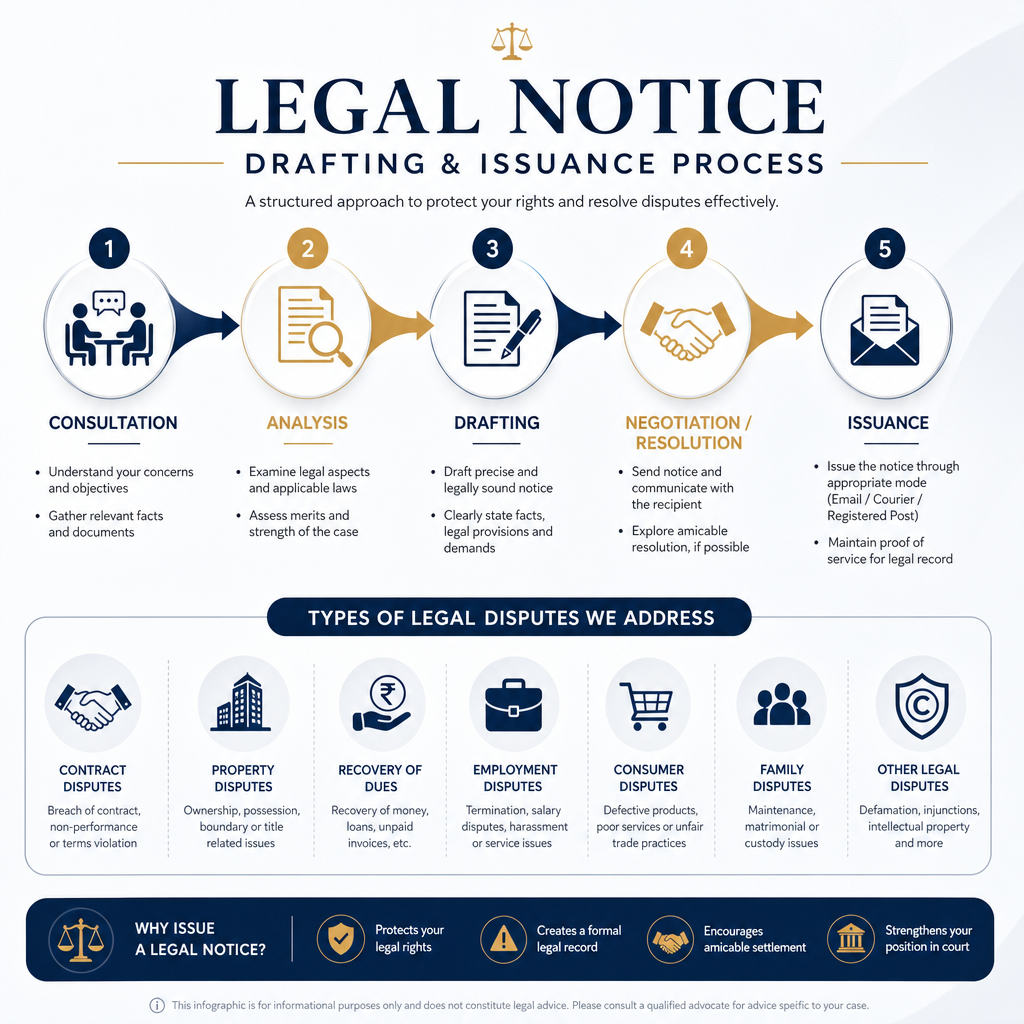
The first step in drafting an online legal notice is to identify the legal basis for the claim or grievance. This involves reviewing the relevant laws, regulations, and contractual obligations that apply to the dispute. For instance, if the dispute involves unpaid wages, the legal basis may be found in the Payment of Wages Act or the employment contract.
Understanding the legal basis is crucial for drafting a notice that is legally sound and defensible. It ensures that the notice accurately reflects the legal rights and obligations of the parties and sets the stage for a successful resolution.
Legal counsel or advisors can provide valuable assistance in identifying the legal basis for the dispute and ensuring that the notice is aligned with the applicable legal framework. This step is particularly important in complex disputes where multiple legal provisions may apply.
Step 2: Drafting the Notice
Once the legal basis is identified, the next step is to draft the legal notice. The notice must include specific details about the dispute, such as the nature of the grievance, the facts of the case, and the remedy sought by the sender. It should also reference the relevant legal provisions and any supporting evidence.
The language of the notice should be clear, concise, and formal, avoiding any ambiguous or inflammatory statements. It is important to strike a balance between assertiveness and professionalism, ensuring that the notice effectively communicates the sender's intent while maintaining legal propriety.
Drafting a well-structured legal notice requires attention to detail and a thorough understanding of the legal principles involved. Legal professionals can provide invaluable guidance in crafting a notice that meets the necessary legal standards and effectively conveys the sender's position.
Step 3: Choosing the Delivery Method
After drafting the notice, the next step is to choose the appropriate method for online delivery. The choice of method depends on several factors, including the type of dispute, the recipient's communication preferences, and the legal requirements for electronic delivery.
Email is a common and effective method for delivering legal notices online, provided that the recipient's email address is accurate and previously used for correspondence related to the dispute. Registered digital platforms offer additional security and verification features, making them suitable for sensitive or high-stakes disputes.
SMS and WhatsApp can also be used for delivering legal notices, especially in cases where the recipient is difficult to reach through other means. However, it is important to ensure that these methods comply with evidentiary requirements and are supported by comprehensive records.
Step 4: Delivering the Notice
Once the delivery method is chosen, the notice can be sent to the recipient through the selected electronic channel. It is important to ensure that the notice is delivered securely and that any necessary authentication measures, such as digital signatures or encryption, are in place.
After delivering the notice, the sender should obtain and retain delivery receipts, read receipts, and any other evidence that verifies the notice's delivery and acknowledgment. These records are crucial for establishing the notice's validity in legal proceedings.
In cases where the recipient does not respond or disputes the notice's validity, the sender may need to pursue additional legal remedies, such as filing a formal complaint or initiating litigation. Legal counsel can provide guidance on the appropriate course of action based on the specific circumstances of the case.
Case Studies: Online Legal Notice Success Stories
Case Study 1: Employment Dispute Resolution
In a notable case involving an employment dispute, an employee successfully used online legal notices to resolve a wage-related grievance. The employee, who had not received wages for several months, leveraged email communication to send a legal notice to the employer, outlining the legal basis for the claim under the Payment of Wages Act.
The notice included specific details about the unpaid wages, the relevant legal provisions, and the remedy sought by the employee. Additionally, the employee attached supporting evidence, such as bank statements and employment records, to substantiate the claim.
The employer, upon receiving the notice, promptly responded and initiated negotiations to settle the matter amicably. The use of online delivery methods facilitated timely communication and resolution, ultimately resulting in a favorable outcome for the employee.
This case highlights the effectiveness of online legal notices in expediting dispute resolution and ensuring compliance with legal standards. By leveraging electronic communication, parties can assert their rights and resolve disputes in a timely and efficient manner.
Case Study 2: Consumer Grievance Redressal
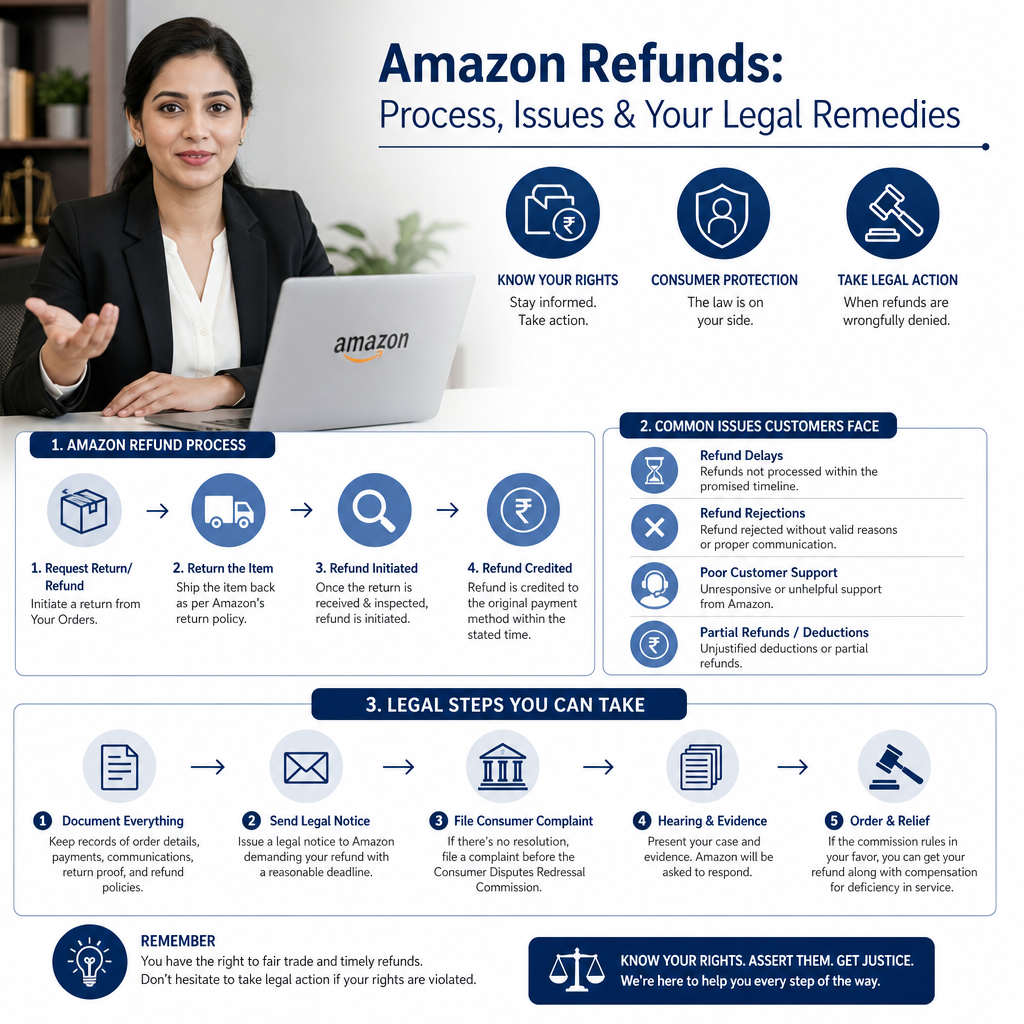
In another case involving a consumer grievance, a customer successfully used online legal notices to address a dispute with a retailer over defective goods. The customer, dissatisfied with the product quality, sent a legal notice via email to the retailer, outlining the grievance under the Consumer Protection Act.
The notice clearly stated the facts of the case, the legal provisions supporting the claim, and the remedy sought by the customer, such as a refund or replacement. The customer also attached photographs and purchase receipts as evidence to corroborate the claim.
The retailer acknowledged the notice and agreed to resolve the matter through a refund, demonstrating the effectiveness of online legal notices in facilitating consumer redressal. The case underscores the importance of clear communication and documentation in achieving a successful resolution.
For more information on handling consumer complaints and refunds, visit the Refunds and Consumer Complaints service page on Legal Recovery.
Case Study 3: Property Dispute Resolution
In a complex property dispute, an individual successfully used online legal notices to assert their rights and achieve a favorable resolution. The dispute involved a breach of contract by a builder, who failed to deliver the property as per the agreed timeline.
The individual, through their legal representative, sent a legal notice via a registered digital platform to the builder, citing the breach of contract and the legal provisions under the Indian Contract Act. The notice included specific details about the contract, the breach, and the remedy sought by the individual.
The use of a registered digital platform ensured the notice's security and authenticity, providing additional assurance to the parties involved. The builder, upon receiving the notice, entered into negotiations to resolve the dispute and agreed to compensate the individual for the delay.
This case illustrates the advantages of using online delivery methods in complex legal disputes, enabling parties to assert their rights and achieve equitable resolutions. For assistance with property and builder disputes, explore the Property and Builder Disputes service offered by Legal Recovery.
Conclusion: Embracing Online Legal Notice Delivery
The delivery of legal notices online in India represents a significant advancement in the legal process, offering speed, efficiency, and compliance with modern technological standards. By understanding the legal framework, evidentiary requirements, and practical considerations, individuals and businesses can effectively utilize online methods to serve legal notices and resolve disputes.
While online delivery methods offer numerous advantages, it is essential to ensure that such methods comply with legal standards and are supported by comprehensive evidence. By leveraging the expertise of legal professionals and utilizing registered digital platforms, parties can enhance the validity and enforceability of online legal notices.
As the legal landscape continues to evolve, embracing online delivery methods can empower parties to assert their rights, achieve timely resolutions, and navigate the complexities of the legal system with confidence.
For more information on delivering legal notices and other legal services, visit the About and Services pages on Legal Recovery's website. To explore how the process works, check out the How It Works section. Additionally, for a deeper dive into legal topics, explore the Blog for insightful articles and updates.
If you require legal assistance or wish to discuss a specific legal matter, you can always Contact Us at Legal Recovery for expert guidance and support.
Popular Searches & Related Topics

Legal Recovery is India's trusted consumer protection and legal tech platform. We specialize in holding corporations accountable for unfair trade practices, deceptive marketing, and commercial fraud. With over 15,000 customers counselled, our mission is to provide fast, out-of-court resolutions by connecting you with top-tier panel advocates for immediate legal action.
Client Reviews
"Impressed with the efficiency and professionalism of the service. The online method is convenient and reliable. Highly recommended!"
Rajesh Kumar
"The online delivery saved me a lot of time and hassle. The process was straightforward and legally compliant. Excellent service!"
Anjali Sharma
"I was able to resolve my dispute quickly thanks to the prompt delivery of my legal notice. The team provided great support throughout."
Vivek Patil
"Fantastic service! The use of digital delivery made everything seamless. I felt reassured knowing the process met all legal standards."
Priya Menon
"Highly satisfied with the service. The online notice delivery was secure, fast, and stress-free. I would definitely use this service again."
Arjun Singh
Frequently Asked Questions
Related Articles
About Author
Team LegalRecovery
View ProfileTeam LegalRecovery is a dedicated team of legal and financial professionals specializing in loan settlement, banking disputes, debt relief, and corporate compliance. We are committed to helping clients achieve debt freedom and business stability through expert strategic advisory.
Connect on LinkedInNeed Legal Help?
Get expert advice on loan settlement, banking disputes and debt relief.
Start Recovery NowRequest Callback