Legal Recovery of Bills from Doctors and Hospitals
Expert Tips on Recovering Unpaid Invoices for Medical Equipment
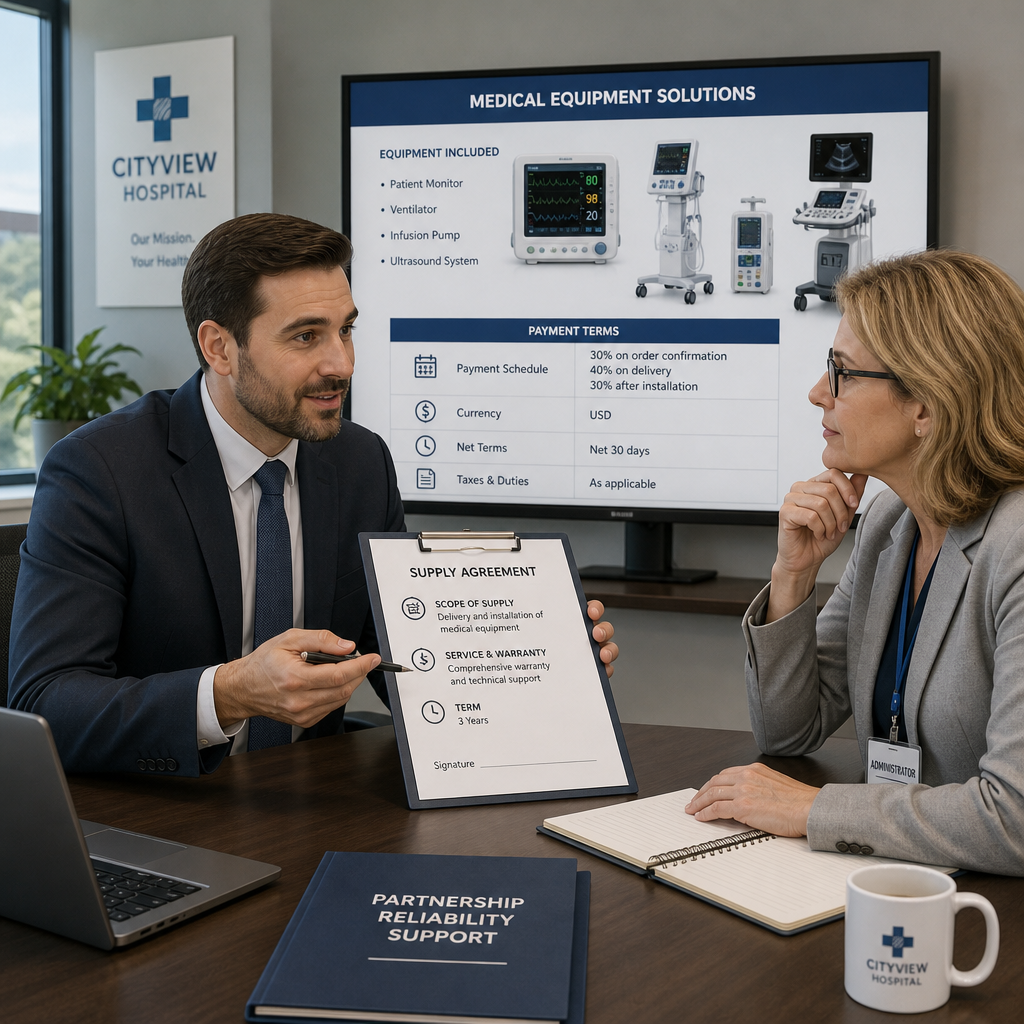
Table of Contents
Table of Contents
Swipe →Legal Remedies for Non-Payment of Medical Equipment Invoices by Healthcare Providers
The healthcare industry is critical in ensuring the well-being of society, but it is not exempt from financial disputes. When companies supply medical equipment to doctors or hospitals, they expect timely payments for their goods. Unfortunately, situations arise where healthcare providers delay or completely evade payments. This not only disrupts business operations but also strains the supplier's financial health. Understanding the legal framework for the recovery of unpaid invoices is crucial for companies facing such challenges.
Contractual Enforcement under the Indian Contract Act, 1872
The foundation of any business transaction, including those involving medical equipment supply, is the contract. The Indian Contract Act, 1872 governs the enforcement of contracts in India. According to this Act, a contract is valid and enforceable if it fulfills certain conditions such as offer, acceptance, consideration, and the capacity of parties. For suppliers, it is important to ensure that their contracts are robust and unequivocal.
A key provision under the Contract Act is the section dealing with the breach of contract. If a doctor or hospital fails to pay for the equipment supplied, it may constitute a breach. The aggrieved party (supplier) can seek remedies such as specific performance or damages. Specific performance involves the court compelling the defaulting party to fulfill their contractual obligations, while damages are monetary compensation for losses incurred.
Suppliers need to meticulously draft their contracts, including clear terms of payment, delivery, and consequences of default. In cases where the contract is oral, the supplier must maintain detailed records of communications and transactions to support their claim in the event of a dispute.
Essential Contractual Clauses for Medical Equipment Suppliers
To safeguard against payment defaults, suppliers should include specific clauses in their contracts:
Payment Terms: Clearly define the payment structure, deadlines, and any interest on late payments.
Dispute Resolution: Include a clause outlining the process for resolving disputes, such as arbitration or mediation, before resorting to litigation.
Retention of Title: A clause stating that the ownership of the equipment remains with the supplier until full payment is received.
Force Majeure: Define the circumstances under which a party may be excused from fulfilling their contractual obligations (e.g., natural disasters, pandemics).
Termination Clause: Outline the conditions under which the contract may be terminated by either party.
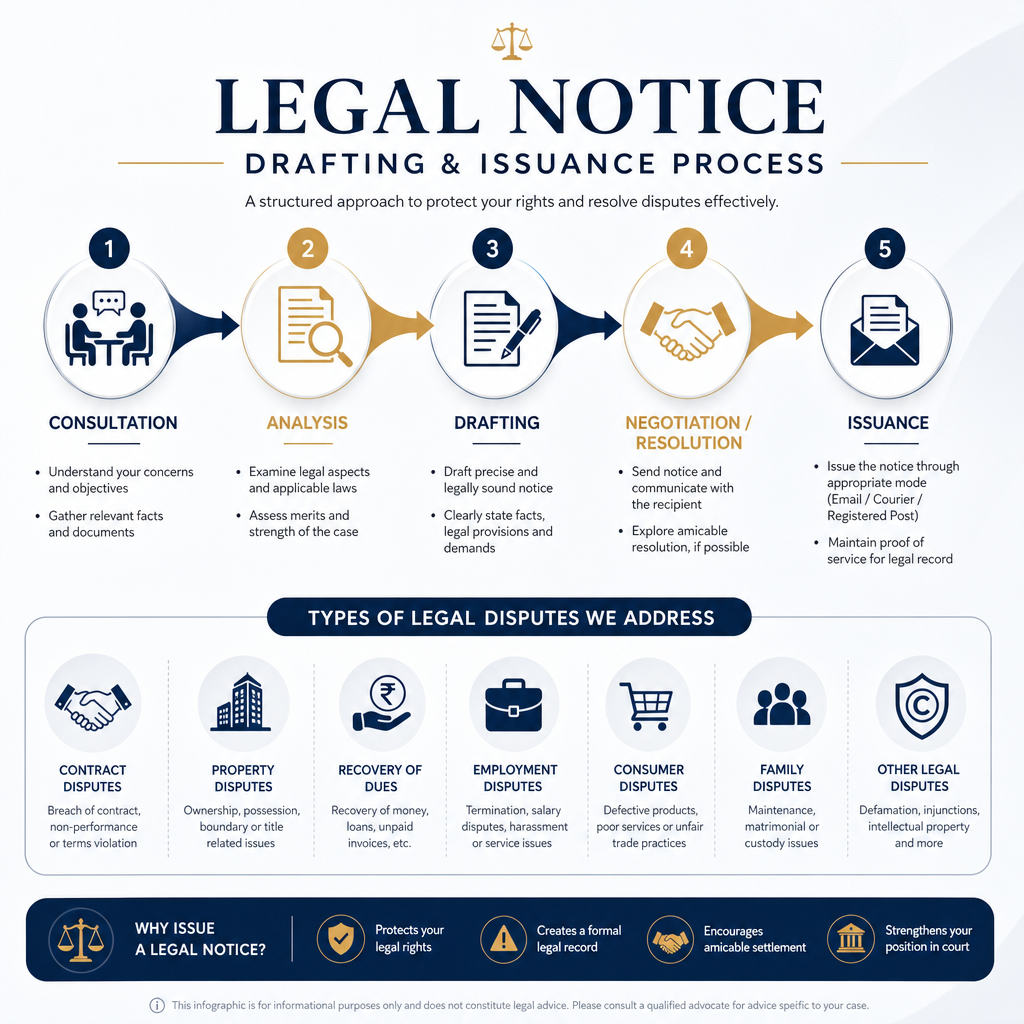
Legal Notice and Demand for Payment
Before initiating legal proceedings, it is advisable to send a legal notice to the defaulting party. A legal notice serves as a formal demand for payment and a prerequisite step for many legal actions. According to the Civil Procedure Code of India, a legal notice provides an opportunity for the parties to resolve the matter amicably.
The legal notice should include:
Details of the Transaction: Clearly state the date of supply, invoice number, and the amount due.
Contractual Obligations: Reference the relevant clauses from the contract that have been breached.
Demand for Payment: Specify the amount due and a reasonable deadline for payment.
Consequences of Non-compliance: Indicate the legal actions you intend to pursue if the payment is not made.
Sending a legal notice often motivates the debtor to settle the dues to avoid further legal consequences. For guidance on how to draft and send a legal notice, you can explore how to send a legal notice online.
Initiating Legal Proceedings for Recovery
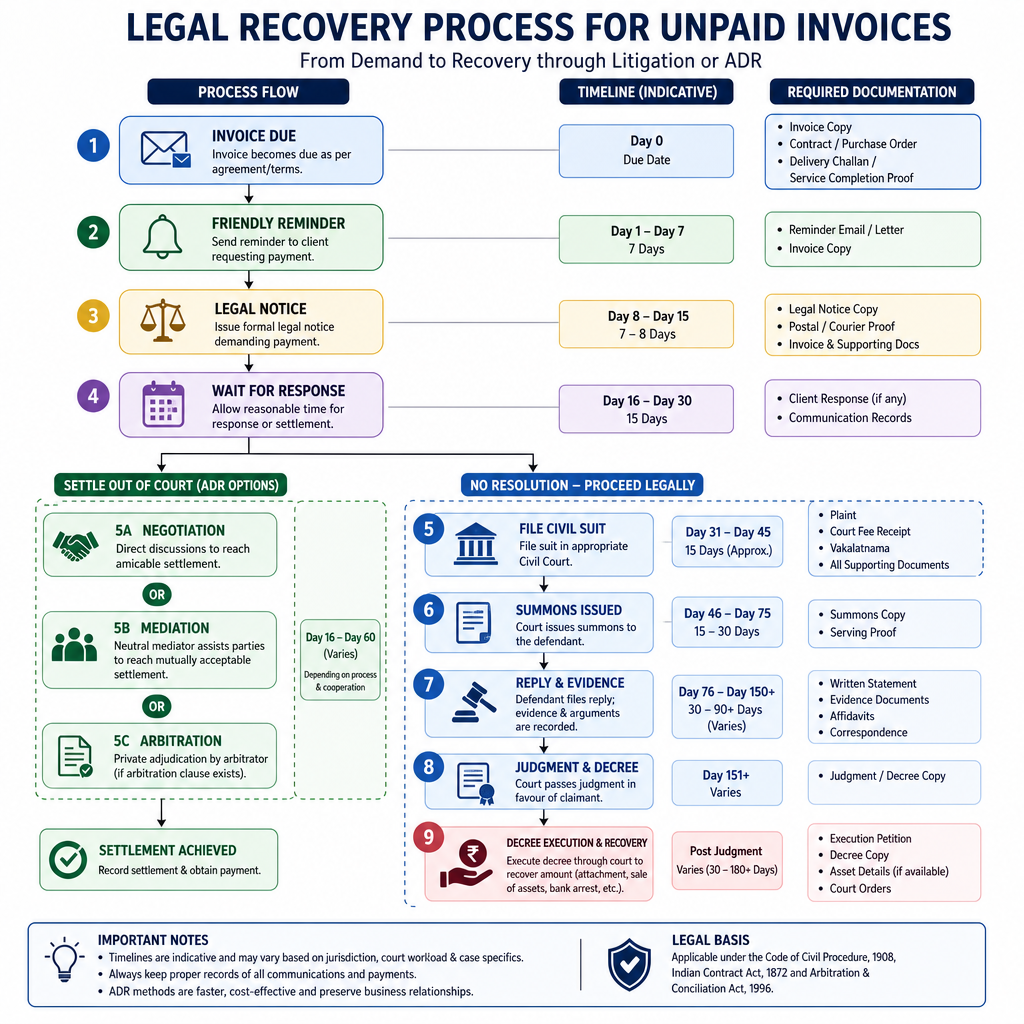
If the defaulting party fails to respond or resolve the issue after a legal notice, the supplier can file a suit for recovery of money in the appropriate civil court. The jurisdiction is typically determined by the location where the defendant resides or conducts business, or where the cause of action arose.
Steps to File a Civil Suit
Filing a civil suit involves several stages:
Preparation of Plaint: Draft a plaint that includes the facts of the case, the relief sought, and supporting documents.
Filing the Suit: Submit the plaint along with the prescribed court fee to the court of competent jurisdiction.
Service of Summons: The court issues a summons to the defendant, requiring them to appear and respond to the suit.
Submission of Written Statement: The defendant files a written statement refuting or accepting the claims made in the plaint.
Evidence and Trial: Both parties present their evidence and witnesses during the trial phase.
Judgment: After evaluating the evidence and arguments, the court delivers a judgment.
The timeframe for the completion of a civil suit can vary significantly. For more details on this process, you can visit the Civil Suit for Recovery of Money page.
Visual Dispute Resolution & Recovery Framework
Utilizing the Negotiable Instruments Act, 1881 (Section 138)
If the payment was made through a cheque that has bounced, the supplier can take action under Section 138 of the Negotiable Instruments Act, 1881. This section deals with the dishonor of cheques due to insufficient funds or if the amount exceeds the arrangement.
Procedure under Section 138
The procedure involves several critical steps:
Receipt of Bank Memo: Obtain a bank memo indicating the reason for the cheque bounce.
Legal Notice: Within 30 days of receiving the bank memo, issue a legal notice to the drawer demanding payment.
Waiting Period: Allow a 15-day window for the drawer to make the payment.
Filing a Complaint: If the payment is not received within 15 days, file a complaint with a magistrate within 30 days.
For detailed guidance on the timelines and procedures, refer to the Section 138 cheque bounce notice timeline.
Alternative Dispute Resolution Mechanisms
Litigation can be lengthy and costly, making alternative dispute resolution (ADR) methods a viable option. ADR methods such as arbitration, mediation, and conciliation can offer quicker and more amicable resolutions.
Arbitration
Arbitration involves appointing an arbitrator by mutual consent who makes a binding decision on the dispute. It is less formal than court proceedings and can be faster. Suppliers should ensure that their contracts include an arbitration clause to avail of this option.
Mediation and Conciliation
Mediation and conciliation involve a neutral third party who facilitates communication between the disputing parties to help them reach a mutually agreeable solution. These methods are collaborative and preserve business relationships.
For a comprehensive understanding of ADR processes and how they can be beneficial, visit the Online Dispute Resolution in India page.
Documentation and Evidence for Legal Recovery
Maintaining thorough documentation is essential for substantiating claims in any legal action. The following table outlines key documents necessary for recovery proceedings:
Document | Description | Purpose |
|---|---|---|
Contract or Purchase Order | Written agreement detailing the terms of the sale and payment. | Establishes the existence and terms of the transaction. |
Invoices | Billing documents specifying the amount owed for goods supplied. | Evidence of the debt and amount due. |
Delivery Receipts | Proof of delivery of goods to the buyer. | Confirms receipt of goods by the buyer. |
Bank Statements | Records of payment transactions or cheque bounces. | Supports claims of non-payment or dishonored cheques. |
Communication Records | Emails, letters, or messages exchanged with the buyer. | Documents attempts to resolve the issue or demand payment. |
Meticulous record-keeping can bolster a supplier's position in legal proceedings and facilitate a favorable outcome. For additional insights on collecting evidence, visit the Legal Recovery of Medical Bills Guide.
Time Limitations and Statutory Deadlines
The Limitation Act, 1963 sets forth the time limits for initiating legal proceedings. For the recovery of money due under a contract, the limitation period is generally three years from the date the right to sue arises. It is crucial for suppliers to act within this time frame to avoid their claim being barred by limitation.
Legal Action | Deadline |
|---|---|
Issuance of Legal Notice | As soon as possible after non-payment is identified. |
Filing of Civil Suit | Within three years from the due date of payment. |
Complaint under Section 138 NI Act | Within 30 days after the 15-day payment window post-legal notice. |
Adhering to these statutory deadlines ensures that the supplier's legal rights are preserved. For more information on filing a money recovery case, refer to the Time Limit to File Money Recovery Case page.
Conclusion: Strategizing for Successful Recovery
While the legal framework provides several avenues for recovering unpaid invoices from doctors or hospitals, navigating these processes requires careful strategy and documentation. Suppliers must ensure their contracts are comprehensive, maintain meticulous records, and seek professional legal advice when necessary. By employing a combination of legal notices, ADR, and litigation, suppliers can enhance their chances of successful recovery.
For detailed assistance and professional support, you can contact Legal Recovery experts to explore tailored solutions for your specific needs. Additionally, reviewing related services such as Vendor and Invoice Recoveries can provide further insights into effective recovery strategies.
Popular Searches & Related Topics

Legal Recovery is India's trusted consumer protection and legal tech platform. We specialize in holding corporations accountable for unfair trade practices, deceptive marketing, and commercial fraud. With over 15,000 customers counselled, our mission is to provide fast, out-of-court resolutions by connecting you with top-tier panel advocates for immediate legal action.
Client Reviews
"The guidance provided by this service was exceptional. We were able to recover our dues swiftly, thanks to their clear process and legal support."
Rakesh Kumar
"Their expertise in contract enforcement helped us safeguard our financial interests. The team was thorough and professional at every step."
Anjali Sharma
"The step-by-step approach to handling bounced cheques under Section 138 was invaluable. We successfully resolved the issue without going to trial."
Vikram Patel
"The inclusion of ADR options in their strategy saved us time and money. Kudos to the team for their insightful approach and effective resolutions."
Neha Gupta
"Their attention to detail in documentation and evidence collection ensured our case was strong. Highly recommend their services for legal recoveries."
Manoj Desai
Frequently Asked Questions
Related Articles
About Author
Team LegalRecovery
View ProfileTeam LegalRecovery is a dedicated team of legal and financial professionals specializing in loan settlement, banking disputes, debt relief, and corporate compliance. We are committed to helping clients achieve debt freedom and business stability through expert strategic advisory.
Connect on LinkedInNeed Legal Help?
Get expert advice on loan settlement, banking disputes and debt relief.
Start Recovery NowRequest Callback