WhatsApp Legal Notice Solutions for Recovery: The Ultimate Indian Guide to Tech-Driven Debt Collection
Master WhatsApp Legal Notice Solutions for Recovery in India
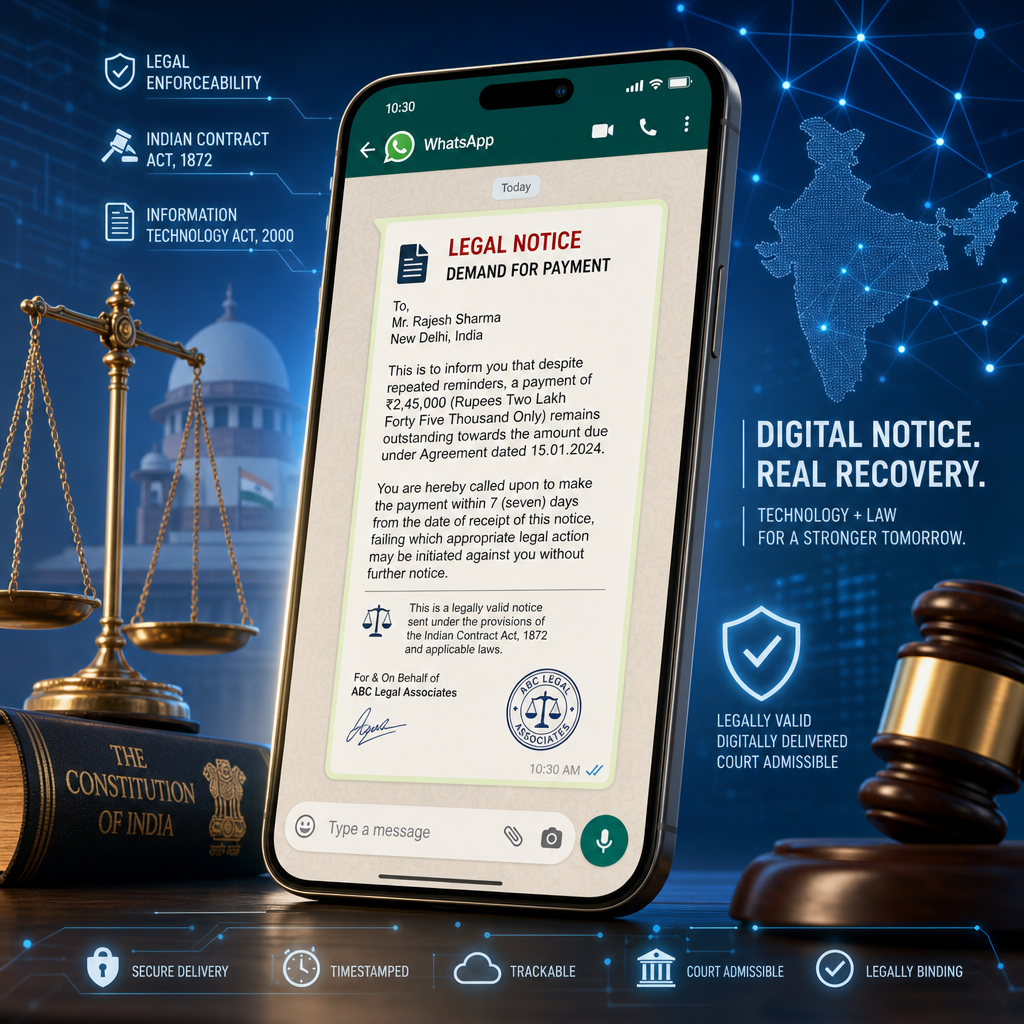
Table of Contents
Table of Contents
Swipe →Few administrative setbacks drain an organization’s momentum or an individual's peace of mind quite like outstanding debt. Whether it is an enterprise client delaying payment on a crucial B2B invoice, a corporate employer suddenly withholding a professional's hard-earned salary, or an acquaintance ignoring a personal loan commitment, chasing unpaid dues is exhausting. Historically, recovering these funds in India meant facing an uphill battle: relying on physical paper trails, enduring months of courier delays, and dealing with debtors who actively evaded court summons or physical letters.
The digital transformation of the Indian judicial landscape has changed the rules of engagement. WhatsApp legal notice solutions for recovery have emerged as a highly effective, fast-paced, and legally recognized alternative to traditional collection methods. Backed by landmark High Court rulings and reinforced by the statutory framework of the Information Technology (IT) Act, 2000, sending a structured legal demand through instant messaging has shifted from an informal follow-up to a powerful legal action.
If you are dealing with a non-paying party who ignores phone calls but actively uses their mobile phone, this digital strategy can completely shift the leverage back to you. This comprehensive guide breaks down the legal validity, practical execution, and step-by-step strategies of utilizing WhatsApp legal notice solutions for recovery within India, helping you secure what you are owed efficiently.
The Legal Validity of WhatsApp Service in India: Move Past the "Blue Tick" Myth
Many business owners and individuals hesitate to use instant messaging for formal legal actions, assuming that a text application cannot hold serious weight in a court of law. However, Indian jurisprudence has consistently adapted to commercial reality.
The Legislative Framework
The foundation of digital legal communication rests on two key pillars of Indian law:
Section 4 of the Information Technology Act, 2000: This provision explicitly grants legal recognition to electronic records. It states that if a law mandates that information or documents be in writing, typewritten, or printed, an electronic record satisfies that requirement if it remains accessible for future reference.
Section 65B of the Indian Evidence Act, 1872 (and its modern procedural successors): This regulates the admissibility of electronic evidence. It allows digital records—including messaging logs, emails, and smartphone screenshots—to be admitted as primary evidence in a dispute, provided they are accompanied by a valid electronic validation certificate.
Landmark Judicial Precedents
Indian courts have moved past traditional physical-only service to stop debtors from using evasive tactics.
In the historic case of Kross Television India Pvt. Ltd. v. Vikhyat Chitra Production, the Bombay High Court famously observed that if a debtor has regularly communicated with you via a specific phone number, they cannot claim they did not receive a notice simply because it arrived on their phone rather than via a physical mail carrier. Justice G.S. Patel noted that when a messaging platform displays double blue ticks, it clearly demonstrates that the document was delivered to the respondent's device and opened.
Similarly, the Delhi High Court in Tata Sons Ltd. v. John Doe permitted the use of digital channels to serve critical legal papers in fast-moving commercial disputes. These rulings have established WhatsApp legal notice solutions for recovery as a vital asset for fast-tracked debt resolution across the country.
Why Modern Claimants Prefer WhatsApp Over Traditional Courier Post
Transitioning from old-school registered mail to professional electronic notices provides clear operational advantages, especially when dealing with uncooperative debtors.
Eliminates Tactical Evasion: A common trick used by defaulting debtors is refusing to accept physical mail, writing "recipient not available" on courier slips, or intentionally providing incomplete office addresses. A digital notice bypasses these roadblocks by landing directly on the device they use every single day.
Instant, Tamper-Proof Tracking: Instead of waiting days for a physical acknowledgment card to return through the mail system, digital notices give you real-time tracking data. Double gray ticks confirm successful delivery to the device, while blue ticks provide instant proof that the document was viewed.
Drastic Cost and Speed Efficiencies: Preparing, printing, and physically mailing multiple sets of documents across different jurisdictions takes time and money. Digital legal notice workflows allow a draft to be completed, reviewed by legal experts, and securely served to a debtor anywhere in India within 48 hours.
Maintains an Clean Paper Trail: Every interaction within a messaging conversation leaves a permanent, unalterable digital footprint. If a debtor panics after viewing the notice and tries to delete their responses, modern legal archiving ensures the initial delivery timestamp remains valid for court use.
To explore how these digital steps form a comprehensive safety net for your cash flow, review the workflow on our page outlining how it works.
Step-by-Step Workflow: How a Professional WhatsApp Legal Notice Is Executed
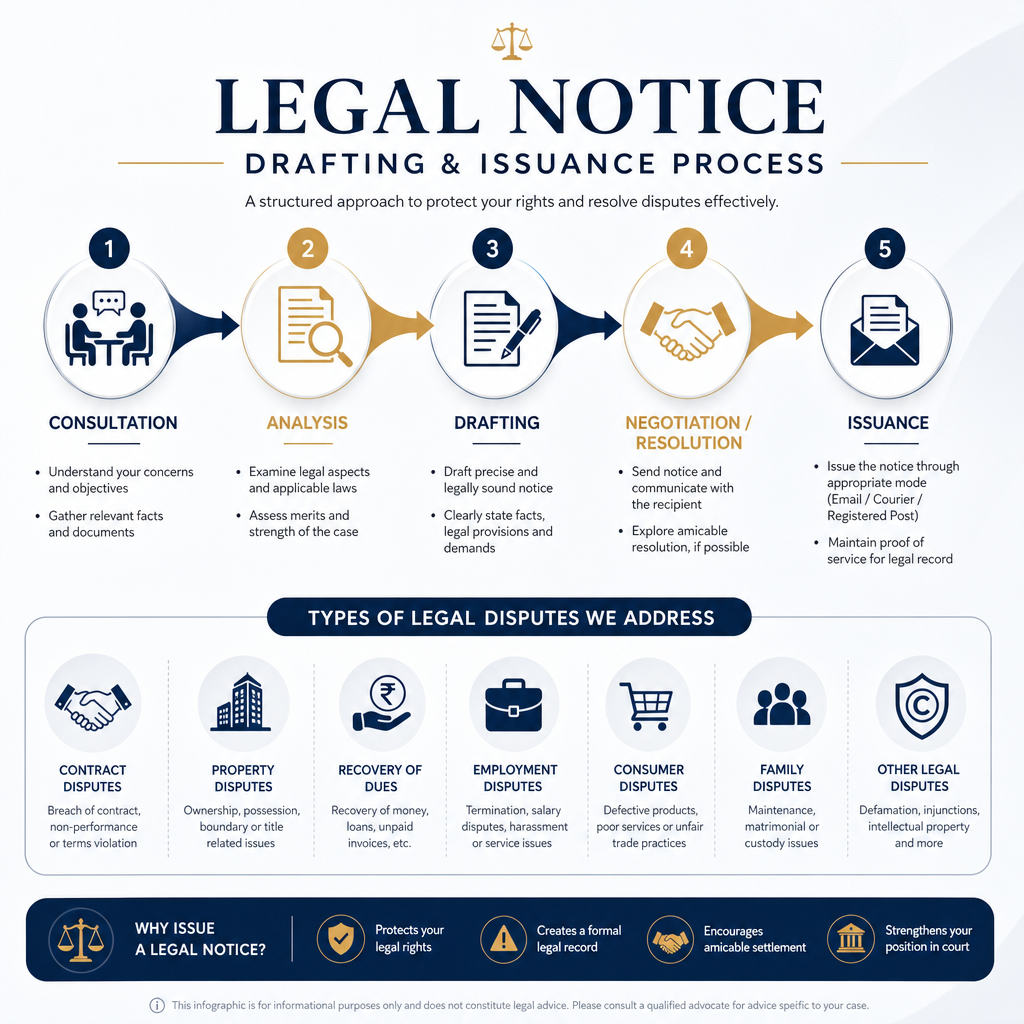
Serving a valid notice through a smartphone app requires much more than simply typing out an angry text message. To ensure your digital notice carries full legal weight and can withstand scrutiny in court, a highly structured process must be followed.
The workflow diagram above illustrates how an optimized digital collection campaign proceeds. At Legal Recovery, our specialists break this down into four key operational steps:
Step 1: Document Consolidation and Evidentiary Review
Before drafting begins, we compile your existing financial paper trail. This includes outstanding invoices, signed service agreements, bank ledgers, and screenshots of past chat conversations where the debtor explicitly acknowledged the balance owed. This ensures the foundational claim is solid.
Step 2: Expert Legal Drafting
A qualified legal expert drafts the notice. The document explicitly outlines the exact source of the debt, references relevant sections of Indian law, sets a firm statutory timeline for payment (typically 15 days), and provides clear instructions on how to clear the balance.
Step 3: Dual-Channel Delivery
We do not rely on digital channels alone. The finalized notice is converted into a secure, non-editable PDF document bearing the advocate's digital signature. It is then delivered directly to the debtor's known number via WhatsApp, accompanied by a formal text summary. Simultaneously, a physical copy is sent via registered Speed Post. This dual-channel approach gives the debtor zero room to claim they were not properly notified.
Step 4: Electronic Archiving & Multi-Channel Tracking
Once the message is sent, our team takes clear screenshots capturing the exact delivery timestamps, metadata, and read status (blue ticks). These digital assets are archived alongside the postal tracking receipts, creating an ironclad evidence file ready for any future court proceedings.
When to Deploy WhatsApp Legal Notice Solutions for Recovery
Different types of financial blockages require targeted strategies. Here is how digital notices can be deployed across various common disputes:
1. Reclaiming Outstanding Freelancer Fees and Client Balances
Independent creative professionals, developers, and consultants are frequently taken advantage of by clients who cut off communication once project assets are delivered. Sending a formal legal demand directly to a client's active chat profile cuts through the silence, signaling that you have professional legal support ready to act. Protect your independent business today by utilizing our specialized services for the recovery of freelancer and client payments.
2. Recovering Unpaid B2B Vendor Invoices and Corporate Receivables
In the business-to-business sector, cash flow bottlenecks are often caused by corporate clients who use bureaucratic delays to hold onto your capital. Deploying WhatsApp legal notice solutions for recovery bypasses slow-moving administrative departments, placing the legal demand straight onto the business owner's or director's personal device. To see how this fits into an overall corporate collection framework, browse our dedicated tools for vendor and invoice recoveries.
3. Securing Long-Overdue Salary and Final Settlements from Employers
If an employer terminates your position without processing your full and final (F&F) settlement, or holds back earned performance bonuses, getting a response from HR can be incredibly difficult. A formal digital notice served to the company's founders or executive team can quickly resolve the deadlock, prompting them to settle to protect their corporate reputation. Review your workplace rights on our page focusing on the recovery of salary and employment dues.
4. Reclaiming Cash Extracted by Untrustworthy Friends or Family Members
Lending money to acquaintances or relatives is rarely backed by a 50-page corporate contract. Instead, these personal loans usually rely on mutual trust, basic bank transfers, and text conversations. When a personal relationship breaks down over unpaid money, a formal yet professional digital notice helps establish a clear boundary, showing the borrower that you are serious about pursuing civil remedies. Learn how to convert casual chat messages into an actionable legal claim through our guide on the recovery of money from a friend.
5. Resolving High-Value Real Estate and Builder-Buyer Stalemates
Property disputes involve significant investments. Whether a developer is delaying project delivery, changing layout plans without your consent, or refusing to return a booking deposit after a contract cancellation, taking swift action is essential. Serving a digital legal demand alongside an escalation to the online Real Estate Regulatory Authority (RERA) portal puts immense pressure on developers to settle. For a deeper look at real estate dispute strategies, read our breakdown of property and builder disputes.
6. Recovering Disputed Tenant Security Deposits and Lease Dues
Landlords occasionally fabricate property damages at the end of a lease simply to keep your security deposit. On the other side, tenants sometimes stop paying rent entirely while refusing to move out. A structured digital notice gives both parties a fast, clear warning, often resolving tenancy standoffs before they turn into long, expensive court cases. Explore your options through our portal for security deposits and rental recoveries.
7. Demanding Refunds for Faulty Consumer Products and Travel Bookings
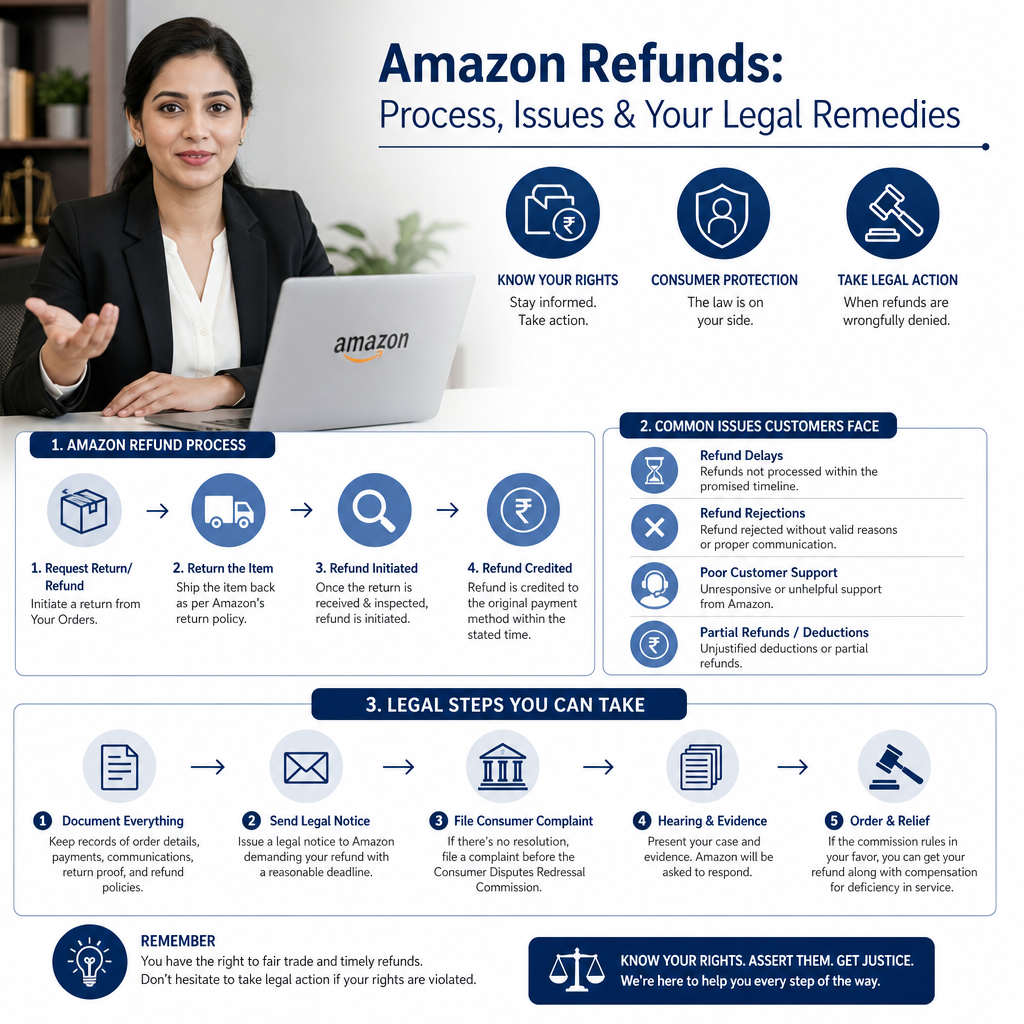
From airlines abruptly canceling flights and withholding refunds to e-commerce companies delivering broken goods and blocking customer service lines, consumer issues are incredibly common. Sending a formal legal notice directly to corporate grievance officers is a highly effective way to get results. Learn more about your options through our specialized resources for refunds and consumer complaints and airline and travel recoveries.
Statutory Recovery Metrics & Resolution Benchmark
Disputes resolved via formal statutory legal demand notices.
Average statutory compliance response timeline.
Mandatory refund of statutory levies under Indian Acts.
Interest compensation claimable under MSME & NI Acts.
Essential Safeguards to Ensure Your Digital Notice Holds Up in Court
While using mobile messaging apps makes debt recovery much faster, it must be handled carefully. If it is executed incorrectly, a defense attorney could potentially get your electronic evidence thrown out.
Critical Safeguard | Technical Execution Method | Why It Matters for Your Case |
Verify Phone Ownership | Match the mobile number against official corporate signatures, invoices, or registered KYC documents. | Prevents the debtor from claiming the number belongs to someone else or is no longer active. |
Use Non-Editable File Formats | Always convert your legal notice into a password-protected or flattened PDF before sending. | Ensures the text cannot be altered, modified, or tampered with after delivery. |
Preserve Digital Metadata | Maintain full, uncropped screenshots showing the phone number, date, time, and message status. | Vital for securing a valid certificate under electronic evidence laws during trial. |
Maintain Professional Tone | Avoid aggressive language or threats. Keep the communication focused purely on the legal facts of the debt. | Harassment over text can hurt your credibility and expose you to counter-claims. |
Summary of Statutory Remedies Accessible Post-Notice
If a debtor ignores your digital notice, it serves as proof of non-cooperation. You can then comfortably transition to formal legal actions using India's core debt recovery laws:
Summary Suits (Order XXXVII of the CPC): A fast-tracked civil option for clear financial debts (like unpaid invoices or written contracts) that prevents debtors from using long, drawn-out trial tactics unless they have a genuine defense.
Cheque Bounce Prosecutions (Section 138 of the NI Act): If a debtor gives you a cheque that bounces, a formal notice must be served within 30 days. If they fail to pay within 15 days of receiving it, you can file a criminal case.
MSME Samadhaan Escalations: Registered small businesses can use their digital notice as the basis to drag non-paying corporate buyers before the MSME Council, which mandates interest penalties at three times the RBI bank rate for delayed payments.
To look through our complete suite of legal collection options and discover which approach fits your situation best, browse our core services list.
Conclusion: Take Control of Your Financial Recovery with Legal Recovery
Unpaid debts should not stall your business operations or cause endless personal stress. The evolution of the Indian legal framework means you no longer have to wait on slow, old-school collection methods to protect your cash flow. By utilizing modern WhatsApp legal notice solutions for recovery, you can cut through the excuses and reach uncooperative debtors directly on the devices they use every day.
At Legal Recovery, we specialize in combining modern technology with deep legal expertise. Our platform ensures that your legal demands are drafted by qualified advocates, served quickly through compliant digital and physical channels, and backed by the solid evidence needed to protect your interests.
Stop spending your valuable time chasing uncooperative debtors. Browse our latest legal updates and strategies on our blog, or learn more about our commitment to efficient, accessible justice by visiting our about page. When you are ready to stop sending unacknowledged reminders and start getting real results, reach out to our team directly through our contact page for a clear evaluation of your case.
Frequently Asked Questions (FAQs)
Q1: Are WhatsApp legal notice solutions for recovery fully accepted by Indian courts?
Yes. Under Section 4 of the Information Technology Act, 2000, and backed by multiple rulings from the Supreme Court and various High Courts, serving a legal notice as a PDF document over a messaging platform is a recognized and valid form of service, provided delivery and read receipts can be verified.
Q2: What happens if a debtor has turned off their blue ticks (read receipts)?
Even if a debtor turns off their blue ticks, a professional recovery campaign does not rely on a single channel. We track the double gray ticks (which prove delivery to the device) and back up the message by simultaneously sending a physical copy via registered Speed Post, creating a combined layer of undeniable delivery proof.
Q3: Can I type out a legal notice directly into a chat window myself?
While you can send text reminders yourself, a formal legal notice must be structured appropriately, outline the relevant statutes, and carry the digital signature of a licensed advocate. Sending an informal text message yourself lacks the legal weight of a professionally drafted notice and may not stand up as solid evidence in court.
Q4: How long does a debtor have to respond after receiving a notice via mobile?
Just like a traditional physical letter, a digital notice typically gives the debtor a 15-day window from the date of receipt to pay the outstanding balance or provide a formal response through their legal counsel.
Q5: What should I do if a debtor blocks my number after receiving the notice?
If a debtor blocks your number after receiving the document, it actually helps demonstrate their bad faith and intent to evade their financial obligations. Because our process dual-delivers the notice via certified Speed Post and email, their attempt to block you on one platform will not disrupt your ability to move forward with a civil suit or tribunal filing.
Q6: Can independent contractors use digital notice solutions for unpaid client invoices?
Absolutely. Independent contractors and freelancers frequently face clients who cut off communication. WhatsApp legal notice solutions for recovery are an excellent, cost-effective way for creative or technical professionals to protect their contracts and quickly grab the attention of non-paying clients without incurring heavy litigation fees.
Q7: What evidence do I need to provide to start a digital notice campaign?
You simply need to provide clear proof of the underlying transaction. This includes items like unpaid invoices, purchase orders, email chains discussing the project, bank statement logs showing the missing payment, or chat histories where the debtor promised a specific payment date.
Q8: Is a digital notice effective for recovering personal loans given to friends?
Yes. Personal loans often lack formal, multi-page legal contracts. If you have bank transfer records showing you sent the money, paired with text messages where the borrower explicitly acknowledges the loan and promises to pay you back, you have a solid foundation to issue a formal digital notice.
Popular Searches & Related Topics

Legal Recovery is India's trusted consumer protection and legal tech platform. We specialize in holding corporations accountable for unfair trade practices, deceptive marketing, and commercial fraud. With over 15,000 customers counselled, our mission is to provide fast, out-of-court resolutions by connecting you with top-tier panel advocates for immediate legal action.
Client Reviews
"Legal Recovery's WhatsApp notice service was a game-changer for my business. We resolved outstanding invoices quickly and efficiently."
Amit
"The digital notice process was seamless and saved us time in recovering overdue payments. Highly recommend Legal Recovery's services."
Priya
"As a freelancer, Legal Recovery's solutions helped me secure payments from unresponsive clients. Their team is professional and effective."
Rohan
Frequently Asked Questions
Related Articles
About Author
Team LegalRecovery
View ProfileTeam LegalRecovery is a dedicated team of legal and financial professionals specializing in loan settlement, banking disputes, debt relief, and corporate compliance. We are committed to helping clients achieve debt freedom and business stability through expert strategic advisory.
Connect on LinkedInNeed Legal Help?
Get expert advice on loan settlement, banking disputes and debt relief.
Start Recovery NowRequest Callback