Recovery of Money from Legal Heirs: A Complete Guide
Learn how to legally recover money from heirs after a debtor's death.
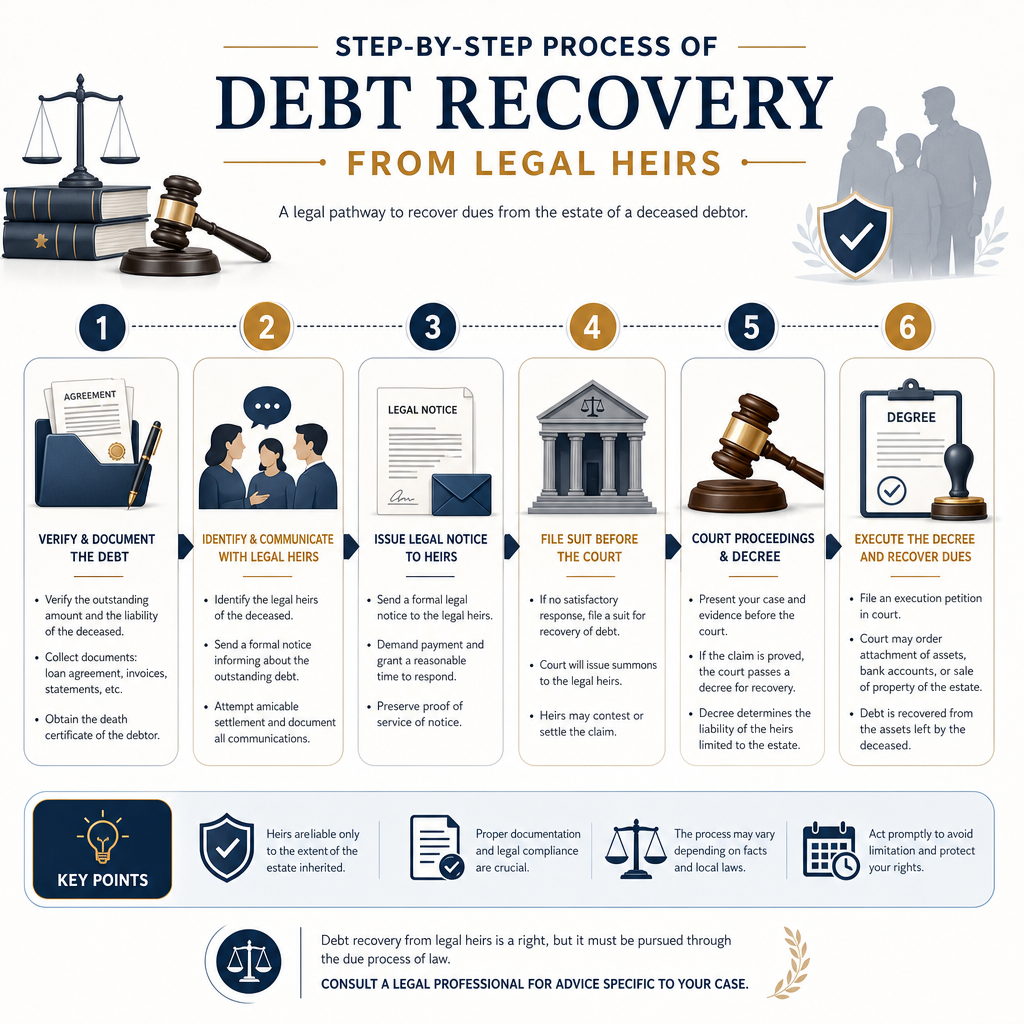
Table of Contents
Table of Contents
Swipe →Comprehensive Guide to Recovery of Money from Legal Heirs in India: Legal Provisions, Liability Limits, and Step-by-Step Remedies
Losing a person who owes you money introduces a delicate and layered set of legal complications. When a debtor passes away without settling their financial obligations, creditors are frequently left stranded, wondering if their hard-earned money is lost forever or if the law provides a pathway to reclaim it. In India, the recovery of money from legal heirs is governed by an intricate combination of personal laws, statutory rules under the Code of Civil Procedure (CPC), and binding judicial precedents from the Supreme Court.
A common misconception is that a person's debts disappear upon their death, or conversely, that their children or spouse must clear those debts entirely out of their own pockets. Neither assumption is legally accurate. Indian law balances the rights of the creditor to retrieve their dues with the rights of the surviving family to be protected from personal financial ruin. If you are a business owner dealing with outstanding invoices, an individual who lent funds to a friend, or a service provider with unpaid dues, navigating this path requires professional precision. At Legal Recovery, we specialize in guiding individuals and corporate entities through structured, lawful channels to ensure outstanding debts are recovered seamlessly without crossing ethical or statutory boundaries.
Understanding the Legal Core: Can You Legally Recover Money from Legal Heirs?
Under Indian jurisprudence, the basic principle is clear: debts do not die with the debtor, but the personal liability of the legal heirs is strictly limited. When a borrower passes away, their outstanding financial liabilities shift to their estate. The legal heirs—whether inheriting through a written Will (testate succession) or via personal laws due to the absence of a Will (intestate succession)—step into the shoes of the deceased. However, they do not inherit personal liability for the debt.
The foundational framework governing the recovery of money from legal heirs is explicitly laid down in Section 52 of the Code of Civil Procedure (CPC), 1908.
Section 52(1) of the CPC states:
Where a decree is passed against a party as the legal representative of a deceased person, and the decree is to be executed against the property of the deceased, it may be executed by the attachment and sale of any such property.
This means that as a creditor, your legal right to recover money is enforceable directly against the assets, properties, and wealth left behind by the deceased debtor. The legal heirs act as custodians of that estate. If they inherit assets, they inherit the corresponding obligation to clear the debts using those specific assets. If no assets are left behind, the legal heirs cannot be forced to pay from their individual personal income, salaries, or ancestral property that was never owned by the deceased.
The Concept of "Estate of the Deceased" and the Extent of Heir Liability
To successfully execute a recovery of money from legal heirs, one must understand what constitutes the "estate" and how liability is meted out. The estate encompasses all tangible and intangible assets owned by the debtor at the time of their passing.
What Forms Part of the Deceased's Estate?
Immovable Properties: Residential apartments, commercial spaces, plots of land, or agricultural land held solely in the debtor's name.
Liquid Assets & Financial Holdings: Bank accounts, fixed deposits (FDs), recurring deposits, mutual fund investments, and shares.
Movable Assets: Vehicles, gold jewelry, machinery, and luxury items.
Business Assets: Capital invested in a proprietorship firm or partnerships (subject to partnership deed clauses).
Calculation of Limited Liability
The liability of a legal representative is strictly pegged to the valuation of the assets they receive. Let us look at a structural comparison of how liability scales depending on the estate's value:
Scenario | Value of Deceased's Estate Inherited | Total Outstanding Debt Due | Maximum Legal Liability of Heirs | Final Outcome for Creditor |
Scenario A: Fully Solvent Estate | ₹50,00,000 | ₹20,00,000 | ₹20,00,000 | Full recovery achieved through the assets. |
Scenario B: Partially Deficit Estate | ₹15,00,000 | ₹25,00,000 | ₹15,00,000 | ₹15,00,000 recovered; remaining ₹10,00,000 written off by law. |
Scenario C: Zero Asset Estate | ₹0 | ₹8,00,000 | ₹0 | No personal liability; heirs owe nothing from personal pockets. |
As shown above, if the debt exceeds the value of the inherited property, the legal heirs are not bound to pay the balance amount from their own personal funds or separate earnings.
Visual Summary: The Debt Recovery Pipeline After a Debtor's Demise
[Debtor Passes Away with Outstanding Debt]
                  │
                  ▼
   [Identify the Legal Representatives]
                  │
                  ▼
     [Evaluate the Inherited Estate]
                  │
       ┌──────────┴──────────┐
       ▼                     ▼
[Estate Has Assets]    [Estate Has No Assets]
       │                     │
       ▼                     ▼
[File Recovery Claim/  [Debt Becomes Legally
 Execution Petition]    Unrecoverable from Heirs]
       │
       ▼
[Recovery Capped up to
 value of inherited estate]
Secured vs. Unsecured Debts: How Recovery Mechanisms Shift
The legal strategy for the recovery of money from legal heirs diverges significantly based on whether the underlying loan or transaction was secured by a collateral asset or purely unsecured.
1. Secured Debts (Home Loans, Car Loans, Mortgages)
In secured transactions, the creditor holds a physical or legal charge over a specific asset. When the primary debtor dies, the creditor's right to attach and sell the collateral remains completely unaffected by the death.
The Role of the SARFAESI Act, 2002: Banks and financial institutions can issue notices under Section 13(2) of the SARFAESI Act directly to the legal heirs, treating them as the modified "borrower" (as upheld in recent Debt Recovery Appellate Tribunal rulings like Smt. Lilawati Sharma v. Bank of India).
If the heirs wish to keep the family home or vehicle, they must step forward to clear the outstanding mortgage or restructure the loan. If they fail to do so, the financial institution exercises its legal right to auction the property to recover the outstanding balance.
2. Unsecured Debts (Personal Loans, Friendly Loans, Unpaid Vendor Invoices)
Unsecured debts present a higher hurdle. Since there is no specific asset pledged, the creditor must initiate formal legal actions against the estate as a whole.
If a businessman has supplied commercial goods and is looking for vendor and invoice recoveries, or if an individual is pursuing the recovery of money from a friend who has passed away, they cannot simply seize physical items from the grieving family.
The creditor must file a civil suit for recovery or implead the legal heirs in an ongoing suit, proving both the validity of the debt and the fact that the heirs have inherited assets from the deceased.
Statutory Recovery Metrics & Resolution Benchmark
Disputes resolved via formal statutory legal demand notices.
Average statutory compliance response timeline.
Mandatory refund of statutory levies under Indian Acts.
Interest compensation claimable under MSME & NI Acts.
Crucial Statutory Provisions and Judicial Precedents
A seamless strategy for the recovery of money from legal heirs requires a thorough application of the following provisions of Indian law:
Code of Civil Procedure (CPC), 1908
Section 50 (Execution of Decree against Legal Representative): If the original debtor passes away after a court decree has been passed but before it is fully satisfied, the creditor can apply to the executing court to execute the decree against the legal heirs. The law clarifies that such heirs are liable only to the extent of the property that has come into their hands and has not been duly disposed of.
Order XXII Rule 4: If the debtor passes away during the pendency of a civil suit, the plaintiff must file an application to bring the legal representatives (LRs) on record within the statutory limitation window of 90 days. Failure to do so causes the suit to abate against the deceased party.
Indian Succession Act, 1925
Section 325: This section outlines that the debts of the deceased must be paid before any legacies or inheritances are distributed to beneficiaries under a Will. Legal heirs cannot distribute the wealth among themselves while ignoring legitimate creditors who hold valid claims against the estate.
Historic Supreme Court Rulings on Heir Liability
The higher judiciary in India has consistently protected families from harassment while ensuring lenders have structural recourse:
The Limitation of Inheritance Rule: The Supreme Court has repeatedly held that the legal representatives of a deceased debtor are liable to satisfy the decree out of the estate of the deceased which came into their hands. If the legal heirs can show they have properly applied the inherited property to pay off other prior debts or that no assets came into their hands, they face zero personal liability.
Consideration and Written Agreements: In historical reviews of debt agreements (such as Sadasukh Jankidas Sahu v. Nawab Akram Jung), courts have noted that when legal heirs execute a subsequent written agreement or promise to clear the ancestral debt out of inherited income streams, it constitutes a valid legal contract with good consideration, rendering it binding.
Step-by-Step Procedure for Creditors Seeking Recovery
If you are a creditor stuck with unpaid dues because of the untimely demise of a borrower, you must act methodically to avoid losing your legal rights due to statutory delays. Follow this structured roadmap implemented by our legal experts at Legal Recovery:
Step 1: Formal Notification and Verification
Before jumping into litigation, send a formal intimation to the family or known legal representatives. Request a copy of the death certificate for your records. This initial phase helps establish open, transparent dialogue. It is also the ideal moment to ascertain whether the deceased left behind a registered Will, or if a legal heir certificate or succession certificate is being processed.
Step 2: Asset and Estate Mapping
To determine if your pursuit of recovery of money from legal heirs is financially viable, map out the assets left behind by the debtor. This involves verifying land registration documents, identifying bank accounts, or reviewing corporate filings if the debtor ran a business entity. If you are dealing with distinct commercial realms like property and builder disputes, understanding asset ownership lines is paramount.
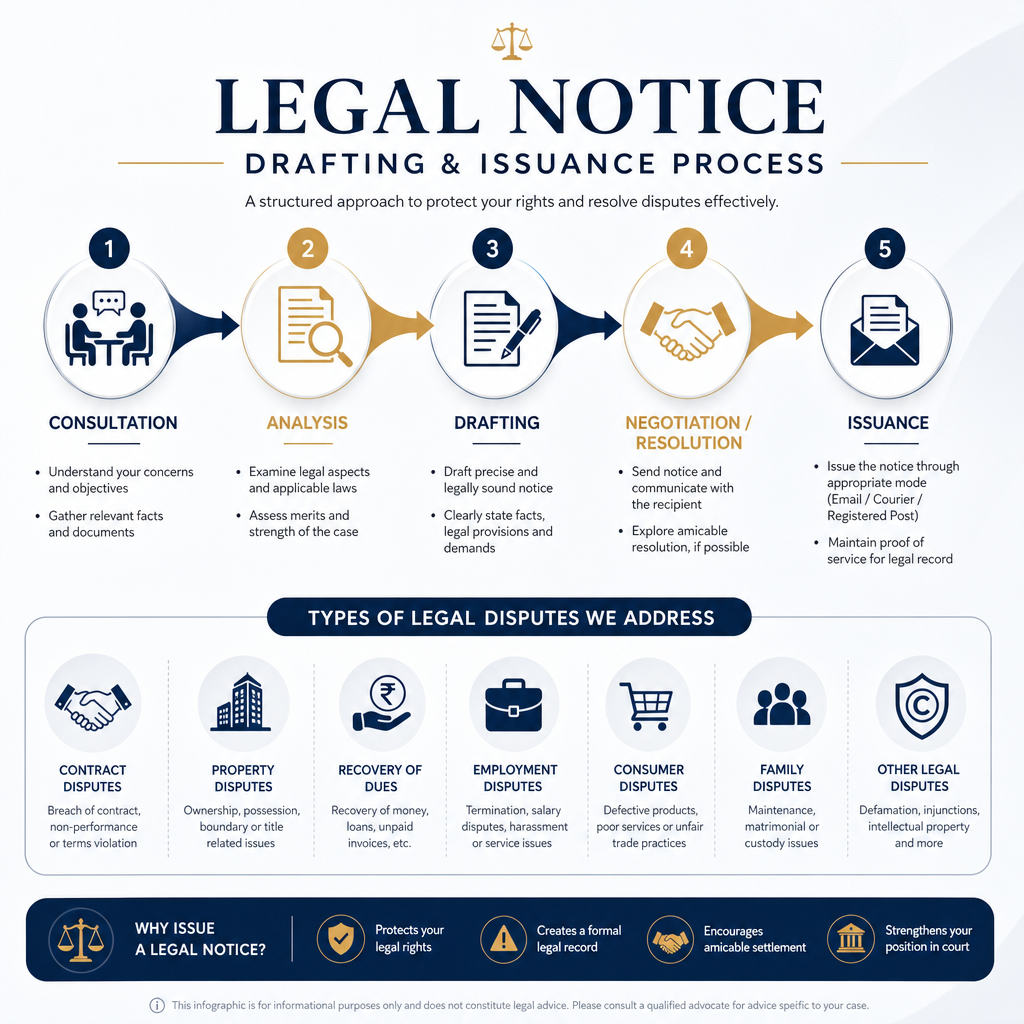
Step 3: Serving a Formal Legal Notice
Draft and serve a comprehensive Legal Notice to all the surviving legal heirs. The notice must specify:
The exact source and documentation of the original debt (e.g., promissory notes, loan agreements, or bounced checks).
The outstanding principal and contractually agreed-upon interest component.
A explicit callout stating that they are being addressed in their capacity as legal representatives holding the estate of the deceased.
A standard 15-day or 30-day window to respond or settle the matter before formal civil litigation commences.
Step 4: Filing a Civil Suit or Execution Petition
If the legal notice yields no resolution or if the heirs refuse to cooperate, you must approach the appropriate judicial forum based on your jurisdiction and monetary valuation:
If litigation was already underway: File an application under Order XXII Rule 4 of the CPC within 90 days to substitute the deceased debtor with their legal representatives.
If a decree was already obtained: File an Execution Petition under Section 50/52 of the CPC to attach and auction the inherited properties of the deceased.
If filing a fresh case: File a Civil Suit for Recovery against the legal heirs, specifically requesting the court to satisfy the debt from the estate of the deceased in their hands.
Critical Exceptions: Co-Borrowers, Guarantors, and Nominees
Not all individuals associated with a deceased debtor are treated equally under the law. Understanding these distinct legal roles prevents confusion during recovery actions.
Co-Borrowers and Joint Accounts
If a loan was taken jointly—such as a home loan signed by a husband and wife—the death of one co-borrower does not dilute or suspend the loan liability. The surviving co-borrower remains jointly and severally liable to repay the entire outstanding loan amount. The creditor does not need to wait for estate distribution; they can demand continuous repayments directly from the surviving co-borrower.
The Legal Position of a Guarantor
A guarantor provides a continuous undertaking to step in if the primary borrower defaults. If the primary borrower passes away and the estate cannot fulfill the debt, the liability moves to the guarantor. The guarantor's liability is co-extensive with that of the principal debtor. The creditor can legally file recovery proceedings against the guarantor to satisfy the balance amount.
Nominee vs. Legal Heir
Many creditors mistakenly believe that if someone is listed as a "nominee" in the deceased debtor's bank account or mutual funds, that nominee is automatically liable to pay off the debts.
Important Legal Distinction: A nominee is merely a trustee or custodian appointed to receive the funds from a financial institution to prevent the funds from being locked up. The nominee does not automatically become the legal owner of that money. The money received by the nominee remains part of the deceased's general estate, making it accessible to the legal heirs and, consequently, liable for the settlement of valid debts held by legitimate creditors.
Actionable Tips for Creditors to Minimize Risk
To protect your business or personal finances from becoming unrecoverable in the event of a debtor's sudden demise, consider incorporating these practical precautions into your lending workflows:
Always Include Co-Signers or Guarantors: Whenever you are executing large personal loans or friendly loans, ensure there is a solvent co-signer or guarantor on the agreement. This provides an immediate alternative path for recovery.
Incorporate Clear Succession Clauses: Ensure your loan agreements, business contracts, or vendor terms explicitly contain a clause stating: "This agreement and all financial liabilities hereunder shall be binding upon the parties hereto and their respective legal heirs, executors, administrators, and legal representatives."
Insist on Loan Insurance: For substantial commercial or personal exposures, request the borrower to back the obligation with a term insurance or credit insurance policy where the payout is directly linked to covering outstanding dues upon death.
Track the Law of Limitation: Remember that the limitation period to file a civil recovery suit in India is 3 years from the date the cause of action arose (e.g., the date of default). The death of the debtor does not reset or extend this 3-year clock. If you delay taking action, your claim might become time-barred under the Limitation Act, 1963.
Conclusion: How Legal Recovery Strategizes Complex Debt Claims
Navigating the recovery of money from legal heirs requires a careful, methodical approach that balances legal strategies with deep empathy for families navigating a loss. Attempting aggressive or unverified recovery methods without understanding the boundaries of Section 52 of the CPC can expose a creditor to criminal charges for harassment or extortion. Conversely, being overly passive could cause your legitimate claims against a solvent estate to become legally invalid due to statutory deadlines.
The absolute key to success lies in early asset mapping, swift legal notice distribution, and the precise presentation of facts before civil courts or debt recovery tribunals. Whether you need assistance recovering unpaid freelancing retainers via recovery of freelancer and client payments, handling complicated security deposit holdbacks through security deposits and rental recoveries, or tackling deep-seated corporate defaults, our legal platform is built to provide maximum clarity and results.
Do not let your hard-earned capital get permanently erased due to legal technicalities. Let our experienced legal strategists and network advocates evaluate your case, identify the inherited estate, and execute a structured recovery plan aligned with prevailing judicial norms.
Take the first step toward reclaiming your dues today. Discover how it works, browse our specialized practice areas across our services portal, or read our latest updates on our blog. For a dedicated, confidential case assessment with our recovery experts, visit our contact page and share your case details.
Popular Searches & Related Topics

Legal Recovery is India's trusted consumer protection and legal tech platform. We specialize in holding corporations accountable for unfair trade practices, deceptive marketing, and commercial fraud. With over 15,000 customers counselled, our mission is to provide fast, out-of-court resolutions by connecting you with top-tier panel advocates for immediate legal action.
Client Reviews
"The guidance provided was crucial in recovering debts from my late uncle's estate. The step-by-step approach made a complex process seem manageable."
Arjun Mehta
"A comprehensive guide that covers all legal aspects. Thanks to the insights, I could communicate effectively with legal heirs and settle outstanding dues amicably."
Priya Nair
"Excellent resource for creditors! The legal framework and procedural steps were clearly explained, making the recovery process smoother and more efficient."
Ravi Kumar
"Highly satisfied with the clarity and detail in the guide. It simplified the complex legalities involved in debt recovery from heirs, helping us resolve disputes quickly."
Sneha Choudhary
"The article was extremely helpful in understanding my rights and options as a creditor. The structured approach and legal insights were invaluable."
Vikram Singh
Frequently Asked Questions
Related Articles

About Author
Team LegalRecovery
View ProfileTeam LegalRecovery is a dedicated team of legal and financial professionals specializing in loan settlement, banking disputes, debt relief, and corporate compliance. We are committed to helping clients achieve debt freedom and business stability through expert strategic advisory.
Connect on LinkedInNeed Legal Help?
Get expert advice on loan settlement, banking disputes and debt relief.
Start Recovery NowRequest Callback