Effective Recovery of Money from Employer and Contractor
Strategies for Successful Money Recovery from Employers and Contractors

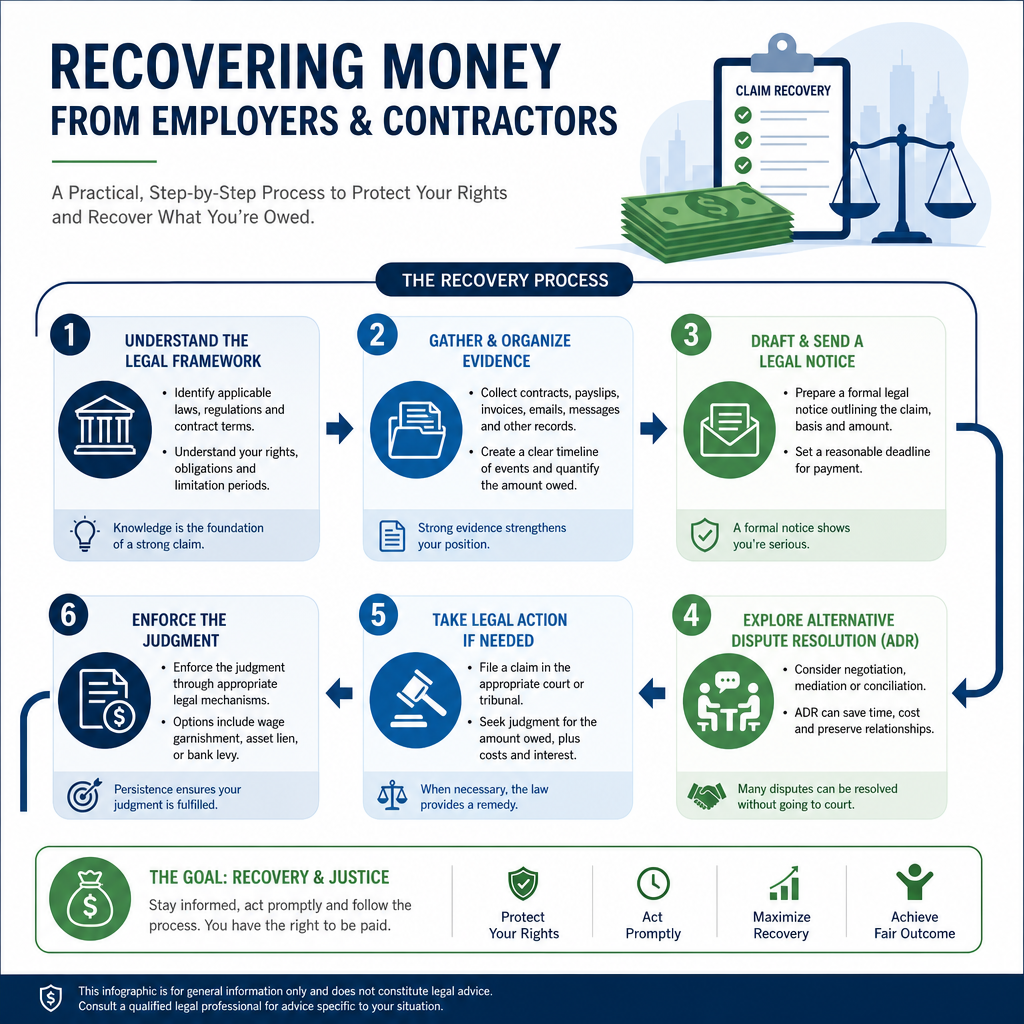
Table of Contents
Table of Contents
Swipe →Recovery of Money From Employer and Contractor: The Definitive Indian Legal Strategy Guide
Earning a rightful livelihood or completing outsourced project milestones rests entirely on a simple promise: that your work will be fairly compensated upon completion. However, when corporate entities withhold a monthly salary, or prime construction contractors disappear after you have delivered essential supplies, that financial security vanishes. Navigating the recovery of money from employer and contractor structures can be an uphill battle if you rely purely on informal phone calls, broken verbal promises, or endless polite follow-up emails. Failing to receive your dues chokes personal financial stability, paralyzes business cash flow, and creates immense mental stress.
Many professionals, independent creators, and sub-contractors choose to delay taking legal action because they assume the Indian judicial system is too slow, expensive, and filled with complicated jargon. They continue accepting vague excuses about "delayed client disbursements" or "internal payroll system audits" until it is too late. The truth is that India's legal ecosystem features specialized, fast-tracked labor statutes and commercial civil remedies created specifically to protect your earnings. Achieving a successful recovery is all about shifting early on from casual text reminders to formal, structured legal demands that hold defaults accountable under the law.
[Default Occurs] ──> [Preserve Written Trails] ──> [Issue Demand Notice] ──> [Fast-Track Statutory Escalation]
To break this cycle of corporate non-compliance, you need clear tactical strategies, organized digital evidence, and an understanding of dynamic statutory regulations. At Legal Recovery, we streamline this path for you, turning intimidating court procedures into structured, digital-first recovery tools. Whether an enterprise has unlawfully withheld your final settlement or a general contractor is holding onto structural project clearances, this comprehensive guide outlines the exact statutory steps, labor remedies, and court mechanisms needed to secure your money.
The Legal Landscape for Workers and Contractors in India
When looking at the recovery of money from employer and contractor pathways, the first step is identifying which primary legal classification applies to your specific arrangement. Your statutory rights change dramatically based on whether you are classified as an employee under formal labor law or an independent contractor under standard commercial codes.
1. The Statutory Shield for Salaried Employees
If you maintain a structured relationship with an enterprise—characterized by dedicated hours, employment agreements, or regular payroll structures—you are protected by Indian labor laws. Key statutory pillars include:
The Payment of Wages Act, 1936: Mandates that salaries must be paid within seven to ten days following the end of a wage period.
The Industrial Relations Code, 2020 (Amended 2026): Consolidates and streamlines how employment disputes are handled, giving statutory bodies clear authority to address wage theft and arbitrary termination adjustments without unnecessary delays.
2. The Commercial Shield for Independent Contractors and Service Vendors
If you provide specialized technical services, creative content, or raw project goods through independent contracts, your relationship is governed by commercial civil law:
The Indian Contract Act, 1872: Protects your right to claim full compensation for a contract breach if you have fulfilled your side of the project.
The Micro, Small, and Medium Enterprises Development (MSMED) Act, 2006: Provides powerful fast-track payment protection for registered businesses, enforcing a strict 45-day invoice clearance window.
Action Plan: Recovery of Money from an Non-Compliant Employer
When an enterprise refuses to clear your monthly salary, structural bonuses, or your full-and-final settlement, your recovery strategy needs to follow a precise sequence.
┌────────────────────────────────────────────────────────┐
│            EMPLOYEE WAGE RECOVERY TIMELINE             │
├────────────────────────────────────────────────────────┤
│ 1. Download official payslips & tax logs (Form 16)     │
│ 2. Serve a formal 15-Day Statutory Demand Notice       │
│ 3. Escalate directly to the Regional Labor Office      │
└────────────────────────────────────────────────────────┘
1. Step One: Secure the Digital Evidentiary Trail
Before alerting an employer to potential legal actions, download and back up all critical proof of your employment from corporate servers. Once access is revoked, gathering this evidence becomes difficult. Make sure to preserve:
Your formal appointment letter, increment emails, and signed appraisal documents.
Monthly payslips, bank statements showing historic salary deposits, and income tax statements.
Written performance approvals, project sign-offs, and final resignation acknowledgments.
2. Step Two: Serve an Expert Statutory Demand Notice
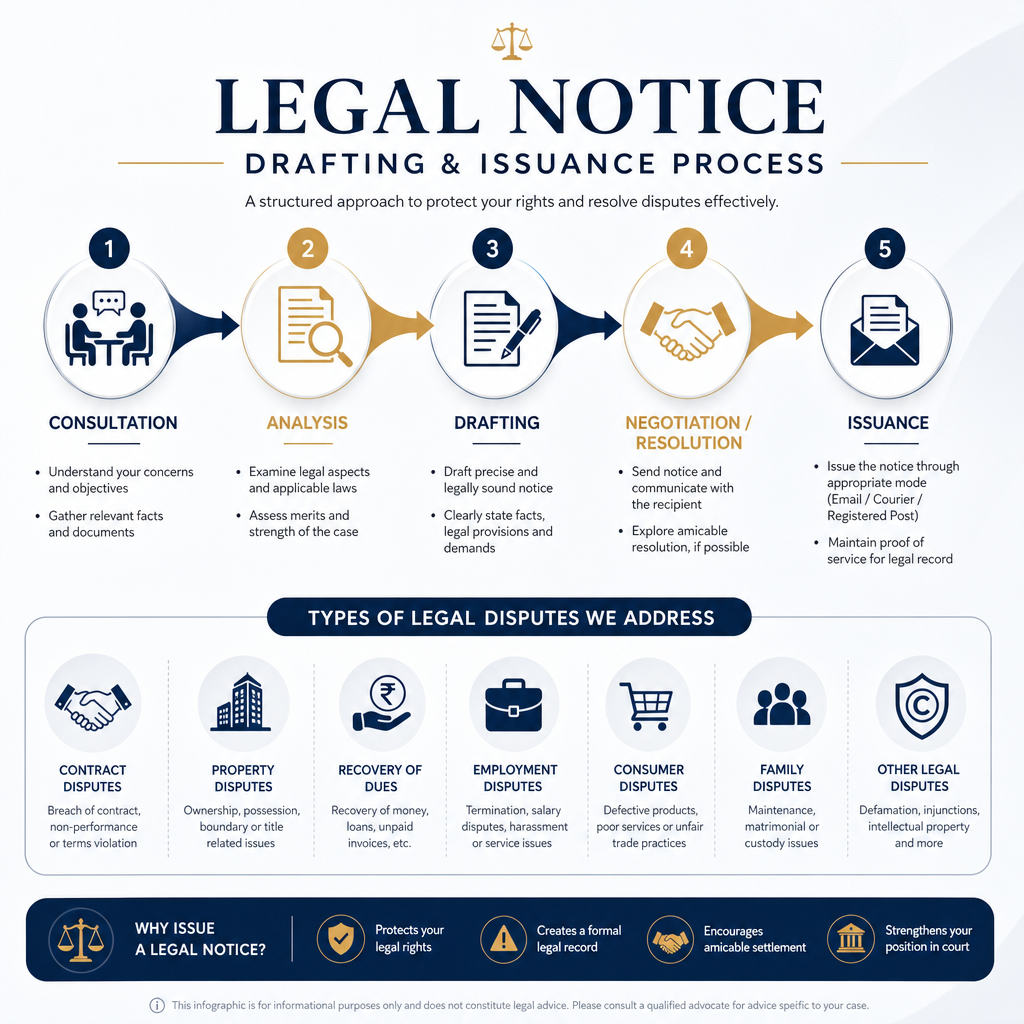
Do not rely on informal human resources threads. Have a specialized attorney draft and serve a formal 15-day demand notice on your company's official advocate letterhead. This document outlines the exact unpaid amounts, cites relevant labor codes, and gives the management a clear timeline to clear the balance before facing litigation. To see how we draft these impactful letters across India, explore our dedicated services for the recovery of salary and employment dues.
3. Step Three: Approach the Regional Labor Commissioner
If the employer ignores the notice, you can file an official complaint with the local labor department. The Labor Commissioner will summon the company's representatives for a conciliation meeting. If the business cannot prove they paid your salary, the department can issue an enforcement order to collect your dues as land revenue arrears.
Action Plan: Recovery of Money from a Defaulting Contractor
Recovering outstanding balances from an independent general contractor or project client requires a different strategy. Because this is a commercial relationship, you must utilize civil litigation tools and specialized contract enforcement mechanisms.
How do you legally ensure the recovery of money from employer and contractor defaults?
To legally recover money from a defaulting employer or contractor, you should first compile your service agreements, invoices, work emails, and bank records. Next, issue a formal legal notice granting a strict 15-day window for payment. If an employer fails to pay, escalate the matter to the regional Labor Commissioner. For a contractor default, file a fast-track summary suit under Order 37 of the Civil Procedure Code (CPC) or approach the MSME Samadhaan portal to claim compounding interest up to three times the benchmark bank rate.
1. Leverage Fast-Track Order 37 Summary Suits
Traditional civil lawsuits can move slowly through courts due to extensive procedural hurdles. To avoid these delays, your attorney can file a "Summary Suit" under Order 37 of the Civil Procedure Code (CPC). This mechanism is specifically built for written contracts, clear invoices, and liquidated financial claims.
Under an Order 37 proceeding, the defaulting contractor does not receive an automatic right to defend themselves. They must present a genuine, non-frivolous defense to a judge within ten days of receiving the summons. If they fail to provide a valid defense, the court can instantly rule in your favor, saving you months of litigation.
2. The Power of MSME Samadhaan for Small Businesses
If your independent service business or agency holds a valid registration, you can bypass traditional civil courts entirely by utilizing the MSME Samadhaan arbitration portal:
Mandatory Payment Windows: Large corporate contractors are legally required to clear your invoices within 45 days of receiving your deliverables.
Compounding Interest Penalties: Any payment delayed beyond this window automatically incurs compounding interest at three times the standard benchmark rate set by the Reserve Bank of India (RBI).
To leverage these specialized corporate tools and protect your cash flow from non-compliant buyers, learn more about our strategic frameworks for vendor and invoice recoveries.
Comprehensive Solutions Across Diversified Recovery Sectors
Financial disputes rarely happen in a vacuum. A delay in receiving corporate payments often impacts your ability to handle other critical financial matters. Understanding how different recovery sectors connect is essential to maintaining your financial well-being:
Gig Work & Freelance Partnerships: If you are an independent creator or software developer working directly with a contractor without a formal corporate setup, safeguard your income by exploring our portal for the recovery of freelancer and client payments.
Commercial Infrastructure & Real Estate: When an infrastructure developer or builder holds your deposits or project capital unfairly, utilize our targeted tools for property and builder disputes.
Rental Property Asset Management: If an unexpected job loss or termination forces you to relocate, protect your savings against landlords who refuse to return your funds by checking our guide on security deposits and rental recoveries.
Personal and Informal Loans: If you have shared personal funds with an acquaintance or relative to stay afloat during a financial crunch, manage those sensitive recovery situations professionally using our guide on the recovery of money from a friend.
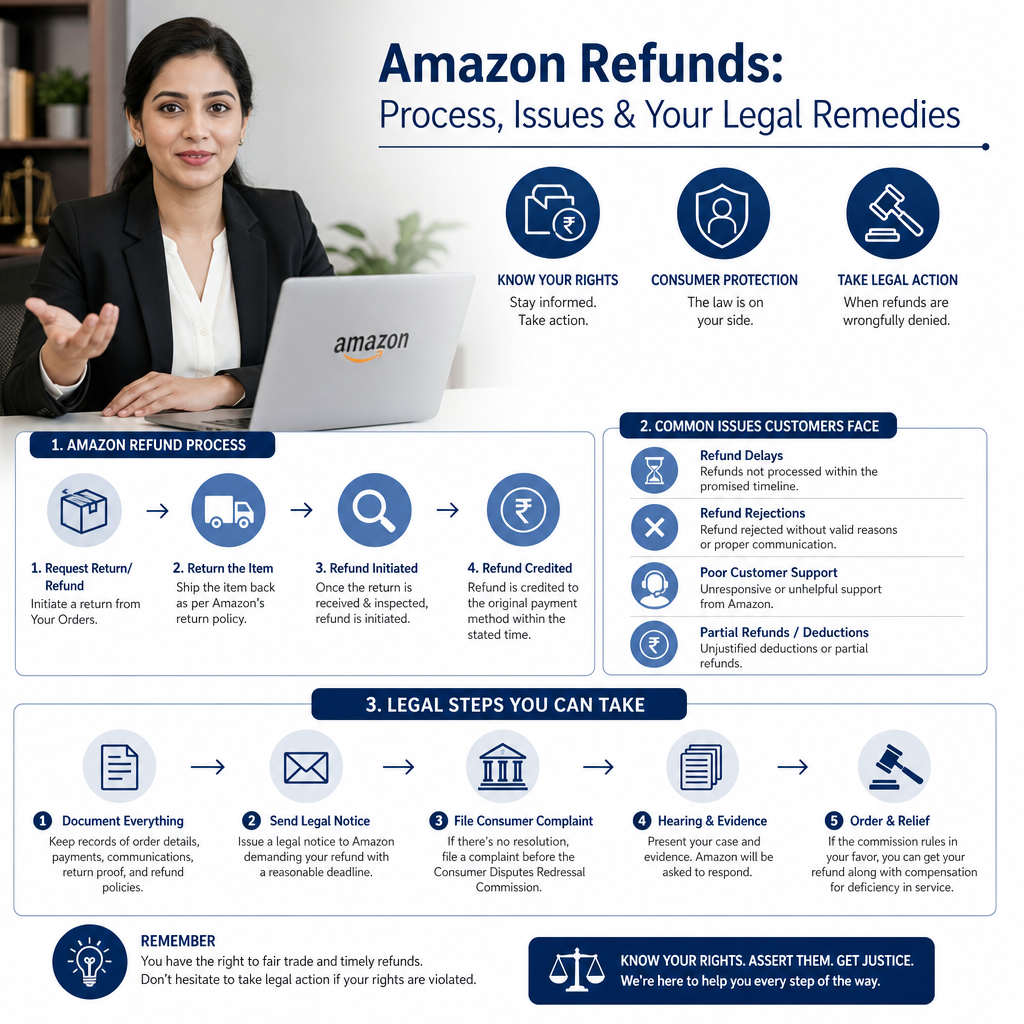
Consumer Protection Frameworks: If a consumer tech platform, insurance provider, or service vendor denies a legitimate refund request, hold them accountable by reviewing our services for refunds and consumer complaints and airline and travel recoveries.
Civil vs. Criminal Remedies for Financial Recovery
When pursuing the recovery of money from employer and contractor entities, you can choose to explore both civil remedies and criminal actions, depending on the severity of the default.
Statutory Avenue | Governing Framework | Average Timeline | Strategic Outcome | Ideal Scenario |
Legal Demand Notice | Section 73 of the Indian Contract Act | 15 to 30 Days | Resolves up to 70% of payment disputes out of court through formal legal pressure. | All salary and contract defaults. |
Summary Litigation | Order 37 of the Civil Procedure Code (CPC) | 6 to 12 Months | Secures a rapid, binding court judgment by blocking frivolous defense tactics. | Unpaid invoices and clear written contracts. |
Labor Conciliation | Industrial Relations Code, 2020 | 3 to 6 Months | Results in government-backed settlement mandates or revenue recovery orders. | Unlawful wage and final settlement withholding. |
Criminal Prosecution | Section 318 of the Bharatiya Nyaya Sanhita (BNS) | 12+ Months | Punishes deliberate fraud and cheating with potential imprisonment of up to 7 years. | Falsified records, scams, or willful fraud. |
When Does a Financial Default Become a Criminal Offense?
A simple breach of contract or an unexpected delay in payroll is fundamentally a civil matter. However, a case enters criminal territory under Section 318 of the Bharatiya Nyaya Sanhita (BNS) (which replaced the old IPC Section 420 for cheating) if you can prove the debtor had a dishonest or fraudulent intention right from the start.
If an employer hires a large team while already in active liquidation, or if a contractor takes your project deposits using completely fabricated credentials, they are committing a criminal offense. A formal criminal complaint adds significant pressure, as it targets the personal liberty of the directors involved.
Statutory Recovery Metrics & Resolution Benchmark
Disputes resolved via formal statutory legal demand notices.
Average statutory compliance response timeline.
Mandatory refund of statutory levies under Indian Acts.
Interest compensation claimable under MSME & NI Acts.
The Legal Recovery Journey: Simple, Transparent, and Digital-First
Navigating financial collection through traditional legal avenues often means dealing with unpredictable hourly retainers, endless paperwork, and confusing jargon. We have redesigned this experience from the ground up to make it transparent and accessible.
1.Digital Workspace Case Initiation:Time: 10 Minutes.
Select the recovery solution that matches your situation and securely upload your basic supporting evidence (such as emails, agreements, or invoices) to our platform. To learn how our digital onboarding system works, view our guide on how it works.
2.Custom Drafting by Legal Experts:Time: 24-48 Hours.
Our experienced labor and commercial lawyers analyze your documents, calculate your exact statutory timelines, and draft a tailored legal demand notice on an official letterhead.
3.Verified Multi-Channel Notice Dispatch:Immediate Action.
The finalized legal notice is served across multiple channels simultaneously—using trackable physical dispatch alongside digital delivery to ensure the debtor cannot claim they never received it.
4.Active Resolution and Court Support:Continuous Updates.
We handle the response window closely. If the debtor remains non-compliant after the deadline, our platform helps you transition smoothly to formal court filings or labor tribunal representations.
Actionable Strategy Tips to Maximize Your Recovery Success
To ensure your financial recovery efforts are as successful as possible, implement these best practices early in the process:
Act Quickly to Beat Limitation Clocks: Under the Indian Limitation Act, 1963, you have a strict three-year window from the date a payment becomes due to file a civil suit. Waiting too long means risking your legal right to enforce the claim.
Keep Your Communication Professional: Avoid getting into emotional or angry text arguments with an employer or contractor. Keep all communications professional and in writing, as these records serve as vital evidence in court.
Verify Corporate Registrations: Always check the Ministry of Corporate Affairs (MCA) portal to confirm the active registration status and official address of your employer or contractor before sending out formal legal notices.
To learn more about our operational standards, data security protocols, and consumer advocacy programs, visit our About page. To review the full scope of financial disputes we manage daily, visit our Services directory.
Historic Supreme Court Precedents on Unpaid Dues
The highest courts in India continually reinforce rules that protect workers and suppliers from arbitrary financial withholding:
1. Wages are a Fundamental Right under Article 21
In State of Punjab v. Labour Court, the Supreme Court of India ruled that regular payment of earned wages is a core component of the right to live with dignity under Article 21 of the Constitution. The Court clarified that corporations cannot use internal financial struggles or poor cash flow as a legal excuse to withhold salaries, ordering immediate enforcement of employee dues.
2. Streamlining Fast-Track Commercial Recovery Rules
In Food Corporation of India v. Evideom Maritime, the judiciary reinforced that courts must handle Order 37 summary actions quickly when clear invoices exist. The judgment stated that unless a defendant contractor offers verifiable proof of an actual dispute regarding work quality, judges should issue an immediate judgment to protect trade cash flows.
Frequently Asked Questions (FAQs)
1. What is the absolute first step I should take for the recovery of money from employer and contractor entities?
The first step is to collect all written proof of your work and relationship, including contracts, email approvals, invoices, or payslips. Once your evidence is organized, have an expert attorney issue a formal legal notice. This notice sets an official legal deadline and often resolves the payment dispute out of court.
2. Can I legally claim my unpaid salary if my employer never issued a formal appointment letter?
Yes, you can. While an official appointment letter provides the strongest direct proof, the lack of one does not cancel out your rights. Under Indian evidence rules, you can prove your employment using secondary records, such as bank statements showing regular monthly company deposits, corporate email logs, or signed ID cards.
3. What is the deadline to file a civil lawsuit for money recovery against a contractor?
Under the Indian Limitation Act, 1963, you have a strict window of three years from the exact date the payment default or breach of contract occurred to file a civil lawsuit. If you let this three-year period pass without taking formal action, your debt becomes legally time-barred, meaning it can no longer be enforced in court.
4. What happens if an employer or contractor completely ignores my legal notice?
If a debtor ignores a formal legal notice after the 15-day window closes, it serves as clear proof of their non-compliance in court. Your advocate will use the delivered notice and its proof of service to file a summary suit under Order 37 of the CPC or initiate a formal complaint with the regional Labor Commissioner.
5. Can a contractor be held criminally liable for failing to settle an invoice?
A simple delay in invoice clearance or an unexpected commercial dispute is classified as a civil matter. However, if you can show that the contractor had a fraudulent intent from the very beginning—meaning they used fake credentials or planned to take your goods without ever paying—they can be prosecuted for cheating under Section 318 of the BNS.
6. Why is an Order 37 Summary Suit better than a standard civil case?
Standard civil cases often take years to resolve due to complex procedural rules. An Order 37 Summary Suit is a specialized, fast-tracked legal mechanism built for clear financial claims. It bars the defendant from using empty, fabricated arguments to drag out the case, allowing you to secure a judgment much faster.
7. What interest penalty can I claim on delayed payments if I am a registered MSME?
Under the MSMED Act, 2006, if a corporate client or contractor delays paying your invoice beyond 45 days, you are legally entitled to claim compounding interest on the balance. This interest is calculated at three times the benchmark bank rate specified by the Reserve Bank of India (RBI).
8. Am I entitled to recover my legal expenses from the defaulting party?
Yes. It is standard legal practice to include a specific clause in your legal demand notice stating that the debtor is responsible for covering your legal fees alongside the core debt. When cases go to court, judges routinely award reasonable legal costs and interest to the successful creditor.
9. What should I do if my employer threatens counter-actions when I ask for my salary?
Threatening an employee with fabricated legal trouble for demanding their rightful salary is completely unlawful. Keep all records of these threats in writing (such as emails or text screenshots). These documents can be submitted to the Labor Commissioner to demonstrate the employer's bad faith behavior.
Secure Your Hard-Earned Capital Today
Securing your financial interests requires swift, decisive, and structured legal action. Allowing payment defaults to go unaddressed rarely leads to a resolution; instead, it risks running out the clock on your statutory limitation windows. By issuing a formal, legally sound demand notice, you assert your rights, protect your finances, and place yourself in a strong position for a fast resolution.
Do not let corporate delays or confusing court procedures separate you from your hard-earned money. Partnering with a digital-first platform ensures your case is handled with complete precision, closing the loopholes that non-compliant employers and contractors use to escape their obligations.
To stay informed about changing labor codes, commercial regulations, and landmark court judgments in India, check out our expert updates on the Legal Recovery Blog page. Take the first step toward a definitive resolution right now by scheduling a case review on our Contact page our legal experts are ready to protect what is rightfully yours.
Popular Searches & Related Topics

Legal Recovery is India's trusted consumer protection and legal tech platform. We specialize in holding corporations accountable for unfair trade practices, deceptive marketing, and commercial fraud. With over 15,000 customers counselled, our mission is to provide fast, out-of-court resolutions by connecting you with top-tier panel advocates for immediate legal action.
Client Reviews
"Legal Recovery made the complex process of claiming unpaid wages straightforward and stress-free. Highly recommended for their professionalism!"
Rajesh Kumar
"I was impressed by how efficiently Legal Recovery handled my case against a contractor. Their expertise was evident in every step they took."
Anjali Desai
"The legal team at Legal Recovery is top-notch. They successfully negotiated a settlement for me, saving both time and money."
Vikram Joshi
"Thanks to Legal Recovery's thorough understanding of the law, I was able to recover my rightful dues with minimal hassle."
Priya Sharma
"Legal Recovery provided exceptional service in resolving my payment dispute. Their attention to detail and client care were remarkable."
Suresh Nair
Frequently Asked Questions
Related Articles
About Author
Anuj Anand Malik
View ProfileAnuj Anand Malik, Founder of AMA Legal Solutions, is a trusted advocate, loan settlement expert, legal advisor, and banking lawyer. With over a decade of experience in loan settlement, corporate law, financial disputes, and compliance, he leads a result-driven law firm based in India that helps individuals, startups, and businesses achieve legal and financial stability.
Connect on LinkedInNeed Legal Help?
Get expert advice on loan settlement, banking disputes and debt relief.
Start Recovery NowRequest Callback