Recover Unpaid Dues for Only 999 Rs
Efficient Legal Recovery of Unpaid Dues at an Affordable Rate
Table of Contents
Table of Contents
Swipe →Legal Mechanisms for Recovering Unpaid Dues in India
India's legal framework provides several robust mechanisms for individuals and businesses to recover unpaid dues efficiently and within an affordable range. For those facing the challenge of outstanding payments, whether from commercial transactions, personal loans, or service agreements, understanding these legal pathways is crucial. Our team at LegalRecovery.in offers a cost-effective solution, providing legal recovery services for just 999 Rs, making it accessible for everyone to reclaim their rightful dues.
Utilizing the Indian Contract Act for Enforcing Payment Obligations
The Indian Contract Act of 1872 serves as the foundational statute governing agreements and obligations between parties. It provides clear provisions for the enforcement of contracts, including the recovery of unpaid debts. A contract, as defined by this Act, is an agreement enforceable by law, which includes written and oral agreements. When a party fails to fulfill their payment obligation under a contract, the aggrieved party has the right to seek legal recourse.
To initiate a recovery process under this Act, it is essential to establish the existence of a valid contract. This involves demonstrating offer, acceptance, consideration, and the intention to create legal relations. Once these elements are proven, the creditor can issue a legal notice to the debtor, demanding payment within a specified period. Failure to respond adequately can lead to a lawsuit in a civil court for breach of contract, where the court may order the payment of the due amount along with interest and legal costs.
Proper documentation is crucial in such cases. Maintaining all communication records, invoices, and proof of delivery of goods or services enhances the strength of the claim. In certain instances, the doctrine of 'quantum meruit' may be invoked, allowing recovery of reasonable compensation for services rendered when there is no existing contract or when a contract is deemed void.
Consumer Protection Act 2019: Safeguarding Consumer Rights
The Consumer Protection Act of 2019 provides a comprehensive mechanism for addressing grievances related to unpaid dues arising from consumer transactions. This Act safeguards consumers against unfair trade practices and ensures that disputes are resolved promptly. Businesses are obligated to deliver goods and services as per the terms agreed upon. Failure to do so can lead to the filing of a complaint with the Consumer Disputes Redressal Commission.
Filing a complaint involves detailing the nature of the grievance, the relief sought, and supporting evidence such as receipts and communications. The commission's role is to mediate and ensure fair resolution, typically through a three-tier system comprising the District, State, and National Commissions. Filing a consumer court complaint online has simplified the process, making it more accessible to consumers.
Moreover, the Act specifies timelines for the resolution of complaints, thereby ensuring swift justice. For instance, the District Commission is required to decide on matters within a stipulated period, reducing the extent of prolonged litigation. In addition to monetary compensation, the commission may order the payment of compensation for mental agony and litigation expenses.
Recovery of Freelancer and Client Payments
Freelancers often face challenges in recovering payments for services rendered. The absence of traditional employer-employee protections necessitates a different approach. LegalRecovery.in provides services tailored to address these specific needs at an affordable rate of 999 Rs. The recovery process begins with the consolidation of all relevant evidence, such as contracts, emails, and invoices, to establish the legitimacy of the claim.
The MSME Development Act, 2006 can be particularly beneficial for freelancers registered as Micro, Small, and Medium Enterprises (MSMEs). It mandates timely payments and prescribes penalties for late payments, thereby strengthening the freelancer's position. Additionally, freelancers can approach the MSME Samadhan for redressal of delayed payment grievances.
For those not registered under MSME, traditional civil suits remain an option. However, the Consumer Protection Act also offers a forum for freelancers to claim dues from defaulting clients, provided the service nature fits the consumer definition under the Act.
Evidentiary Essentials for Personal Loan Recovery
Personal loans extended to friends or relatives are often informal and lack formal agreements, posing unique challenges for recovery. Despite these challenges, it is possible to reclaim such dues legally. The Indian Evidence Act allows for various forms of evidence, including emails, WhatsApp messages, and witness statements, to substantiate claims.
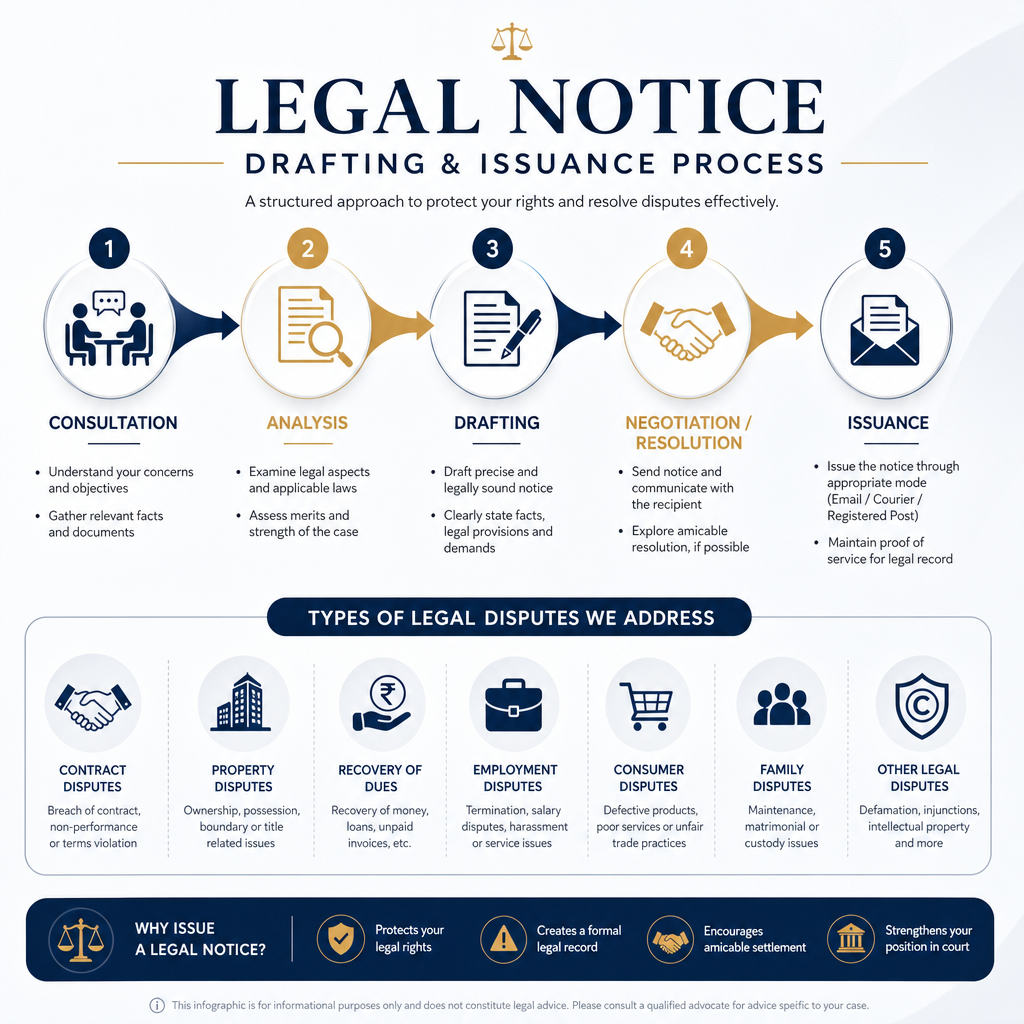
It is advisable to maintain detailed records of transactions, including bank transfers and any written communications regarding the loan terms. These documents serve as critical evidence in a recovery process. When informal reminders fail to yield results, sending a legal notice to a friend can formalize the demand for repayment and initiate the legal process.
Engaging a lawyer to draft a compelling legal notice is a prudent step, as it underscores the seriousness of the claim and often prompts repayment. If the debtor remains non-responsive, the next step is filing a summary suit under Order 37 of the Civil Procedure Code, which expedites the recovery process for liquidated amounts.
Visual Dispute Resolution & Recovery Framework
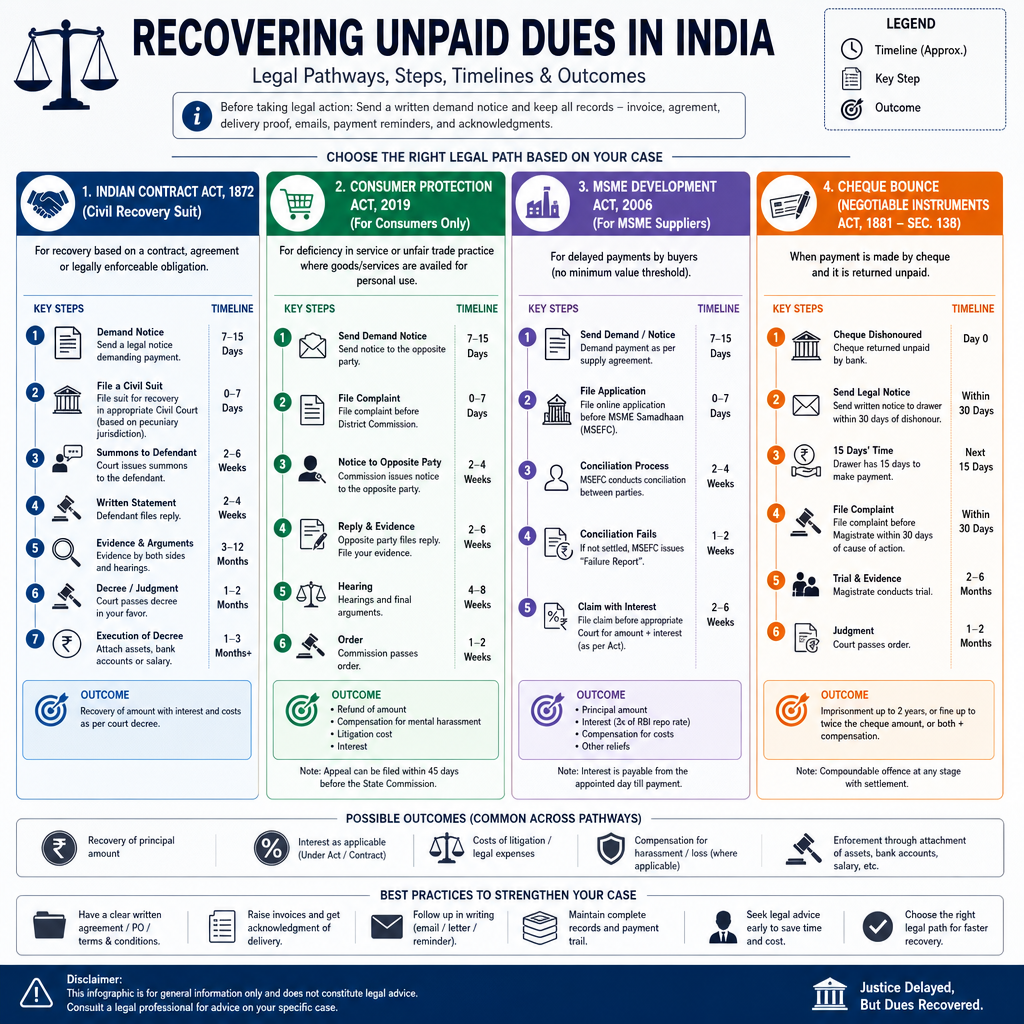
Table: Statutory Timelines & Limitation Matrix
Dispute Type | Notice Deadline | Response Time | Court Filing Window |
|---|---|---|---|
Consumer Complaint | 30 days from cause | 45 days | 2 years from cause |
Cheque Bounce | 15 days from bounce | 15 days | 30 days after notice |
Freelancer Payment | As per contract | 15 days | 3 years |
Personal Loan | Nil (Immediate) | 15 days | 3 years from demand |
Contractual Enforcement through MSME Samadhan
Businesses categorized under the MSME sector have a distinct advantage in recovering dues through the MSME Samadhan portal. This initiative by the Ministry of Micro, Small, and Medium Enterprises aids in the resolution of delayed payments and provides a structured grievance redressal mechanism. The portal enables MSME entities to file applications against buyers who delay payments beyond the statutory time frame, as stipulated by the MSME Act.
The process involves submitting an online application detailing the transaction, the amount due, and supporting documentation. Upon receipt, the application is referred to the Micro and Small Enterprises Facilitation Council, which mediates between the parties to expedite recovery. The council's decisions are legally binding and enforceable in a court of law.
MSME entities can leverage this mechanism to not only recover dues swiftly but also claim compound interest on delayed payments. This adds a significant deterrent against future delays. For more on MSME delayed payment recovery, visit our dedicated service page.
Section 138 of the Negotiable Instruments Act: Cheque Bounce Recovery
Section 138 of the Negotiable Instruments Act, 1881, is a powerful tool for recovering dues from bounced cheques. It criminalizes the dishonor of a cheque for insufficiency of funds or if it exceeds the amount arranged with the bank. The aggrieved party must adhere to stringent statutory timelines to ensure successful prosecution and recovery.
Upon cheque dishonor, the payee is required to issue a demand notice to the drawer within 30 days, seeking payment. The drawer is given 15 days to settle the dues. If the drawer fails to comply, the payee can file a complaint in a magistrate's court within 30 days of the expiry of the notice period. The court can impose penalties, including imprisonment and fines, and order the repayment of the cheque amount.
For detailed guidance on the Section 138 cheque bounce notice timeline and procedure, visit our legal recovery blog section.
Judicial Remedies and Civil Suits for Recovery of Dues
Civil suits remain a cornerstone for the recovery of dues, especially when other mechanisms do not yield satisfactory outcomes. The Civil Procedure Code provides the framework for instituting such suits, allowing claimants to seek redress through the judicial system. A civil suit for recovery involves preparing a plaint detailing the claim, the basis of the demand, and attaching all relevant documents.
Once filed, the court reviews the plaint and issues a summons to the defendant to respond. The litigation process encompasses evidence presentation, witness examination, and legal arguments. Civil courts have the authority to adjudicate on the matter and pass decrees for the payment of dues along with interest and costs.
Engaging skilled legal representation is advisable to navigate the complexities of court procedures effectively. Our team at LegalRecovery.in offers expert guidance throughout this process, ensuring that clients can recover money through civil suits without undue delay.
Alternative Dispute Resolution (ADR) for Cost-Effective Recovery
Alternative Dispute Resolution (ADR) methods, such as arbitration, mediation, and conciliation, offer efficient and cost-effective avenues for resolving disputes over unpaid dues. These processes are less formal than court proceedings and are often quicker, making them suitable for parties seeking expedient resolutions.
Arbitration involves an independent third party, the arbitrator, who hears both sides and makes a binding decision. Mediation and conciliation, on the other hand, involve a mediator or conciliator who facilitates dialogue between parties to reach a mutually agreeable solution. These methods preserve business relationships by focusing on amicable settlements rather than adversarial proceedings.
For businesses and individuals seeking to resolve disputes outside court, ADR provides a viable alternative. Our online dispute resolution services are designed to complement traditional methods, offering the benefits of speed and confidentiality.
Practical Strategies for Successful Debt Recovery
Effective debt recovery requires a strategic approach that combines legal knowledge with practical measures. The first step involves assessing the viability of the claim by reviewing contractual terms, payment history, and the debtor's financial standing. Armed with this information, creditors can craft a tailored recovery strategy.
Sending a formal written demand or legal notice can often prompt payment by emphasizing the seriousness of the claim. If necessary, engaging in pre-litigation negotiations can lead to settlement agreements that avoid protracted legal battles. For businesses, implementing strong credit control policies, including credit checks and contractual clauses detailing penalties for late payments, can prevent the accumulation of unpaid dues.
Our team at LegalRecovery.in provides comprehensive support in devising and executing debt recovery strategies, ensuring that clients can reclaim their dues efficiently and cost-effectively.
Popular Searches & Related Topics

Legal Recovery is India's trusted consumer protection and legal tech platform. We specialize in holding corporations accountable for unfair trade practices, deceptive marketing, and commercial fraud. With over 15,000 customers counselled, our mission is to provide fast, out-of-court resolutions by connecting you with top-tier panel advocates for immediate legal action.
Client Reviews
"LegalRecovery.in provided exceptional service in recovering my dues. The process was efficient, and the team was professional every step of the way. Highly recommended!"
Amit Kumar
"I was amazed at how quickly LegalRecovery.in resolved my payment issues. They made the process easy to understand and handled everything at an affordable cost."
Priya Sharma
"The team at LegalRecovery.in exceeded my expectations with their dedication and expertise. My unpaid dues were settled promptly, saving me time and stress."
Rajesh Gupta
"I appreciate the transparency and affordability of LegalRecovery.in's services. Their legal knowledge and customer service were top-notch, leading to successful debt recovery."
Neha Patel
"Thanks to LegalRecovery.in, I was able to recover my dues without any hassle. Their professional approach and effective strategies made all the difference."
Vikram Desai
Frequently Asked Questions
Related Articles
About Author
Team LegalRecovery
View ProfileTeam LegalRecovery is a dedicated team of legal and financial professionals specializing in loan settlement, banking disputes, debt relief, and corporate compliance. We are committed to helping clients achieve debt freedom and business stability through expert strategic advisory.
Connect on LinkedInNeed Legal Help?
Get expert advice on loan settlement, banking disputes and debt relief.
Start Recovery NowRequest Callback