Recover Stuck B2B Invoices with 95% Success Rate
Discover Proven Strategies to Reclaim Your Outstanding B2B Payments

Table of Contents
Table of Contents
Swipe →Contractual Enforcement and MSME Samadhan Legal Remedies for Unpaid Client Invoices
In the complex world of business-to-business (B2B) transactions, getting invoices paid on time can be a challenge. For businesses providing goods or services, stuck invoices can severely impact cash flow and growth potential. Achieving a remarkable 95% success rate in recovering these outstanding payments involves a combination of proactive measures, legal remedies, and strategic negotiations. This article delves into the legal frameworks, practical strategies, and resources available to effectively recover stuck B2B invoices in India.
Key Legal Frameworks Governing Invoice Recovery in India
The legal landscape in India provides several statutory mechanisms to address delayed payments in B2B transactions. The Indian Contract Act, 1872, forms the cornerstone of contractual obligations and enforcement. It outlines the essential elements of a valid contract and provides recourse in cases of breach. The Micro, Small and Medium Enterprises Development (MSMED) Act, 2006, specifically addresses the challenges faced by MSMEs in recovering dues, mandating that payments be made within a specified period and imposing penalties on defaulters.
Furthermore, the Companies Act, 2013, and the Insolvency and Bankruptcy Code, 2016, provide additional avenues for recovery by enabling creditors to initiate insolvency proceedings against defaulting entities. The Negotiable Instruments Act, 1881, is also significant, especially in cases where post-dated cheques are used as a payment mechanism.
For businesses that qualify as MSMEs, the MSME Samadhan portal serves as a dedicated platform to file complaints against delayed payments. This portal facilitates dispute resolution through conciliation and arbitration, providing an effective solution for MSMEs to address their payment concerns without resorting to lengthy court procedures.
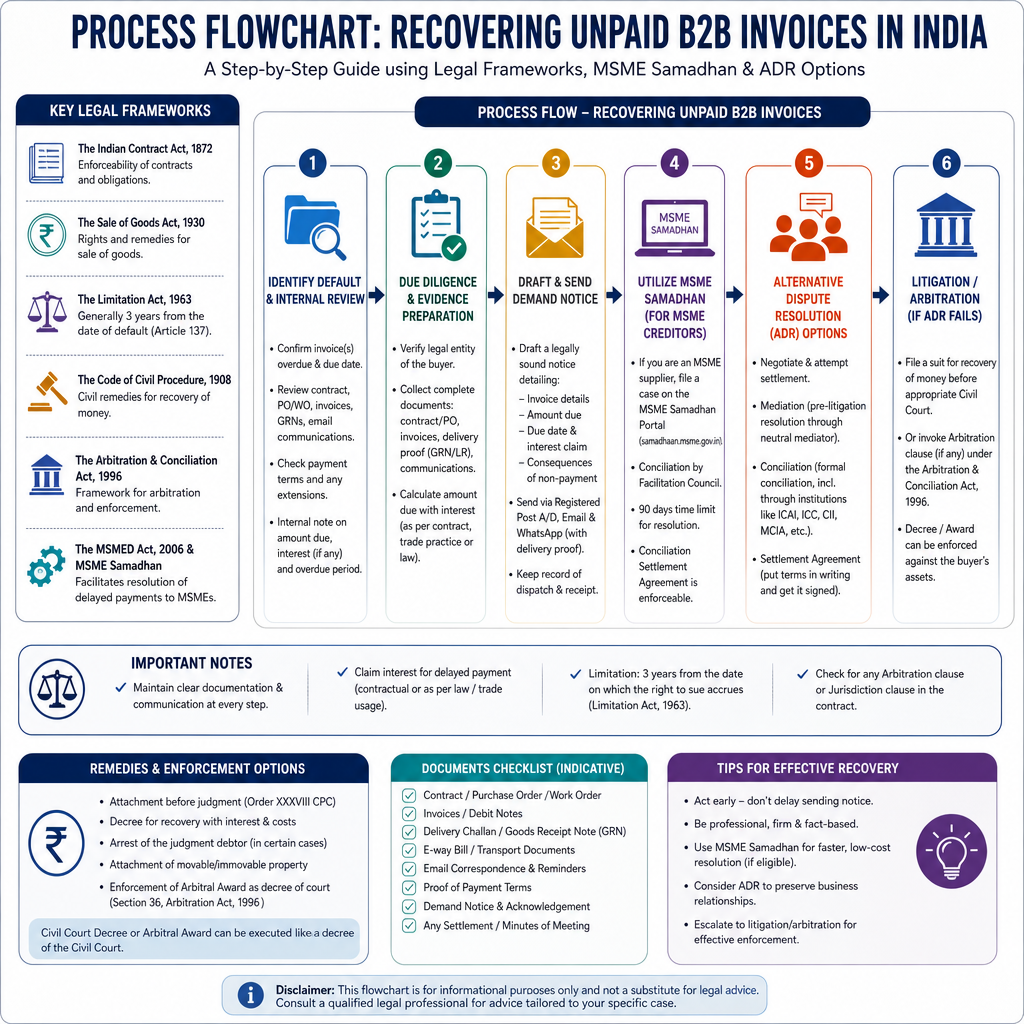
Step-by-Step Guide to Recovering Stuck B2B Invoices
The process of recovering unpaid invoices begins with ensuring that all contractual obligations have been met and documented. Maintaining comprehensive records of the goods or services provided, delivery confirmations, and previous payment histories are crucial. Here's a detailed step-by-step guide to help you navigate the recovery process:
1. Initial Due Diligence and Documentation
Before initiating any legal action, it's essential to conduct a thorough review of the transaction documents. Ensure that the invoice in question aligns with the terms outlined in the contract. Verify the delivery of goods or services and document all communications with the debtor.
Contractual Agreements: Ensure that the contract clearly states payment terms, interest on delayed payments, and applicable penalties for non-payment.
Delivery Confirmations: Obtain signed delivery receipts or electronic acknowledgments confirming that the goods or services were delivered as per the agreement.
Communication Records: Maintain an organized record of all email correspondences, meeting notes, and any other form of communication with the debtor.
2. Sending a Formal Demand Notice
Once documentation is in place, the next step is to send a formal demand notice to the debtor. This legal document serves as an official request for payment and sets the stage for potential legal action if the debt remains unpaid.
Drafting the Notice: The demand notice should clearly state the outstanding amount, due date, and any penalties or interest due.
Response Time: Specify a reasonable timeframe within which the debtor should respond or make the payment, typically 15-30 days.
Legal Notice Format: Follow recommended legal formats and include all relevant details to ensure the notice is enforceable.
3. Utilizing MSME Samadhan for Resolution
If the business qualifies as an MSME, leveraging the MSME Samadhan portal can expedite the recovery process. The portal enables the filing of complaints against defaulting parties and provides a platform for mediation and arbitration.
Eligibility Criteria: Confirm MSME status and register on the MSME Samadhan portal.
Filing a Complaint: Submit all relevant documents and details of the unpaid invoices through the portal.
Dispute Resolution: Engage in conciliation or arbitration proceedings facilitated by the portal to resolve the dispute amicably.
4. Initiating Insolvency Proceedings
For larger debts or when dealing with insolvent entities, the Insolvency and Bankruptcy Code, 2016, provides a structured approach to recover dues. Creditors can file an application with the National Company Law Tribunal (NCLT) to commence insolvency proceedings.
Application Process: Gather all necessary documents, including the contract, invoices, and demand notice.
Evidence Submission: Prepare documents that demonstrate the debtor's inability to pay and any attempts made to recover the dues.
NCLT Proceedings: Attend hearings and provide evidence to support your claim for initiating insolvency proceedings.
Exploring Alternative Dispute Resolution Mechanisms
While formal legal proceedings are effective, they can also be time-consuming and expensive. Alternative Dispute Resolution (ADR) methods, such as mediation and arbitration, offer a quicker and less adversarial approach to resolving invoice disputes.
Mediation as a Preferred Method
Mediation involves a neutral third party facilitating discussions between the creditor and debtor to reach a mutually acceptable settlement. This approach is particularly useful when maintaining an ongoing business relationship is a priority.
Neutral Mediator: Select an experienced mediator who can guide the negotiation process effectively.
Voluntary Participation: Ensure both parties are willing to engage in mediation and work towards a resolution.
Confidentiality: Mediation proceedings are confidential, allowing both parties to discuss issues openly without fear of repercussions.
Arbitration as a Binding Resolution
Arbitration is a more formal ADR method where an arbitrator makes a binding decision based on the evidence and arguments presented by both parties. It is often included as a clause in contracts as an alternative to litigation.
Arbitration Clause: Ensure your contract includes a well-defined arbitration clause specifying the rules and procedures to be followed.
Selection of Arbitrators: Choose arbitrators with expertise in the relevant industry to ensure an informed decision.
Enforceability: Arbitration awards are enforceable in courts, providing a legally binding resolution to the dispute.
Visual Dispute Resolution & Recovery Framework
Essential Documentation for Legal Proceedings
Proper documentation is crucial for substantiating claims and facilitating the recovery of unpaid invoices. Here is a comprehensive checklist of the necessary documents required for legal proceedings:
Document Category | Required Documents | Admissibility |
|---|---|---|
Contractual Agreements | Signed contract, terms of payment, amendments | Primary evidence of the agreement |
Invoices | Original invoices, delivery receipts | Proof of the amount due |
Payment Records | Bank statements, transaction records | Evidence of partial payments or non-payment |
Communication | Email correspondences, meeting notes | Supporting evidence of demands made |
Legal Notices | Demand notice, acknowledgment of receipt | Proof of formal demand and response |
Enhancing Invoice Recovery Success through Best Practices
Beyond legal remedies, adopting best practices in invoicing and payment follow-up can significantly enhance the success rate of recovering stuck B2B invoices.
Crafting Clear and Concise Invoices
Ensure that all invoices are clear, concise, and free of errors. Include detailed descriptions of goods or services, correct billing information, and breakdowns of charges and taxes.
Standardized Format: Use a standardized format for all invoices to maintain consistency and professionalism.
Specifications: Specify due dates, penalties for late payment, and payment methods accepted.
Contact Information: Provide accurate contact details for queries and disputes.
Implementing Automated Payment Reminders
Automating payment reminders can reduce the likelihood of invoices being forgotten or overlooked. Use email or SMS reminders to prompt clients of upcoming or overdue payments.
Reminder Schedule: Set up reminders at regular intervals before and after the due date.
Personalization: Customize reminders to include details of the specific invoice and any applicable late fees.
Tracking Responses: Monitor client responses to reminders and adjust strategies accordingly.
Legal Support and Resources for Invoice Recovery
Engaging legal support can provide invaluable assistance in recovering stuck invoices. Legal professionals can offer guidance on the appropriate steps to take, the drafting of legal notices, and representation in court or ADR proceedings.
Firms like LegalRecovery.in specialize in the recovery of B2B invoices and offer comprehensive services, from sending legal notices to representing clients in court. They leverage their expertise and resources to ensure a high success rate in recovering dues.
Vendor and Invoice Recoveries: Explore professional services dedicated to recovering dues from vendors and clients.
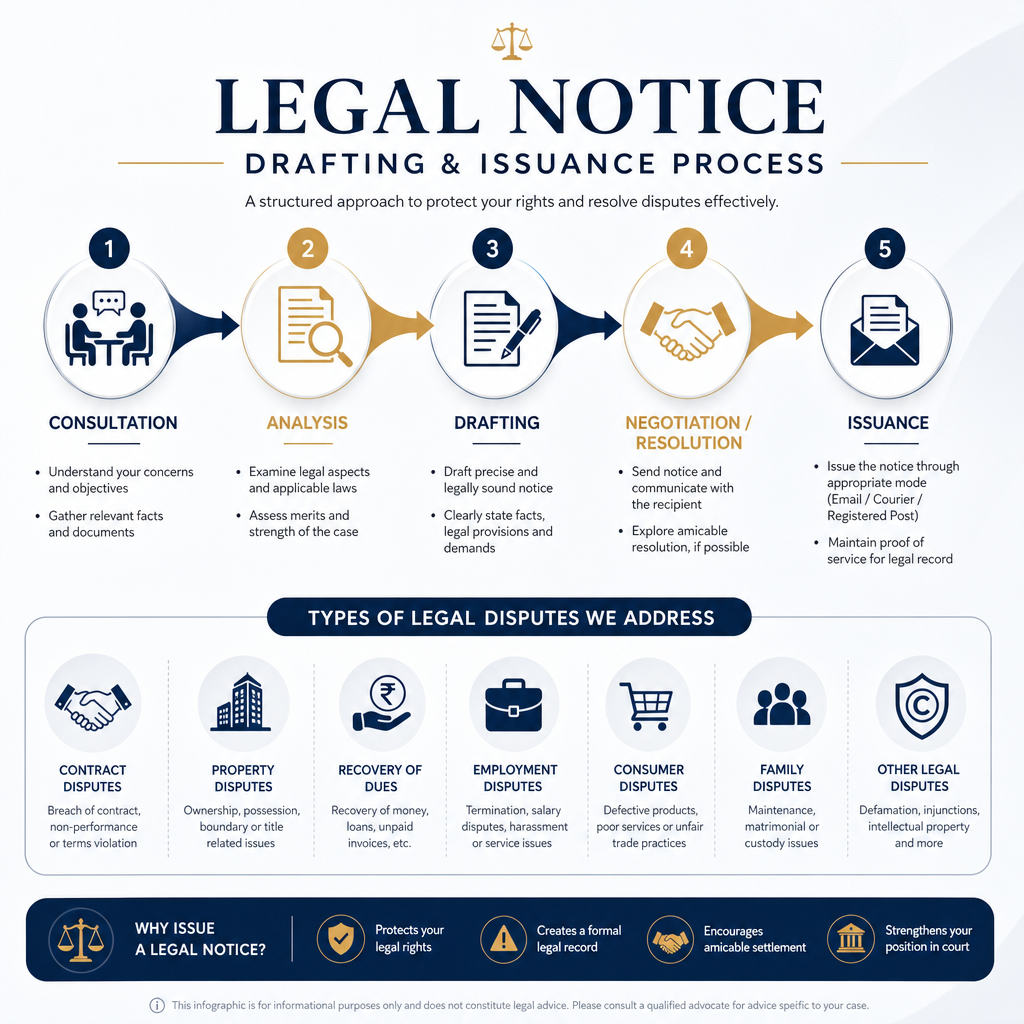
Sending a Legal Notice: Learn about the process and benefits of sending a legal notice to defaulting debtors.
How LegalRecovery Works: Understand the step-by-step process involved in engaging a legal recovery service.
Conclusion: Achieving a 95% Success Rate in Invoice Recovery
Recovering stuck B2B invoices requires a multifaceted approach that combines diligent record-keeping, strategic negotiation, and effective legal remedies. By adhering to the outlined procedures and leveraging available resources like the MSME Samadhan portal and professional legal services, businesses can significantly enhance their success rate in recovering dues. The key lies in proactive engagement, clear communication, and a willingness to explore both formal and alternative dispute resolution mechanisms.
Adopting these strategies can ensure that your business maintains a healthy cash flow and minimizes the impact of unpaid invoices on your financial stability.
Popular Searches & Related Topics

Legal Recovery is India's trusted consumer protection and legal tech platform. We specialize in holding corporations accountable for unfair trade practices, deceptive marketing, and commercial fraud. With over 15,000 customers counselled, our mission is to provide fast, out-of-court resolutions by connecting you with top-tier panel advocates for immediate legal action.
Client Reviews
"The recovery process was seamless. The team was professional and ensured we recovered our dues efficiently. Highly recommend their service."
Amit Sharma
"Excellent service! The legal strategies outlined were incredibly effective in recovering outstanding invoices. Very satisfied with the outcome."
Neha Patel
"LegalRecovery.in provided us with the expertise we needed. Their attention to detail and strategic approach were key to our successful invoice recovery."
Vikram Desai
"A professional and reliable service that delivered results beyond our expectations. The team was supportive throughout the entire process."
Priya Gupta
"The proactive measures and legal support provided were outstanding. Achieving a 95% success rate was truly impressive. Thank you for your support!"
Rajesh Khanna
Frequently Asked Questions
Related Articles
About Author
Team LegalRecovery
View ProfileTeam LegalRecovery is a dedicated team of legal and financial professionals specializing in loan settlement, banking disputes, debt relief, and corporate compliance. We are committed to helping clients achieve debt freedom and business stability through expert strategic advisory.
Connect on LinkedInNeed Legal Help?
Get expert advice on loan settlement, banking disputes and debt relief.
Start Recovery NowRequest Callback