How to Recover Money from an Online Company
Effective strategies for recovering funds from online businesses

Table of Contents
Table of Contents
Swipe →Consumer Protection Act 2019: Legal Remedies for Consumers Against Online Companies
In the digital era, transactions with online companies have become commonplace, providing convenience but also posing unique challenges, especially when it comes to recovering funds. The Consumer Protection Act, 2019, plays a pivotal role in safeguarding the interests of consumers against unfair trade practices and ensuring they have a pathway to recover money from online companies that have failed to deliver on their obligations. This comprehensive guide delves into the legal remedies available under Indian law for consumers seeking to recover money from online businesses.
Legal Framework for Money Recovery
The Consumer Protection Act, 2019, is the cornerstone legislation that empowers consumers to challenge online companies that engage in fraudulent, unfair, or deceptive practices. Enacted to replace the earlier Consumer Protection Act of 1986, this updated law addresses the nuances of e-commerce, recognizing the evolving landscape of consumer transactions. It sets forth the framework for the establishment of Consumer Dispute Redressal Commissions at the District, State, and National levels, providing a tiered approach to dispute resolution.
Under the Act, consumers can file complaints against online companies for issues such as non-delivery of goods, defective products, and non-refund of payments. The Act enshrines the rights to be protected against marketing of goods or services which are hazardous to life and property, as well as the right to seek redressal against unfair trade practices, thereby establishing a robust mechanism for money recovery.
The Act further introduces the concept of "product liability," making manufacturers, sellers, and service providers accountable for any harm caused due to defective products or deficient services. This provision is particularly relevant for disputes with online companies, ensuring that consumers have recourse should they fall victim to substandard goods or services.
Filing a Consumer Complaint for Money Recovery
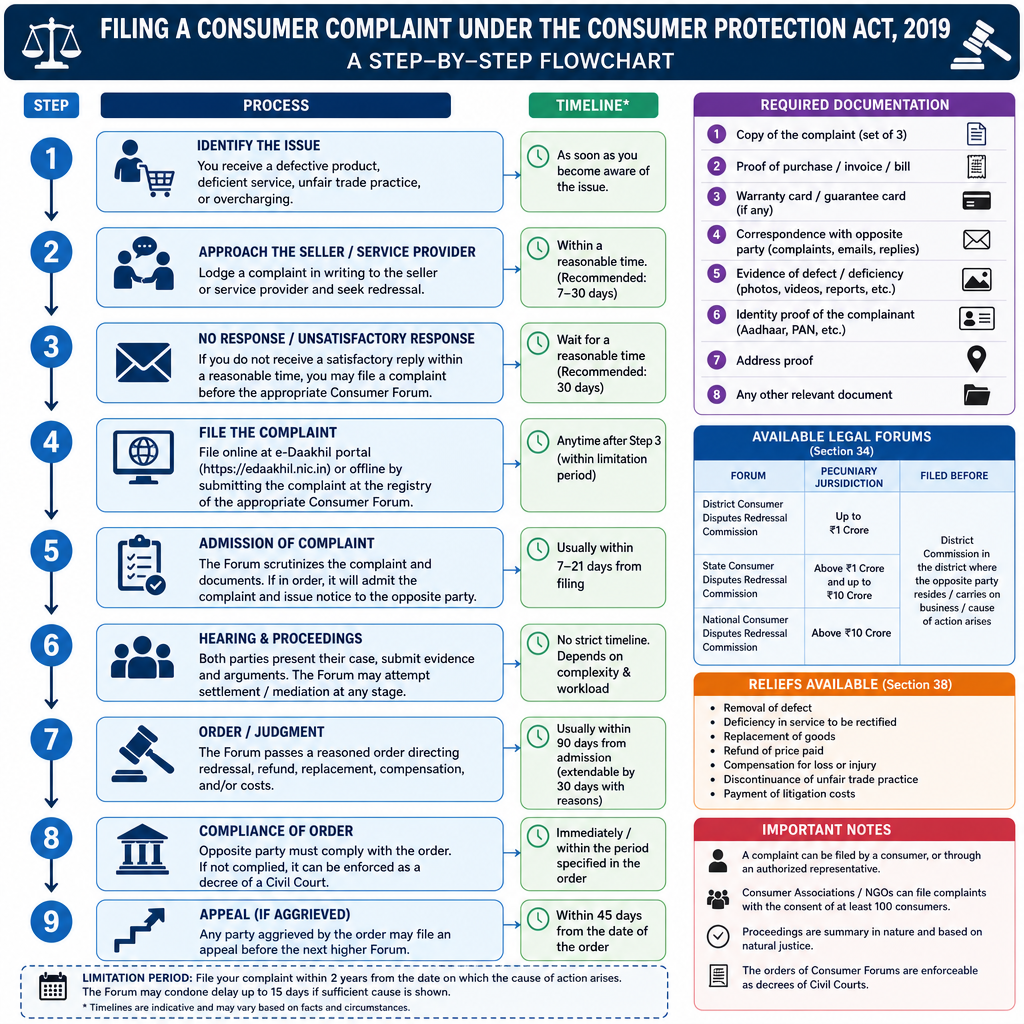
To initiate a complaint under the Consumer Protection Act, 2019, consumers need to follow a structured process, which involves:
Drafting the Complaint: The complaint must clearly outline the nature of the grievance, the relief sought, and the facts supporting the claim. It should include details of the transaction, the product or service in question, and any communications with the online company.
Assembling Supporting Documents: Evidence such as purchase receipts, payments records, communication logs (emails, chat messages), and any acknowledgment from the company must be compiled. These documents are crucial for substantiating the claim.
Selecting the Appropriate Forum: Depending on the value of the claim, the complaint can be filed with the District Consumer Disputes Redressal Commission (up to ₹1 crore), State Consumer Disputes Redressal Commission (₹1 crore to ₹10 crore), or the National Consumer Disputes Redressal Commission (above ₹10 crore).
Filing the Complaint: The complaint can be filed online through the e-Daakhil portal, a significant step towards facilitating hassle-free and quick access to justice for consumers.
Learn more about filing a consumer court complaint online to understand the detailed procedure and nuances involved.
Role of Evidence and Documentation
Evidence plays a critical role in recovering money from online companies. Proper documentation can make or break a case, serving as the backbone of the complaint:
Purchase Documentation: Invoices, receipts, and order confirmations serve as primary proof of the transaction. They establish the contract between the consumer and the company.
Communication Records: Email exchanges, chat logs, and customer service interactions provide context and demonstrate attempts made to resolve the issue before escalating it legally.
Bank Statements: Proof of payment, such as bank or credit card statements, corroborate the financial aspect of the transaction.
Ensuring the admissibility of these documents involves submitting originals or certified copies, ensuring they are legible and clearly linked to the transaction in question. Digital evidence, such as screenshots, must be accompanied by digital signatures or certifications where applicable.
Issuing a Legal Notice
Before escalating a complaint to a consumer forum, issuing a legal notice to the online company is a prudent step. This notice serves as a formal demand for compliance and provides the company with an opportunity to resolve the issue amicably:
Drafting the Notice: The notice must be detailed and include specifics of the grievance, the legal grounds for the claim, and a reasonable timeframe for response.
Sending the Notice: It should be sent via registered post or any method that provides proof of delivery, ensuring there is a record of the notice being received by the company.
Response Timeframe: Typically, a 15 to 30-day period is granted for the company to respond to the notice, failing which further legal action can be initiated.
The legal notice is a critical step as it often prompts a resolution without the need to escalate the matter legally. For guidance, explore how to send a legal notice online for recovery of money.
Visual Dispute Resolution & Recovery Framework
Alternative Dispute Resolution (ADR) Mechanisms
ADR mechanisms such as mediation and arbitration offer alternative pathways to resolving disputes outside the traditional court system. These methods can be quicker and less adversarial, focusing on mutual agreement rather than adversarial litigation:
Mediation: Involves a neutral third-party mediator who facilitates dialogue between the consumer and the company to reach a mutually satisfactory resolution.
Arbitration: In this binding process, a neutral arbitrator reviews the case and makes a decision that both parties must adhere to. It's less formal than court proceedings but equally binding.
ADR can be particularly effective in disputes involving smaller amounts where the cost of litigation may outweigh the benefits. It also preserves the relationship between the parties, which can be advantageous for ongoing transactions.
Statutory Timelines and Limitation Periods
Understanding statutory timelines and limitation periods is crucial in money recovery cases. Delays can result in claims being barred, so it is essential to act within prescribed limits:
Action | Statutory Timeline | Limitation Period |
|---|---|---|
Filing Consumer Complaint | Within 2 years from the date of cause of action | 2 years |
Responding to Legal Notice | Typically 15 to 30 days | N/A |
Appealing Consumer Forum Decision | Within 30 days from the order | 30 days |
It’s important to adhere to these timelines to ensure your claim remains valid. Consult the time limit to file a money recovery case in India for more specific information on deadlines.
Utilizing LegalRecovery Services for Efficient Resolution
For consumers overwhelmed by the complexities of legal proceedings, services like LegalRecovery offer a reliable solution. These platforms provide expert guidance, document drafting, and filing assistance, streamlining the process of recovering money from online companies.
LegalRecovery services can assist in:
Drafting Legal Notices: Ensuring notices are comprehensive and legally sound, increasing the likelihood of a prompt response from the company.
Filing Consumer Complaints: Navigating the filing process for complaints in appropriate forums, minimizing procedural errors.
Engaging in ADR: Facilitating mediation or arbitration to expedite dispute resolution while preserving relationships.
Explore the LegalRecovery process to understand how these services can help you efficiently manage your recovery needs.
Conclusion: Empowering Consumers for Effective Money Recovery
Recovering money from online companies requires a strategic approach backed by an understanding of legal rights and procedural requirements. The Consumer Protection Act, 2019, along with established dispute resolution frameworks, provides consumers with robust tools to address grievances and secure refunds or compensation. By leveraging legal mechanisms, maintaining meticulous documentation, and utilizing professional recovery services, consumers can effectively navigate the complexities of money recovery in the digital marketplace.
For further assistance, consider contacting LegalRecovery for expert advice and support on your specific case, ensuring a proactive and informed approach to reclaiming your funds.
Popular Searches & Related Topics

Legal Recovery is India's trusted consumer protection and legal tech platform. We specialize in holding corporations accountable for unfair trade practices, deceptive marketing, and commercial fraud. With over 15,000 customers counselled, our mission is to provide fast, out-of-court resolutions by connecting you with top-tier panel advocates for immediate legal action.
Client Reviews
"LegalRecovery made the entire process of reclaiming my money from an online retailer seamless. Their guidance was invaluable, and I received my refund promptly."
Rajesh Kumar
"Exceptional service! The team at LegalRecovery was knowledgeable and efficient. They helped me resolve my issue quickly without any hassle."
Anjali Mehta
"I was skeptical at first, but LegalRecovery exceeded my expectations. Their legal notice drafting and documentation advice were spot on, leading to a successful resolution."
Vikram Singh
"Thanks to LegalRecovery, I navigated the complex legal procedures effortlessly. Their support in filing the complaint online was a game-changer."
Sneha Patel
"Highly recommend LegalRecovery for anyone struggling with online fraud. Their expertise and structured approach ensured a favorable outcome for my case."
Aman Chawla
Frequently Asked Questions
Related Articles

Recover My Funds from Fraudulent Transfer Now
Learn the steps to legally reclaim funds lost in fraudulent transfers.
Read Article
How to Recover My Funds from Fraud Successfully
Expert Tips for Retrieving Money Lost to Fraudulent Schemes
Read Article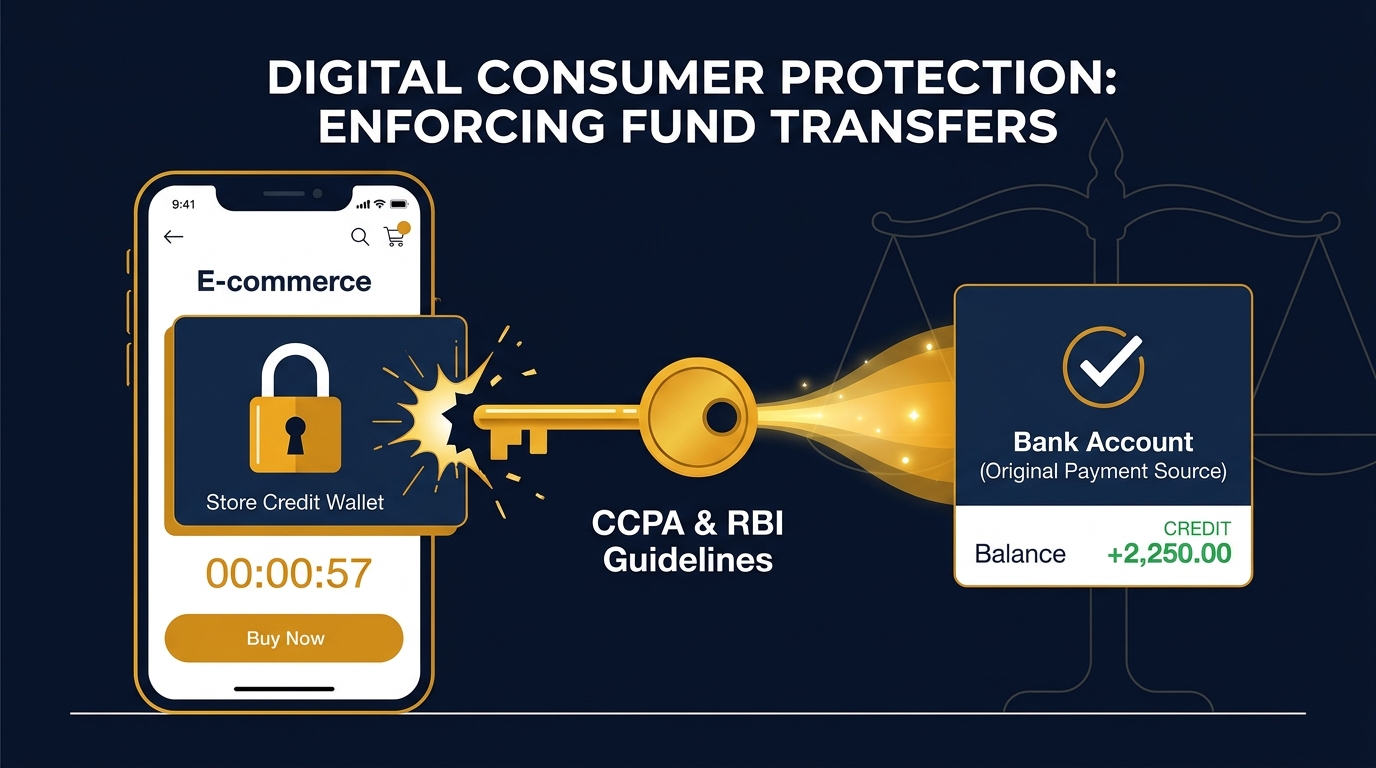
E-Commerce App Forcing Wallet Refund Over Bank Account? Legal Fix
ecommerce forcing wallet refund instead of original payment method, can company force store credit instead of bank refund india, myntra ajio refund stuck in wallet transfer to bank, ccpa guidelines against forced wallet refunds dark patterns, rbi prepaid payment instrument wallet refund to source, legal notice for original source refund ecommerce, section 2 47 consumer protection act unfair trade practice, dark patterns forced action interface interference, closed loop wallet refund bank withdrawal, e daakhil complaint for store credit refund
Read Article
Money Not Returned? 7 Ways to Recover It in India (2026)
From unpaid personal loans and salary dues to deposits and refunds, find the right next step and evidence to keep.
Read ArticleAbout Author
Anuj Anand Malik
View ProfileAnuj Anand Malik, Founder of AMA Legal Solutions, is a trusted advocate, loan settlement expert, legal advisor, and banking lawyer. With over a decade of experience in loan settlement, corporate law, financial disputes, and compliance, he leads a result-driven law firm based in India that helps individuals, startups, and businesses achieve legal and financial stability.
Connect on LinkedInNeed Legal Help?
Get expert advice on loan settlement, banking disputes and debt relief.
Start Recovery NowRequest Callback