How to Recover My Funds from Family Loans
Effective strategies for recovering friendly loans from family members.
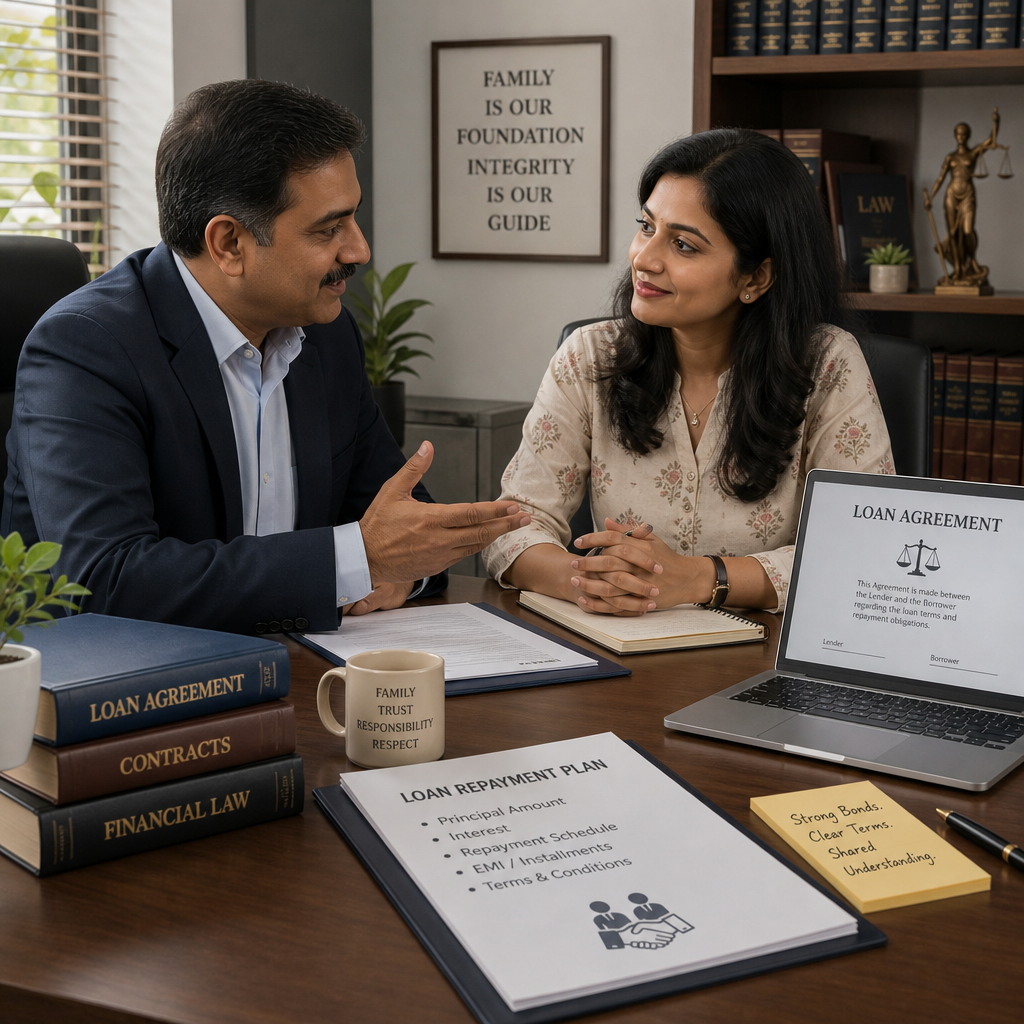
Table of Contents
Table of Contents
Swipe →Evidentiary Essentials and Demand Notice Protocols for Recovering Personal Loans in India
In the intricate fabric of Indian society, familial relationships hold a significant place. These bonds often extend beyond emotional support to financial assistance in times of need. However, the informal nature of friendly loans to family members can sometimes lead to complex disputes, especially when the borrower defaults on repayment. While no one enters such arrangements anticipating conflict, it is crucial to understand the legal mechanisms available to recover funds lent to family members. This article will explore the legal framework, judicial remedies, and practical strategies for navigating such situations in India.
The Indian Contract Act of 1872: Governing Friendly Loans
The Indian Contract Act of 1872 forms the backbone of any agreement between two parties, including friendly loans. When a loan is provided, an implicit or explicit contract is formed, which includes an agreement to repay the borrowed amount. In a legal context, even an oral agreement, supplemented by documentation such as emails or messages, can be construed as a contract. The Act emphasizes that for a contract to be valid, it must involve a lawful object, mutual consent, and consideration (in this case, the loan amount).
While family loans often lack a formal written agreement, the law recognizes other forms of evidence. For instance, transaction records or written correspondence that indicate the loan's purpose and terms can establish the existence of a contract. It is crucial to maintain records of any communication regarding the loan, including messages or emails that confirm the agreed-upon terms.
Furthermore, the borrower must have the legal capacity to enter into a contract. This means they must be of sound mind and not disqualified by law from entering into such agreements. Any loan provided to a minor or an individual incapable of understanding the contract would be deemed void.
In cases where the borrower denies the agreement or the terms, the Indian Contract Act can be invoked to establish the contract's existence and enforceability. A comprehensive understanding of the Act is essential for anyone looking to recover funds lent informally to family members.
Documentation: The Cornerstone of a Successful Claim
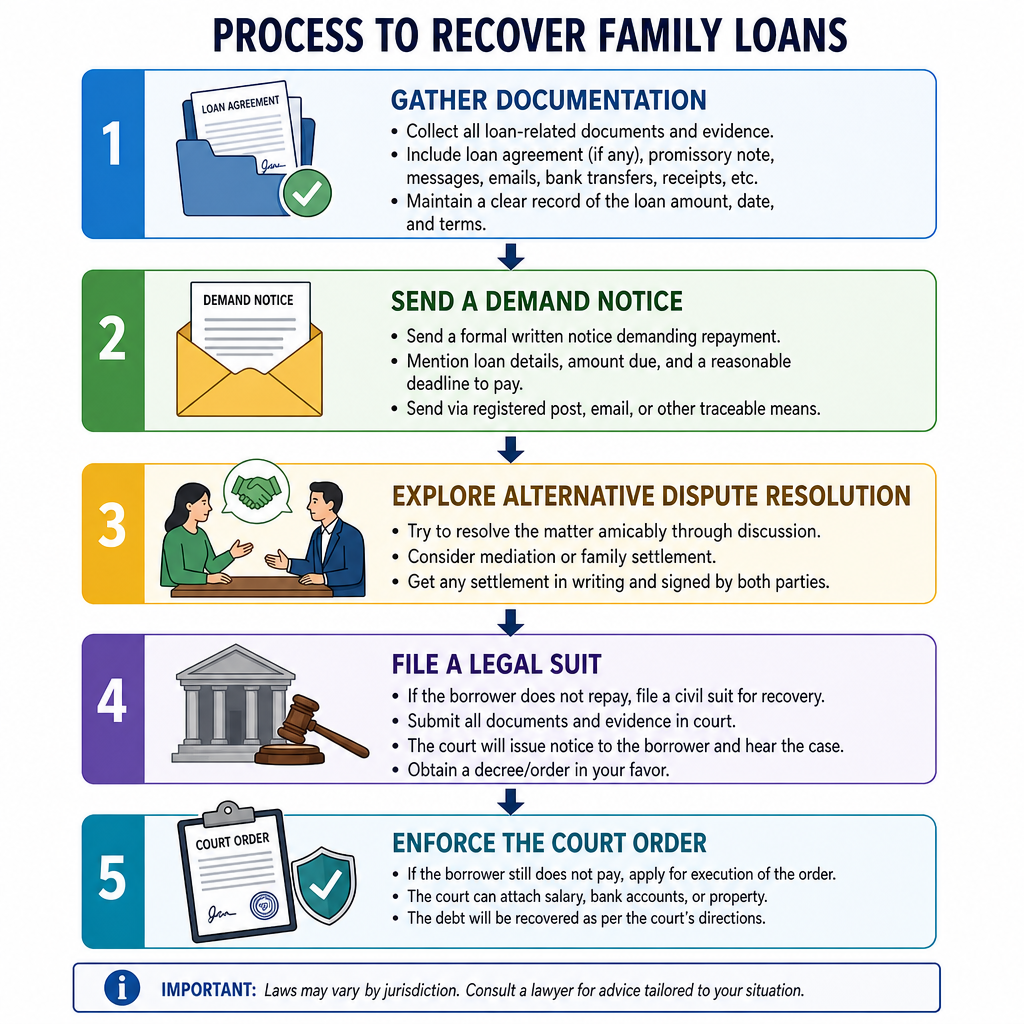
Before initiating any recovery process, it's imperative to gather all relevant documentation. These documents serve as proof of the transaction and its terms, thereby strengthening your legal position. The absence of a formal contract necessitates a reliance on alternative forms of evidence, which the Indian Evidence Act of 1872 can help substantiate.
Key documents include bank statements showing the transfer of funds, any written acknowledgments from the borrower, and records of all communication related to the loan. These can be in the form of WhatsApp messages, emails, or even text messages. Such documentation can establish the existence of a loan and the borrower's acknowledgment of their obligation to repay.
Additionally, maintaining a record of any partial repayments made by the borrower is crucial. This not only evidences the transaction but also solidifies the borrower's acknowledgment of the debt. It's advisable to keep these records organized and accessible, as they may be required during legal proceedings.
In the absence of written agreements, such evidence can be pivotal. The Indian Evidence Act allows for the admissibility of electronic records as evidence, thus enabling the use of digital communication to support your claim. Ensuring the integrity and authenticity of these records is paramount, as they will form the basis of your case in any legal forum.
Sending a Demand Notice: An Essential First Step
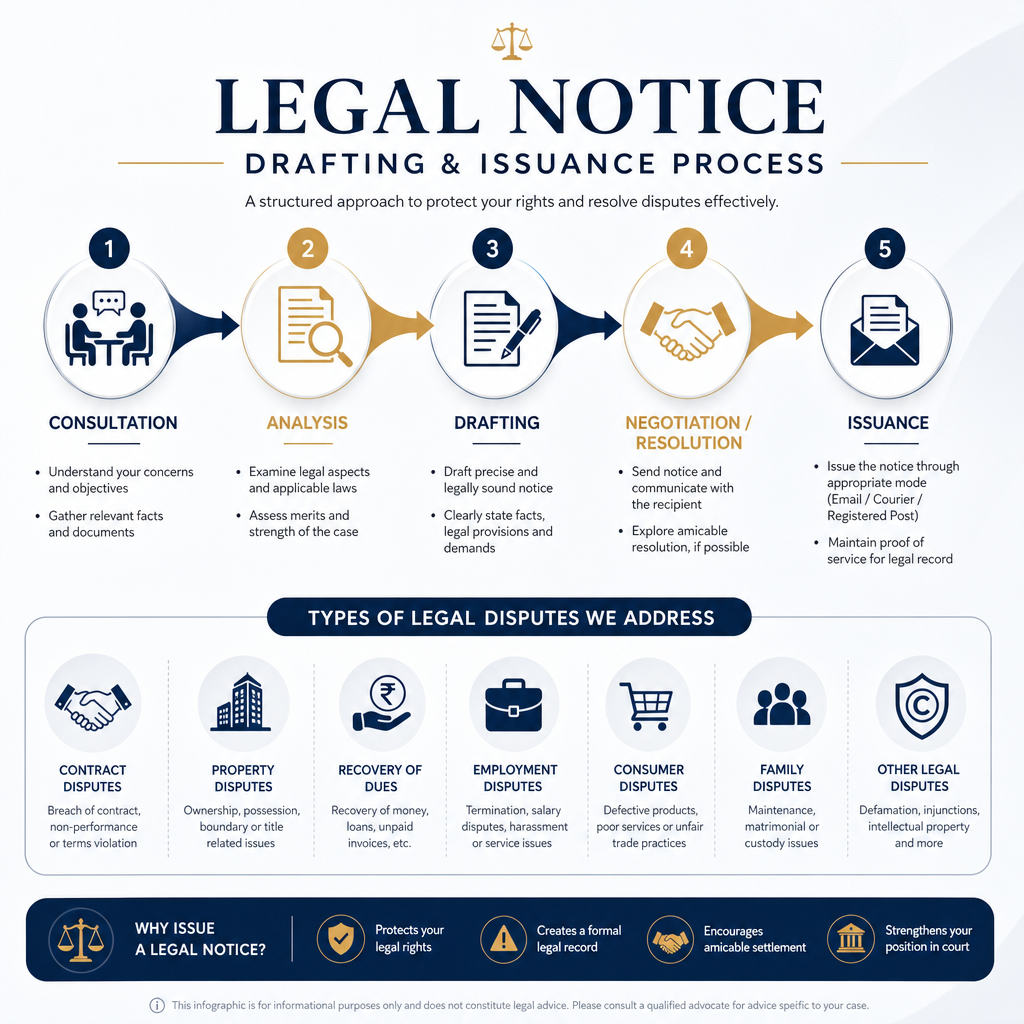
Before pursuing legal action, it is customary and often effective to send a formal demand notice to the borrower. This notice serves as an official request for payment and a precursor to litigation. It outlines the details of the loan, the amount due, any interest applicable, and a deadline for payment.
The demand notice should be drafted meticulously, ensuring all relevant details are included. It's advisable to seek professional assistance in drafting this document to prevent any legal loopholes. The notice should clearly state your intention to pursue legal action if the debt is not repaid by the specified date.
Upon receipt of the demand notice, the borrower may choose to settle the debt to avoid legal proceedings. This step not only formalizes the repayment request but also demonstrates your seriousness in reclaiming the funds. According to the protocols for sending a legal notice in India, the notice must be sent via registered post or courier to ensure delivery can be verified.
If the borrower fails to respond or refuses to repay, the demand notice serves as evidence of your attempt to resolve the matter amicably. This can favorably influence any subsequent legal proceedings, showcasing your willingness to settle the matter out of court.
Initiating Legal Action: Filing a Money Recovery Suit
If the borrower remains unresponsive to the demand notice, you may consider filing a civil suit for recovery of money. The Code of Civil Procedure, 1908 provides a framework for such suits, and it is crucial to adhere to the prescribed procedures to ensure the claim is heard.
Before filing a suit, you must determine the appropriate court based on the monetary value of the claim and the jurisdiction. Typically, the suit will be filed in the Small Causes Court for amounts up to ₹10,000, whereas higher amounts may require filing in a District Court or High Court.
The suit should detail the nature of the loan, the terms of repayment, any correspondence regarding the loan, and the borrower's failure to repay. It must be accompanied by all supporting documents, including the demand notice and proof of the borrower's receipt of the notice.
Engaging a legal professional to represent you in court is highly recommended. They can ensure that the case is presented effectively and that all procedural requirements are met. The court will assess the evidence and, if satisfied, issue a decree in your favor, mandating the borrower to repay the loan amount with interest, if applicable.
Visual Dispute Resolution & Recovery Framework
Arbitration and Mediation: Alternative Dispute Resolution Mechanisms
Given the sensitive nature of family disputes, alternative dispute resolution (ADR) mechanisms like arbitration and mediation can be particularly effective. These methods allow for a more amicable resolution, preserving familial relationships while achieving financial recovery.
Arbitration involves appointing an independent arbitrator, agreed upon by both parties, to review the case and provide a binding decision. Mediation, on the other hand, involves a neutral third party facilitating a discussion between the parties to reach a mutually acceptable solution.
The Arbitration and Conciliation Act, 1996 governs these proceedings in India. These methods are generally quicker and less formal than court proceedings, often resulting in a resolution that satisfies both parties. However, both parties must consent to this approach, and the process is only viable if both are willing to engage in good faith.
Opting for ADR can significantly reduce the time and costs associated with litigation. It also provides a platform for addressing underlying issues that may not be resolved through legal action alone. In many cases, preserving family relationships is paramount, and ADR offers a pathway to achieve this while ensuring financial accountability.
Table: Statutory Timelines & Limitation Matrix
Legal Action | Statutory Timeline | Limitation Period |
|---|---|---|
Response to Demand Notice | 15-30 days from receipt | N/A |
Filing a Civil Suit | Immediately after 15 days from demand notice if no response | 3 years from the date of cause of action |
Arbitration Request | As per agreement between parties | 3 years from the date of cause of action |
Enforcement of Court Orders
Once a court issues a decree in your favor, the next step is enforcement. The borrower is legally obligated to comply with the court's decision. However, if they fail to do so, further legal measures can be taken.
The Code of Civil Procedure provides mechanisms for enforcing a decree, which include attachment of the borrower's property or garnishment of wages. These are serious actions and often compel borrowers to comply to avoid further legal complications.
It is essential to work closely with your legal counsel during this phase to ensure all proceedings are conducted correctly. Enforcement can be a lengthy process, but it is crucial for recovering the funds owed to you.
In some cases, borrowers may seek to negotiate a settlement post-decree. This can be an opportunity to recover a substantial portion of the loan without undergoing the enforcement process. However, any settlement should be documented clearly to avoid future disputes.
Conclusion: Balancing Legal Action with Familial Bonds
Recovering funds from family members can be a delicate process. It involves not only legal considerations but also emotional and relational dynamics. While the law provides robust mechanisms for recovery, it is essential to balance these with the potential impact on family relationships.
In every step of the process, from sending a demand notice to potentially engaging in court proceedings, maintaining open communication and a willingness to resolve the matter amicably is crucial. Legal action should always be a last resort, pursued only when all other avenues have been exhausted.
For those navigating this challenging situation, seeking professional advice is invaluable. Legal experts can provide guidance tailored to the specific circumstances, ensuring that your rights are protected while minimizing the impact on familial relationships.
Ultimately, the goal is to achieve a resolution that respects both the legal obligations and the personal bonds that underpin family relationships. For more resources and guidance on recovering funds from family members, consider visiting LegalRecovery's dedicated services.
Popular Searches & Related Topics

Legal Recovery is India's trusted consumer protection and legal tech platform. We specialize in holding corporations accountable for unfair trade practices, deceptive marketing, and commercial fraud. With over 15,000 customers counselled, our mission is to provide fast, out-of-court resolutions by connecting you with top-tier panel advocates for immediate legal action.
Client Reviews
"The guidance provided was incredibly detailed and helpful. I was able to recover my loan without harming family ties. Highly recommended service!"
Rajesh Kumar
"I never thought I would need legal help for a family loan, but this service made the process seamless and stress-free. Thank you for the excellent support!"
Anjali Mehta
"The team was professional and empathetic. They helped me understand the legal framework and recover my money effectively. Great service!"
Vikram Patel
"A lifesaver! The legal advice and strategies offered were top-notch, and I managed to recover my funds quickly. Highly impressed!"
Neha Gupta
"Excellent service! The legal strategies were clearly explained, and the outcome was favorable. I appreciate the professional approach in resolving such sensitive matters."
Suresh Reddy
Frequently Asked Questions
Related Articles
About Author
Team LegalRecovery
View ProfileTeam LegalRecovery is a dedicated team of legal and financial professionals specializing in loan settlement, banking disputes, debt relief, and corporate compliance. We are committed to helping clients achieve debt freedom and business stability through expert strategic advisory.
Connect on LinkedInNeed Legal Help?
Get expert advice on loan settlement, banking disputes and debt relief.
Start Recovery NowRequest Callback