Recover Your FNF After Illegal Termination: Legal Steps
Explore essential legal steps to reclaim your rightful FNF dues.
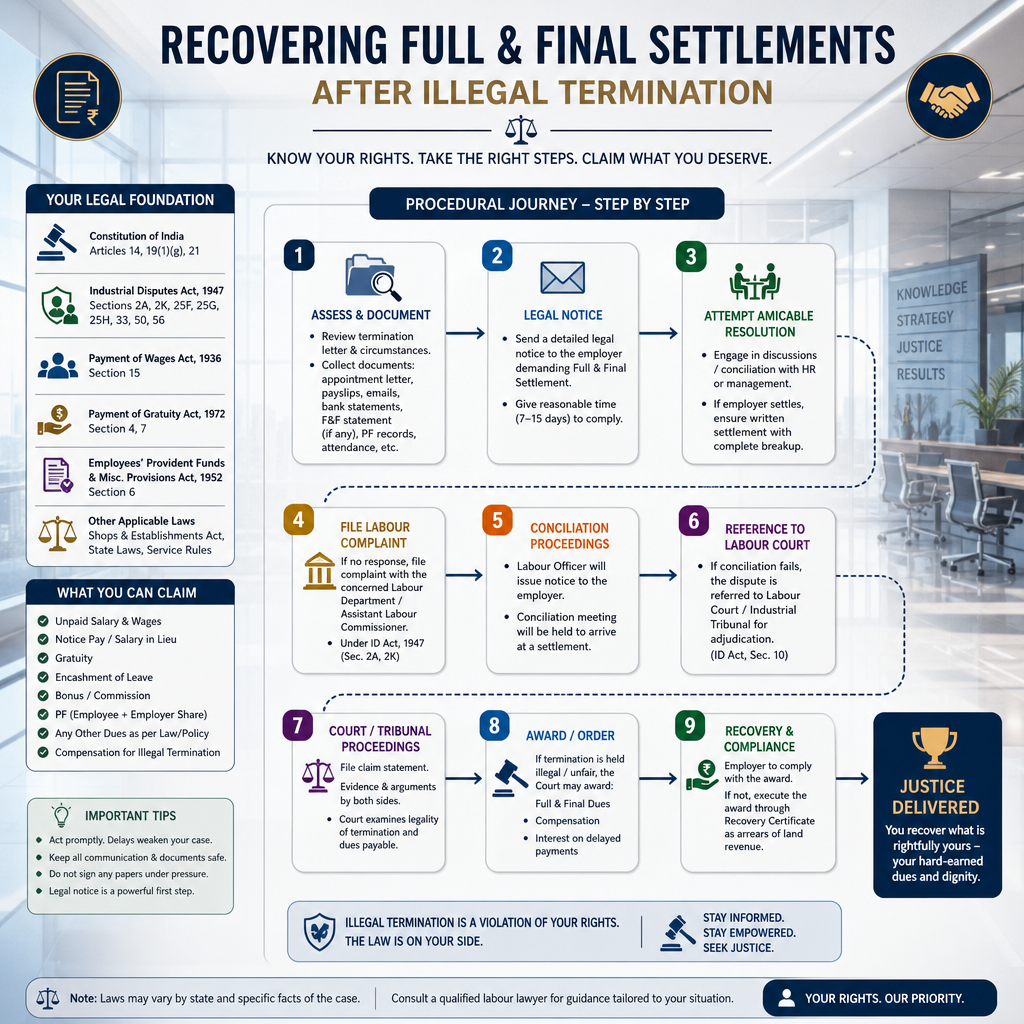
Table of Contents
Table of Contents
Swipe →Understanding Illegal Termination: A Deep Dive
In the vibrant landscape of employment laws in India, the term "illegal termination" holds significant weight. Illegal termination occurs when an employer dismisses an employee in violation of law or contract terms. Such actions not only disrupt an employee’s career trajectory but also affect their mental well-being and financial stability. For those who find themselves in such a predicament, understanding the nuances of illegal termination is the first step towards reclaiming their Full and Final Settlement (FNF).
Illegal termination can stem from various practices such as dismissing employees without a valid reason, failing to adhere to notice period stipulations, or contravening labor laws. In India, the Industrial Disputes Act, 1947 plays a pivotal role in defining and protecting against wrongful termination. According to Section 25F of the Act, employers must provide a notice period or pay in lieu thereof, and ensure the payment of retrenchment compensation. Ignorance of these procedural mandates can render a termination illegal.
Moreover, the Payment of Wages Act, 1936 stipulates that wages, including all dues, must be paid in a timely manner. Any deviation from this act, especially during termination, can be contested legally. Employees should familiarize themselves with such statutory provisions to better advocate for their rights.
Understanding the legal framework is crucial for employees who believe they have been wrongfully terminated. A comprehensive comprehension of these laws not only empowers employees but also facilitates informed decision-making when pursuing legal remedies. For those navigating this complex terrain, consulting with legal experts, like those at Legal Recovery, can provide invaluable assistance.
Full and Final Settlement: What It Entails
Once an employee's term of employment concludes, the process of Full and Final Settlement (FNF) ensues. This settlement is a critical component that ensures all pending dues are cleared by the employer. The FNF process encapsulates all monetary dues owed to an employee, which includes salary, bonus, leave encashment, and any other legal dues as per the employment agreement or statutory provisions.
The calculation of FNF is often intricate, involving components like unpaid wages, accrued leaves, gratuity, and bonuses. The Payment of Gratuity Act, 1972, for instance, mandates the payment of gratuity to employees who have served for more than five years. Employers must adhere to these calculations to avoid legal repercussions.
Typically, the FNF process is expected to be completed within a stipulated timeframe, often 30-45 days from the date of termination. However, in cases of illegal termination, employers might unjustly withhold these payments. This is not only unfair but also illegal, warranting legal action from the aggrieved party.
To successfully navigate and expedite the FNF process, employees must maintain comprehensive records of all employment-related documents, such as appointment letters, salary slips, and correspondence concerning dues. This documentation will serve as crucial evidence in any legal proceeding. For assistance with FNF calculations and legal recourse, Legal Recovery's expert services offer valuable guidance.
The Legal Framework: Acts and Statutes
The legal framework guiding employee rights and employer obligations is extensive and multifaceted. Several key acts govern the recovery of FNF after illegal termination, providing employees with a robust legal foundation to challenge unjust dismissals.
Firstly, the Industrial Disputes Act, 1947, is central in safeguarding workers against unfair dismissal. It outlines the procedures for retrenchment and stipulates that any termination without following these procedures could be deemed illegal. Employees can file a complaint under this act to seek redressal.
The Payment of Wages Act, 1936, is another crucial legislation. It ensures that all earned wages are paid promptly, including upon termination. Any delay or denial can be contested under this act, empowering employees to claim their rightful dues.
Furthermore, the Shops and Establishments Act, applicable in various states, provides specific guidelines for employment terms, including termination and payment settlements. Compliance with this act is mandatory for employers, and any infringement can be legally challenged.
Lastly, the Minimum Wages Act, 1948, guarantees payment of at least the statutory minimum wages. If an employer fails to pay the minimum wages as part of the FNF, it constitutes a violation of this act. For a comprehensive understanding of these legal frameworks and to explore actionable steps, Legal Recovery’s blog offers insightful resources and expert opinions.
Steps to Recover Your FNF After Illegal Termination
Recovering FNF dues after illegal termination involves a strategic approach, combining legal knowledge with procedural diligence. Here, we outline the essential steps to aid in the recovery process.
Firstly, initiate a dialogue with the employer. In many cases, amicable settlements can be reached through open communication. It's crucial to document all interactions with the employer, as this serves as evidence in case further legal action is necessary.
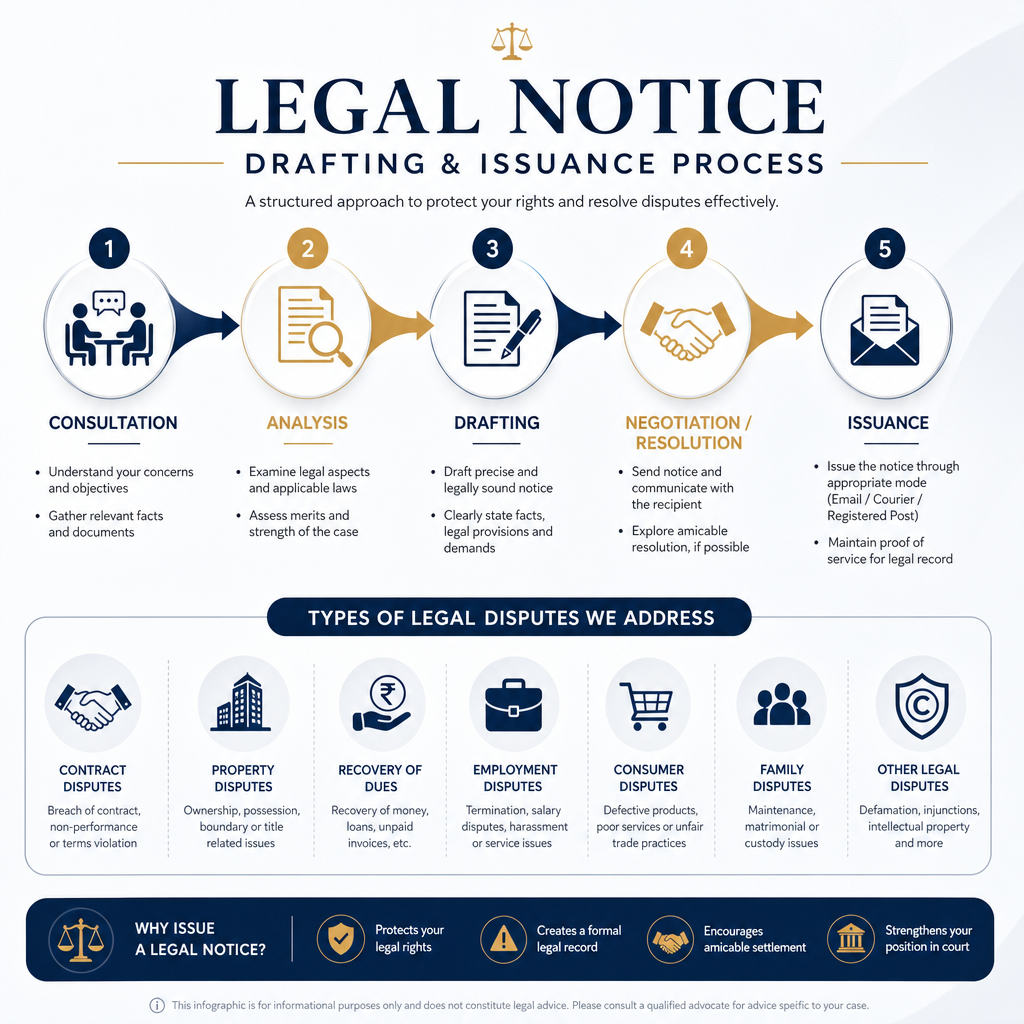
If negotiations prove unfruitful, the next step is to issue a formal demand notice. This notice should clearly outline the dues owed, referencing relevant employment contracts and legal statutes. A well-drafted demand notice can often compel employers to settle the outstanding amounts promptly.
Should the employer fail to respond or refuse payment, proceeding with a legal complaint becomes necessary. Employees can file a complaint with the Labor Commissioner or approach a labor court for adjudication. The process involves submitting all relevant documents, including employment contracts, salary slips, and communication records.
Engaging a legal expert is advisable to navigate the complexities of labor laws and court proceedings. Firms like Legal Recovery specialize in employment disputes and can offer tailored guidance to ensure a favorable outcome.
Statutory Recovery Metrics & Resolution Benchmark
Disputes resolved via formal statutory legal demand notices.
Average statutory compliance response timeline.
Mandatory refund of statutory levies under Indian Acts.
Interest compensation claimable under MSME & NI Acts.
Drafting a Demand Notice: A Practical Guide
Crafting an effective demand notice is a pivotal step in the FNF recovery process. This document serves as a formal request to the employer for the payment of outstanding dues and sets the stage for potential legal action.
Begin the notice with a clear subject line, such as "Demand for Full and Final Settlement Dues." This immediately communicates the document's purpose. The opening paragraph should introduce the employee, their position, and the context of their employment and termination.
Subsequently, detail the specific dues owed, including salary, bonuses, leave encashments, and any other financial entitlements. Reference any applicable contracts, company policies, and relevant legal statutes, such as the Payment of Wages Act, to substantiate the claims.
The notice should conclude with a deadline for payment, typically 15 to 30 days from the receipt of the notice. Additionally, it should state the potential legal consequences of non-compliance, including filing a suit for recovery of dues.
Before sending the notice, ensure it is reviewed by a legal professional to ascertain its legal soundness and effectiveness. Firms like Legal Recovery offer expert services in drafting and reviewing demand notices, ensuring that they meet all legal requirements and effectively communicate the employee's stance.
Gathering Evidence: Strengthening Your Case
Evidence plays a crucial role in substantiating claims of illegal termination and unpaid dues. Effective documentation can significantly bolster an employee's case, facilitating a smoother legal process.
The most fundamental piece of evidence is the employment contract. This document outlines the terms of employment, including notice periods and termination clauses, forming the basis for any claims of contractual violation.
Additionally, maintain records of all salary slips and bank statements that reflect salary deposits. These documents are vital in proving the quantum of unpaid dues. In cases where bonuses or incentives form part of the dues, corresponding documentation or company communications should be preserved.
Emails and written correspondence with the employer, especially those related to termination and settlement discussions, are equally important. Such communications can provide context and show attempts at resolving the issue amicably.
Finally, any internal company policies or manuals that outline employment practices should be included. These documents may contain provisions that support the employee’s claims. For guidance on organizing and presenting evidence, Legal Recovery offers specialized services to assist employees in building a robust case.
Legal Proceedings: Navigating the Court System
When amicable resolutions fail, pursuing legal proceedings becomes necessary. Understanding how to navigate the court system is crucial for employees seeking justice and compensation.
The first step in legal proceedings is filing a complaint with the Labor Commissioner or the respective labor court. The complaint should outline the nature of the illegal termination and detail all outstanding dues. Supporting documents, including contracts and communication records, should be attached.
Once filed, the court may summon both parties for a conciliatory meeting. This session aims to mediate and arrive at a mutual agreement. If conciliation fails, the case proceeds to adjudication, where a judge reviews the evidence and arguments from both sides.
The court may either order the employer to pay the dues or dismiss the claim if found unsubstantiated. It's essential for employees to prepare thoroughly, presenting a well-organized and compelling case.
Throughout this process, legal representation is invaluable. Attorneys experienced in labor law, such as those at Legal Recovery, can provide expert advocacy, enhancing the chances of a favorable outcome. For more insights into how legal proceedings unfold, Legal Recovery’s comprehensive guide on how it works is an excellent resource.
Case Studies: Learning from Real-World Scenarios
Examining real-world case studies can provide invaluable insights into the dynamics of illegal termination and FNF recovery. Each case offers unique lessons and strategies that can be applied to similar situations.
Consider the case of Rajesh Kumar, a mid-level executive at a manufacturing firm. Upon his abrupt termination, Rajesh was denied his FNF dues. He meticulously documented all communications and salary records, which he presented to the labor court. The court ruled in his favor, emphasizing the employer's failure to adhere to the contractual notice period, thus ordering full payment of dues.
Similarly, in the case of Anjali Mehta, a software professional, her employer terminated her services without any notice or severance. Anjali approached the labor commissioner with evidence of her contract stipulating a three-month notice period. With the support of expert legal counsel, she successfully recovered her dues, including additional compensation for the employer's breach of contract.
These cases underscore the importance of documentation and legal guidance. They also highlight that while the legal process may be time-consuming, persistence and preparedness often yield positive outcomes.
For those seeking deeper insights into employment disputes, Legal Recovery provides case studies and expert analyses, helping employees navigate their unique situations effectively.
Conclusion: Taking Charge of Your Rights
Recovering your FNF after illegal termination is a journey that requires knowledge, persistence, and strategic actions. By understanding the legal framework, documenting every detail, and engaging in informed negotiations, employees can reclaim their rightful dues.
The path to recovery is undoubtedly challenging, fraught with legal intricacies and procedural hurdles. However, with the right support, such as that offered by Legal Recovery, employees can effectively navigate this terrain.
Empowerment through knowledge and strategic actions can turn the tide, ensuring that employers are held accountable and employees receive what they rightfully deserve. As you embark on this journey, remember that each step brings you closer to justice and financial restitution.
For personalized assistance and more information on employment dispute resolution, visit Legal Recovery’s contact page and connect with a team of seasoned legal professionals ready to assist you.
Popular Searches & Related Topics

Legal Recovery is India's trusted consumer protection and legal tech platform. We specialize in holding corporations accountable for unfair trade practices, deceptive marketing, and commercial fraud. With over 15,000 customers counselled, our mission is to provide fast, out-of-court resolutions by connecting you with top-tier panel advocates for immediate legal action.
Client Reviews
"Legal Recovery's team was incredibly supportive. They guided me through every step, helping me recover my dues efficiently. Highly recommend their services!"
Amit Sharma
"I was impressed by their professionalism and expertise. They made the complex legal process straightforward, resulting in a successful FNF recovery for me."
Priya Nair
"Their legal team provided top-notch service. With their help, I managed to navigate the legal intricacies and secure my rightful dues. Fantastic experience!"
Rajesh Kumar
"Legal Recovery has set a benchmark in legal consultancy. Their meticulous approach and expertise were pivotal in reclaiming my FNF after wrongful termination."
Anjali Mehta
"From drafting demand notices to court representation, Legal Recovery was exceptional. Their dedication ensured a favorable outcome in my case."
Vikram Patel
Frequently Asked Questions
Related Articles
About Author
Team LegalRecovery
View ProfileTeam LegalRecovery is a dedicated team of legal and financial professionals specializing in loan settlement, banking disputes, debt relief, and corporate compliance. We are committed to helping clients achieve debt freedom and business stability through expert strategic advisory.
Connect on LinkedInNeed Legal Help?
Get expert advice on loan settlement, banking disputes and debt relief.
Start Recovery NowRequest Callback