Understanding the Purpose of Legal Notice in Recovery
Explore how legal notices aid in effective recovery processes.
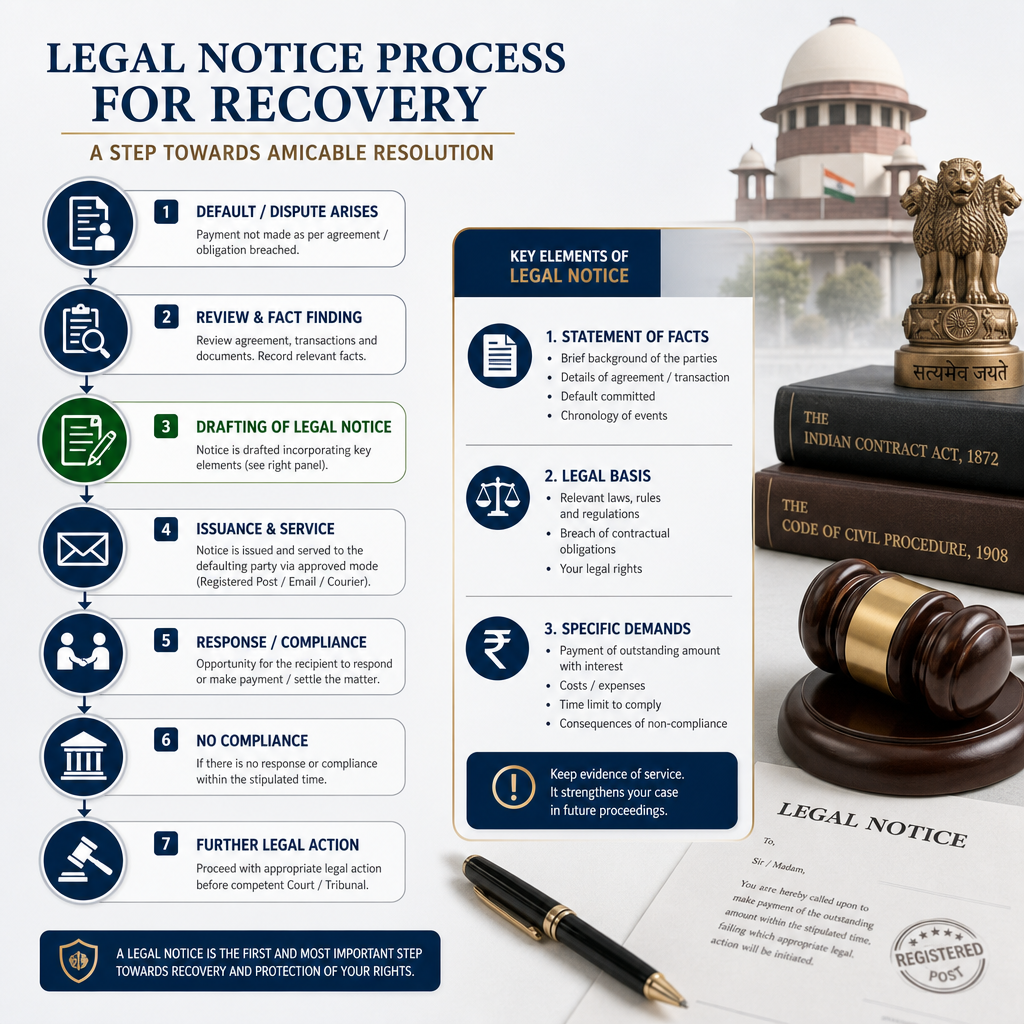
Table of Contents
Table of Contents
Swipe →Introduction to Legal Notices
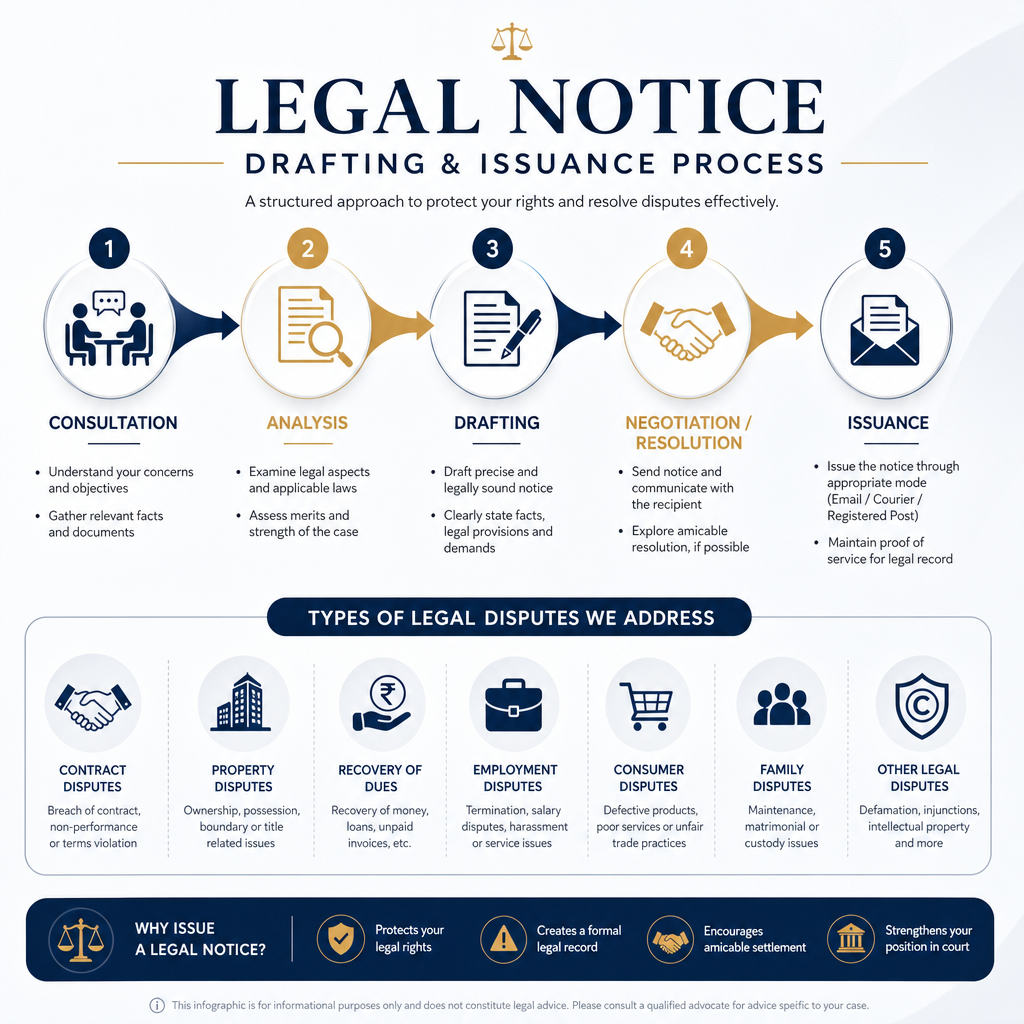
Legal notices are a pivotal component in the realm of law, serving as a formal communication that signals the initiation of legal action unless a resolution is achieved. In the Indian judicial system, legal notices hold substantial significance, acting as preliminary warnings before litigation ensues. The purpose of a legal notice is to provide the recipient with an opportunity to resolve the matter amicably without resorting to court proceedings. These documents are crucial in the recovery process, whether it involves financial debts, property disputes, or employment-related issues.
In the context of recovery, legal notices are often the first step in reclaiming dues, whether they emanate from unpaid invoices, defaulted loans, or unsettled contracts. By serving a legal notice, the aggrieved party formally communicates their grievances and the specific remedies sought. This step is essential in creating a paper trail that can be invaluable in subsequent legal proceedings if the dispute is not resolved amicably.
Understanding the Purpose of Legal Notice
The primary purpose of a legal notice is to notify the opposing party of the sender's grievances and the legal actions they intend to pursue if the issue remains unresolved. This notification serves multiple functions: it informs the recipient of the complainant's demands, sets the stage for negotiations, and preserves the sender's legal rights by documenting the grievances formally.
Legal notices also encourage the recipient to take the matter seriously, as failing to respond or resolve the issue can lead to costly and time-consuming litigation. The notice provides a clear statement of the sender's position, the facts of the dispute, and the legal rationale for the claims being made. It is a critical step in the legal process that helps prevent misunderstandings and potentially leads to a quicker resolution.
In the context of recovery, legal notices are instrumental in reclaiming dues. For instance, businesses may issue legal notices to clients who have defaulted on payments, while landlords may use them to address unpaid rent or breaches of lease agreements. In each case, the notice outlines the amount due, the basis for the claim, and the timeframe within which the recipient must respond or remedy the situation.
Legal Framework Governing Legal Notices in India
India's legal system is governed by an intricate framework of laws and regulations that dictate the use and efficacy of legal notices. Several statutes provide the legal basis for issuing notices, with specific provisions outlining how and when they should be served to ensure compliance with due process requirements.
One of the most relevant statutes in this regard is the Indian Contract Act, 1872, which governs the contractual obligations of parties. Under this act, legal notices are often used to demand the performance of contractual obligations or to claim damages for breach of contract. The act outlines the rights and duties of parties to a contract, providing a legal basis for the issuance of notices in the event of a breach.
Another significant statute is the Negotiable Instruments Act, 1881, which specifically addresses issues related to the dishonor of cheques. Section 138 of the act mandates the issuance of a legal notice to the drawer of the cheque within 30 days of the cheque being returned unpaid. This notice serves as a precursor to initiating criminal proceedings for cheque bounce offenses.
Additionally, the Code of Civil Procedure, 1908, provides guidelines for the service of legal notices in civil matters. It outlines the procedure for serving notices to ensure that the recipient is properly informed of the legal action being contemplated.
Key Elements of a Legal Notice
A well-drafted legal notice is essential for effectively communicating grievances and initiating the recovery process. The notice must be crafted with precision, as any errors or omissions can undermine the sender's legal position.
The key elements of a legal notice include:
Details of the Parties: The notice must clearly identify the sender and recipient, including their names, addresses, and any relevant identification details such as business registration numbers or PAN cards.
Statement of Facts: The notice should provide a detailed account of the facts leading to the dispute. This includes a description of the relationship between the parties, the specific obligations that have been breached, and the circumstances leading to the breach.
Legal Basis for the Claim: The notice must outline the legal basis for the sender's claims, citing relevant statutes, contractual provisions, or case law that supports their position. This establishes the sender's legal rights and justifies their demands.
Specific Demands: The notice should clearly state the specific demands being made, such as the payment of outstanding dues, the cessation of certain actions, or the performance of contractual obligations.
Deadline for Compliance: The notice must provide a reasonable timeframe within which the recipient must comply with the demands. This period is typically stipulated by the relevant statute or contractual agreement.
Consequences of Non-Compliance: The notice should warn the recipient of the legal actions that will be taken if they fail to comply with the demands. This may include filing a lawsuit, initiating arbitration, or reporting the matter to regulatory authorities.
Statutory Recovery Metrics & Resolution Benchmark
Disputes resolved via formal statutory legal demand notices.
Average statutory compliance response timeline.
Mandatory refund of statutory levies under Indian Acts.
Interest compensation claimable under MSME & NI Acts.
Legal Notice in Recovery of Salary and Employment Dues
In the employment sector, legal notices play a crucial role in the recovery of unpaid salaries and employment dues. Employees who have been wronged by their employers due to non-payment or delayed payment of wages can leverage legal notices to assert their rights and seek redress.
The Payment of Wages Act, 1936, and the Minimum Wages Act, 1948, provide the legal framework for ensuring timely payment of wages to employees. These statutes mandate that wages be paid within a specified time frame and provide employees with the right to issue legal notices if their wages are unjustly withheld.
When drafting a legal notice for the recovery of salary, it's imperative to include details such as the amount due, the period for which wages have not been paid, and any previous correspondence with the employer regarding the issue. The notice should also cite relevant provisions of the employment agreement and statutory rights under applicable laws.
Employees may also seek recovery of other employment dues such as bonuses, overtime pay, and gratuity. The Payment of Bonus Act, 1965, and the Payment of Gratuity Act, 1972, provide legal recourse for employees to claim these dues. In such cases, the legal notice should specify the amount claimed, the basis for the claim, and any supporting documentation such as employment contracts or payslips.
Legal Recovery offers services for the recovery of salary and employment dues, assisting employees in drafting effective legal notices and pursuing claims through appropriate legal channels. For more information, visit our services page.
Legal Notice in Recovery of Money from Clients and Freelancers
Legal notices are also extensively used in business transactions, particularly in the recovery of money owed by clients and freelancers. In today's fast-paced business environment, delayed payments and defaults are common challenges faced by businesses and independent contractors alike.
When clients fail to pay for services rendered or goods delivered, businesses can issue legal notices to demand payment and initiate recovery proceedings. The notice should include details of the outstanding invoices, the terms of the contract, and any previous attempts to resolve the issue amicably. It's also important to cite applicable provisions of the Indian Contract Act, 1872, which governs contractual obligations and remedies.
Freelancers can also issue legal notices to clients who have defaulted on payments for services provided. The notice should outline the scope of work agreed upon, the amount due, and any communication with the client regarding payment delays. Freelancers may also seek assistance from legal service providers like Legal Recovery to draft effective notices and pursue recovery through appropriate legal means.
For more information on recovery of freelancer and client payments, visit our services page.
Legal Notice in Property and Rental Disputes
Property and rental disputes are another common area where legal notices are used extensively. Landlords often issue legal notices to tenants for non-payment of rent, damage to property, or breach of lease agreements. In such cases, the notice serves as a formal warning to the tenant, providing them with an opportunity to rectify the breach before legal action is initiated.
The notice should include details of the lease agreement, the nature of the breach, and the specific actions required to remedy the situation. It should also provide a reasonable timeframe for compliance and outline the legal consequences of non-compliance.
Similarly, tenants can issue legal notices to landlords for issues such as wrongful eviction, non-refund of security deposits, or failure to fulfill maintenance obligations. The notice should specify the tenant's grievances, the relevant provisions of the lease agreement, and any previous communication with the landlord regarding the issue.
Legal Recovery offers services for resolving property and builder disputes, assisting clients in drafting legal notices and pursuing claims through appropriate legal channels. For more information, visit our services page.
Case Studies: Effective Use of Legal Notices in Recovery
Case studies provide valuable insights into the practical application of legal notices in recovery processes. By examining real-world examples, we can better understand the strategies and outcomes associated with the use of legal notices.
Case Study 1: Recovery of Unpaid Invoices
A small business providing IT services faced challenges recovering payments from a client who had defaulted on multiple invoices totaling ₹10,00,000. The business issued a legal notice to the client, outlining the outstanding amounts, the terms of their service agreement, and previous attempts to resolve the issue. The notice demanded payment within 15 days to avoid further legal action. The client, recognizing the seriousness of the notice and the potential consequences, settled the outstanding dues within the stipulated timeframe.
Case Study 2: Recovery of Unpaid Rent
A landlord issued a legal notice to a tenant who had defaulted on rent for three consecutive months, totaling ₹1,20,000, in violation of their lease agreement. The notice outlined the terms of the lease, the breach by the tenant, and the deadline for clearing the dues. It also warned of legal action, including eviction proceedings, if the tenant failed to comply. The tenant responded by settling the overdue rent and negotiating a revised payment plan, avoiding eviction.
These case studies illustrate the effectiveness of legal notices in prompting compliance and facilitating amicable resolutions. By clearly communicating grievances and the potential consequences of non-compliance, legal notices can serve as powerful tools for recovery.
Conclusion
Legal notices are indispensable in the recovery process, serving as formal communications that notify recipients of grievances and the legal actions that may follow if issues remain unresolved. Whether it's recovering unpaid dues, addressing breaches of contract, or resolving property disputes, legal notices play a crucial role in facilitating amicable resolutions and preserving the sender's legal rights.
It's essential to draft legal notices with precision, ensuring that all relevant details are included and that the legal basis for the claims is clearly outlined. By leveraging the expertise of legal service providers like Legal Recovery, individuals and businesses can effectively utilize legal notices to achieve their recovery objectives. For more information on how legal notices can aid in effective recovery processes, visit our website.
Popular Searches & Related Topics

Legal Recovery is India's trusted consumer protection and legal tech platform. We specialize in holding corporations accountable for unfair trade practices, deceptive marketing, and commercial fraud. With over 15,000 customers counselled, our mission is to provide fast, out-of-court resolutions by connecting you with top-tier panel advocates for immediate legal action.
Client Reviews
"Legal Recovery's service was impeccable. They helped me draft a legal notice that quickly resolved my unpaid salary issue without needing to go to court."
Amrita Singh
"I was struggling with a client who defaulted on payments. Legal Recovery's precise legal notice made the client pay up promptly. Highly recommend their services!"
Rajesh Kumar
"Thanks to Legal Recovery, I got my overdue freelance payments settled swiftly. Their approach was professional, and the legal notice was spot-on."
Neha Patel
"The legal notice drafted by Legal Recovery helped me recover rent arrears from a problematic tenant without further legal hassles. A very efficient service!"
Vikram Mehta
"Legal Recovery saved me a lot of stress in a property dispute. Their legal notice was well-structured and resolved the issue quickly. Excellent support!"
Sanya Roy
Frequently Asked Questions
Related Articles
About Author
Team LegalRecovery
View ProfileTeam LegalRecovery is a dedicated team of legal and financial professionals specializing in loan settlement, banking disputes, debt relief, and corporate compliance. We are committed to helping clients achieve debt freedom and business stability through expert strategic advisory.
Connect on LinkedInNeed Legal Help?
Get expert advice on loan settlement, banking disputes and debt relief.
Start Recovery NowRequest Callback