Mastering B2B/B2C Debt Recovery: Strategies for Success
Effective Solutions for B2B and B2C Debt Recovery Challenges

Table of Contents
Table of Contents
Swipe →Online Legal Recovery in India: The Complete Guide to Reclaiming Your Unpaid Dues
Few things paralyze a business or disrupt personal financial stability quite like stuck money. Whether it is an unpaid vendor invoice, a corporate client withholding project fees, or a builder refusing to return a booking amount, the frustration of chasing outstanding debts is universally draining. For a long time, the traditional route of debt recovery in India was synonymous with endless court visits, astronomical lawyer fees, and years of administrative stagnation.
The digital transformation of the Indian judicial landscape has fundamentally shifted this dynamic. Online legal recovery has emerged as a tech-driven, highly structured, and legitimate alternative that bridges the gap between traditional litigation and fast-paced modern commerce. By integrating digital legal notices, alternative dispute resolution (ADR) mechanisms, and online tracking systems, individuals and corporations can now resolve financial stalemates without resetting their calendars by decades.
If you are currently struggling to recover stuck funds, navigating this modern ecosystem can feel overwhelming. This guide breaks down the mechanisms, statutory legal protections, and strategic workflows of online legal recovery in India, offering a clear roadmap to reclaim what is rightfully yours.
Understanding Online Legal Recovery: The Digital Shift in Debt Resolution
At its core, online legal recovery is the process of using digital legal platforms, e-filing mechanisms, and specialized web-based legal services to demand, track, and secure outstanding financial dues. It transitions debt collection out of the realm of aggressive, uncoordinated collection calls and structures it into a legally binding, traceable digital workflow.
Historically, recovering money in India required physical access to localized jurisdictions, manual drafting of paper notices, and reliance on physical couriers—leaving immense room for delays or tactical evasion by the debtor. Modern online systems eliminate these logistical vulnerabilities. From generating an ironclad legal notice to tracking its delivery via secure electronic channels and initiating summary suits in digital courts, the entire process is fast, transparent, and completely verifiable.
This digital approach is not just a convenience; it is a necessity in an economy where cross-border and inter-state transactions happen in seconds. For a complete understanding of how these technological layers operate seamlessly to protect your capital, you can explore the foundational breakdown on our webpage detailing how it works.
Why Modern Businesses and Individuals Choose Online Legal Recovery
The shift toward internet-based legal resolution is driven by measurable efficiencies. When compared to legacy legal pathways, digital recovery processes offer clear structural advantages that protect the claimant's bottom line:
Drastic Cost Reduction: Traditional litigation requires heavy retainers, physical court appearance fees, and manual documentation costs. Digital platforms lower the barrier to entry, offering clear, fixed-price models for drafting and dispatching legal claims.
Traceable Delivery & Geolocation: Under Section 65B of the Indian Evidence Act, electronically transmitted notices—backed by email delivery receipts, WhatsApp read logs, and digital tracking—hold equal weight in court, stopping debtors from falsely claiming they "never received the notice."
Time-Efficient Turnarounds: A standard legal notice that used to take weeks to draft, review, and ship can now be executed and served in under 48 hours, accelerating response times.
Pan-India Jurisdiction: A business based in Bangalore can seamlessly pursue a defaulting client in Delhi without needing to fly out legal teams or hire regional counsel.
To discover the full scope of tech-enabled recovery suites designed for diverse financial disputes, review our comprehensive services portfolio.
Step-by-Step Workflow of the Online Legal Recovery Process
Phase 1: Case Review and Digital Documentation Archive
Before any formal legal document is generated, you must assemble a clear, digital paper trail. This archive serves as the evidentiary backbone of your claim. Vital components include:
Digitally signed master service agreements (MSAs) or purchase orders (POs).
Unpaid invoices alongside proof of complete service delivery (such as email sign-offs or delivery challans).
Written admissions of debt, including emails or chat histories where the debtor explicitly acknowledges the balance due and promises payment.
Phase 2: Drafting and Serving the Digital Legal Notice
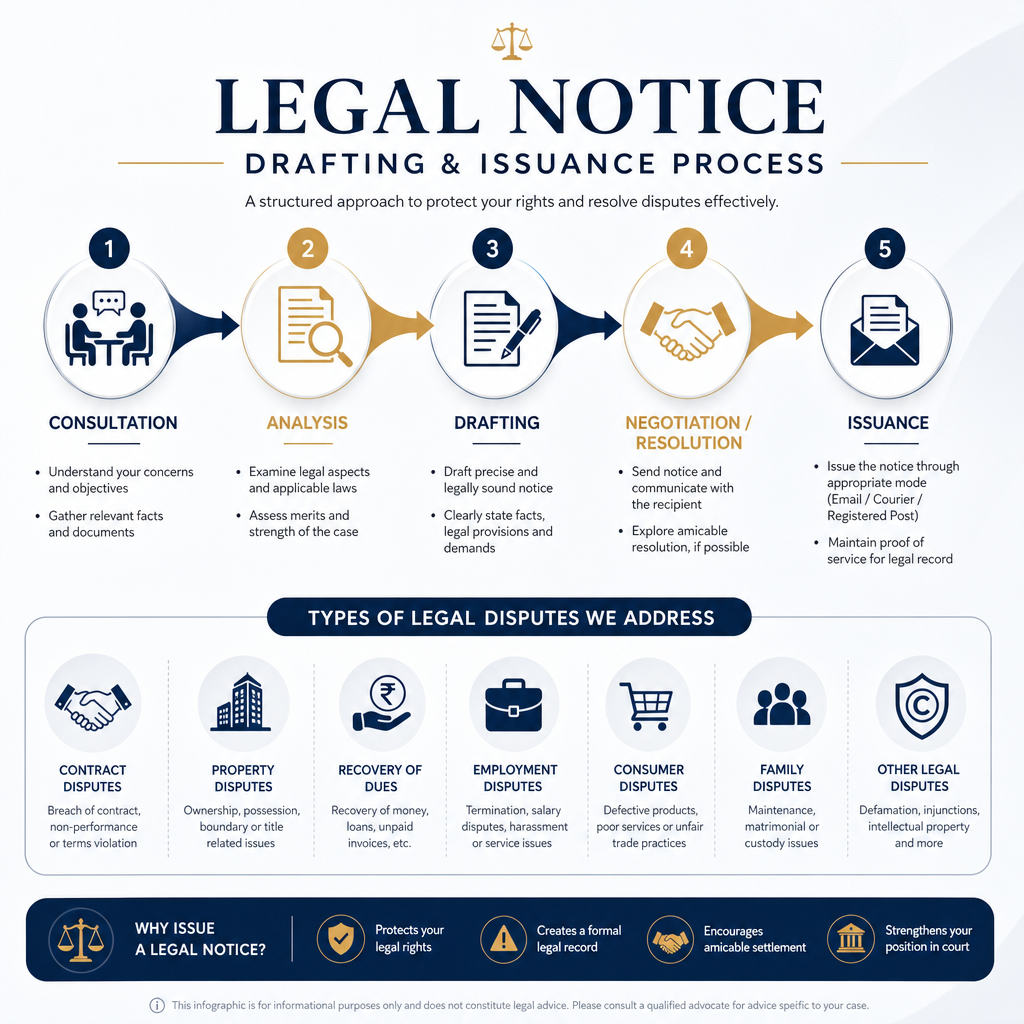
The formal journey of online legal recovery begins with sending an authoritative legal notice. Prepared by qualified legal experts, this document details the exact nature of the default, establishes a strict statutory window for resolution (typically 15 days), and warns of impending legal actions if ignored. The notice is served via high-impact channels: registered e-mail with tracking tokens, secure WhatsApp delivery, and physical Speed Post to ensure complete legal compliance.
Phase 3: Pre-Litigation Mediation and Online Dispute Resolution (ODR)
Once the notice lands, a significant percentage of debtors choose to negotiate rather than risk a public, credit-damaging legal battle. Through Online Dispute Resolution (ODR) platforms, both parties can enter structured virtual mediation rooms. This allows for the drafting of binding settlement agreements, structured repayment timelines, or compromised settlements without stepping into a physical courtroom.
Phase 4: Escalation to E-Courts and Digital Tribunals
If the debtor remains unresponsive or hostile, the case transitions to the formal judicial framework via India’s expanding e-courts network. Depending on the nature of the transaction, claims are fast-tracked into specialized digital tribunals. This includes filing summary suits under Order XXXVII of the Code of Civil Procedure (CPC) or initiating insolvency proceedings through digital filings with the National Company Law Tribunal (NCLT).
Statutory Recovery Metrics & Resolution Benchmark
Disputes resolved via formal statutory legal demand notices.
Average statutory compliance response timeline.
Mandatory refund of statutory levies under Indian Acts.
Interest compensation claimable under MSME & NI Acts.
Primary Statutory Frameworks Powering Debt Recovery in India
When embarking on an online legal recovery campaign, your actions are backed by a robust framework of Indian civil, commercial, and criminal statutes. Knowing which law fits your specific dispute ensures your recovery strategy is both aggressive and legally sound.
Statutory Provision / Act | Core Legal Mechanism | Ideal Use-Case Scenario |
Order XXXVII, Code of Civil Procedure (CPC), 1908 | Summary Suit (Fast-tracked decree without long trials if the debtor cannot present a valid defense). | Written contracts, bills of exchange, clear unpaid invoices, and dishonored checks. |
Section 138, Negotiable Instruments Act, 1881 | Criminal liability for cheque bounce (Imposes up to 2 years imprisonment or a fine up to double the cheque amount). | Situations where a debtor issues a physical cheque that is subsequently returned due to "insufficient funds." |
Section 73-74, Indian Contract Act, 1872 | Direct claims for liquid damages, financial compensation, and contract breaches. | Freelancer payment defaults, unreturned security deposits, and sudden vendor terminations. |
Micro, Small & Medium Enterprises Development (MSMED) Act, 2006 | Mandates compound interest at 3x the RBI bank rate for payments delayed past 45 days. | Registered MSME vendors chasing corporate buyers or large enterprises for delayed dues. |
Insolvency and Bankruptcy Code (IBC), 2016 | Corporate insolvency resolution process initiated by operational creditors for defaults over ₹1 Crore. | B2B debt recovery against defaulting private or public limited companies. |
Tailored Online Legal Recovery Strategies for Specific Disputes
Different types of financial blockages require highly distinct legal approaches. A strategy that works against a defaulting corporate enterprise will not yield the same results when applied to a landlord or a private borrower.
1. Recovery of Corporate Vendor Dues & Invoice Violations
In B2B transactions, defaults frequently stem from cash flow mismanagement or bad-faith contract maneuvering. Utilizing online legal recovery allows companies to assertively demand payments while maintaining their professional standing. If your business is an MSME, leveraging the online Samadhaan portal alongside a formal legal demand letter gives you immense leverage, forcing corporate debtors to settle to keep their credit ratings clean. For specialized assistance in corporate commercial matters, you can connect directly with our expert team specializing in vendor and invoice recoveries.
2. Salvaging Salary and Employment Dues from Defaulting Employers
When an enterprise abruptly halts operations, terminates employees without processing full and final (F&F) settlements, or holds back earned bonuses, employees often feel powerless. Through structured digital interventions, workers can issue clear legal demands detailing violations of employment contracts and State Shops and Establishment Acts. To understand how to legally compel an employer to disburse withheld wages, explore our dedicated resource on the recovery of salary and employment dues.
3. Resolving Real Estate and Builder-Buyer Confrontations
Property transactions involve significant portions of an individual's life savings. When a builder fails to deliver a project on time, alters construction layouts without consent, or refuses to refund booking amounts upon cancellation, immediate action is paramount. Online filings through the Real Estate Regulatory Authority (RERA) portals, combined with consumer court escalations, offer a potent solution. If you are currently facing roadblocks with a developer or a co-owner, review our tactical insights on property and builder disputes.
4. Protecting Independent Professionals and Freelancer Contracts
The gig economy suffers from a lack of structural safety nets. Clients frequently exploit independent contractors by accepting creative assets or software code and then going completely silent during the invoice cycle. Online legal notices show non-paying clients that independent professionals have access to structured institutional backing. Protect your creative or technical agency today by checking out our step-by-step approach to the recovery of freelancer and client payments.
5. Reclaiming Security Deposits and Rental Balance Holds
Landlords occasionally invent arbitrary property damages at the end of a lease term to hold onto security deposits. Conversely, tenants may stop paying rent while refusing to vacate the premises. Online legal notice dispatch channels provide a direct, swift mechanism to resolve these issues without descending into long, drawn-out eviction trials. Learn more about your regional tenancy rights via our portal for security deposits and rental recoveries.
6. Recovering Personal Loans Extended to Friends or Family members
Lending capital to acquaintances or relatives is rarely backed by a complex corporate contract. Usually, these loans rely on basic promissory notes, bank transfer records, or text message exchanges. When these informal commitments are broken, initiating an empathetic yet firm legal notice helps establish a formal boundary, showing the debtor that you are ready to pursue civil collection pathways if needed. For a step-by-step breakdown of how to convert casual messages into actionable evidence, read our guide on the recovery of money from a friend.
7. Securing Refunds for Consumer Faults and Travel Delays
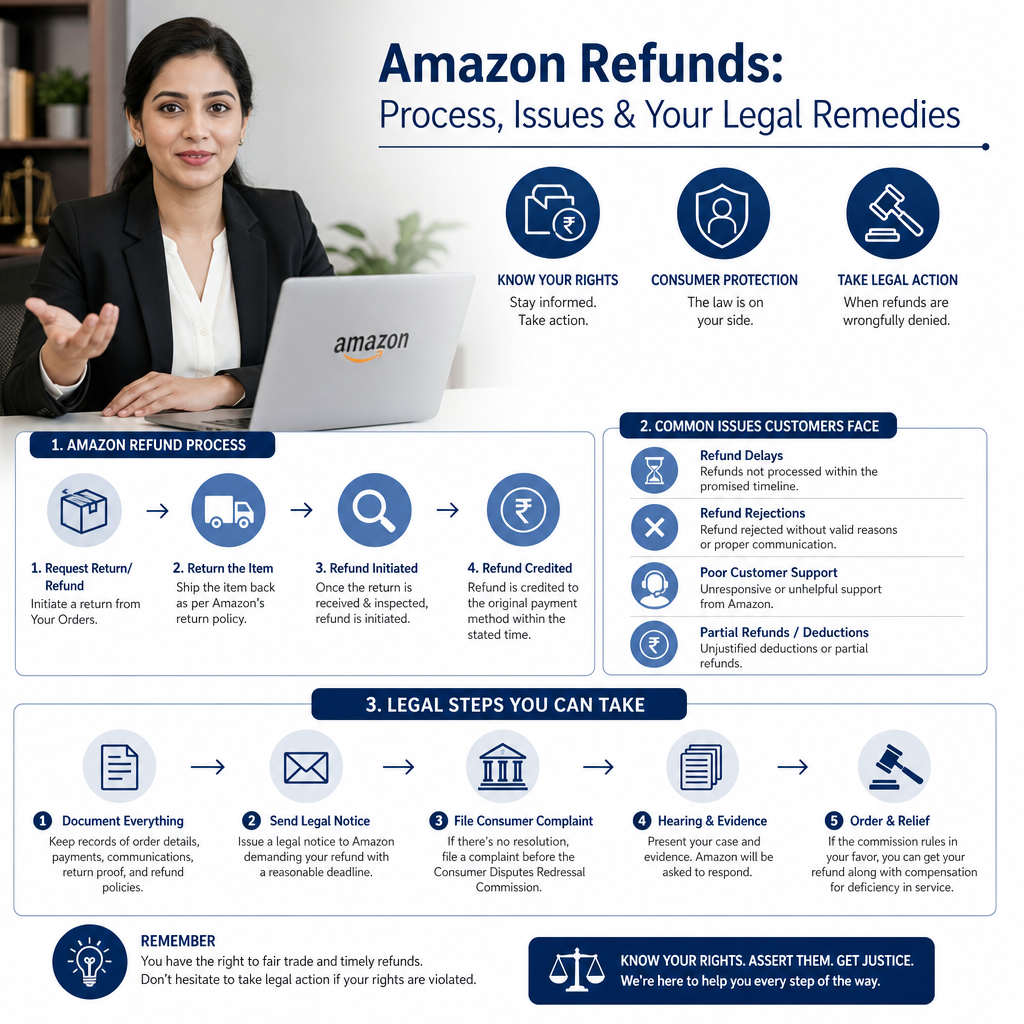
From airlines canceling flights without providing refunds to e-commerce portals delivering defective items and blocking customer support channels, consumer exploitation remains a systemic issue. Online complaints filed via the National Consumer Helpline (NCH) or digital state consumer commissions offer swift resolutions. Read more about protecting your travel bookings on our specialized pages for refunds and consumer complaints as well as airline and travel recoveries.
How to Protect Your Cash Flow Against Future Defaults
While having access to a reliable online legal recovery framework is an excellent fallback, building preventative safeguards into your daily workflows is the best way to keep your capital safe.
Enforce Mandatory Written Agreements: Never initiate work, ship inventory, or lend capital based on verbal assurances. Ensure every transaction is governed by a digitally signed contract containing explicit payment terms, late fees, and clear dispute resolution clauses.
Conduct Rigorous Pre-Transaction Due Diligence: Before onboarding a major client or entering a high-value rental agreement, check public databases like the Ministry of Corporate Affairs (MCA) portal, review credit scores, and check for historical litigation.
Implement Automated Invoice Tracking Systems: Set up an organized bookkeeping workflow that flags invoices the moment they cross their due dates. Send polite, automated email reminders 7 days, 3 days, and 1 day before the due date, followed by immediate operational follow-ups if they lapse.
Set Up a Clear Escalation Timeline: Do not let uncooperative debtors string you along with endless vague promises for months. Define a strict internal policy: if an invoice remains unpaid 45 days past its due date despite regular follow-ups, the account automatically transitions to legal recovery specialists.
Conclusion: Partner with Legal Recovery to Reclaim Your Peace of Mind
Navigating outstanding debts does not have to mean losing hours of productivity to stress, worry, and administrative headaches. The modern Indian legal system provides the exact tools needed to challenge non-paying entities confidently. By shifting from unstructured, manual chasing to a precise, tech-driven online legal recovery strategy, you assert control over your cash flow and protect your financial well-being.
At Legal Recovery, we cut through traditional institutional delays by combining deep statutory expertise with digital legal solutions. Our streamlined platform ensures that whether you are an independent freelancer, an enterprise dealing with vendor defaults, or an individual trying to recover personal funds, your case is handled with speed, authority, and meticulous attention to detail.
Stop letting uncooperative debtors hold your hard-earned capital hostage. Explore our insights and strategic updates on our official blog, or learn more about our values and legal team by visiting our about page. When you are ready to stop chasing and start recovering, take the decisive first step and reach out to our specialists through our contact page for a comprehensive evaluation of your case.
Popular Searches & Related Topics

Legal Recovery is India's trusted consumer protection and legal tech platform. We specialize in holding corporations accountable for unfair trade practices, deceptive marketing, and commercial fraud. With over 15,000 customers counselled, our mission is to provide fast, out-of-court resolutions by connecting you with top-tier panel advocates for immediate legal action.
Client Reviews
"Legal Recovery was instrumental in resolving our B2B debt issues swiftly. Their professionalism and expertise are unmatched."
Amit
"I'm impressed with Legal Recovery's approach to B2C debt recovery. They handled the process efficiently and ethically."
Priya
"The team at Legal Recovery helped us navigate complex legal frameworks for debt recovery. Highly recommended for businesses!"
Rohan
Frequently Asked Questions
Related Articles
About Author
Team LegalRecovery
View ProfileTeam LegalRecovery is a dedicated team of legal and financial professionals specializing in loan settlement, banking disputes, debt relief, and corporate compliance. We are committed to helping clients achieve debt freedom and business stability through expert strategic advisory.
Connect on LinkedInNeed Legal Help?
Get expert advice on loan settlement, banking disputes and debt relief.
Start Recovery NowRequest Callback