Legal Recovery of Money from Landlord Issues
Guide to recovering your security deposit from non-paying landlords

Table of Contents
Table of Contents
Swipe →Tenant Protections and Legal Limitations on Unreasonable Landlord Security Deposit Deductions
The relationship between a tenant and a landlord is governed by a rental agreement, which is essentially a contract stipulating the terms of tenancy. One of the most common issues that arise in this relationship is the recovery of the security deposit upon the termination of the lease. Security deposits are intended to cover any potential damages to the property or unpaid rent, but problems arise when landlords fail to return these deposits or make unreasonable deductions.
Understanding Security Deposits in Rental Agreements
Security deposits are a standard feature in most rental agreements and can vary significantly in amount based on the location, property value, and the terms agreed upon between the landlord and tenant. Generally, the security deposit is equivalent to one to three months' rent. The purpose of this deposit is twofold: it acts as a financial assurance for the landlord against damages and unpaid dues and ensures that the property is returned in good condition.
Under the Indian Contract Act, 1872, and the Transfer of Property Act, 1882, a landlord is legally obligated to refund the security deposit after deducting any legitimate expenses for damages or unpaid dues as per the agreed terms. However, it is crucial that these deductions are reasonable and justifiable, otherwise, they can be contested.
To mitigate disputes over security deposits, it is advisable for tenants to have a comprehensive, written rental agreement that clearly outlines the conditions under which deductions can be made. This agreement should specify the amount of the security deposit, the conditions for its return, and any permissible deductions.
Legal Rights of Tenants to Security Deposit Recovery
Tenants have several legal rights when it comes to the recovery of their security deposit. Primarily, landlords are legally bound to return the deposit within a stipulated timeframe after the lease has ended. If a landlord fails to comply, tenants can pursue legal remedies. The Consumer Protection Act, 2019, and various state-specific rental housing laws provide the framework for such disputes.
Moreover, the law requires that any deductions from the deposit must be substantiated with appropriate documentation. Landlords cannot legally withhold the security deposit without providing a detailed list of damages, repairs, or pending dues, and supporting evidence such as bills or receipts.
In several states, tenancy laws have been enacted that provide additional protections and specify the maximum amount that can be charged as a security deposit, as well as the timeframe within which it should be returned. These laws are designed to prevent landlords from taking advantage of tenants and to ensure fair treatment.
Tenants should be aware that failure to return the security deposit without valid grounds can be challenged in consumer courts as a deficiency in service. This is because the rental agreement is considered a service contract, and failure to refund the deposit amounts to a breach of this contract.
Practical Steps to Recover Security Deposits
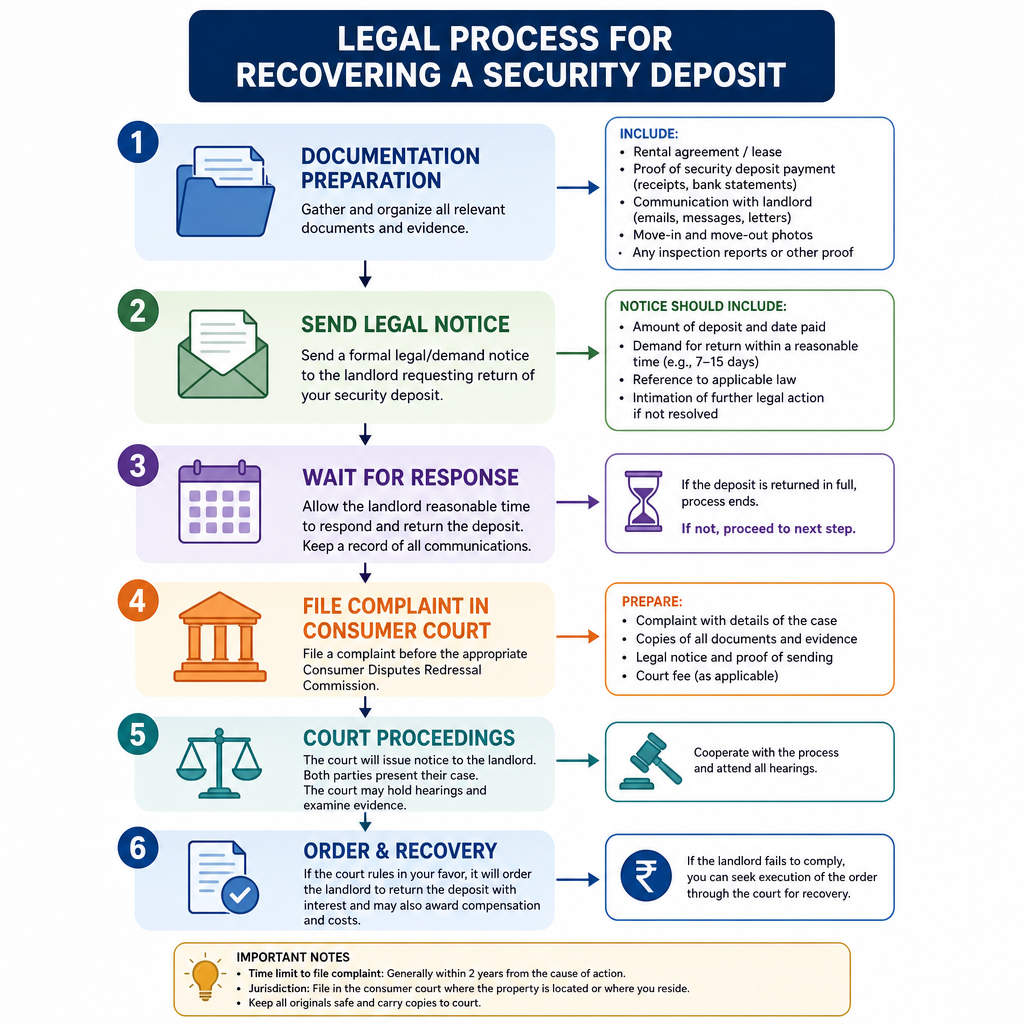
Recovering a security deposit from a non-compliant landlord involves several practical steps. The first step is to initiate communication with the landlord. A written request for the return of the deposit should be made, clearly stating the end of the tenancy and compliance with all lease conditions.
If the initial request does not result in timely payment, tenants are advised to send a formal demand notice. This notice should outline the details of the tenancy, the amount of security deposit, and demand its refund. The notice should also reference any relevant clauses in the rental agreement or applicable laws that support the tenant’s claim.
In case the matter remains unresolved, tenants may consider pursuing legal action. This can involve filing a complaint with the appropriate consumer forum or civil court. The complaint should include all evidence of the tenancy, payment of the deposit, and any correspondences with the landlord regarding the return of the deposit.
Enlisting the aid of a legal professional can be advantageous in such cases. Legal counsel can provide guidance on the appropriate forum for filing the complaint and assist with drafting the necessary legal documents. For more information, tenants can refer to Security Deposits and Rental Recoveries.
Role of Evidence in Security Deposit Disputes
Evidence plays a critical role in any legal dispute over security deposits. Tenants should maintain a comprehensive record of all documents related to the rental agreement. This includes the initial lease agreement, any addendums, payment receipts for the deposit and rent, and any correspondence with the landlord over the course of the tenancy.
Documentation of the property's condition at the start and end of the tenancy is particularly important. Photographs, videos, or inspection reports can serve as crucial evidence to dispute any wrongful damage claims made by the landlord. Any receipts or invoices for repairs paid for by the tenant should also be retained.
In the absence of a written rental agreement, other forms of evidence such as bank statements showing deposit payments, email correspondences, or even witness testimonies from neighbors or property managers can be used to substantiate claims.
Having a detailed inventory or checklist of the property's condition agreed upon by both parties at the onset of the tenancy can also serve as a valuable tool in resolving disputes. Such an inventory should be signed by both the tenant and landlord and can be referred to in case of any disagreements.
Consumer Courts and Civil Remedies
Tenants can seek redress through consumer courts or civil courts when they face issues with security deposit returns. The Consumer Protection Act, 2019, allows tenants to file complaints regarding deficiency in service, which includes non-return of security deposits.
Filing a complaint in a consumer court involves drafting a complaint that outlines the facts of the case, the relief sought, and the legal grounds for such relief. The complaint should be accompanied by all relevant evidence and documentation. Tenants should also be prepared to attend hearings and present their case.
The jurisdiction for filing the complaint is typically determined by the value of the claim. For claims up to ₹1 crore, the District Consumer Disputes Redressal Commission is the appropriate forum. For higher claims, the State or National Commissions may be approached.
Alternatively, tenants can file a suit for recovery of money in a civil court. This process is more formal and requires drafting of pleadings and submission of evidence. Civil suits can take longer to resolve but may result in judicial orders for the recovery of the deposit, along with possible compensation for legal costs and interest on the withheld amount.
For a detailed understanding of the steps to recover security deposits from uncooperative landlords, tenants may refer to expert articles and legal resources.
Visual Dispute Resolution & Recovery Framework
Drafting a Legal Notice for Security Deposit Recovery
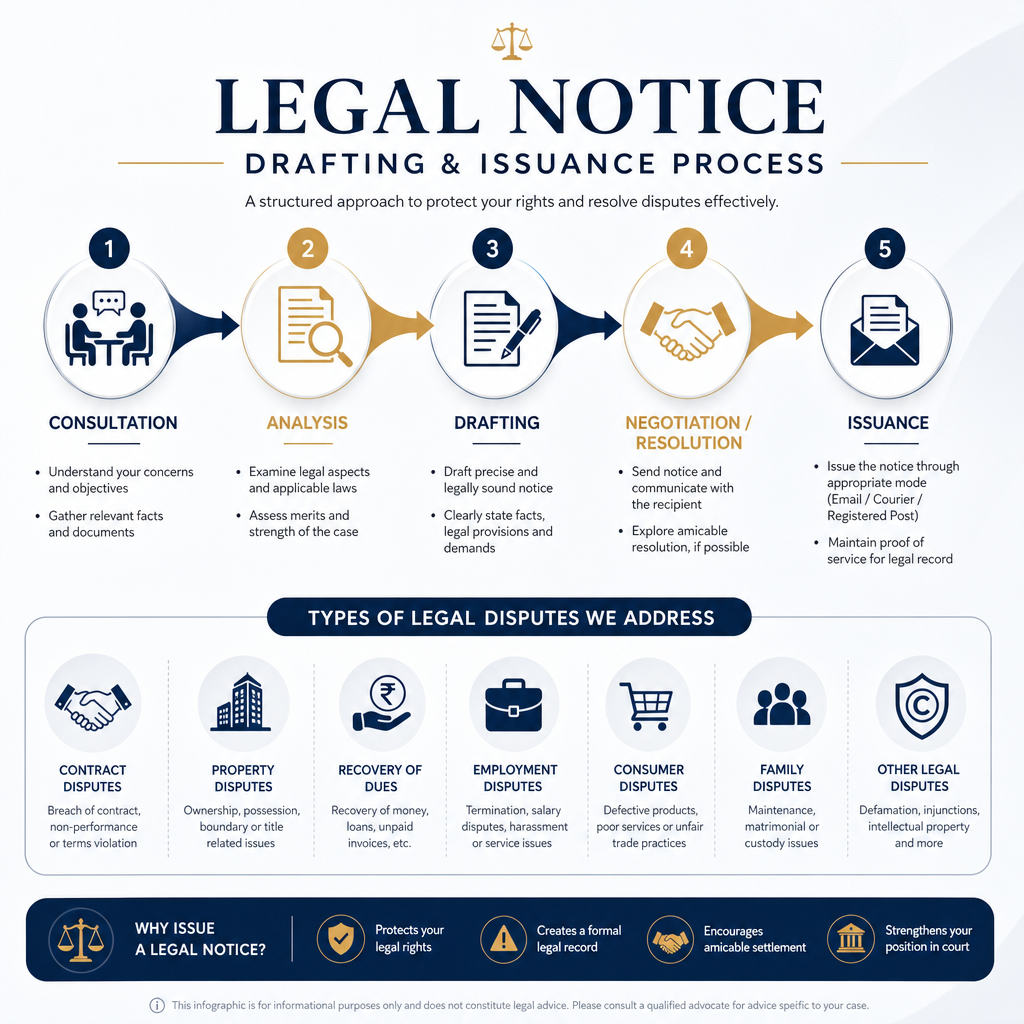
A legal notice serves as a formal demand for the return of the security deposit and is often the first step in initiating legal proceedings. It is a crucial document that not only demands payment but also sets the stage for potential litigation.
The notice should clearly state the facts of the case, including the terms of the rental agreement, the amount of the deposit, and any conditions related to its return. It should specify any breaches by the landlord and provide a reasonable deadline for compliance.
Precision in language is of utmost importance, and the notice should avoid any ambiguity. It is advisable to include references to applicable laws and clauses in the rental agreement that support the tenant’s claim. The notice should also warn of potential legal actions if the refund is not processed within the specified timeframe.
Legal notices can be drafted by legal professionals to ensure compliance with statutory requirements and to enhance the credibility of the tenant’s claim. Tenants may also choose to send the notice via registered post or through a legal notice service to ensure proper delivery and record.
Impact of State-Specific Tenancy Laws on Deposit Recovery
State-specific tenancy laws can significantly influence the process of recovering security deposits. For example, some states have enacted tenancy acts that limit the security deposit amount to a certain number of months’ rent and mandate its return within a specific period after the termination of tenancy.
In Maharashtra, the Maharashtra Rent Control Act, 1999, provides guidelines on deductions and timelines for returning deposits. Similarly, the Karnataka Tenancy Act outlines the rights and obligations of landlords and tenants, including provisions for deposit refunds.
Understanding these local laws is essential for tenants as they provide additional protections and can be cited in legal proceedings. These laws also offer recourse mechanisms for disputes regarding unfair practices by landlords.
Tenants should consult with legal experts familiar with state-specific laws to navigate their case effectively. They may also explore resources and guides that provide comprehensive information on tenancy laws and deposit recovery in their state.
Dispute Resolution Mechanisms and Alternatives
Besides legal proceedings, tenants can explore alternative dispute resolution (ADR) methods such as mediation or arbitration. These methods offer a faster and often less adversarial route to resolving disputes compared to traditional court procedures.
Mediation involves a neutral third party facilitating discussions between the landlord and tenant to reach a mutually acceptable solution. It is a voluntary process and can be a simple way to resolve disagreements over deposit deductions.
Arbitration, on the other hand, is a more formal process where an arbitrator hears both sides and makes a binding decision. This option is generally quicker than court litigation and can be included as a clause in rental agreements to manage disputes.
However, the success of ADR depends on the willingness of both parties to cooperate and abide by the decision. In instances where ADR is not effective or not possible, legal proceedings remain the primary mode of recourse for recovering security deposits. For more on alternative dispute resolution, tenants can review how LegalRecovery works in facilitating such processes.
Table: Required Documentation for Security Deposit Recovery
Document Type | Description | Purpose |
|---|---|---|
Rental Agreement | Written contract between tenant and landlord outlining terms of tenancy and security deposit details. | Primary evidence of terms agreed upon and legal obligations of both parties. |
Payment Receipts | Proof of payments made for rent and security deposit. | Evidence of financial transactions and deposit amount paid. |
Property Condition Reports | Documentation of property’s condition at the start and end of tenancy. | To dispute any unjust damage claims and deductions. |
Correspondence | Emails, letters, or messages exchanged with the landlord regarding deposit refund. | Proof of efforts made to recover the deposit and landlord’s response. |
Legal Notice | Formal demand for deposit refund sent to landlord. | Official step in initiating legal proceedings and demanding compliance. |
Conclusion: Ensuring Fair Treatment in Security Deposit Returns
The recovery of security deposits from landlords who fail to comply with legal obligations is a critical issue that affects many tenants. By understanding tenant rights, maintaining comprehensive documentation, and exploring both legal and alternative dispute resolution mechanisms, tenants can effectively navigate the recovery process.
State-specific tenancy laws and consumer protection frameworks provide a robust legal basis for challenging unfair practices. Tenants are encouraged to seek legal assistance when dealing with non-compliant landlords and to leverage resources such as LegalRecovery for guidance and support.
Ultimately, ensuring fair treatment in security deposit returns requires awareness, preparation, and a willingness to seek appropriate legal remedies when necessary. By taking proactive steps, tenants can protect their interests and ensure a fair resolution to deposit disputes.
Popular Searches & Related Topics

Legal Recovery is India's trusted consumer protection and legal tech platform. We specialize in holding corporations accountable for unfair trade practices, deceptive marketing, and commercial fraud. With over 15,000 customers counselled, our mission is to provide fast, out-of-court resolutions by connecting you with top-tier panel advocates for immediate legal action.
Client Reviews
"The legal recovery service was exceptional. They guided me through every step, and I received my full deposit back without any hassle."
Anjali Mehta
"I was impressed by the professionalism and efficiency of the team. They successfully handled my case with precision and care."
Rohan Patel
"A seamless experience from start to finish. The legal team was knowledgeable and helped recover my deposit swiftly."
Priya Sharma
"Outstanding service! The experts made the process stress-free and ensured a favorable outcome in recovering my security deposit."
Vikram Joshi
"The service exceeded my expectations. The clarity and support provided were excellent, leading to a quick resolution."
Deepika Rao
Frequently Asked Questions
Related Articles

About Author
Team LegalRecovery
View ProfileTeam LegalRecovery is a dedicated team of legal and financial professionals specializing in loan settlement, banking disputes, debt relief, and corporate compliance. We are committed to helping clients achieve debt freedom and business stability through expert strategic advisory.
Connect on LinkedInNeed Legal Help?
Get expert advice on loan settlement, banking disputes and debt relief.
Start Recovery NowRequest Callback