Legal Notice for Recovery of Money Format: A Comprehensive Guide
Discover how to draft an effective legal notice for recovering owed money.
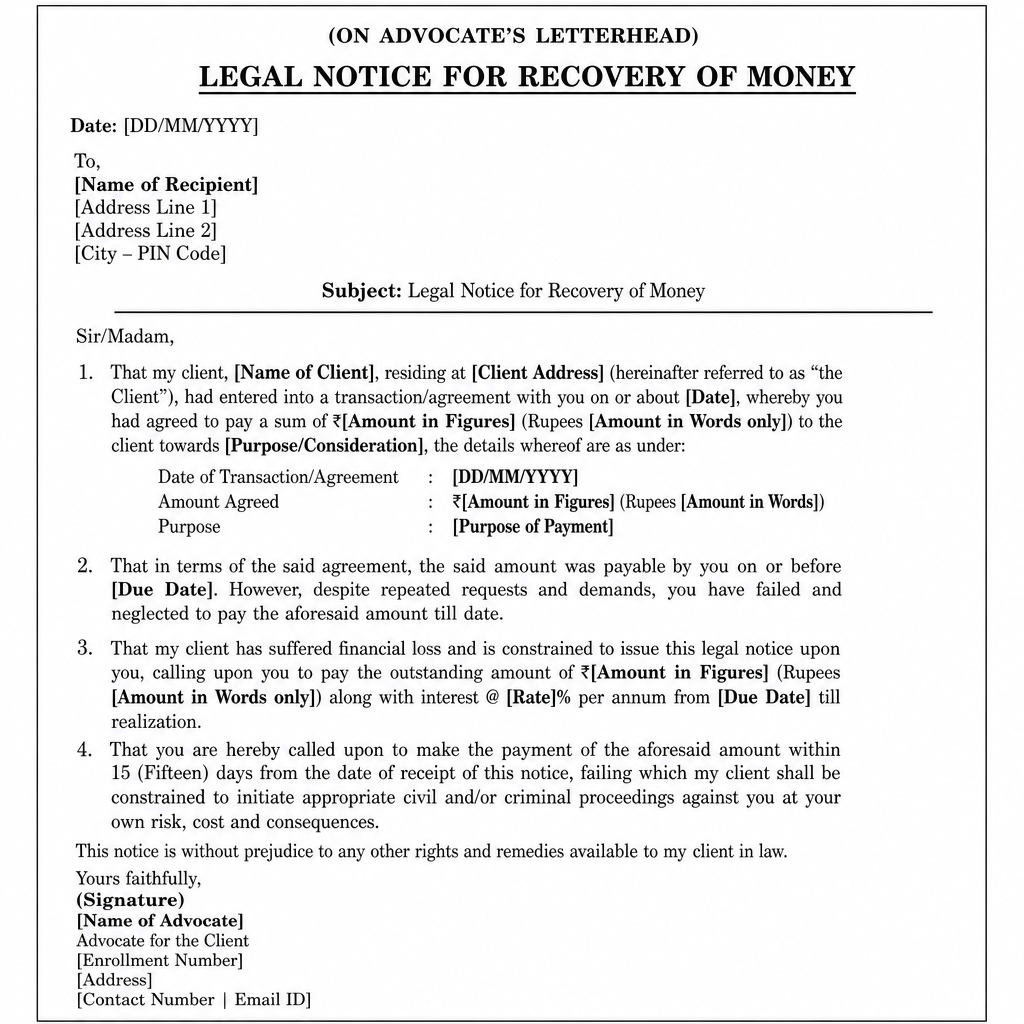
Table of Contents
Table of Contents
Swipe →Understanding Legal Notices for Recovery of Money
In the complex world of financial transactions, disputes over unpaid debts are not uncommon. When an individual or a business entity owes you money, and despite repeated reminders, the debtor fails to fulfill their obligation, drafting a legal notice becomes an essential step in the recovery process. A well-formulated legal notice serves both as a formal demand for payment and as a preliminary step before taking the matter to court. It is crucial to understand the intricacies involved in creating a legal notice for recovery of money format and the legal framework supporting it in India.
The legal notice acts as a wake-up call for the debtor, indicating that the creditor is serious about recovering the dues through legal channels if necessary. It is a prerequisite in many cases before initiating litigation, as it gives the debtor a final opportunity to settle the matter amicably. The notice must be crafted carefully, reflecting the legal basis for the claim, and should be persuasive enough to encourage payment without proceeding to the courtroom.
To effectively draft a legal notice, one must have a deep understanding of the applicable laws and regulations. In India, several acts come into play, such as the Indian Contract Act, 1872; the Negotiable Instruments Act, 1881; and specific state laws like the Payment of Wages Act and the Shops and Establishments Act. Each of these statutes provides different protections and obligations for creditors and debtors, impacting how a legal notice should be structured and delivered.
This comprehensive guide will explore the essential components of a legal notice for recovery of money, the step-by-step process of drafting and serving such a notice, and the potential outcomes. We will delve into the relevant legal provisions, required evidence, and case studies to offer a thorough understanding of the subject.
Key Elements of a Legal Notice for Recovery of Money
A legal notice for recovery of money must contain specific elements to be considered valid and effective. These elements ensure that the notice serves its primary purpose: prompting the debtor to clear their dues without necessitating further legal action. The critical components of a legal notice are as follows:
1. The Details of the Parties Involved
The legal notice must clearly state the names, addresses, and other pertinent details of both the creditor (the party sending the notice) and the debtor (the party receiving the notice). This section establishes the identities of the parties involved and provides a basis for the legal relationship between them. It's important to ensure that the details are accurate to avoid any discrepancies that could invalidate the notice or weaken the case.
2. The Basis of the Claim
This section outlines the reason for the claim and the relationship between the parties that led to the debt. It includes the original agreement or contract, if applicable, and highlights the specific provisions that have been breached by the debtor. This element serves to substantiate the creditor's claim and forms the foundation of the legal notice.
3. The Amount Due
A legal notice must specify the exact amount due, including any interest or penalties, if applicable. This amount should be clearly itemized to avoid any confusion on the debtor's part. Providing a detailed breakdown of the dues helps to reinforce the legitimacy and seriousness of the claim.
4. The Time Frame for Payment
The notice should specify a reasonable time frame within which the debtor is expected to respond or settle the dues. Typically, a period of 15 to 30 days is provided for the debtor to comply with the notice. This period offers the debtor a fair chance to make the payment or negotiate a settlement, thus avoiding further legal proceedings.
5. Legal Consequences of Non-compliance
The notice must clearly state the legal actions that will be taken if the debtor fails to comply with the demands within the stipulated time frame. These actions might include filing a lawsuit or initiating arbitration proceedings. Clearly outlining the consequences underscores the seriousness of the situation and may encourage the debtor to settle the dues promptly.
6. Signature and Verification
The notice should be duly signed by the creditor or their legal representative. It is advisable to have the notice drafted and verified by a qualified legal professional to ensure all legal requirements are met and to strengthen the notice’s enforceability in court.
Step-by-Step Guide to Drafting a Legal Notice for Recovery of Money
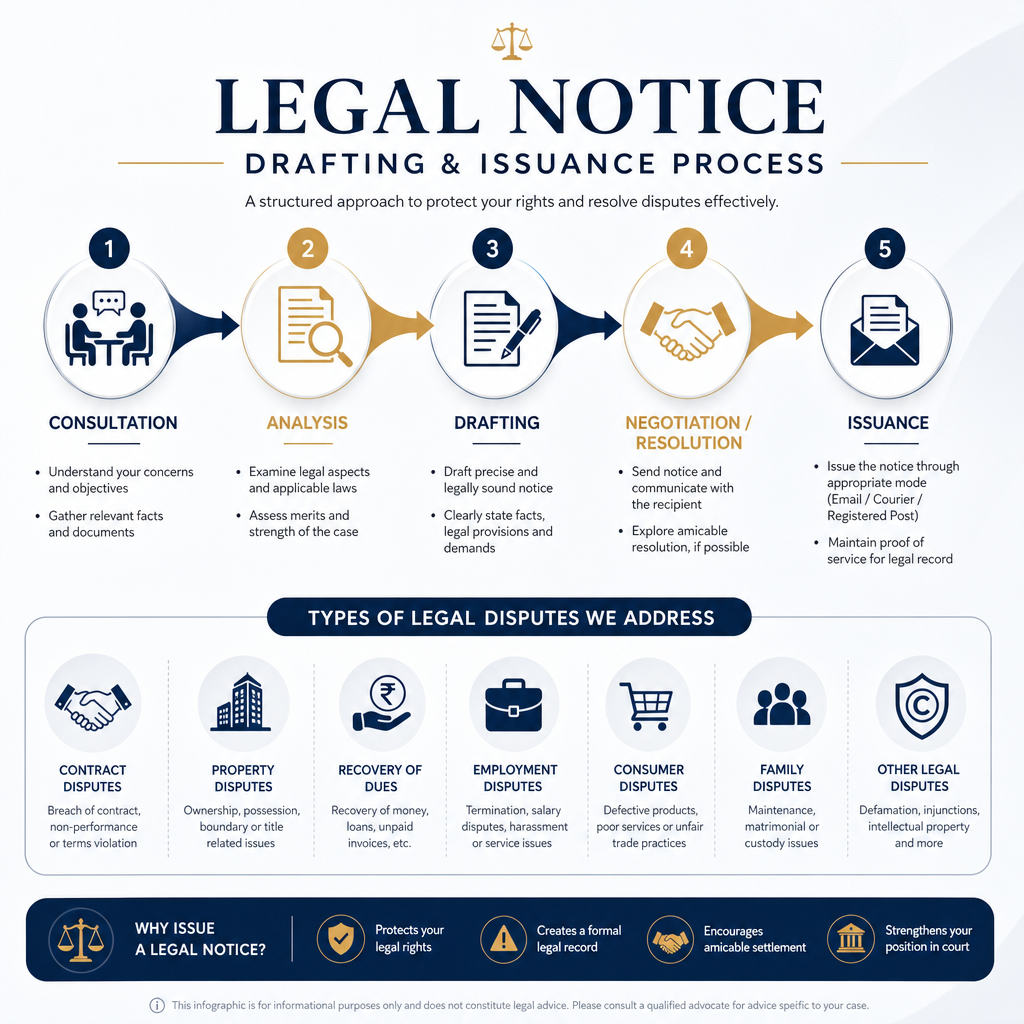
Drafting a legal notice requires careful attention to detail and a structured approach to ensure it meets all legal requirements. Here is a step-by-step guide to creating an effective legal notice for recovery of money format:
Step 1: Gather Evidence
Before drafting the notice, compile all necessary evidence supporting your claim. This may include contracts, invoices, correspondence, and any relevant communications between the parties. Documenting these items establishes the basis for your claim and will be instrumental in any subsequent legal proceedings.
Maintaining an organized file of all these documents is crucial. They serve as proof of the debtor's obligation and the efforts made by the creditor to recover the dues amicably. In some cases, third-party professionals like auditors or financial experts may assist in validating the financial transactions involved.
Step 2: Consult Legal Professionals
While it's possible to draft a legal notice independently, seeking assistance from a legal professional is highly recommended. Lawyers specializing in debt recovery will have the expertise to draft a notice that is not only legally sound but also strategically effective. They can ensure that the notice aligns with the specific legal provisions relevant to your case.
Legal professionals can provide valuable insights into the debtor’s potential defenses and advise on the best approach to take. They can also assist in identifying any additional legal remedies available under relevant acts like the Payment of Wages Act or the Negotiable Instruments Act.
Step 3: Draft the Notice
Begin drafting the notice by including all key elements discussed earlier. The language should be formal and concise, clearly stating the facts and demands. Avoid using overly aggressive language, which can be counterproductive or reduce the chances of amicable settlement.
The notice should be divided into sections, each addressing specific aspects of the claim, such as the parties involved, the basis of the claim, and the legal consequences of non-compliance. Each section should be clearly labeled for easy reference.
Step 4: Review and Revise
Once the draft is complete, review it thoroughly to ensure accuracy and completeness. Check for any factual errors or omissions that could weaken your claim. Revise the language if necessary to enhance clarity and effectiveness.
It’s beneficial to have a colleague or another legal professional review the notice as well. A second pair of eyes may catch errors or suggest improvements that could strengthen your position.
Step 5: Serve the Notice
After finalizing the notice, serve it to the debtor via a reliable method that provides a record of receipt, such as registered post with acknowledgment due or a courier service. This evidence of delivery is crucial if the case proceeds to court, as it proves the debtor received the notice and was given an opportunity to respond.
Ensure that a copy of the notice and the proof of delivery is preserved carefully. In the digital age, maintaining electronic records can also be prudent, particularly if the correspondence extends to email communications.
Statutory Recovery Metrics & Resolution Benchmark
Disputes resolved via formal statutory legal demand notices.
Average statutory compliance response timeline.
Mandatory refund of statutory levies under Indian Acts.
Interest compensation claimable under MSME & NI Acts.
Legal Framework Governing Debt Recovery in India
Several statutes govern the recovery of debts in India, providing legal remedies and protections for creditors. Understanding these laws is crucial for drafting a compliant and enforceable legal notice. Below are some of the key legal provisions relevant to the recovery of money:
Indian Contract Act, 1872
The Indian Contract Act is the cornerstone of contractual obligations and liabilities in India. It defines the framework within which parties enter into contracts and the consequences of breach. Under this Act, a contract becomes enforceable when there is an offer, acceptance, consideration, and intent to create legal obligations.
When drafting a legal notice for recovery of money, referencing the specific contractual provisions breached by the debtor is essential. The notice must establish the existence of a valid contract and the debtor's failure to fulfill their obligations.
Negotiable Instruments Act, 1881
The Negotiable Instruments Act deals with instruments like cheques, bills of exchange, and promissory notes, which are commonly used in business transactions. Section 138 of this Act criminalizes the dishonor of a cheque due to insufficient funds, making it a powerful tool for creditors attempting to recover money owed.
If the debt involves a dishonored cheque, the legal notice must comply with the provisions of this Act, including stipulating a 15-day period for the debtor to make the payment. Failure to comply can lead to criminal proceedings against the debtor, in addition to civil recovery actions.
Payment of Wages Act and Shops and Establishments Act
The Payment of Wages Act governs the timely disbursement of wages to employees, while the Shops and Establishments Act regulates the conditions of employment in various establishments. These acts become relevant when the debt involves unpaid wages or dues from an employment context.
Legal notices for recovery of salary or employment dues must adhere to these statutes, ensuring that all regulatory requirements are met. These acts provide specific timeframes and employer obligations, which should be reflected in the legal notice.
Evidence Required for Recovery of Money Cases
Evidence plays a critical role in the recovery of money cases, both in strengthening the legal notice and in court proceedings. The following types of evidence are commonly required:
Documentary Evidence
Contracts and Agreements: Clearly establish the legal relationship and obligations.
Invoices and Bills: Demonstrate the amount owed and the basis of the claim.
Bank Statements: Show transactions and any dishonored payments.
Correspondence: Emails, letters, and messages that show attempts to recover the debt.
Oral Evidence
Testimonies from witnesses who can corroborate the facts of the case may also be necessary. These could include employees, business partners, or financial advisors who have firsthand knowledge of the transactions.
Expert Evidence
In complex cases, expert witnesses like accountants or financial analysts may be engaged to provide insights into the financial aspects of the case, such as proving discrepancies or validating calculations of interest and penalties.
Case Studies on Recovery of Money Using Legal Notices
Case studies provide valuable insights into how legal notices can effectively lead to the recovery of money. Here are a few illustrative examples:
Case Study 1: Recovery of Employment Dues
In a landmark case involving a multinational corporation, an employee who was wrongfully terminated without the settlement of their dues issued a legal notice. By clearly referencing the Payment of Wages Act and other employment agreements, the employee successfully compelled the corporation to settle the outstanding dues, avoiding costly litigation.
Case Study 2: Cheque Bounce Dispute
A small-scale entrepreneur faced repeated cheque bounces from a client. By issuing a legal notice under the Negotiable Instruments Act, the entrepreneur was able to leverage the threat of criminal proceedings to recover the dues swiftly. The case highlights the power of structured legal notices in financial disputes.
Case Study 3: Vendor Payment Recovery
A vendor supplying raw materials to a manufacturing firm faced delayed payments. After several unsuccessful attempts to resolve the issue amicably, the vendor issued a legal notice referencing both the contractual agreement and the Shops and Establishments Act. The firm, recognizing the potential legal consequences, settled the dues promptly.
Conclusion
Drafting a legal notice for recovery of money is a critical step in the debt recovery process, requiring a thorough understanding of the applicable legal framework and a strategic approach. By carefully constructing a notice that meets all legal requirements and effectively communicates the creditor’s demands, it is often possible to achieve a resolution without resorting to litigation. The structured approach outlined in this guide, along with an awareness of the relevant legal statutes, can significantly enhance the prospects of successful debt recovery.
For more information and professional assistance on recovery of money, visit Legal Recovery. Our experts at Legal Recovery Services are ready to assist you with your legal needs.
Popular Searches & Related Topics

Legal Recovery is India's trusted consumer protection and legal tech platform. We specialize in holding corporations accountable for unfair trade practices, deceptive marketing, and commercial fraud. With over 15,000 customers counselled, our mission is to provide fast, out-of-court resolutions by connecting you with top-tier panel advocates for immediate legal action.
Client Reviews
"The guide was incredibly detailed and helped me understand the legal process. I was able to recover my dues efficiently."
Rohit Sharma
"I appreciated the step-by-step approach. The legal notice format provided was clear and effective in resolving my issue."
Priya Singh
"This guide demystified the legal process for me. The detailed explanation of laws and procedures was invaluable."
Sanjay Patel
"The case studies were particularly helpful in understanding real-world applications. I highly recommend this guide for anyone dealing with unpaid debts."
Kavita Mehta
"An excellent resource for drafting legal notices. The insights on legal consequences were particularly useful in my case."
Arjun Kapoor
Frequently Asked Questions
Related Articles
About Author
Team LegalRecovery
View ProfileTeam LegalRecovery is a dedicated team of legal and financial professionals specializing in loan settlement, banking disputes, debt relief, and corporate compliance. We are committed to helping clients achieve debt freedom and business stability through expert strategic advisory.
Connect on LinkedInNeed Legal Help?
Get expert advice on loan settlement, banking disputes and debt relief.
Start Recovery NowRequest Callback