Lawyer Assistance for Recovery of Rent Security Deposit
How a Lawyer Can Help You Send a Legal Notice for Rent Deposit Recovery

Table of Contents
Table of Contents
Swipe →Tenant Protections and Legal Limitations on Unreasonable Landlord Security Deposit Deductions
Security deposits serve as a financial safeguard for landlords across India, ensuring that they have some form of financial compensation for potential property damage or unpaid rent. However, this system can sometimes lead to disputes, especially when landlords refuse to return the deposit without valid reasons. Legal frameworks in India provide significant protections for tenants against unreasonable deductions or withholding of security deposits. This article delves into the procedural and legal facets of recovering a security deposit with the help of a lawyer, including sending a legal notice for recovery.
The Importance of a Lawyer in Security Deposit Disputes
Engaging a lawyer can significantly bolster your position when dealing with security deposit disputes. A lawyer can offer valuable insights into the legal provisions and frameworks that protect tenants' rights. They are adept at navigating the complexities of the Transfer of Property Act, 1882, which governs rental agreements and tenant-landlord relationships in India.
One of the primary roles of a lawyer in these situations is to assess the terms and conditions of your rental agreement. This document often outlines the conditions under which a security deposit may or may not be withheld. A lawyer can help ascertain whether the landlord's reasons for withholding your deposit align with the agreement and the prevailing legal standards.
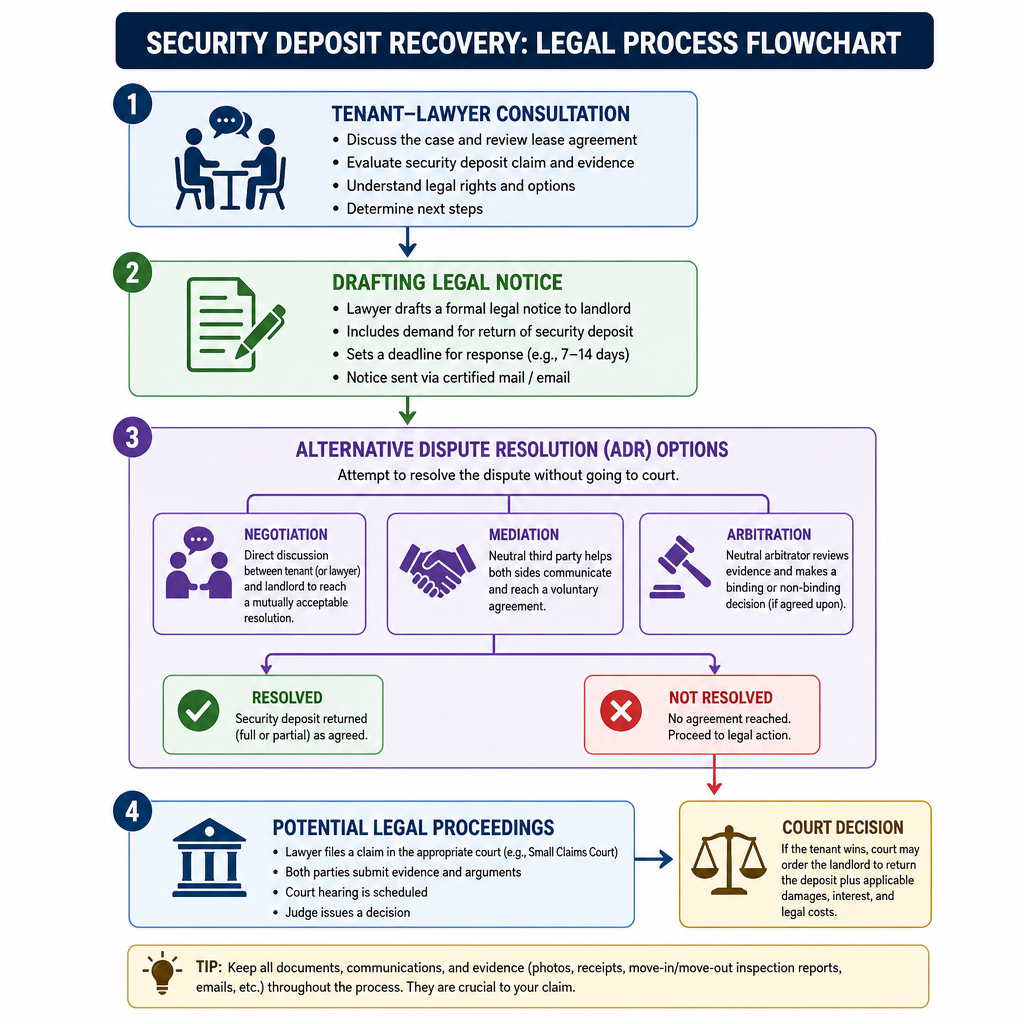
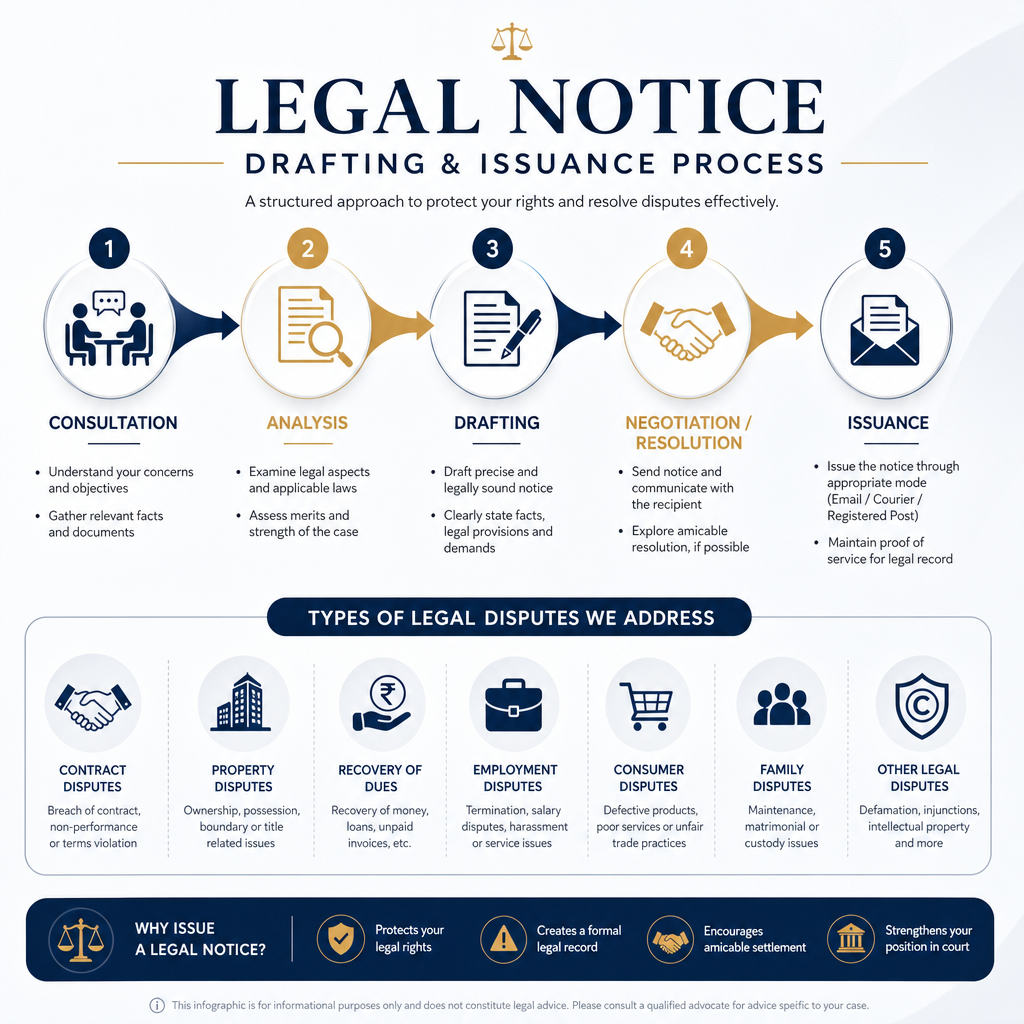
Moreover, lawyers possess the expertise to draft a legally sound notice that articulates the tenant's demand for the return of their security deposit. This notice serves as an official communication to the landlord, outlining the legal repercussions of non-compliance. Sending a legal notice often acts as a potent tool, compelling landlords to fulfill their obligations under the agreement to avoid potential litigation.
In addition to drafting and sending legal notices, lawyers can represent tenants in negotiations, mediations, or arbitration proceedings. These methods often lead to a quicker and more amicable resolution compared to lengthy court battles. By leveraging a lawyer's negotiation skills, tenants can often secure a favorable outcome without resorting to litigation.
Drafting a Legal Notice for Security Deposit Recovery
Drafting a legal notice is a critical aspect of the recovery process. This document must be comprehensive, clearly explaining the tenant's demands and the legal basis for those demands. A well-drafted notice typically includes the following elements:
Tenant and Landlord Details: The notice should begin with the full names and current addresses of both parties. It is crucial to establish their identities and roles in the rental agreement.
Details of the Rental Agreement: Include specifics about the rental agreement, such as the date of commencement, the term of the lease, and the amount of the security deposit paid.
Reason for the Notice: Clearly state that the notice is being issued due to the landlord's failure to return the security deposit. Detail any deductions made and why they are being contested.
Citations of Relevant Laws: Reference applicable laws and clauses from the rental agreement that support the tenant's right to recover the deposit. This adds a layer of authority to the notice.
Deadline for Compliance: Provide a reasonable time frame within which the landlord should comply with the request, typically 15 to 30 days.
Legal Consequences: Mention the potential legal consequences the landlord may face if they fail to comply, such as the initiation of legal proceedings.
By clearly articulating these points, a legal notice can effectively press the landlord to meet their contractual and legal obligations. For further guidance on drafting legal notices, you can refer to our comprehensive guide on legal notices.
Statutory Framework Governing Security Deposits
The statutory framework for security deposits is primarily governed by the Transfer of Property Act, 1882, and various state-specific tenancy laws. These regulations outline the rights and responsibilities of landlords and tenants concerning security deposits. Understanding these provisions can aid tenants in reinforcing their claims.
Under the Transfer of Property Act, a security deposit is considered an advance payment made by the tenant to the landlord. This deposit can only be utilized by the landlord to cover valid claims arising from the tenant's breach of agreement, such as unpaid rent or property damage. However, the Act does not specify the exact percentage or amount that can be withheld, often leading to disputes.
State-specific tenancy laws provide additional guidelines. For instance, in Maharashtra, the Maharashtra Rent Control Act, 1999, stipulates that the security deposit should not exceed the amount of rent for three months. Similarly, the Delhi Rent Control Act imposes limitations on the use of security deposits. Typically, these laws require that the deposit be returned within a specified period after the tenant vacates the premises.
Tenants should be aware of these laws and use them to contest any unreasonable withholding of deposits. With a lawyer's assistance, tenants can effectively leverage these legal provisions to strengthen their case. More details on the statutory limits and timelines for security deposit refunds can be found in our resource about security deposits and rental recoveries.
Visual Dispute Resolution & Recovery Framework
Evidence and Documentation Required for Recovery
In any legal dispute, evidence plays a critical role in determining the outcome. For security deposit recovery, tenants must gather pertinent documents that support their claim. The following table outlines the necessary documentation and their relevance to the case:
Document | Description | Relevance |
|---|---|---|
Rental Agreement | The signed agreement between tenant and landlord. | Defines the terms of the security deposit and obligations of both parties. |
Security Deposit Receipt | Receipt proving the amount paid as a security deposit. | Validates the amount claimed by the tenant. |
Correspondence Records | Emails, text messages, or letters exchanged with the landlord. | Show attempts to resolve the matter amicably. |
Property Condition Photographs | Photos of the property before and after tenancy. | Evidence of the property's state to contest unwarranted damage claims. |
State Tenancy Law Copies | Relevant sections of state-specific tenancy laws. | Support the legal basis for recovering the deposit. |
Compiling these documents can significantly bolster a tenant's case. A detailed understanding of the necessary evidence can be critical, especially if the dispute escalates to a legal proceeding. For more insights on the evidence required, you can explore our guide on what evidence should be collected for recovery.
Alternative Dispute Resolution Mechanisms
Before resorting to litigation, tenants should consider alternative dispute resolution (ADR) mechanisms such as negotiation, mediation, and arbitration. ADR offers a less adversarial approach and can often lead to more expedient and satisfactory outcomes.
Mediation involves a neutral third party who facilitates discussions between the tenant and landlord, helping both parties reach a mutually acceptable resolution. This process is typically informal and allows for creative solutions that legal proceedings might not offer.
Arbitration, on the other hand, is more formal than mediation but still less so than court litigation. An arbitrator acts similarly to a judge, hearing both sides and making a binding decision based on the merits of the case and applicable laws. The arbitration process is often quicker and more cost-effective than traditional court proceedings.
Engaging in these alternative dispute resolution mechanisms can often preserve the relationship between the tenant and landlord, which might be beneficial if both parties are open to future dealings. A lawyer can provide invaluable assistance in selecting and pursuing the most appropriate ADR method for your specific circumstances.
For more information on resolving disputes outside of court, consider reading our article on how to recover money without going to court in India.
Initiating Legal Proceedings for Deposit Recovery
If alternative dispute resolution fails, tenants may need to initiate legal proceedings to recover their security deposit. The process begins with filing a civil suit in the Small Causes Court or Rent Control Tribunal, depending on jurisdiction and the specifics of the case. It is essential to act within the statutory period, as specified by the Limitation Act, 1963, which typically allows up to three years to file a suit for recovery of money.
Filing a lawsuit requires meticulous preparation of all relevant documents and evidence, as outlined in the table above. The complaint must clearly state the facts of the case, the tenant's demands, and the legal basis for those demands. A lawyer with expertise in property disputes is crucial in crafting a compelling argument and navigating the legal process.
During the proceedings, both parties will present their evidence and arguments. The court will evaluate whether the landlord's deductions were justified and whether the tenant is entitled to a refund of the security deposit. The presence of a lawyer can significantly influence the outcome, ensuring that the tenant's rights are effectively represented.
If the court rules in favor of the tenant, it may order the landlord to refund the deposit along with interest, as stipulated by the applicable laws. For more information on the process of filing a suit, you can refer to our resource on filing a civil suit for recovery of money in India.
Legal Protections Against Unjust Landlord Actions
India's legal framework provides several protections for tenants against unjust actions by landlords. These protections are enshrined in various laws aimed at preventing exploitation and ensuring fair treatment in rental agreements.
The Consumer Protection Act, 2019, offers recourse for tenants who can be considered consumers of rental services. Under this Act, tenants may file a complaint against landlords for unfair trade practices or deficiency in service. This approach can be particularly effective if the landlord's actions can be categorized as service-related issues, such as failing to return a security deposit without cause.
Moreover, the Indian Contract Act, 1872, reinforces the principle that contracts (including rental agreements) should be honored as per their terms. Any breach, such as illegally withholding a deposit, can be grounds for legal action. This Act empowers tenants to seek legal remedies when confronted with contract violations.
It is advisable for tenants to be aware of these legal protections and seek guidance from a lawyer to ensure comprehensive protection of their rights. For further reading on tenant rights and legal protections, consider visiting our page on legal recovery of money from landlord issues.
Conclusion: The Role of Legal Counsel in Ensuring Fairness
The recovery of a security deposit can be a daunting process fraught with legal complexities and procedural hurdles. Engaging a lawyer not only clarifies these complexities but also strengthens the tenant's position in any ensuing dispute. From drafting a precise legal notice to representing the tenant in negotiations or court, a lawyer's assistance is invaluable in ensuring a just resolution.
Legal counsel equips tenants with the knowledge and tools necessary to assert their rights against unfair practices by landlords. By understanding the legal framework and procedural nuances involved, tenants can effectively recover their security deposits and avoid the pitfalls of prolonged disputes. For more comprehensive insights into the recovery process and the legal support available, you can explore the resources on security deposits and rental recoveries.
If you find yourself in a similar situation, do not hesitate to seek professional legal advice to navigate the intricacies of security deposit recovery. Legal Recovery offers a range of services tailored to assist tenants in resolving such disputes amicably and efficiently. To learn more about how we can help, visit our service page or contact us directly.
Popular Searches & Related Topics

Legal Recovery is India's trusted consumer protection and legal tech platform. We specialize in holding corporations accountable for unfair trade practices, deceptive marketing, and commercial fraud. With over 15,000 customers counselled, our mission is to provide fast, out-of-court resolutions by connecting you with top-tier panel advocates for immediate legal action.
Client Reviews
"The legal assistance I received for recovering my security deposit was exceptional. The lawyer was thorough and guided me at every step, resulting in a quick resolution. Highly recommend this service!"
Rajesh Kumar
"I was stressed about my withheld deposit until I sought help from Legal Recovery. The lawyer's expertise in drafting a legal notice was pivotal in getting my full deposit back without going to court."
Anita Sharma
"Thanks to the skilled lawyer, I successfully reclaimed my deposit. They handled everything professionally, from legal notice drafting to negotiation. I couldn't be more satisfied!"
Vikram Patel
"Legal Recovery's service was impeccable. Their lawyers understood the nuances of my case and facilitated a swift recovery of my security deposit that I thought was lost."
Priya Mehta
"The process of recovering my deposit was made easy with the help of a knowledgeable lawyer who was always available for my queries. Their strategic approach was impressive."
Suresh Nair
Frequently Asked Questions
Related Articles

About Author
Team LegalRecovery
View ProfileTeam LegalRecovery is a dedicated team of legal and financial professionals specializing in loan settlement, banking disputes, debt relief, and corporate compliance. We are committed to helping clients achieve debt freedom and business stability through expert strategic advisory.
Connect on LinkedInNeed Legal Help?
Get expert advice on loan settlement, banking disputes and debt relief.
Start Recovery NowRequest Callback