Importance of Legal Notice When Your FNF is Not Being Paid
Understand why sending a legal notice is crucial for unpaid FNF claims.
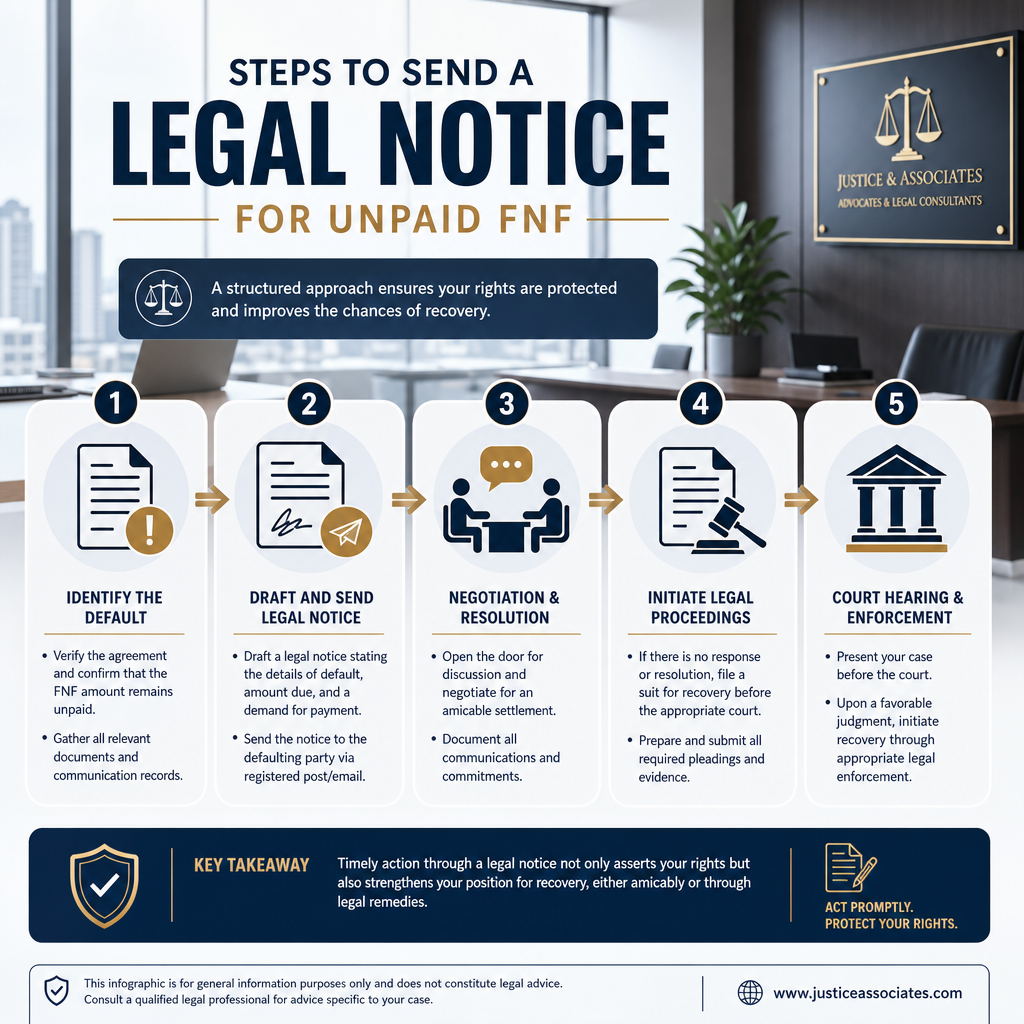
Table of Contents
Table of Contents
Swipe →The Critical Importance of Legal Notice When Your FNF is Not Being Paid: A Complete Guide to Recovering Your Dues
Leaving a job is a major career milestone, but the transition can quickly turn stressful if your former employer delays or refuses to clear your Full and Final (FNF) settlement. Whether you resigned voluntarily, completed a contract, or were laid off, receiving your hard-earned money is a fundamental legal right. Unfortunately, many corporate organizations, startups, and MSMEs delay these payments indefinitely, leaving ex-employees financially stranded and emotionally exhausted.
When follow-up emails, phone calls, and HR escalations yield nothing but empty promises, you must elevate your approach. This is where understanding the true importance of legal notice when your FNF is not being paid becomes your greatest asset. A formal legal notice acts as an official declaration of a dispute, shifting the dynamic from a casual internal HR issue to a serious legal matter. It sends a clear, legally backed signal to your ex-employer that you will not walk away from your rightful earnings.
For thousands of professionals across India, drafting and sending a structured legal demand is the ultimate turning point that forces stubborn management to clear outstanding balances. If you find yourself trapped in a continuous cycle of ignored follow-ups, this comprehensive guide will explain your legal rights, statutory timelines, and how leveraging professional platforms like Legal Recovery can help you reclaim what is rightfully yours without stepping into a courtroom.
Understanding Your Full and Final (FNF) Settlement: What Does It Include?
Before diving into the legal technicalities, it is essential to understand exactly what constitutes a Full and Final settlement. An FNF settlement is not just your last month's salary; it is a consolidated accounting of all financial obligations your employer owes you, balanced against any liabilities or assets you need to return.
Key Components of an FNF Settlement
A comprehensive FNF statement typically comprises several distinct components governed by various Indian labor laws:
Unpaid Salary: Your base pay, allowances, and incentives calculated up to your final working day.
Encashment of Leave: Payment for accumulated earned leaves or privilege leaves that were not utilized during your tenure, governed by the Factories Act, 1948, or state-specific Shops and Establishments Acts.
Gratuity: If you completed five or more consecutive years of service with the organization, you are legally entitled to gratuity under the Payment of Gratuity Act, 1972.
Statutory Bonus: Any outstanding annual bonus or performance-linked incentives outlined in your employment agreement or governed by the Payment of Bonus Act, 1965.
Notice Period Pay: If the company terminated your services abruptly without letting you serve your notice period, they are liable to pay you salary in lieu of that notice period.
Reimbursements: Outstanding travel claims, medical allowances, or business expenses incurred by you on behalf of the company.
Common Deductions to Watch For
Your employer has the right to deduct certain items from your FNF, but these must be transparent and reasonable:
Professional Tax (PT), Income Tax (TDS), and Provident Fund (PF) contributions.
Cost of non-returned company assets (laptops, access cards, mobile phones).
Notice period recovery (if you left without serving the mandatory notice period stipulated in your contract).
The Legal Timelines: When is an Employer Legally Obligated to Clear Your FNF?
A frequent tactic used by HR departments is delaying the FNF process by claiming it takes "45 to 90 working days" as per company policy. However, statutory laws override arbitrary internal company policies.
The New Wage Code Framework
Under the implementation guidelines of the New Wage Code in India, an employer is mandated to pay the full and final settlement of wages to a resigned, dismissed, or retrenched employee within two working days of their removal, dismissal, retrenchment, or resignation.
Even under older frameworks like the Payment of Wages Act, 1936, and various state Shops and Establishments Acts, companies are expected to settle accounts within a reasonable window, typically not exceeding 30 days from the last working day.
Settlement Component | Statutory Governing Act | Maximum Legally Permissible Timeline |
Final Wages/Salary | New Wage Code / Payment of Wages Act | Within 2 working days of termination/resignation |
Gratuity | Payment of Gratuity Act, 1972 | Within 30 days from the date it becomes payable |
Leave Encashment | State Shops & Establishments Act | Along with the final monthly salary cycle |
If your employer exceeds these timelines without providing a legitimate, contractually backed justification, they are operating outside the law. Recognizing this timeline highlights the absolute importance of legal notice when your FNF is not being paid, as it calls out these precise statutory violations.
The Importance of Legal Notice When Your FNF is Not Being Paid
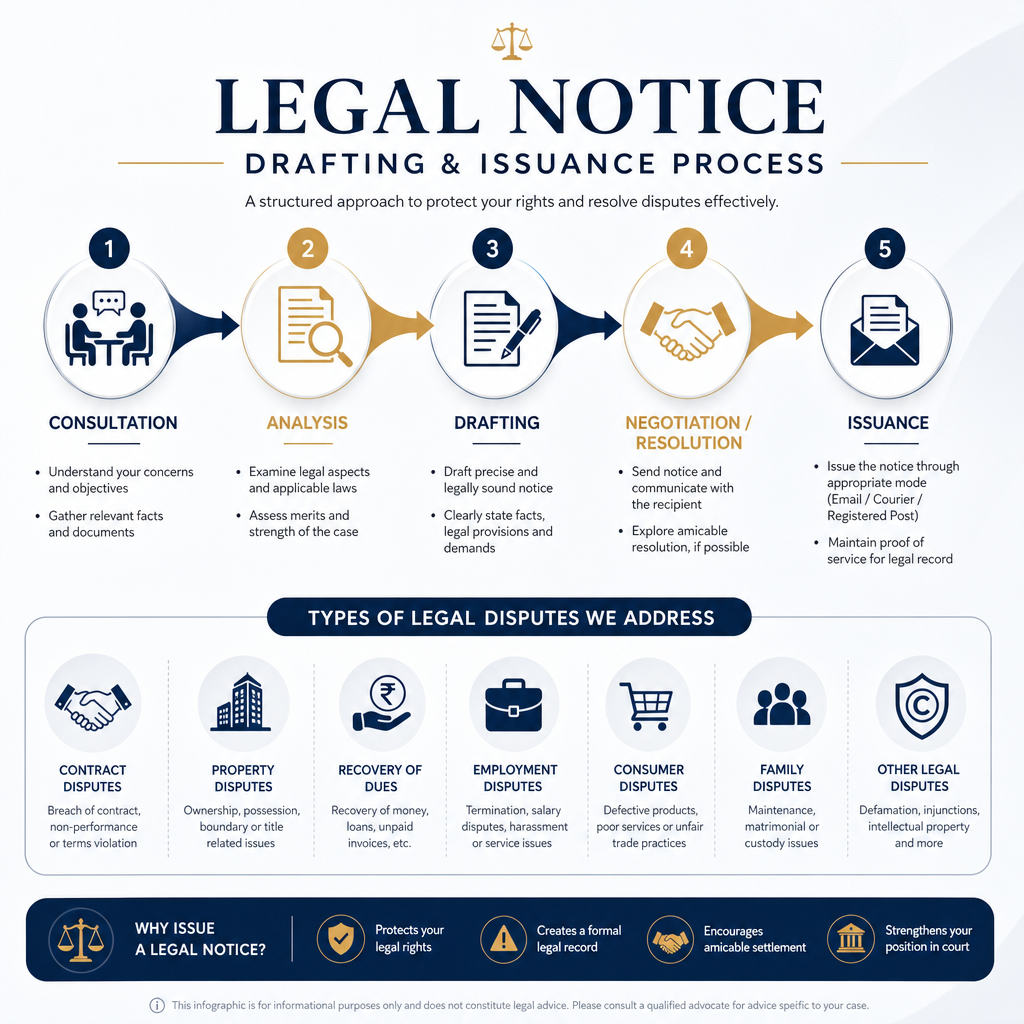
When corporate negotiations break down, a legal notice bridges the gap between passive grievance and active legal remedy. It is a formal communication drafted by an advocate on behalf of an aggrieved employee. Here is why sending a legal notice is highly effective:
1. It Establishes a Formal Legal Record
A legal notice is an undeniable piece of documentary evidence. It formally registers the date, time, and nature of your financial grievance. Should the matter escalate to a labor court or civil court, this document proves to the judge that you acted in good faith, exhausted internal remedies, and gave the employer a fair opportunity to resolve the issue amicably.
2. It Breaches Corporate Complacency
Large corporations and fast-paced startups receive hundreds of employee grievance emails daily, which are often routed to junior HR executives and ignored. However, a legal notice printed on an established law firm’s letterhead is delivered directly to the company’s legal department, directors, and promoters. It immediately escalates the matter from an HR pile to a boardroom liability.
3. It Instills the Fear of Litigation and Reputational Damage
No business wants to spend time, money, and resources fighting an open-and-shut wage recovery case in court. Furthermore, corporations are highly protective of their market reputation. Publicly visible labor disputes hamper a company’s ability to attract top talent and can spook investors. The threat of impending legal action usually forces management to prioritize your payment.
4. It Accelerates Out-of-Court Settlements
The vast majority of corporate FNF disputes are settled within 15 to 30 days of serving a legal notice. Employers realize that paying the outstanding FNF amount is significantly cheaper and less troublesome than hiring corporate defense lawyers to contest a valid claim.
To understand how seamlessly this process can be executed from the comfort of your home, explore how professional recovery mechanisms operate by visiting Legal Recovery How It Works.
Step-by-Step Guide: What to Do Before and After Sending a Legal Notice
Reclaiming your unpaid FNF requires a structured, strategic approach. Taking impulsive steps can weaken your legal standing, whereas following a methodical process maximizes your chances of a swift recovery.
Step 1: Secure Your Documentary Evidence
Before initiating any legal process, download, screenshot, and print all vital employment records. Once you leave a company, your corporate email ID and Slack access are revoked, making it incredibly difficult to gather proof later. Ensure you possess:
Your signed Employment Contract/Offer Letter and Appraisals.
Monthly Salary Slips (at least the last 6 months).
Resignation Acceptance Email or Termination Letter confirming your last working day.
Relieving Letter and Experience Certificate (if issued).
Detailed printouts of all follow-up emails sent to HR and Finance regarding your FNF status.
Bank account statements showing the non-credit of the FNF amount.
Step 2: Send a Final Demand Email (The Pre-Notice Phase)
Draft a final, polite but firm email to the HR Head, CFO, and CEO. State clearly that your FNF is overdue based on statutory timelines, attach a breakdown of the calculation, and give them a final window of 7 working days to credit the amount. Mention explicitly that failure to do so will leave you with no option but to seek professional legal remedies.
Step 3: Draft and Issue the Formal Legal Notice
If the final demand email is ignored, it is time to deploy a legal notice. While you can technically write a demand letter yourself, a notice drafted by an expert legal professional carries immense weight. The notice must contain:
A chronological timeline of your employment history with the company.
The exact breakdown of the outstanding dues owed to you.
References to specific violations of employment contracts and Indian labor laws.
A mandatory compliance window (typically 15 days) for the employer to pay the money or reply to the notice.
Clear statements on the consequences of non-compliance, including claiming interest on the delayed amount (usually 12% to 18% per annum) and recovery of legal costs.
For professional assistance in drafting a water-tight, impactful demand, connect with specialized legal strategists via Legal Recovery Services.
Step 4: Tracking Response and Evaluation
Once the notice is sent via Registered AD (Acknowledgment Due) or Speed Post alongside an official electronic copy, track its delivery status. The employer has three options upon receipt:
Compliance: They reach out, share the FNF calculation sheet, and credit your account immediately.
Counter-Notice/Reply: Their legal counsel responds with counterclaims (e.g., alleging loss of company property or breach of data policies). A professional advocate can easily dismantle groundless counterclaims.
Silence: If they completely ignore the notice, it signifies bad faith, preparing your path for direct judicial intervention.
Legal Recourses: What if the Employer Ignores the Legal Notice?
If your ex-employer remains stubborn even after receiving a formal demand, several strong judicial pathways exist under Indian jurisprudence to recover your money.
1. Approach the Labor Commissioner
For employees falling under the definition of a "workman" as per Section 2(s) of the Industrial Disputes Act, 1947, a complaint can be filed before the local Labor Commissioner. The commissioner acts as a conciliator, summoning both parties to resolve the non-payment issue. If conciliation fails, the matter is referred to the Labor Court.
2. Filing a Suit under the Shops and Establishments Act
Most commercial establishments, IT firms, consulting companies, and retail businesses fall under their respective state's Shops and Establishments Act. You can file a formal complaint with the local area Inspector appointed under this Act, who has the power to penalize employers for withholding employee wages.
3. Summary Suits under Order 37 of the CPC
For managerial, executive, and administrative supervisory staff who might not fit into the traditional definition of a "workman," a Summary Civil Suit can be filed under Order XXXVII of the Code of Civil Procedure, 1908. Summary suits are expedited legal proceedings specifically meant for the recovery of liquidated debts arising out of written contracts (such as an employment agreement). The employer cannot defend themselves in a summary suit unless they prove to the court that they have a genuinely meritorious defense.
4. Criminal Breach of Trust (Section 406 / Section 420 of IPC / BNS)
If an employer has deducted Provident Fund (PF) or Tax (TDS) from your salary but failed to deposit it with the government, or if they have dishonestly misappropriated money earmarked for your wages, a criminal complaint for Criminal Breach of Trust can be filed.
To learn more about the broader landscape of employment recovery, check out the dedicated section on Legal Recovery of Salary and Employment Dues.
Statutory Recovery Metrics & Resolution Benchmark
Disputes resolved via formal statutory legal demand notices.
Average statutory compliance response timeline.
Mandatory refund of statutory levies under Indian Acts.
Interest compensation claimable under MSME & NI Acts.
Case References and Legal Precedents in FNF Recovery
Indian courts have consistently held that an employee’s salary and statutory benefits are protected forms of property under Article 300A of the Constitution of India, and withholding them arbitrarily violates fundamental rights.
Notable Precedents:
Kapila Hingorani vs. State of Bihar (2003): The Supreme Court of India strongly declared that the right to receive wages is a fundamental facet of the Right to Life guaranteed under Article 21 of the Constitution. Corporate entities cannot hide behind financial crunches or internal operational disputes to deny basic salary payments to their workers.
Suresh Kumar vs. Union of India: Various High Courts have reiterated that terminal benefits like gratuity and leave encashment are not bounties or charitable gifts distributed at the sweet will of an employer. They are deferred wages earned through years of hard labor, and any delay in their disbursement attracts interest penalties.
These rulings underscore why realizing the importance of legal notice when your FNF is not being paid is vital. Presenting these legally binding judicial precedents in your notice leaves your employer's legal cell with zero room to maneuver.
Common Myths vs. Realities of FNF Recovery
When individuals contemplate sending a legal notice, fear and misinformation often hold them back. Let's separate myth from reality.
Myth 1: "Sending a legal notice will blackball me from future jobs or ruin my background verification (BGV)."
Reality: Seeking your legally earned dues through lawful means is a professional right, not a crime. Background verification companies check if you have committed financial fraud, absconded, or falsified certificates. Demanding your outstanding salary via an official legal channel does not render you "unemployable." In fact, it showcases that you understand your professional worth and compliance boundaries.
Myth 2: "Going to court takes 20 years; it's not worth the money."
Reality: While full-scale civil litigations can be lengthy, an FNF recovery rarely goes deep into litigation. A professionally drafted legal notice resolves up to 85% of cases within 2 to 3 weeks without needing court visits. Even if escalated, labor court summary proceedings for unpaid wages are vastly expedited compared to standard property disputes.
Myth 3: "My company manual says FNF takes 90 days, so I can't do anything before that."
Reality: Company HR manuals are sub-legal internal documents. They cannot supersede national and state laws such as the Payment of Wages Act or the New Wage Code, which mandate swift settlement of dues.
Beyond Employment: Exploring Other Dimensions of Financial Recovery
While withholding FNF settlements is a rampant issue, individuals frequently encounter financial exploitation across various aspects of daily life. The strategic principles of serving an official legal notice apply across multiple consumer and civil sectors:
Consumer Protections: Paid for a product or service that was never delivered, or denied a legitimate refund by an e-commerce platform? Assert your rights via Legal Recovery Refunds and Consumer Complaints.
Real Estate and Landlord Disputes: Landlords refusing to return security deposits after you vacate a property is a major issue for urban professionals. Resolve this by checking Legal Recovery Security Deposits and Rental Recoveries.
The Gig Economy: Freelancers, independent contractors, and creative consultants routinely face delayed payments from clients. Establish robust professional boundaries with Legal Recovery of Freelancer and Client Payments.
Personal Matters: Lent cash to an acquaintance, colleague, or relative who is now avoiding your calls? Explore options via Legal Recovery of Money from a Friend.
Travel Disruption: Getting stuck with flight cancellations or ghosted by travel booking portals can be fixed through Legal Recovery Airline and Travel Recoveries.
B2B Transactions: Small businesses and vendors struggling to clear outstanding business bills can opt for Legal Recovery Vendor and Invoice Recoveries.
Real Estate Allocations: Delays in property possession by builders can be challenged effectively through Legal Recovery Property and Builder Disputes.
Why Choose Legal Recovery for Your FNF Settlement?
Navigating the nuances of labor regulations while coping with the financial stress of an unpaid FNF can be overwhelming. Standard law firms often charge exorbitant consultation fees just to understand your case, followed by variable costs for writing single notices.
Legal Recovery revolutionizes this space by offering a tech-driven, affordable, highly automated yet personalized ecosystem designed to handle financial and employment recoveries seamlessly.
The Legal Recovery Advantage:
Tailored Expert Drafting: Your notice isn’t generated from a generic internet template. Experienced labor advocates customize it to reference your contract details, state laws, and precise calculation data.
Transparent pricing: No hidden retainers or surprising court fees. You pay a clear upfront cost for the services you select.
End-to-End Tracking: From digital dispatch to physical tracking of Registered Speed Post, you receive updates at every step.
High Success Rates: By maintaining a stellar institutional reputation, corporate legal teams recognize notices from our affiliate networks and act swiftly to settle claims out of court.
To learn more about the team's credentials and mission to democratize legal aid, visit Legal Recovery About Us.
Sample Framework of a Legal Notice for Unpaid FNF
To give you a visual idea of how structured and professional this document is, here is an structural outline of a typical legal notice issued for unpaid FNF dues:
Plaintext
LEGAL NOTICE / DEMAND LETTER

To,
The Board of Directors / Head of HR,
[Company Name Private Limited]
[Corporate Office Address]

Subject: Legal Notice for the immediate release of overdue Full & Final (FNF) settlement, unpaid salary, and statutory dues of ex-employee [Your Name].

Under instructions from our client [Your Name], residing at [Your Address], we hereby serve you with the following legal notice:

1. Our client was appointed as [Designation] at your esteemed organization via an Offer Letter dated [Date], discharging their duties with utmost diligence.
2. Our client tendered their formal resignation on [Resignation Date], which was duly accepted by management, establishing [Last Working Day Date] as the final working day.
3. Despite multiple follow-ups dated [List Dates], your organization has unlawfully withheld the FNF settlement amounting to INR [Amount], violating the Payment of Wages Act and contractual terms.
4. Take notice that you are hereby required to credit the total sum of INR [Amount] along with an accrued interest of 12% per annum into our client's bank account within 15 days of receiving this notice.
5. Failure to comply will compel our client to initiate appropriate legal actions, including civil and criminal recourse before competent courts, entirely at your company’s cost and risk.

Yours sincerely,
[Advocate Signature / Seal]
Conclusion: Take Control of Your Hard-Earned Money Today
Allowing an employer to indefinitely withhold your Full and Final settlement is not just a financial loss; it is a compromise on your professional rights. Corporate entities rely heavily on employee passivity, assuming that most professionals will simply walk away rather than deal with legal complications.
Understanding the importance of legal notice when your FNF is not being paid empowers you to shatter this assumption. A formal, expert notice alters the power dynamic completely, compelling management to pull your file out of the drawer and process your transaction immediately to avoid litigation.
Do not let corporate apathy stall your career progression or jeopardize your financial security. If your ex-employer has ignored your emails and delayed your dues past legal limits, it is time to act decisively. Let our specialized network handle the complexities of drafting, tracking, and executing your legal demand safely and swiftly.
Take the definitive first step toward recovering what is yours. Visit the Legal Recovery Blog for deeper legal insights, or head straight to our portal to launch your recovery action today by reaching out through Legal Recovery Contact Us.
Frequently Asked Questions (FAQs)
FAQs
1. What is the importance of legal notice when your FNF is not being paid?
A legal notice is important because it converts an unresolved internal HR issue into a formal legal dispute. It provides an official documentary record for courts, bypasses regular HR buffers to alert company owners, and indicates that you are ready to pursue statutory legal actions if your dues are not settled immediately.
2. Can a company withhold my FNF if I do not complete my notice period?
An employer can only deduct an amount equivalent to the salary of the unserved notice period days if specified in your employment contract. They cannot completely withhold your entire FNF settlement, leave encashment, or gratuity earned over past years based on this single factor.
3. How long should I wait before sending a legal notice for an unpaid FNF?
Legally, under the New Wage Code guidelines, settlements should be finalized within two working days. Pragmatically, if your company has not cleared your FNF within 30 days of your last working day and continues to ignore your official follow-up emails, you should send a legal notice without further delay.
4. Will sending a legal notice cause issues for my background verification (BGV) in future jobs?
No. Serving a legal notice is a legitimate exercise of your legal right to claim your own earned money. Background verification agencies check for behavioral misconduct, criminal acts, absconding, or fake profiles; demanding unpaid salary through formal channels does not negatively impact your BGV scorecard.
5. Can I charge interest on my delayed FNF settlement?
Yes. When issuing a legal notice for unpaid FNF, your advocate can legally demand interest on the withheld amount. Courts routinely award interest ranging from 12% to 18% per annum for delayed salary and statutory benefits like gratuity.
6. What happens if my employer completely ignores the legal notice?
If an employer ignores the notice after the 15-day compliance window expires, it establishes their bad faith. You can use the copy of the notice and its delivery proof to file an official complaint with the Labor Commissioner, approach the state Shops and Establishments Inspector, or initiate a expedited Summary Suit in civil court.
7. Is an email follow-up considered a valid legal notice?
No, a regular email follow-up to HR is not a legal notice. A legal notice is a specific document structured according to legal conventions, typically drafted and sent by a legal professional or advocate on their official letterhead via registered post or speed post, outlining explicit statutory violations.
8. Can I send a legal notice to a startup or small business for unpaid FNF?
Yes, labor laws and contractual laws apply equally to startups, MSMEs, and multi-national corporations. If a startup fails to clear your FNF settlement due to lack of funding or management issues, a legal notice can be served directly to its co-founders and directors.
9. Can I claim gratuity as part of my FNF settlement?
If you have completed five years of continuous service with an employer, you are legally entitled to receive gratuity under the Payment of Gratuity Act, 1972. This amount must be computed and added to your final full and final settlement statement.
10. How can Legal Recovery help me in getting my unpaid FNF cleared?
Legal Recovery simplifies the entire process by matching you with skilled legal advocates who draft a customized, robust legal notice highlighting your statutory rights. We manage the end-to-end dispatch and tracking of the notice at a transparent, upfront cost, ensuring your employer takes immediate action without you undergoing courtroom hassles.
Popular Searches & Related Topics

Legal Recovery is India's trusted consumer protection and legal tech platform. We specialize in holding corporations accountable for unfair trade practices, deceptive marketing, and commercial fraud. With over 15,000 customers counselled, our mission is to provide fast, out-of-court resolutions by connecting you with top-tier panel advocates for immediate legal action.
Client Reviews
"The legal recovery service was exceptional in resolving my FNF dispute. Their professionalism and expertise in drafting a legal notice made the process seamless, and I received my dues promptly."
Rahul Sharma
"I was impressed by the thorough approach taken by the team in handling my case. They ensured my legal notice was well-structured, leading to a quick resolution without the need for litigation."
Priya Nair
"Thanks to the expert advice and legal notice drafted by Legal Recovery, I was able to recover my unpaid FNF dues from my former employer. Highly recommend their services!"
Ajay Mehta
"The guidance provided by Legal Recovery was invaluable. Their legal notice was effective, and the matter was settled amicably. Their service is both professional and efficient."
Sneha Kapoor
"Legal Recovery's expertise in employment law is unmatched. They handled my FNF issue with utmost care, ensuring I received my dues without any further complications."
Vikram Joshi
Frequently Asked Questions
Related Articles

About Author
Team LegalRecovery
View ProfileTeam LegalRecovery is a dedicated team of legal and financial professionals specializing in loan settlement, banking disputes, debt relief, and corporate compliance. We are committed to helping clients achieve debt freedom and business stability through expert strategic advisory.
Connect on LinkedInNeed Legal Help?
Get expert advice on loan settlement, banking disputes and debt relief.
Start Recovery NowRequest Callback