How to Recover Money Owed: A Legal Guide
Discover effective legal strategies for recovering debt.

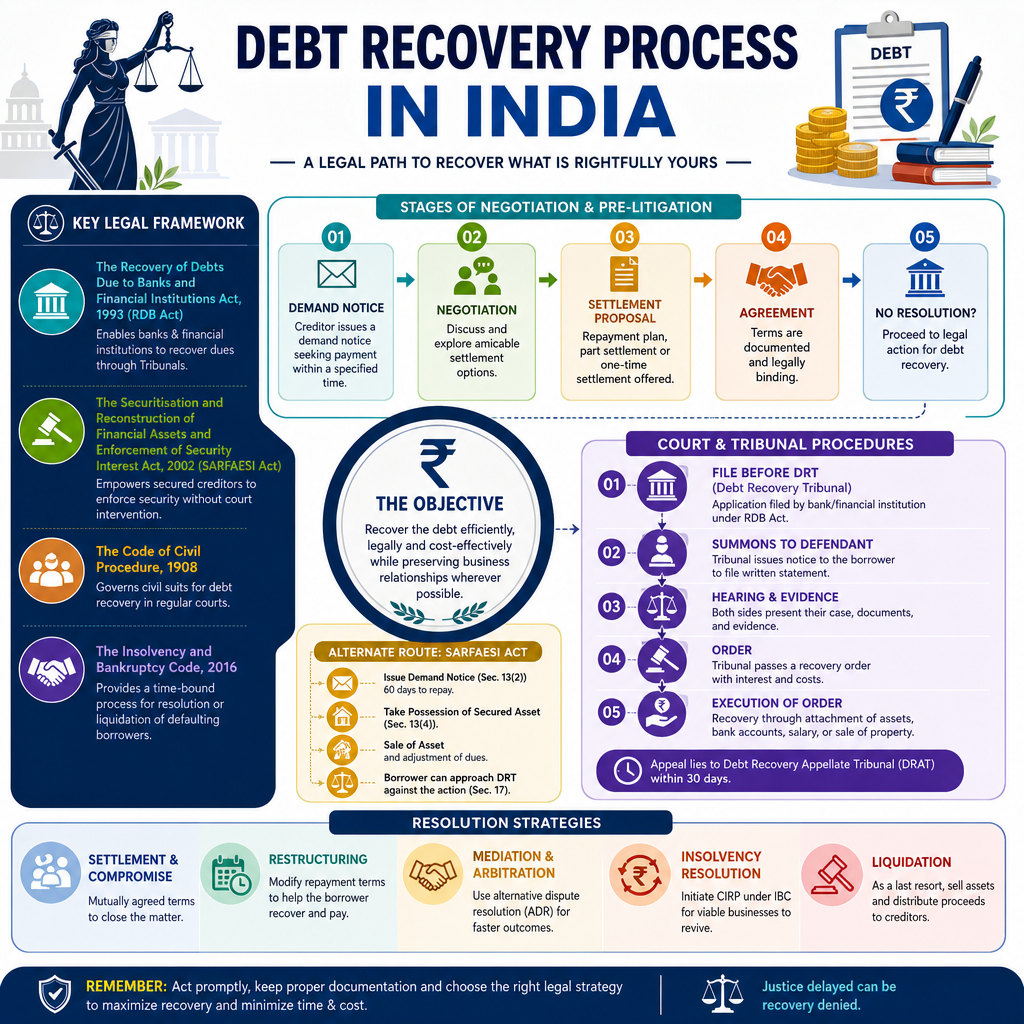
Table of Contents
Table of Contents
Swipe →How to Recover Money Owed: The Definitive Legal Guide to Restitution under Indian Law
Lending your hard-earned funds or offering valuable services with the expectation of timely compensation is the bedrock of commercial and personal transactions. However, when a borrower stops taking your calls, a corporate client repeatedly delays settling invoices, or an employer leaves you empty-handed after months of hard work, that underlying financial trust shatters. Facing a non-compliant debtor is a deeply stressful experience that can stall business expansion, cripple personal savings, and cause considerable emotional distress. If you find yourself holding an unfulfilled balance, it is essential to learn how to recover money owed using organized, legally binding strategies.
Many individuals and small business owners delay taking action because they fear the perceived complexity, high costs, and lengthy timelines of the Indian judicial system. They often rely on informal reminders, text messages, and stressful personal negotiations that yield little result. The truth is that Indian civil and criminal laws provide robust, time-sensitive frameworks specifically designed to protect creditors and enforce financial accountability. Understanding how to recover money owed is about knowing your formal legal rights, recognizing when to transition from friendly follow-ups to statutory ultimatums, and preserving the critical evidence required to make your claim completely unassailable.
Navigating financial recovery requires careful precision, structural documentation, and tactical leverage. At Legal Recovery, we are dedicated to simplifying this process, bridging the gap between aggrieved creditors and elite legal tools. Whether you are dealing with unpaid corporate contracts, an unreturned personal loan, or withheld rental deposits, this comprehensive guide lays out the exact operational steps, statutory routes, and legal pathways necessary to recover your dues and protect your financial well-being.
Evaluating Your Legal Standing: The Critical Starting Point
Before invoking statutory provisions or filing formal complaints, you must evaluate the factual foundation of your financial claim. Knowing how to recover money owed begins with analyzing your supporting evidence and checking key statutory timelines.
[Gather Evidence] ──> [Verify Limitation Window] ──> [Assess Debtor's Solvency] ──> [Select Legal Strategy]
1. Documenting the Evidentiary Trail
Under the Indian Evidence Act, 1872, a financial claim requires credible proof of a transaction. While a formal, heavily stamped agreement provides the strongest legal foundation, secondary digital footprints are entirely valid. You must organize and preserve:
Signed contracts, purchase orders, promissory notes, or work fulfillment certificates.
Bank account transfer statements, digital wallet receipts, and formal ledgers.
Written admissions of debt found in emails, text messages, or WhatsApp conversations.
2. Monitoring the Strict Clock of Limitation
Time is the most critical asset in financial debt recovery. Under the Indian Limitation Act, 1963, the standard statutory window to file a civil lawsuit for money recovery is exactly three years from the date the debt became due or the default occurred. If you allow this three-year period to lapse without initiating formal legal action, your claim becomes "time-barred," meaning courts will no longer enforce your right to collect the money.
How do you legally recover money owed to you in India?
To legally recover money owed, you should follow a structured three-step process: First, compile all transaction evidence (such as bank transfers, invoices, or chat records). Second, have an advocate draft and send a formal, multi-stage legal notice demanding payment within 15 to 30 days. Third, if the debtor remains non-compliant, file a summary suit under Order 37 of the CPC, approach the MSME Council (if registered), or initiate criminal proceedings for cheating if fraud can be proven.
Strategic Blueprints: How to Recover Money Owed Across Different Sectors
Financial default takes many shapes depending on the underlying relationship between the creditor and the debtor. A generic approach rarely delivers optimal results; instead, your strategy must adapt to the specific context of the dispute.
1. Resolving Commercial B2B Defaults and Invoice Disputes
For micro, small, and medium enterprises (MSMEs), unrecovered payments from corporate clients can severely choke operational cash flow. When a business client accepts your goods or services but refuses to settle the associated invoices, you can leverage specialized statutory frameworks:
The MSMED Act, 2006: If your business is registered under the MSME portal, corporate buyers are legally mandated to clear your invoices within 45 days of acceptance. Delayed payments automatically attract compounding interest at three times the benchmark bank rate specified by the Reserve Bank of India (RBI).
Order 37 of the Civil Procedure Code (CPC): This provision allows businesses to file a "Summary Suit." Unlike traditional civil trials that drag on for years, a summary suit limits the defendant's ability to stall, often leading to a rapid judgment if they lack a valid defense.
To implement a scalable, corporate-grade strategy for your business liquidity, explore our targeted pathways for vendor and invoice recoveries.
2. Navigating Personal Loans to Friends and Family Members
Lending emergency financial support to an acquaintance or family member is a kind gesture, but trying to get it back often turns into an uncomfortable, frustrating situation. Individuals frequently overlook formal paperwork in these personal contexts, making recovery seem difficult.
However, if you have a clear bank transfer history or messages where the borrower acknowledges the debt, you hold a valid legal claim. A formal, objective pre-litigation legal notice acts as a vital tool. It moves the conversation out of the personal realm, signaling that you are handling the default professionally. To manage these delicate personal disputes effectively, check our tailored guide on the recovery of money from a friend.
3. Securing Freelancer Fees and Independent Contractor Payments
The modern gig economy runs on trust, but independent software developers, graphic creators, digital marketers, and copywriters frequently face clients who vanish after taking delivery of project milestones. Because independent contractors operate outside traditional labor laws, their strategy relies on enforcement under the Indian Contract Act, 1872.
┌────────────────────────────────────────────────────────┐
│               FREELANCE RECOVERY STEPS                 │
├────────────────────────────────────────────────────────┤
│ 1. Halt active asset access or hosting permissions     │
│ 2. Compile brief, clear project scope approvals        │
│ 3. Issue a formal breach of contract demand notice     │
└────────────────────────────────────────────────────────┘
An expert legal notice outlining a breach of contract, commercial liability, and potential intellectual property violations quickly gets the attention of non-compliant clients. Protect your creative earnings from bad-faith actors via our specialized service for the recovery of freelancer and client payments.
4. Reclaiming Unpaid Corporate Salaries and Employee Benefits
Corporate professionals often face situations where employers unlawfully withhold their final settlement, earned bonuses, or gratuity payments following a resignation or sudden termination. If you find yourself in this position, you can seek recourse through formal labor laws:
The Payment of Wages Act, 1936: Mandates that employers must clear all earned wages within specific timelines following an employee's departure.
The Industrial Disputes Act, 1947: Provides a structured path to approach regional Labor Commissioners to contest unfair financial withholding.
When you are already facing financial stress due to missed wages, paying heavy upfront retainers to a traditional law firm adds to the burden. To learn how we challenge corporate wage defaults affordably, visit our portal on the recovery of salary and employment dues.
5. Managing Real Estate Disputes and Builder Defaults
For the majority of Indian citizens, buying a home is their single largest lifetime financial investment. Facing endless possession delays, unexpected structural changes, or developers refusing to honor a refund request is an incredibly painful experience.
When trying to figure out how to recover money owed by an influential, well-funded real estate developer, you must invoke the protection of the Real Estate (Regulation and Development) Act, 2016 (RERA) or approach Consumer Disputes Redressal Commissions. A formal notice grounding your claims within RERA standards adds immense legal weight to your case. Mount a robust strategy against non-compliant builders by reviewing our detailed guide on property and builder disputes.
6. Resolving Landlord-Tenant Security Deposit Conflicts
Landlords across major urban hubs frequently cook up imaginary maintenance, painting, and deep-cleaning wear-and-tear deductions as an excuse to illegally retain your substantial security deposit when your lease ends. Paying a local lawyer a massive fee to recover a modest deposit makes little economic sense. Our digital-first approach restores this balance for tenants, using targeted statutory demand letters to secure a rapid return of your deposit. Protect your tenant rights by exploring our streamlined portal for security deposits and rental recoveries.
7. Enforcing Consumer Rights and Travel Industry Refunds
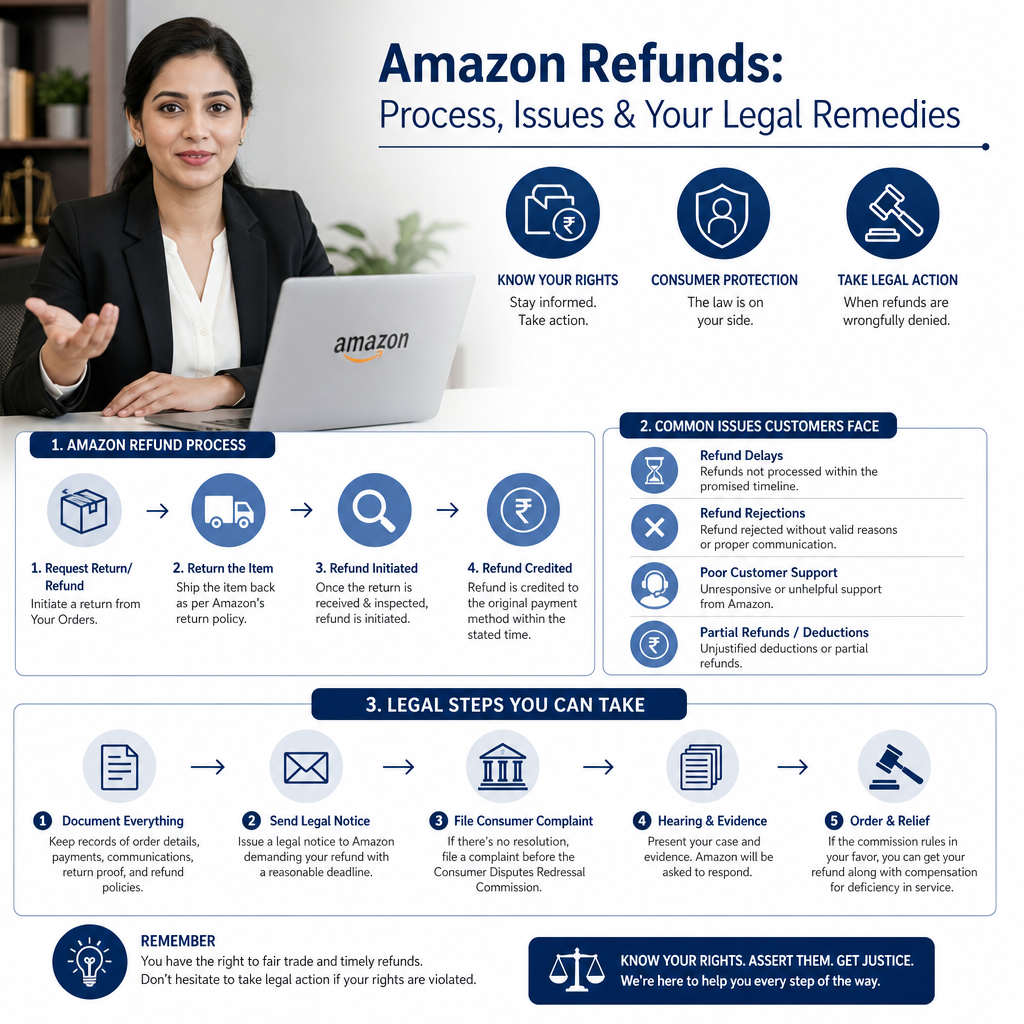
Whether you are dealing with an insurance company rejecting a legitimate medical claim, an e-commerce platform delivering defective goods and denying a return, or an airline trapping your booking funds in an involuntary credit shell, consumers face corporate apathy daily. The Consumer Protection Act, 2019, provides a clear path to enforce accountability. A formal legal notice is a required preliminary step before filing an official complaint with the Consumer Forum. Hold corporations accountable by utilizing our specialized frameworks for refunds and consumer complaints alongside our specific path for airline and travel recoveries.
Core Operational Remedies: The Legal Avenues for Recovery
When informal negotiations fail, you must transition to formal legal remedies. Indian law provides distinct civil and criminal paths to enforce financial restitution.
Legal Option | Primary Statutory Framework | Typical Processing Timeline | Core Strategic Advantage | Suitable For |
Legal Notice | Section 138 of NI Act / Section 73 of Contract Act | 15 to 30 Days | Highly cost-effective; settles up to 70% of disputes out of court by creating immediate psychological pressure. | All financial defaults and debt disputes. |
Summary Suit | Order 37 of the Civil Procedure Code (CPC) | 6 to 12 Months | Fast-tracked civil remedy; bars the debtor from using frivolous defense strategies to stall. | Invoices, bills, promissory notes, and written contracts. |
MSME Arbitration | Section 18 of the MSMED Act, 2006 | 6 to 18 Months | Mandates compounding interest at three times the RBI bank rate; shifts the power balance to the vendor. | Registered MSME businesses facing B2B defaults. |
Criminal Complaint | Section 318 of the Bharatiya Nyaya Sanhita (BNS) | 12+ Months | Explores criminal liability for cheating and fraud; targets the personal liberty of the debtor. | Willful fraud, dishonoured instruments, and scams. |
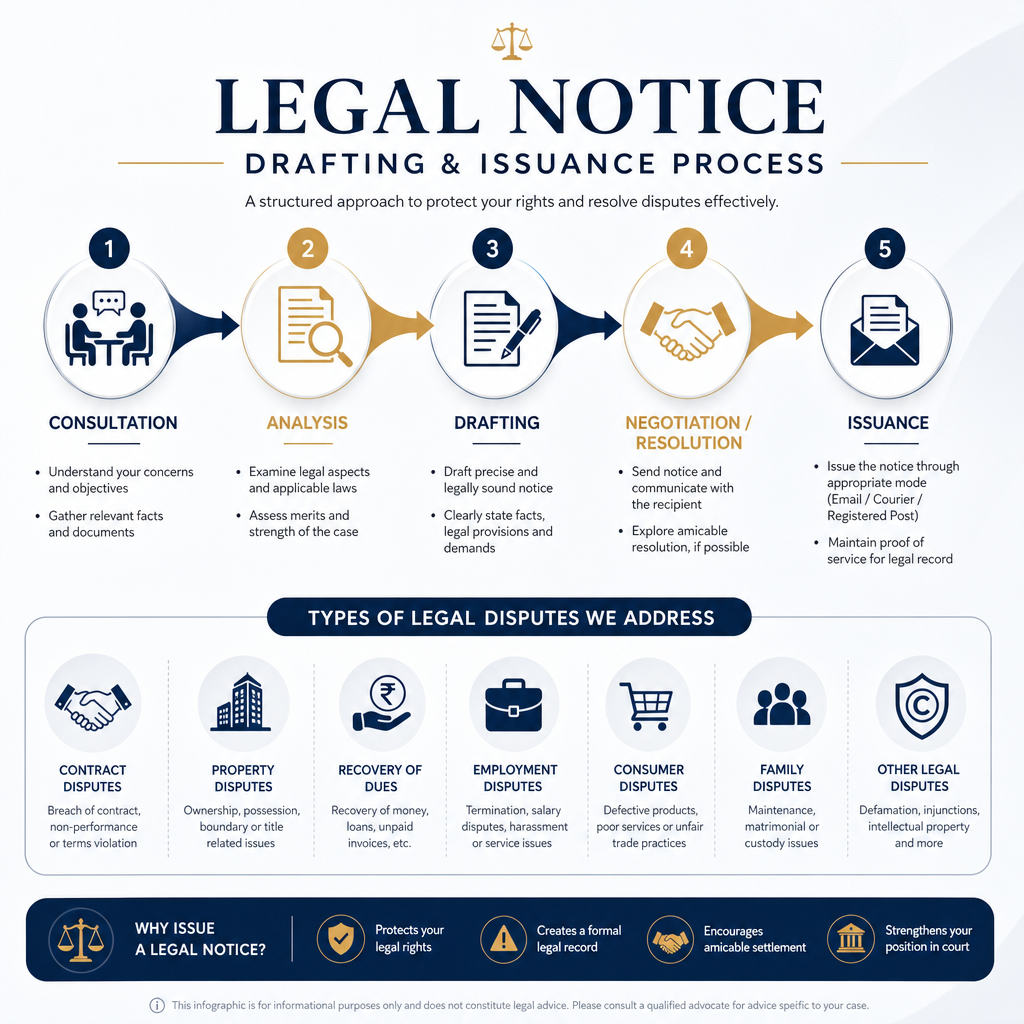
Step-by-Step Flow: The Recovery Journey with Legal Recovery
Navigating financial collection through our platform is completely transparent and friction-free. You do not have to travel to crowded offices, deal with dense legal jargon, or worry about unpredictable hourly billing.
1.Digital Onboarding and Evidence Submission:Time: 10-15 Minutes.
You select your specific recovery profile and securely upload your basic supporting evidence (such as bank receipts, invoices, or chat screenshots) directly onto our portal. To see this intuitive system in action, learn more about how it works.
2.Expert Jurisdictional Review and Drafting:Time: 24-48 Hours.
Our experienced corporate and civil legal professionals analyze your case parameters, calculate the exact timelines, and craft your custom notices, ensuring every applicable section of Indian law is cited correctly.
3.Multi-Channel Notice Dispatch:Immediate Action.
The finalized notices are formally issued on an official advocate letterhead and sent out simultaneously via physical tracking-verified posts and digital channels to ensure prompt delivery.
4.Escalation & Ongoing Legal Management:Strategic Follow-Through.
We track the statutory delivery windows closely. If the debtor remains non-compliant after the notice period expires, our platform helps you transition smoothly to formal court filings or tribunal representations.
Statutory Recovery Metrics & Resolution Benchmark
Disputes resolved via formal statutory legal demand notices.
Average statutory compliance response timeline.
Mandatory refund of statutory levies under Indian Acts.
Interest compensation claimable under MSME & NI Acts.
Practical Tips to Maximize Your Recovery Success Rate
If you want to ensure your financial collection strategy yields the highest possible return on investment, keep these actionable tips in mind:
Act Early to Avoid Insolvency Risks: Waiting too long to collect a debt increases the risk that the debtor might face insolvency, exit the market, or declare bankruptcy, leaving you among a long list of unsecured creditors.
Maintain an Objective, Written Record: Avoid engaging in angry, emotional phone calls. Keep your communication professional, documented, and traceable via email and text, as these records serve as vital secondary evidence in court.
Always Verify Delivery Coordinates: Ensure you provide your legal team with the most accurate, active physical address or registered corporate office location of the debtor to guarantee legally binding delivery.
To learn more about our core philosophy, technological integrations, and consumer advocacy programs, feel free to visit our About page. To explore the full spectrum of legal recovery avenues we manage daily, browse through our comprehensive Services guide.
Landmark Judgments: Shaping Modern Financial Recovery
The higher judiciary in India continually updates legal frameworks to accelerate debt recovery and curb stalling tactics used by bad-faith debtors.
1. Strengthening Order 37 Summary Proceedings
In the landmark case of B.L. Kashyap & Sons Ltd. v. JMS Steels & Power Corp., the Supreme Court of India clarified the rules for granting a defendant leave to defend in an Order 37 summary suit. The Court ruled that unless the debtor presents a substantial, completely bona fide defense, the judge should not grant unconditional permission to contest the case. This judgment is an invaluable tool for creditors, as it stops debtors from using hollow, fabricated arguments to drag out a clear collection case.
2. Protecting MSME Creditors Against Corporate Delays
In Silpi Industries v. Kerala State Road Transport Corporation, the Supreme Court reinforced the overarching authority of the MSMED Act, 2006. The Court confirmed that the statutory right of an MSME vendor to claim compounding interest at three times the RBI rate takes precedence over any conflicting clauses in a private corporate contract. This precedent gives small businesses immense leverage when issuing demand notices to large buyers.
Frequently Asked Questions (FAQs)
1. What is the absolute first step I should take when trying to learn how to recover money owed?
The very first step is to compile every piece of transaction evidence you possess, including bank statements, text acknowledgments, and invoices. Once your evidence is organized, have a specialized attorney issue a formal legal notice. This step sets an official statutory timeline and often resolves the dispute out of court without needing a trial.
2. Can I still recover a financial debt if I don't have a formal written agreement?
Yes, absolutely. While a signed contract provides the strongest documentary proof, the lack of one does not invalidate your claim. Under the Indian Evidence Act, you can establish the existence of a debt using secondary digital evidence. This includes bank transaction records, email threads, invoice histories, and WhatsApp conversations, which your advocate will use to build a robust demand.
3. What is the standard statutory limitation window to file a money recovery suit in India?
Under the Indian Limitation Act, 1963, you have a strict window of three years from the exact date the financial default or breach occurred to file a formal civil recovery suit. If you fail to initiate legal action within this three-year period, your debt becomes legally time-barred, meaning you permanently lose your right to enforce the claim in court.
4. What happens if a debtor completely ignores a formal legal notice?
If a debtor ignores a legal notice or refuses to comply within the specified notice period (typically 15 to 30 days), it establishes their deliberate non-compliance. Your advocate will use the delivered notice and proof of service as a primary exhibit to file a summary suit under Order 37 of the CPC or initiate appropriate criminal proceedings for cheating.
5. Can a debtor be arrested for failing to return a personal loan?
A simple failure to repay a loan is fundamentally a civil dispute, which does not result in immediate arrest. However, if it can be proven that the borrower had a deceptive intent right from the start—meaning they used falsified documents, lied about their assets, or planned to defraud you from day one—the matter moves into criminal territory under Section 318 of the BNS (cheating), which can lead to criminal arrest.
6. Why is an Order 37 Summary Suit preferred over a standard civil lawsuit?
A standard civil lawsuit can drag on for several years due to complex procedural stages and evidentiary requirements. In contrast, an Order 37 Summary Suit is a fast-tracked mechanism designed specifically for debt collection. It requires the defendant to obtain explicit permission from the judge to defend themselves, preventing them from using frivolous stalling tactics.
7. Can I claim the costs of my legal fees directly from the defaulting debtor?
Yes. It is a standard legal practice to include a specific clause within your demand notice stating that the recipient is liable to cover your legal costs alongside the core principal debt. If your case moves into formal court litigation, judges routinely award reasonable legal expenses and interest to the successful creditor.
8. What should I do if a debtor issues a bounced cheque as a repayment attempt?
If a debtor issues a cheque that subsequently bounces due to insufficient funds, you gain access to a powerful criminal remedy under Section 138 of the Negotiable Instruments Act. You must send a specific statutory notice within 30 days of the dishonour. If they fail to pay within 15 days, you can file a criminal complaint that carries a penalty of up to two years of imprisonment.
9. How does Legal Recovery ensure its services remain affordable?
Traditional law firms carry heavy operational overheads, including expensive physical offices and manual document creation. We leverage secure digital onboarding, cloud-based validation tools, and specialized legal workflows to remove these systemic inefficiencies. This allows us to offer transparent, fixed-fee solutions without compromising on accuracy or quality.
Take Decisive Action to Protect Your Financial Rights Today
Securing your financial interests is about taking swift, precise, and organized action. Allowing a default to linger without a formal response rarely leads to a resolution; instead, it risks running out the clock on your statutory limitation windows. By issuing a legally sound notice, you assert your rights, protect your business cash flow, and establish a powerful position for rapid recovery.
Do not let stalling tactics or confusing legal procedures cost you your hard-earned savings. Partnering with a specialized platform ensures your strategy is handled with complete accuracy, closing the gaps that debtors use to escape their obligations.
To stay updated on changing civil laws, debt collection guidelines, and landmark court judgments in India, explore our collection of expert insights on the Legal Recovery Blog page. Take the first step toward a definitive resolution right now by scheduling a dedicated case consultation on our Contact page our legal experts are ready to protect what is rightfully yours.
Popular Searches & Related Topics

Legal Recovery is India's trusted consumer protection and legal tech platform. We specialize in holding corporations accountable for unfair trade practices, deceptive marketing, and commercial fraud. With over 15,000 customers counselled, our mission is to provide fast, out-of-court resolutions by connecting you with top-tier panel advocates for immediate legal action.
Client Reviews
"The legal recovery team provided excellent support, ensuring timely recovery of my unpaid dues. Highly recommended!"
Rohit Sharma
"Impressed with their professionalism and strategic approach to resolving my debt issues. Their knowledge of Indian laws is commendable."
Sneha Patel
"Legal Recovery's expertise in handling my case was evident. They navigated the complexities with ease and secured a favorable outcome."
Anjali Verma
"Their guidance through the legal process was invaluable. The team was thorough and responsive, making the debt recovery process seamless."
Rajiv Nair
"Thanks to their dedicated efforts, I was able to recover a significant amount from a defaulting client. Their service is truly top-notch!"
Kiran Gupta
Frequently Asked Questions
Related Articles
About Author
Anuj Anand Malik
View ProfileAnuj Anand Malik, Founder of AMA Legal Solutions, is a trusted advocate, loan settlement expert, legal advisor, and banking lawyer. With over a decade of experience in loan settlement, corporate law, financial disputes, and compliance, he leads a result-driven law firm based in India that helps individuals, startups, and businesses achieve legal and financial stability.
Connect on LinkedInNeed Legal Help?
Get expert advice on loan settlement, banking disputes and debt relief.
Start Recovery NowRequest Callback