Freelancer Payment Recovery Guide
Essential tips to recover unpaid freelance invoices efficiently.
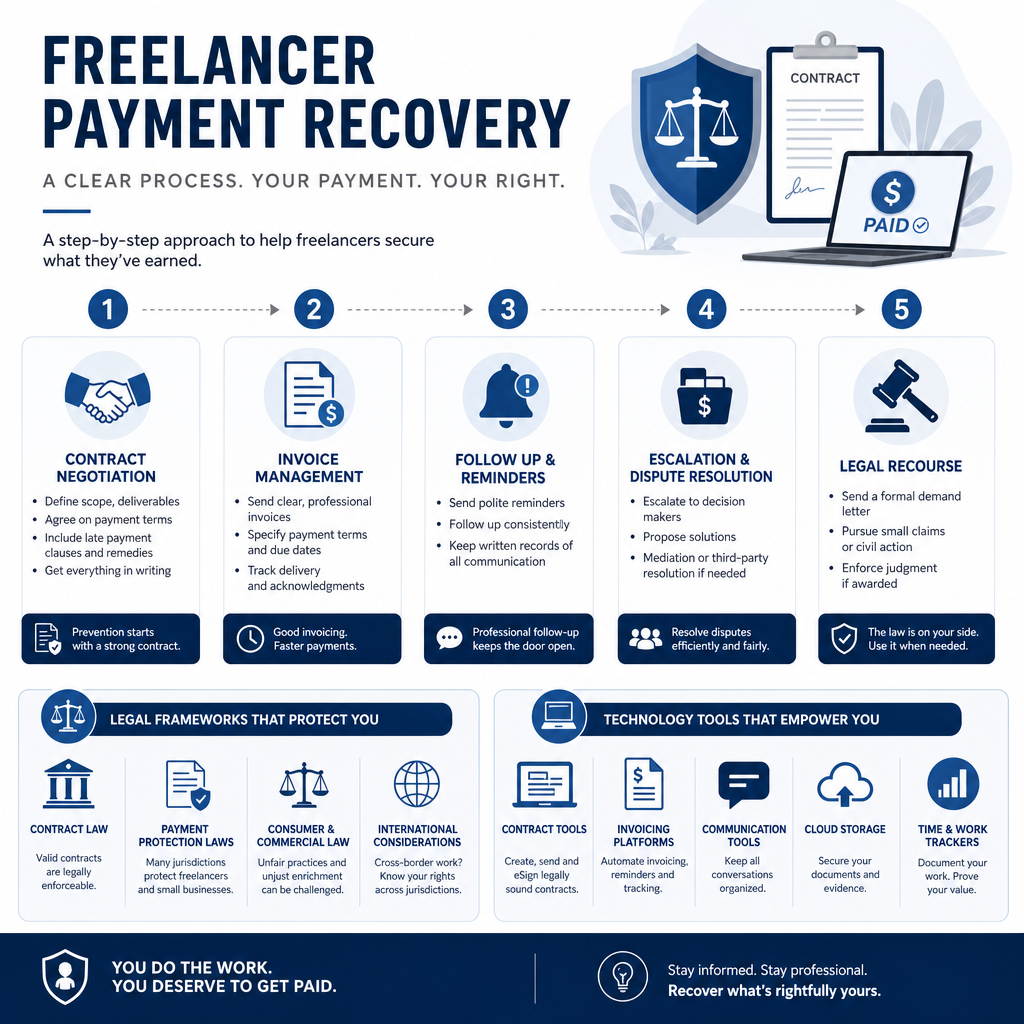
Table of Contents
Table of Contents
Swipe →Introduction to Freelancer Payment Recovery
In the dynamic landscape of the gig economy, freelancers are often applauded for their flexibility and autonomy. However, financial stability can be a pressing concern when dealing with clients who delay or avoid making payments for completed work. In India, freelancers are protected under various legislative frameworks, but navigating these can be daunting for individuals. This guide aims to provide an in-depth understanding of the processes involved in recovering unpaid freelance invoices, highlighting essential legal frameworks, practical steps, and resources to assist freelancers in India in securing their rightful earnings.
Understanding Legal Protections for Freelancers in India
Freelancers in India operate without the safety net that regular employees possess under labor laws like the Payment of Wages Act and the Shops and Establishments Act. However, they can still rely on contractual obligations and other legal provisions to ensure payment for their services. Familiarity with these laws and provisions is crucial for any freelancer aiming to protect their earnings.
The Payment of Wages Act
While traditionally applicable to salaried employees, the Payment of Wages Act establishes principles of timely payment, which can be invoked in a freelance setting if the terms are clearly articulated in a contract. Freelancers should ensure that payment terms are explicitly stated, including deadlines and penalties for late payments. Understanding the nuances of this Act can empower freelancers to argue for their rights in case of delayed payments.
The Shops and Establishments Act
Though primarily designed for regulating employment conditions in commercial establishments, the Shops and Establishments Act can indirectly benefit freelancers. If a freelancer operates through a registered entity, they can leverage provisions of this Act to establish a formal framework to resolve disputes or recover dues.
The Gratuity Act
The Gratuity Act is generally not applicable to freelancers, as gratuity is a benefit extended to employees under formal employment contracts. However, freelancers can negotiate terms that mimic gratuity or other long-term financial benefits, thereby enriching their contracts with clients for greater security.
Legal Procedures for Recovering Unpaid Invoices
Understanding the legal procedures available for recovering unpaid invoices is essential for freelancers. While informal resolutions are preferred, sometimes it becomes imperative to engage in formal legal processes to ensure payment recovery.
Contractual Agreements
The cornerstone of any payment recovery process is a well-drafted contract. A detailed agreement outlining deliverables, payment terms, due dates, and dispute resolution mechanisms forms the basis for any legal action. Freelancers should ensure that their contracts include clauses on arbitration or alternative dispute resolution to facilitate easier recovery of dues in case of disagreements.
Negotiation and Mediation
Before resorting to litigation, freelancers are encouraged to attempt resolution through negotiation or mediation. Engaging the client in constructive dialogue to address payment issues can often yield positive results without legal intervention. Mediation, involving a neutral third party, is another effective strategy to resolve disputes amicably and maintain professional relationships.
Filing a Complaint in Consumer Court
If negotiation fails, freelancers can approach the Consumer Court under the Consumer Protection Act. This approach is beneficial if the freelancer can demonstrate that the unpaid dues resulted from service deficiencies attributable to the client. The process involves filing a complaint with evidence of service contracts and communication records.
Summary Suits
For swift recovery, freelancers can file a summary suit under Order 37 of the Code of Civil Procedure. This legal recourse is suitable when the debt is undisputed, based on documented evidence like contracts and invoices. Summary suits expedite the process by limiting the defenses available to the debtor, making it a viable option for freelancers.
Negotiable Instruments Act
In cases where clients issue post-dated cheques or promissory notes as a promise of payment, the Negotiable Instruments Act becomes relevant. The Act provides remedies for bounced cheques, including criminal proceedings under Section 138, which can serve as a deterrent to defaulting clients. Understanding this Act is crucial for freelancers dealing with cheque payments.
Practical Steps for Payment Recovery
An organized approach to invoice management and record-keeping can significantly enhance a freelancer's ability to recover unpaid dues. Here is a step-by-step guide to assist freelancers in efficiently managing and recovering outstanding payments.
Step 1: Establish Clear Payment Terms
From the outset, freelancers should establish clear payment terms within their contracts. This includes specifying the payment schedule, preferred payment methods, late fees, and interest on overdue amounts. Clear terms prevent misunderstandings and provide a legal basis for payment recovery.
Step 2: Maintain Detailed Records
Maintaining meticulous records of all transactions, communications, and deliverables is crucial. This documentation serves as evidence in case of disputes and supports claims in legal proceedings. Records should include invoices, emails, messages, and notes from meetings or calls.
Step 3: Send Timely Invoices and Reminders
Sending timely invoices and follow-up reminders is essential. Freelancers should issue invoices immediately upon completion of work and schedule reminders for upcoming and overdue payments. This consistent communication reinforces the client's obligation to pay promptly.
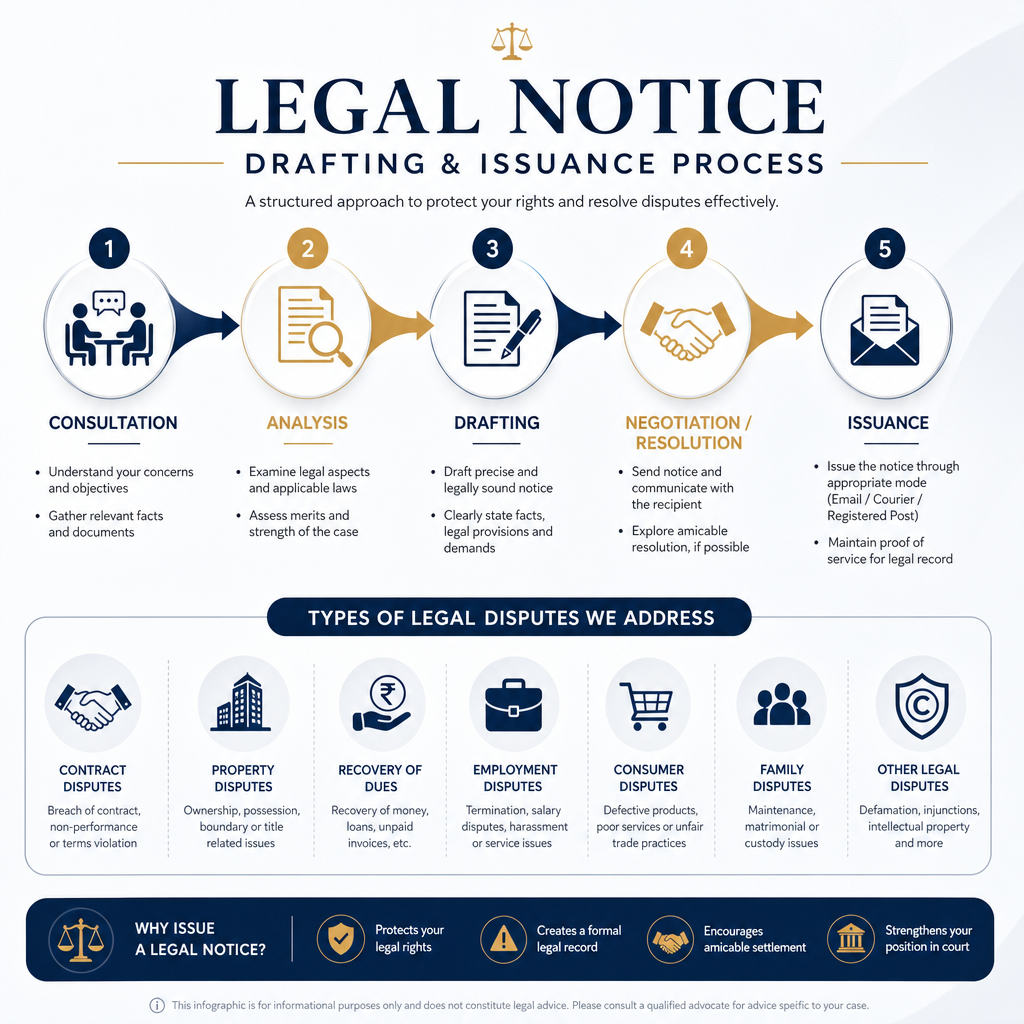
Step 4: Issue a Formal Demand Letter
If payments remain outstanding, the next step is to issue a formal demand letter. This letter should outline the unpaid amount, reference contractual obligations, and provide a deadline for payment. A well-crafted demand letter can often prompt clients to settle their dues to avoid further legal action.
Step 5: Seek Legal Assistance
Should the above steps fail, seeking legal assistance becomes necessary. Hiring a legal expert can provide freelancers with tailored advice and representation. Legal professionals can guide freelancers through the complexities of filing a case and represent them in court if needed. To learn about the services available, freelancers can visit our freelancer payment recovery services page.
Statutory Recovery Metrics & Resolution Benchmark
Disputes resolved via formal statutory legal demand notices.
Average statutory compliance response timeline.
Mandatory refund of statutory levies under Indian Acts.
Interest compensation claimable under MSME & NI Acts.
Case Studies: Successful Freelancer Payment Recovery
Examining real-life scenarios where freelancers successfully recovered unpaid dues can provide invaluable insights. Here, we explore case studies that highlight various strategies and legal interventions employed to resolve payment disputes.
Case Study 1: The Role of Contracts
In this scenario, a freelance web developer faced a non-paying client post-project completion. The developer's well-drafted contract specified payment terms and a clause for mediation. When the client defaulted, mediation was invoked, resulting in a mutually agreeable payment plan that salvaged the professional relationship.
Case Study 2: Leveraging the Negotiable Instruments Act
A freelance graphic designer received a post-dated cheque from a client, which bounced due to insufficient funds. With the cheque as evidence, the designer pursued legal action under Section 138 of the Negotiable Instruments Act. This led to a swift resolution, with the client settling the dues to avoid criminal charges.
Case Study 3: Summary Suit Success
A content writer filed a summary suit against a company that defaulted on payment for completed articles. The writer had robust documentation of contracts, invoices, and communications. The court ruled in favor of the writer, mandating the company to clear the outstanding amount plus interest, demonstrating the efficacy of summary suits in undisputed cases.
Building and Maintaining Professional Client Relationships
While ensuring payment recovery is paramount, maintaining professional client relationships is equally important for a freelancer's long-term success. Here are strategies to foster healthy client relationships while securing payments.
Open Communication
Fostering open communication channels with clients can preempt payment issues. Regular updates, check-ins, and feedback loops facilitate transparency and trust. Clients are more likely to honor payments when they feel engaged and valued throughout the project lifecycle.
Setting Realistic Expectations
Setting clear and realistic project expectations from the start helps prevent misunderstandings. Freelancers should outline deliverables, timelines, and payment schedules explicitly. This clarity aids in smoother project execution and reinforces the client's commitment to timely payments.
Building Trust and Credibility
Trust and credibility are essential components of a successful freelance career. Delivering high-quality work consistently and meeting deadlines builds a strong reputation. Clients are more inclined to prioritize payments to freelancers who maintain professional integrity.
Offering Flexible Payment Options
Providing clients with flexible payment options, such as installment plans or early payment discounts, can facilitate timely payments. Understanding client cash flow challenges and accommodating payment preferences may enhance goodwill and promptness in settling dues.
Utilizing Legal Contracts for Clarity
Legal contracts not only secure payment terms but also clarify expectations. Freelancers should ensure that contracts cover all aspects of the working relationship, including scope, timelines, revisions, and payment terms. This comprehensive approach minimizes the risk of disputes and facilitates smoother payment recovery.
Leveraging Technology for Invoice Management
The digital age offers numerous tools to aid freelancers in managing invoices and tracking payments efficiently. Harnessing these tools can streamline the payment recovery process and enhance financial transparency.
Online Invoicing Platforms
Platforms such as Zoho Books, QuickBooks, and FreshBooks provide comprehensive invoicing solutions for freelancers. These tools offer features like automated invoicing, expense tracking, and payment reminders, ensuring that clients are consistently reminded of their payment obligations.
Payment Tracking and Analytics
Reporting and analytics tools within invoicing platforms can help freelancers track payment trends, identify late-paying clients, and analyze cash flow patterns. This data-driven approach empowers freelancers to make informed decisions about client relationships and payment terms.
Automated Payment Reminders
Automated reminders eliminate the manual effort of following up on payments. Freelancers can set up scheduled reminders for upcoming and overdue payments, ensuring that clients receive timely prompts to settle invoices, thereby reducing the risk of delays.
Secure Payment Gateways
Integrating secure payment gateways such as Razorpay or PayPal into the invoicing process can facilitate quick and secure transactions. These gateways offer multiple payment options and ensure that clients can pay promptly, reducing friction in the payment process.
Digital Contract Management
Utilizing digital contract management tools like DocuSign or Adobe Sign can streamline contract creation and execution. These platforms enable freelancers to draft, send, and sign contracts electronically, ensuring legal enforceability and easy access to agreements when needed for payment disputes.
Conclusion: Navigating Freelancer Payment Recovery
Freelancer payment recovery involves a comprehensive understanding of legal frameworks, effective contract management, and strategic client interaction. By leveraging legal protections, adopting systematic recovery processes, and maintaining professional relationships, freelancers in India can safeguard their earnings and thrive in the competitive gig economy. For personalized legal assistance and comprehensive services on payment recovery, visit Legal Recovery, where our expert team is ready to support your freelance journey.
Popular Searches & Related Topics

Legal Recovery is India's trusted consumer protection and legal tech platform. We specialize in holding corporations accountable for unfair trade practices, deceptive marketing, and commercial fraud. With over 15,000 customers counselled, our mission is to provide fast, out-of-court resolutions by connecting you with top-tier panel advocates for immediate legal action.
Client Reviews
"The guide provided clear and actionable steps that helped me recover overdue payments without any hassle. Highly recommend it to fellow freelancers!"
Amitabh Rao
"This article was a lifesaver. The practical advice on legal frameworks and contract management empowered me to handle a tough client situation successfully."
Shalini Verma
"I was struggling with unpaid invoices until I followed the steps in this guide. The structured approach made recovery swift and straightforward. Excellent resource!"
Rohan Gupta
"An essential read for freelancers in India. The detailed insights into legal procedures and negotiation tactics were particularly beneficial for my situation."
Priya Menon
"This comprehensive guide transformed my invoicing process, making it more efficient and effective. The legal tips are invaluable for safeguarding payments."
Siddharth Singh
Frequently Asked Questions
Related Articles
About Author
Team LegalRecovery
View ProfileTeam LegalRecovery is a dedicated team of legal and financial professionals specializing in loan settlement, banking disputes, debt relief, and corporate compliance. We are committed to helping clients achieve debt freedom and business stability through expert strategic advisory.
Connect on LinkedInNeed Legal Help?
Get expert advice on loan settlement, banking disputes and debt relief.
Start Recovery NowRequest Callback