Employer Not Paying FNF? Know Your Legal Rights
Learn how to take action if your employer delays FNF payments.

Table of Contents
Table of Contents
Swipe →Legal Strategies for Enforcing Full and Final Settlement (FNF) Payments
The issue of an employer not paying the Full and Final Settlement (FNF) is a common predicament many employees face upon resignation or termination. The FNF settlement includes all dues payable to the employee, such as unpaid salary, bonus, earned but unused leave, and other dues. As per the Indian legal framework, any delay or refusal to pay can lead to significant legal ramifications for the employer. Understanding your rights and the legal remedies available is crucial to ensure you receive what is legally and rightfully yours.
The Legal Framework Governing FNF Settlements in India
In India, the payment of salary and settlements like FNF is primarily governed by the Payment of Wages Act, 1936, and the Indian Contract Act, 1872. These acts mandate that the employer must clear all dues, including FNF, within a reasonable time frame. Generally, companies specify the timeline for FNF in their employment contracts or company policies, often ranging from 30 to 45 days post the last working day.
Additionally, the Shops and Establishments Act, which varies from state to state, also provides guidelines on employment terms, including FNF settlements. Failure to adhere to these statutory requirements can be deemed a violation of labor laws, granting the employee the right to pursue legal action.
The Industrial Disputes Act, 1947, also plays a role, especially in cases involving disputes over wrongful termination and related dues. It provides mechanisms for resolving industrial disputes, which include matters related to compensation and settlements.
Steps to Address Non-Payment of FNF
When faced with an employer not paying your FNF, it is vital to approach the situation methodically. Here are detailed steps to consider:
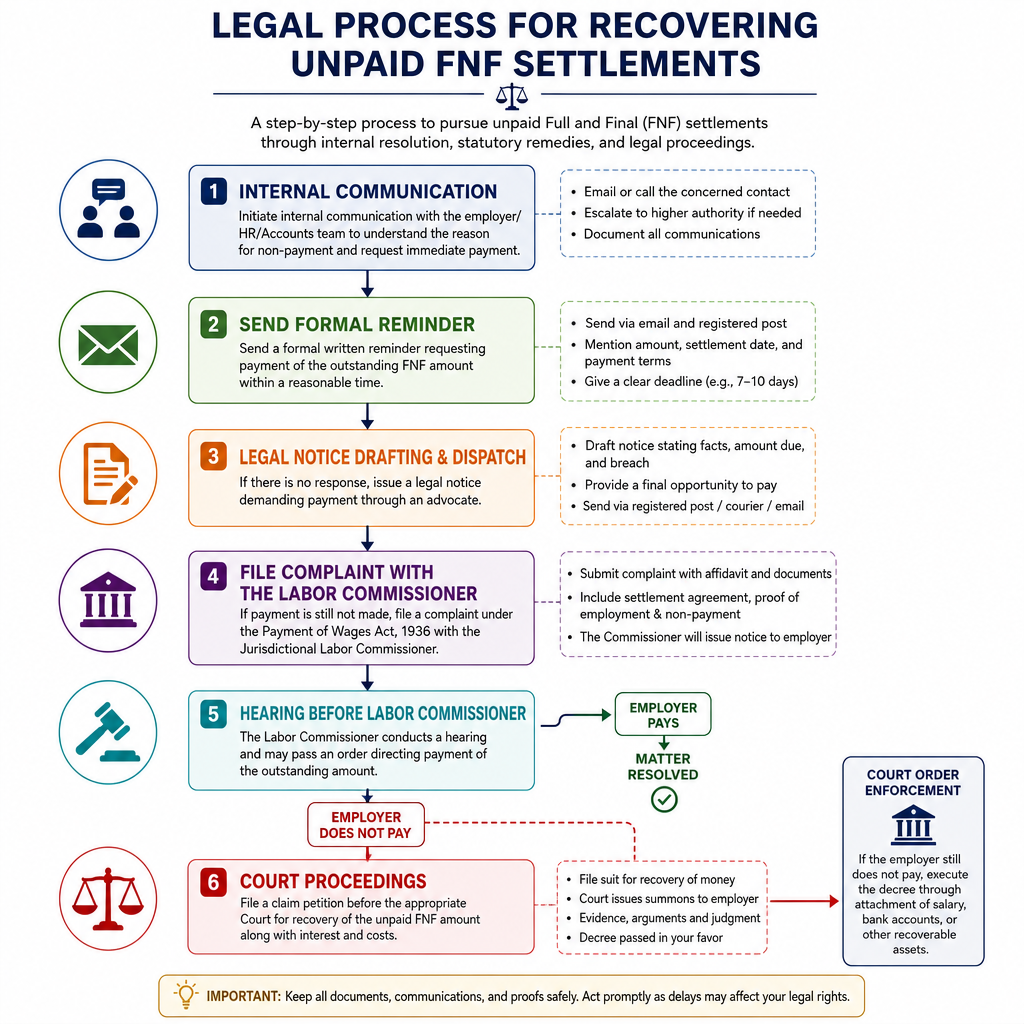
1. Internal Communication
Your first line of action should be to reach out to the HR department or the concerned authority within your organization. Request a clear explanation for the delay in writing and keep a record of all such communications. Often, initial delays are resolved through internal channels without the need for legal intervention.
When communicating, be professional and maintain a tone of inquiry rather than confrontation. Clearly state your case, citing the employment contract or company policies regarding FNF settlements. Document all correspondences for future reference.
2. Sending a Formal Reminder
If internal communication does not yield results, send a formal reminder via email or registered post. This reminder should include references to previous correspondences, the specifics of your FNF dues, and a request for immediate resolution. Set a reasonable deadline for the employer to respond and fulfill their obligations.
This step is crucial as it demonstrates your seriousness and creates a documented timeline of your attempts to resolve the issue amicably.
3. Drafting a Legal Notice
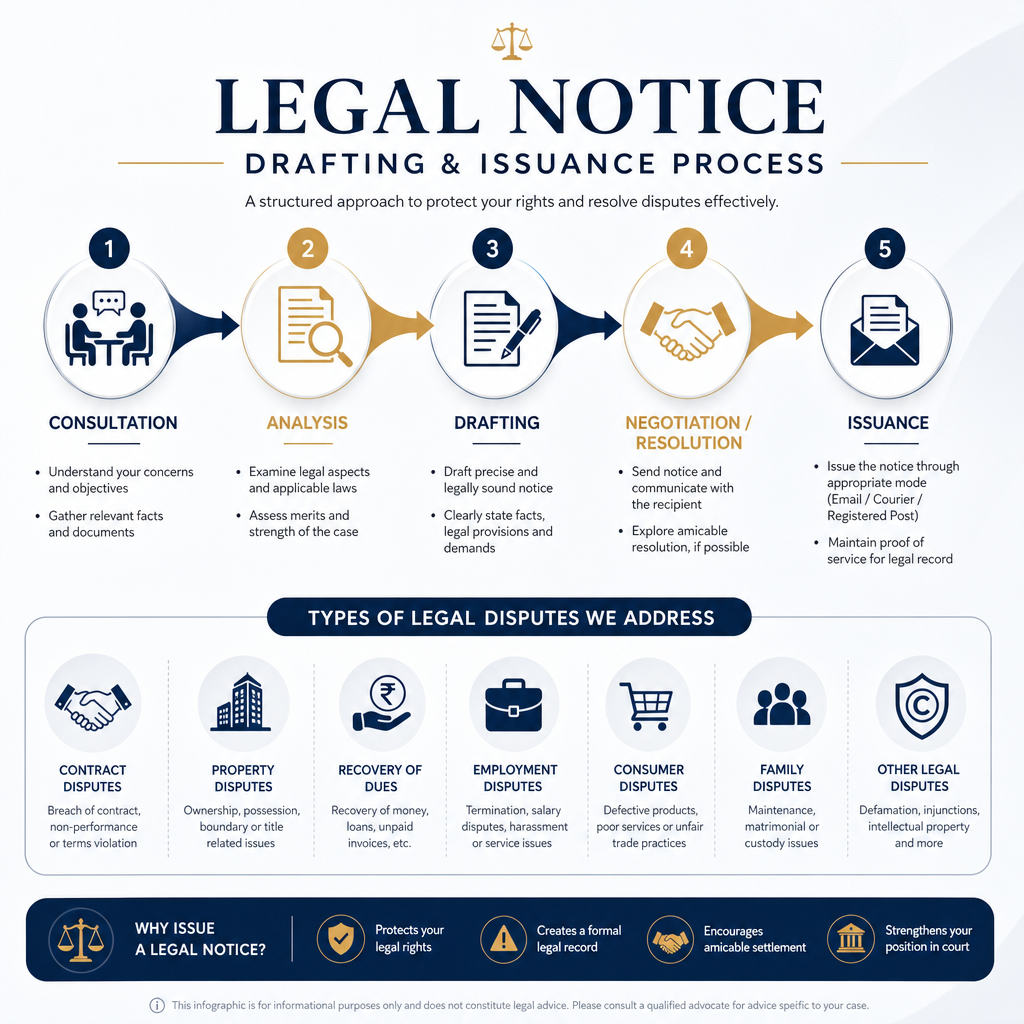
If the employer fails to respond or resolve the issue, the next step is to send a legal notice. A legal notice is a formal communication indicating your intent to initiate legal proceedings if the dues are not cleared. It serves as a final warning to the employer and often results in prompt action.
While you can draft and send a legal notice yourself, it is advisable to consult a lawyer to ensure it is legally sound and adheres to the format required under Indian law. You can learn more about the process of drafting a legal notice through LegalRecovery's resources.
4. Filing a Complaint with the Labor Commissioner
If the legal notice does not resolve the issue, you may file a complaint with the Labor Commissioner. The Commissioner acts as a mediator and can compel the employer to settle the dues. The labor commissioner will initiate an inquiry and possibly hold meetings with both parties to facilitate a settlement.
To proceed with this, you must provide all relevant documents, including your employment contract, proof of resignation or termination, and any communication regarding the FNF issue.
Documentation and Evidence Requirements
Proper documentation is critical when pursuing legal remedies for unpaid FNF. The following table outlines essential documents you should prepare and maintain:
Document Type | Description | Importance |
|---|---|---|
Employment Contract | Details the terms of employment, including FNF policies. | Primary evidence of agreed terms. |
Resignation Letter | Official communication of your intent to leave the company. | Proof of formal resignation. |
Salary Slips | Monthly records of salary and deductions. | Evidence of salary payments and deductions. |
Email Correspondence | Communication with HR and management regarding FNF. | Supports your claim and timeline of actions taken. |
Legal Notice | Formal demand for FNF payment sent to the employer. | Mandatory step before legal proceedings. |
Visual Dispute Resolution & Recovery Framework
Legal Proceedings and Court Involvement
If all previous attempts fail, the next step involves initiating legal proceedings. Here’s a step-by-step guide on how you can escalate the matter legally:
1. Filing a Civil Suit
A civil suit can be filed in the appropriate labor court or civil court, depending on the nature and amount of the claim. The court will examine the evidence, hear both parties, and make a judgment based on the merits of the case.
Filing a civil suit requires adherence to specific procedures, including paying court fees, submitting all documentation and evidence, and attending court hearings. It is advisable to engage a lawyer experienced in employment law to guide you through the process.
2. Consumer Court as an Alternative
In certain scenarios, you may approach the Consumer Court if the employment relationship is seen as a service under the Consumer Protection Act, 2019. This is typically applicable in cases where the employee is deemed a consumer of the employer's services, though it's less common in employment disputes.
Filing a complaint in the Consumer Court involves submitting a complaint letter, detailing the issue and providing supporting documents. The process is less formal and faster than regular civil court proceedings, making it a viable option in specific cases.
3. National Company Law Tribunal (NCLT)
If you were a part of senior management or a director, you might approach the NCLT for redressal. The tribunal addresses issues related to company law and insolvency, which may include employment disputes under certain conditions.
The NCLT’s procedures are distinct and require specific documentation, so legal assistance is advisable to navigate the tribunal effectively.
Practical Dispute Resolution Strategies
Before resorting to legal proceedings, consider these practical strategies to resolve the dispute:
1. Mediation and Arbitration
Mediation and arbitration are alternative dispute resolution methods that can be faster and less adversarial than court proceedings. These processes involve a neutral third party who facilitates discussions and helps both parties reach a mutually agreeable solution.
Many companies include mediation or arbitration clauses in their employment contracts, so review your agreement to determine if these options are available to you.
2. Negotiation
Direct negotiation with the employer, perhaps involving mutual acquaintances or professional mediators, can often lead to a quicker resolution. Approaching the discussion with a clear understanding of your rights and a willingness to compromise can be effective.
When negotiating, ensure that any agreements reached are documented in writing to prevent future disputes.
Statutory Timelines and Limitation Matrix
Understanding the statutory timelines for filing complaints or lawsuits is crucial. Missing a deadline can jeopardize your case. Here’s a table summarizing some key timelines:
Action | Time Limit | Applicable Statute |
|---|---|---|
Filing Complaint with Labor Commissioner | 3 years from the cause of action | Limitation Act, 1963 |
Filing Civil Suit | 3 years from the date of non-payment | Limitation Act, 1963 |
Sending a Legal Notice | No specific limitation but advisable within 60-90 days of non-payment | Indian Contract Act, 1872 |
Consumer Court Complaint | 2 years from the cause of action | Consumer Protection Act, 2019 |
Conclusion: Ensuring Compliance and Future Safeguards
Dealing with an employer who is not paying FNF can be arduous and legally complex. However, understanding your rights and the legal remedies available can empower you to take the necessary steps effectively. From internal dialogue to formal legal actions, each step is crucial in ensuring you receive what is rightfully yours.
For ongoing or future employment, it is prudent to thoroughly review employment contracts, understand company policies regarding FNF, and maintain a record of all employment-related communications. Building a strong case for salary and employment dues recovery begins with proper documentation and a clear understanding of legal rights.
If you are facing delays or issues with your FNF settlement and need professional help, consider reaching out to legal experts who specialize in employment and salary recovery cases. For more information on the legal process and to take action, visit Legal Recovery and explore their comprehensive services and resources.
Popular Searches & Related Topics

Legal Recovery is India's trusted consumer protection and legal tech platform. We specialize in holding corporations accountable for unfair trade practices, deceptive marketing, and commercial fraud. With over 15,000 customers counselled, our mission is to provide fast, out-of-court resolutions by connecting you with top-tier panel advocates for immediate legal action.
Client Reviews
"The guidance provided by Legal Recovery was impeccable. They helped me recover my dues swiftly with a professional approach."
Rahul Sharma
"I was very impressed with the detailed advice and support from Legal Recovery. They made the entire process stress-free and efficient."
Anjali Desai
"Excellent service and great legal expertise. Legal Recovery ensured I received my FNF without any hassles."
Vikram Patel
"Thanks to Legal Recovery, my FNF issue was resolved quickly. Their team is knowledgeable and attentive."
Priya Menon
"Fantastic experience with Legal Recovery! Their thorough understanding of the legal framework made all the difference."
Arjun Gupta
Frequently Asked Questions
Related Articles
About Author
Team LegalRecovery
View ProfileTeam LegalRecovery is a dedicated team of legal and financial professionals specializing in loan settlement, banking disputes, debt relief, and corporate compliance. We are committed to helping clients achieve debt freedom and business stability through expert strategic advisory.
Connect on LinkedInNeed Legal Help?
Get expert advice on loan settlement, banking disputes and debt relief.
Start Recovery NowRequest Callback